




Why Falling LME Stocks Can Keep Copper Above $14,000 After Expiry


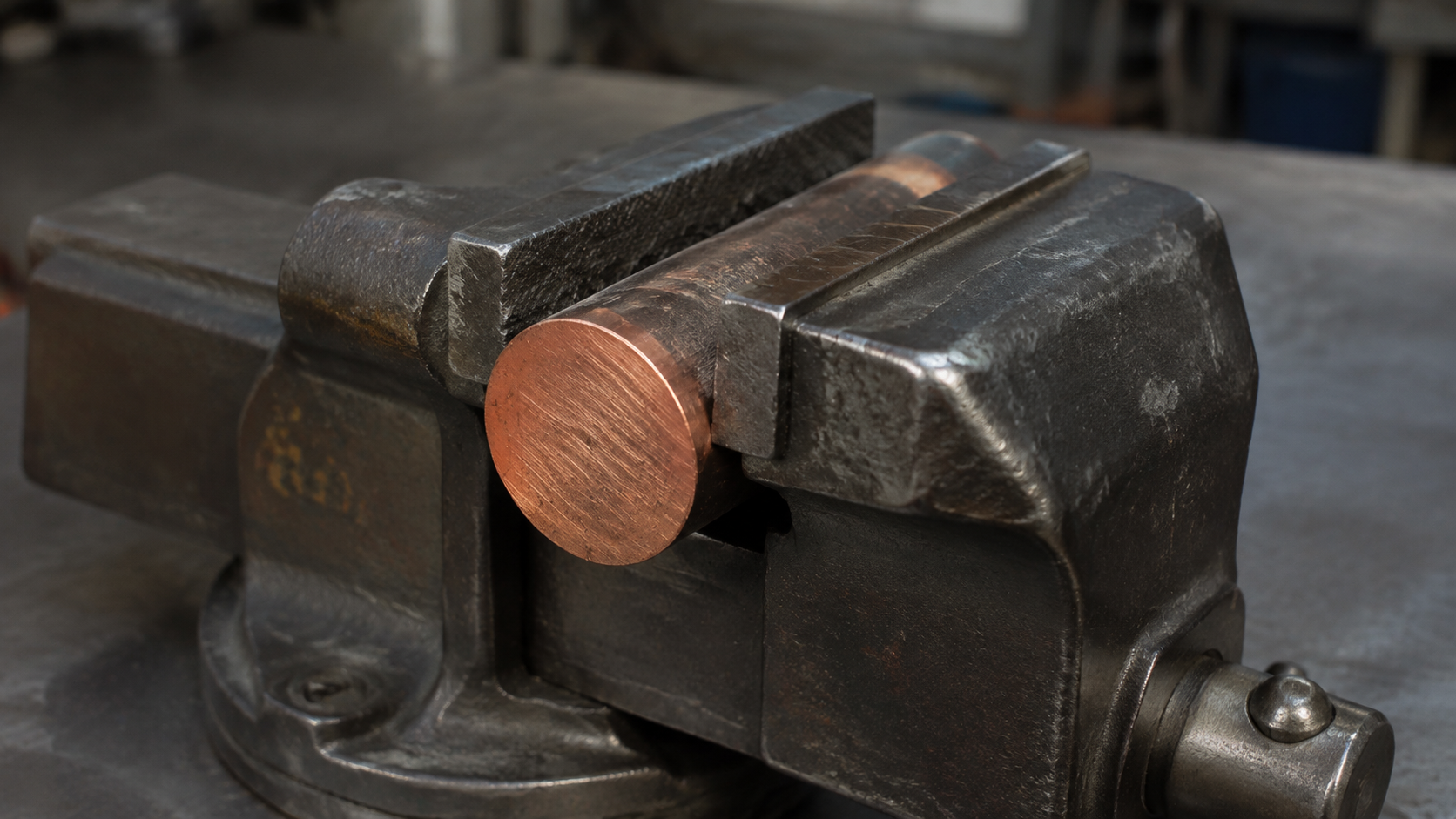
Falling LME stocks could keep copper above $14,000 even as the $543.50 spot premium fades after August contract expiry.
- On August 17, 2026, spot copper traded up to $543.50 per tonne above the LME three-month contract, the widest spread since 2021.
- The cash-to-three-month premium reached $434 per tonne, up from $45 two weeks earlier and the highest since October 2021, as short sellers bought back copper contracts ahead of expiry.
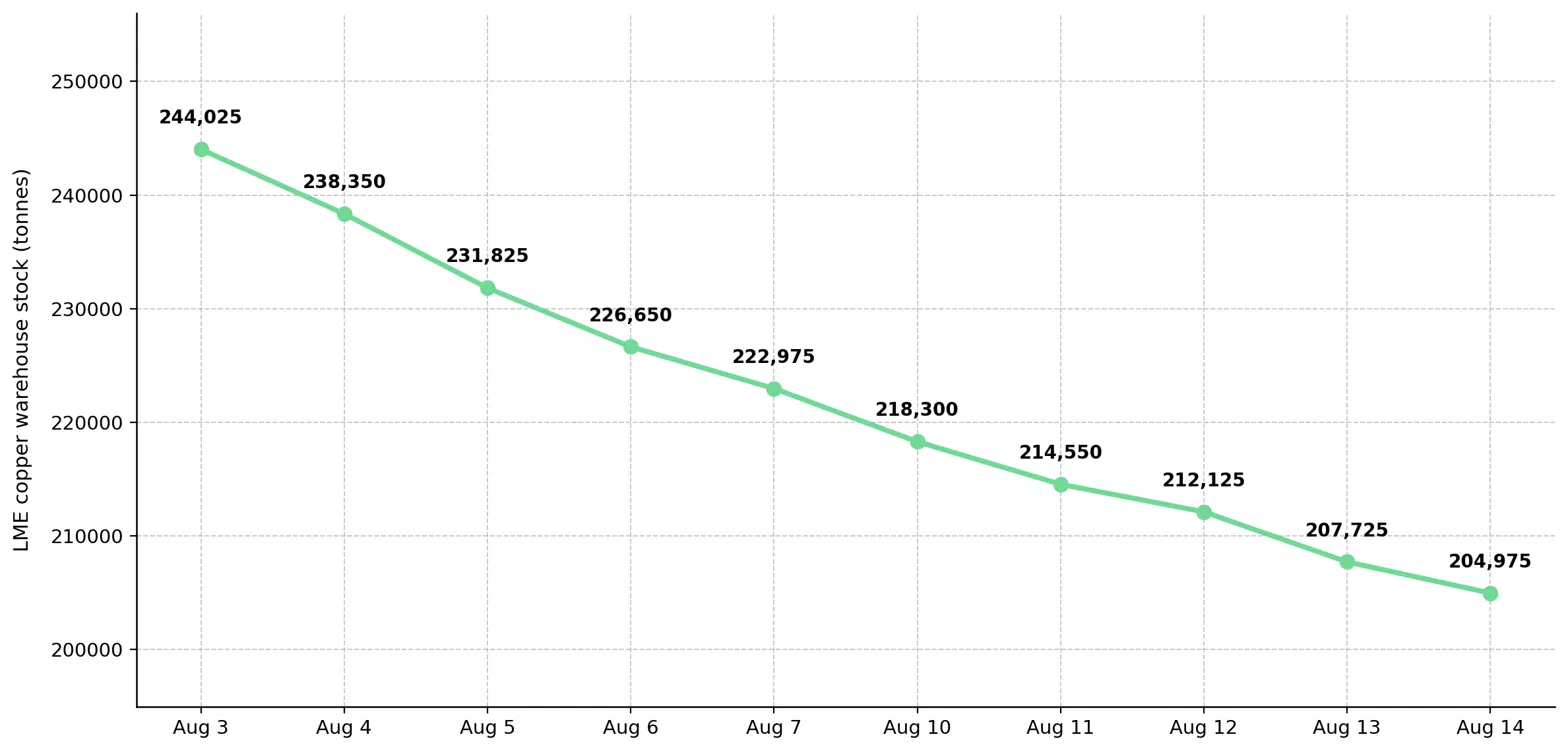
- London Metal Exchange (LME) warehouse stocks fell to 204,975 tonnes on August 14, 2026, from 249,850 on July 31 and 389,425 on May 29, marking 42 consecutive declines, the longest run since 2014.
- The LME introduced emergency measures on August 14, 2026 to limit further spikes in spot copper prices.
- LME monthly contracts expire on August 19, 2026, testing whether the spread narrows after short covering ends or stays elevated because available copper remains scarce.
$543.50 Copper Premium Jumps as Buyers Compete for Immediate Supply
Copper approached a record as spot metal traded up to $543.50 per tonne above the LME three-month contract, the widest spread since 2021. Cash copper settled at $14,545 per tonne versus $14,134 for the three-month contract. Copper has gained about 18% in 2026 and 47% over 12 months.
The cash-to-three-month premium rose from $45 two weeks earlier to $434 per tonne, its highest since October 2021, as buyers paid more for copper available for immediate delivery. Backwardation rewards holders for selling copper now rather than storing it. The premium reflects competition for copper available now, amplified by short covering, rather than a broad increase in copper demand.
Falling LME Stocks Cut Available Copper as Short Sellers Buy Back Contracts
LME warehouse stocks fell to 204,975 tonnes from 249,850 in late July and 389,425 in late May. The 42-session decline is the longest since 2014, with nearly half of remaining stocks already scheduled for withdrawal from LME warehouses. Chile cut its copper production forecast for a second straight quarter, while the Gresik smelter remained offline after a boiler leak, reducing mine and refined supply available to replenish falling stocks.
The August 19, 2026 expiry of LME benchmark monthly contracts will test how much of the spread came from short covering, as short sellers bought back copper contracts ahead of expiry and added to spot-price gains. The LME introduced emergency measures on August 14 to limit further spikes in spot copper prices as the cash premium widened sharply.
Copper Can Stay Above $14,000 After Short Sellers Finish Buying Back Contracts
The August 19 expiry can remove short-covering pressure, but it cannot restore available copper supply. Cancelled warrants keep metal scheduled for withdrawal, while Chile’s lower production forecast and the Gresik smelter outage continue to constrain replacement supply. Ole Hansen, Commodity Strategist at Saxo Bank, said the longer-term supply pressures would remain after the expiry.
Base case: After the August 19, 2026 expiry, short sellers complete their contract rolls, allowing the spread to narrow from $543.50 toward $100 to $200 per tonne while cash copper remains above $14,000 as LME warehouse stocks continue to fall.
Bear case: If more copper becomes available for LME delivery, the cash-to-three-month premium falls toward the $45 per tonne recorded in late July as competition for immediate supply declines.
Monthly Copper Pricing Drives Mine Revenue, Not the $543.50 Spot Premium
The $543.50 per tonne backwardation does not flow directly into mine revenue because producers typically sell cathode and concentrate on contracts linked to monthly average settlement prices, not the cash-to-three-month spread. The spread instead benefits holders of warranted metal and traders in near-dated contracts. Producer margins depend on the underlying copper price, with cash copper settling at $14,545 per tonne on August 14, 2026.
The mining impact comes from supply constraints supporting the underlying copper price. Chile’s second consecutive production forecast cut and the Gresik smelter outage reduce supply available to replenish falling exchange stocks. Producers able to deliver copper on schedule can negotiate stronger contract terms when available supply is scarce.
How much of the current spread comes from short covering will become clearer after the August 19 expiry, when that buying pressure subsides. Producer valuations should use realized copper price assumptions rather than the cash-to-three-month spread because mines do not capture that premium directly.
Monitor 80,000-Tonne LME Warrants as Less Available Copper Raises the Premium
With LME stocks at 204,975 tonnes and roughly half scheduled for withdrawal, less copper remains available for immediate delivery, supporting the cash-to-three-month premium.
The key threshold is 80,000 tonnes of available LME warrants. Below that level, large holders are no longer required to lend copper to short sellers, leaving less metal available for settlement. That can keep the cash-to-three-month premium elevated or push it higher.
Track daily LME warehouse stocks and the cash-to-three-month premium. Reassess if stocks stabilize for three consecutive sessions after the August 19 expiry or the premium falls below $150 per tonne, signaling that short-covering pressure has faded.
Analyst's Notes





Subscribe to Our Channel





%20(1)%20(1).jpg)
.jpg)
Stay Informed


