




Why Invest in North American Salt Mining: The Overlooked Infrastructure Play


Why invest in salt mining? Atlas Salt's 4 Mtpa Great Atlantic project capitalizes on North America's 8-10 Mtpa import deficit, offering 21.3% IRR and ESG-leading ops
- North America imports 8 to 10 million tonnes of de-icing salt annually, with the last new mine opening in 2001. Recent closures (Cargill's Avery Island facility removing 2.5 million tonnes per annum, potential Cleveland closure eliminating another 2 million tonnes) have created a replacement imperative that favors new domestic production, particularly projects like Atlas Salt's 4 million tonnes per annum Great Atlantic facility positioned to serve eastern seaboard markets.
- The $2.3 to $2.9 billion North American de-icing salt market grows at 4.2% compound annual growth rate, driven by non-discretionary municipal spending, infrastructure expansion, and climate variability extending winter treatment seasons. Unlike cyclical commodities, salt consumption persists regardless of economic conditions, providing defensive portfolio characteristics with institutional-quality returns.
- The December 2025 acquisition of US Salt for $907.5 million (16.5 times EBITDA) and K+S's 2020 Americas sale for $3.2 billion (12.5 times EBITDA) demonstrate sophisticated capital's conviction in salt sector fundamentals. Applied to Atlas Salt's projected $183 million steady-state EBITDA, comparable multiples imply enterprise values of $1.8 billion to $3.0 billion versus current market capitalization of $75 million, suggesting 24 to 40 times upside potential.
- Atlas's Newfoundland location provides sub-three-day shipping to Boston versus 14-plus days from Chile or Egypt, reducing delivered costs by 15% to 20% while cutting carbon emissions by 80%. Shallow deposit depth (180 meters versus 600 meters for legacy mines), established infrastructure eliminating $50 to $100 million in typical greenfield costs, and sector-leading ESG performance (950 tonnes CO2 equivalent per million tonnes, 95% below base metal peers) position the project for preferential access to sustainability-focused capital.
- Development-stage miners historically appreciate 200% to 400% from feasibility through construction as execution risk declines. Atlas currently trades at 0.07 times NPV versus 0.6 to 0.9 times for construction-stage peers, with multiple de-risking milestones expected over 12 to 18 months including project financing (Endeavour Financial engaged), binding offtake conversion (Scotwood MOU for 1.25 to 1.5 million tonnes per annum), remaining federal permits, and Early Works commencement, each typically generating 15% to 30% share price appreciation.
The Overlooked Essential: Salt's Role in Critical Infrastructure
While investors chase lithium, copper, and rare earths, an equally essential commodity quietly underpins modern society: salt. In North America alone, the de-icing salt market consumes 28.5 to 36 million tonnes annually, representing a $2.3 to $2.9 billion industry growing at 4.2% compound annual growth rate. Yet this market faces a striking paradox. Demand is rising steadily, domestic supply is shrinking rapidly, and the last new salt mine opened over two decades ago.
For investors seeking recession-resistant assets with tangible supply-demand fundamentals, the salt sector presents a compelling, under-followed opportunity. Development-stage projects like Atlas Salt's Great Atlantic operation in Newfoundland offer particularly attractive entry points into this defensive commodity space.
This article examines the macro forces driving salt investment appeal, analyzes supply-side constraints creating opportunity, and profiles Atlas Salt (TSXV: SALT) as a case study in how modern mine development can capitalize on structural market shifts. With major transactions validating premium sector valuations and legacy infrastructure failing across North America, the timing for strategic salt investments has never been more compelling.
Global Demand Trends
Salt's investment appeal begins with its unique demand profile. Unlike industrial metals sensitive to manufacturing cycles and economic downturns, de-icing salt consumption is fundamentally non-discretionary. Municipalities must treat roads and highways during winter months, regardless of budget constraints or economic conditions. This creates revenue stability that few mining sectors can match.
The U.S. Geological Survey reports stable to growing consumption patterns, driven by three primary structural factors that show no signs of reversal over the coming decades.
First, infrastructure expansion continues creating new demand. Road networks in the U.S. Midwest, Canadian Prairie provinces, and Atlantic Canada continue expanding, requiring proportional increases in winter treatment capacity and salt stockpiles. Each new mile of highway requires approximately 0.5 to 0.8 tonnes of salt annually, creating predictable demand growth tied to infrastructure investment cycles.
Second, climate variability is extending treatment seasons beyond historical norms. Increasing freeze-thaw cycles, a documented byproduct of warming winters punctuated by extreme cold snaps, require more frequent salt applications across longer seasonal windows. The National Oceanic and Atmospheric Administration reports that shoulder-season ice events (November and March) have increased by 18% since 2010, directly translating to higher salt consumption.
Third, evolving safety standards and litigation risk compel governments to prioritize aggressive road treatment protocols. Following several high-profile accidents attributed to inadequate winter maintenance, per-mile salt application rates have increased 12% to 15% across major metropolitan areas. Municipal liability concerns effectively eliminate cost as a constraint on winter salt procurement.
The Fortune Business Insights report values the global salt market at $26 billion in 2024, with de-icing representing the fastest-growing segment globally. Critically for North American investors, the continent remains heavily import-dependent, bringing in 8 to 10 million tonnes per annum to supplement domestic production. This import dependence exposes buyers to freight cost volatility, supply chain disruptions, and geopolitical risks that domestic production can mitigate.
Chile, Egypt, and Mexico collectively supply 68% of U.S. salt imports according to U.S. Geological Survey trade data. Recent shipping disruptions in the Panama Canal and Suez Canal have elevated supply security as a procurement priority, often justifying 10% to 15% price premiums for North American sources.
"Atlantic Canada, Quebec, and the U.S. East Coast consume 11 to 16 million tonnes of de-icing salt annually. Our 4 million tonnes per annum nameplate capacity directly addresses this clear market deficit. We can reach Boston in under three days, compared to over two weeks from Chile or Egypt. That proximity translates to lower costs, reduced emissions, and superior supply reliability for customers."
Nolan Peterson, CEO, Atlas Salt Inc.
Peterson brings over 20 years of mine development and operations experience, previously serving as CEO of World Copper where he advanced over $1 billion in mineral assets through feasibility and permitting stages.
Peterson's observation captures the fundamental investment thesis: North American salt markets face a structural supply deficit that geography, logistics, and aging infrastructure make increasingly acute. Projects positioned to serve this deficit benefit from multiple competitive advantages that legacy producers cannot replicate.
Supply-Side Constraints
North America's salt supply base is demonstrably geriatric, creating replacement demand that new projects can capture. The ten largest producing facilities, including Compass Minerals' Goderich operation in Ontario (producing since 1959) and Cargill's Whiskey Island mine in Ohio (operational since 1961), average over 60 years in continuous operation. This aging infrastructure faces escalating maintenance costs, environmental compliance challenges, and geological constraints that limit production expansion.
Three recent supply-side events underscore the structural challenges facing incumbent producers, creating market space for new entrants.
The Cargill Closures
In January 2021, Cargill announced the permanent closure of its Avery Island salt mine in Louisiana, eliminating 2.5 million tonnes per annum of Gulf Coast production capacity. The mine, which began operations in the mid-1800s and represented one of North America's oldest continuously operating salt facilities, ceased production due to geological depletion, rising extraction costs, and limited reserve extensions. The closure removed approximately 8% of total U.S. production capacity, tightening regional supply balances significantly.
The Avery Island closure proved particularly impactful because the facility served as a key supplier to southeastern U.S. markets, which now rely more heavily on imports from Mexico and South America. Increased transportation distances have added $8 to $12 per tonne to delivered costs for many customers, improving the relative economics for domestic alternatives.
Ongoing Divestiture Challenges
Cargill's attempts to exit its remaining salt operations have encountered persistent obstacles that illustrate the sector's infrastructure challenges. The company's Cleveland and New York salt assets have remained unsold since formally entering the divestiture process in 2023, despite Cargill's willingness to accept below-book valuations.
The primary barrier to sale involves environmental liabilities associated with mining beneath Lake Erie. Both the Whiskey Island facility in Cleveland and the Cayuga mine in New York operate 550 to 700 meters below major freshwater bodies, creating groundwater contamination risks and long-term remediation obligations that potential buyers find prohibitive. Industry analysts estimate closure and remediation costs could exceed $150 million per facility, effectively eliminating acquisition interest from financial buyers.
If Cargill ultimately closes these facilities rather than selling them, North American supply would contract by an additional 2 to 2.5 million tonnes per annum. This would represent approximately 7% of current domestic production, further exacerbating import dependence and supporting price appreciation for remaining suppliers.
Strategic Capital Flight
The sector's most significant transaction occurred in May 2020, when Germany's K+S AG sold its entire Americas salt business to Stone Canyon Industries Holding for $3.2 billion. The transaction, which included the iconic Morton Salt and Windsor Salt brands along with multiple production facilities, represented 12.5 times trailing EBITDA.
K+S's strategic exit reflected a broader pattern among diversified mining companies: the capital intensity and relatively modest growth prospects of legacy salt operations make them unattractive compared to battery metals, precious metals, or bulk commodities with stronger demand growth. The transaction consolidated approximately 35% of North American production capacity under Stone Canyon's ownership, creating oligopolistic market structure that supports pricing discipline.
Robert Booth, Vice President of Engineering and Construction at Atlas Salt and former project lead on over $1.5 billion in mine builds for Newmont Mining and Hudbay Minerals, observes: "Legacy salt mines face escalating sustaining capital requirements that often exceed original development costs. Shaft maintenance, water management systems, and ventilation infrastructure require constant investment. Greenfield projects with modern designs and shallow deposits can deliver 15% to 20% lower all-in sustaining costs from day one of production."
Atlas's 2025 Updated Feasibility Study projects all-in sustaining costs of $34.90 per tonne, materially below the $42.70 per tonne benchmark from its 2023 study and competitive with the best-performing legacy operations despite Atlas having no economies of scale during early production years.
Geographic Arbitrage: Proximity as Competitive Advantage
In bulk commodity markets where product specifications are standardized and quality differences minimal, location determines competitive position. With salt product values of $60 to $80 per tonne FOB mine or port, transportation costs constitute 30% to 40% of total delivered price to end customers. This transportation cost structure creates powerful geographic moats for suppliers with proximity advantages.
Atlas Salt's St. George's, Newfoundland location provides three distinct competitive advantages that translate directly to superior project economics and customer value propositions.
Shipping Efficiency and Logistics
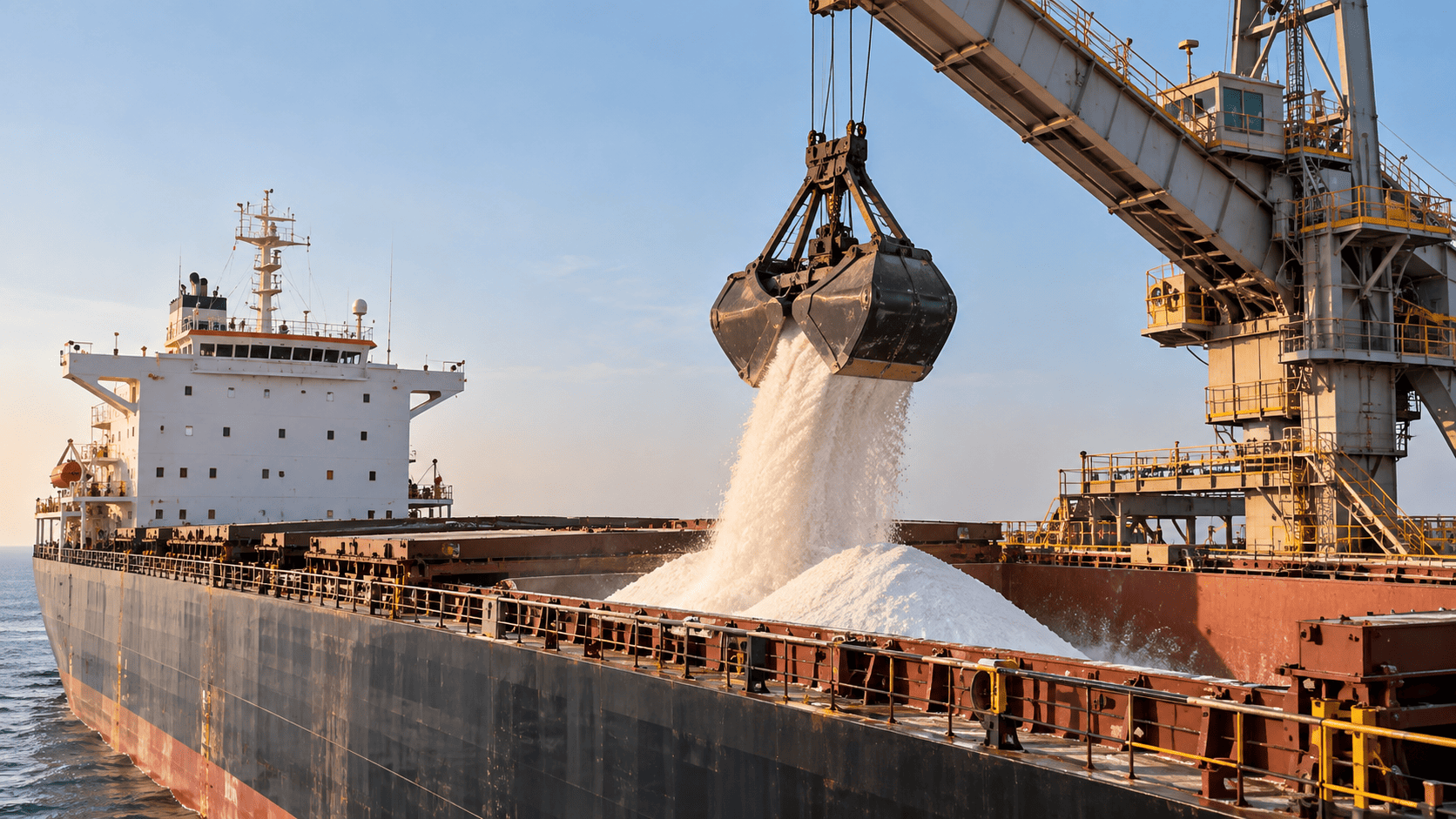
The Great Atlantic Salt Project sits just 2 kilometers from Turf Point Marine Terminal, a deep-water port facility with existing bulk handling infrastructure. An enclosed conveyor system will transport crushed salt directly from the mine processing plant to shipside storage, eliminating truck haulage and minimizing handling costs.
Transit time to key East Coast markets dramatically favors Newfoundland production over international alternatives. Boston, the largest de-icing salt market in the northeastern United States, can be reached in under three days. By contrast, Chilean producers require 16 to 18 days ocean transit, while Egyptian suppliers face 14 to 16 days even before potential Suez Canal delays. This 11 to 15 day advantage reduces working capital requirements through faster cash conversion cycles, lowers inventory carrying costs for customers, and provides supply chain flexibility that overseas competitors cannot match.
The shipping efficiency also delivers material environmental benefits that increasingly matter to institutional investors and government procurement officers. Atlas's independent lifecycle assessment calculates that Newfoundland production generates approximately 80% lower carbon emissions per tonne delivered to Boston compared to Chilean or Egyptian supply. For state and municipal buyers operating under emissions reduction mandates, this 1.2 to 1.8 tonnes CO2 equivalent advantage per tonne purchased represents a meaningful procurement criterion.
Infrastructure Access and Capital Efficiency
Atlas benefits from infrastructure established over 70 years of regional mining activity. The project sits adjacent to the Trans-Canada Highway, providing year-round road access for personnel, supplies, and equipment. A 66 kilovolt electrical substation located 1.4 kilometers from the planned mine entrance eliminates the need for dedicated power line construction. The Turf Point port facility has operated since the 1950s for gypsum exports, meaning dredging, berthing infrastructure, and navigation aids already exist.
This infrastructure density eliminates $50 to $100 million in upfront capital expenditure typical of greenfield projects in remote locations. Comparable mining developments in northern Canada or Alaska routinely require dedicated port construction, 50 to 100 kilometer road builds, and electrical infrastructure investments that inflate initial capital requirements by 15% to 25%. Atlas's ability to leverage existing infrastructure directly improves project returns and reduces execution risk.
Andrew Smith, Atlas's Project Director with over 10 years of underground mine construction experience and former Head of Project Management Office at Dumas Contracting, notes: "We're building on proven ground. Newfoundland has a 70-year mining history with gypsum, limestone, and fluorspar. Local contractors understand mine development, equipment suppliers maintain regional inventories, and permitting agencies have institutional knowledge of bulk commodity operations. This dramatically reduces the learning curve and schedule risk that plagues truly greenfield developments."
Policy Support and Market Access
Canadian federal and provincial governments have designated salt as a critical mineral essential for infrastructure security under the 2025 Critical Minerals Strategy. This designation provides access to accelerated permitting, potential infrastructure co-investment, and 30% investment tax credits for clean technology capital expenditures under Bill C-59. For Atlas's highly electrified mine design, these tax credits could reduce after-tax capital costs by $40 to $60 million.
Equally important, North American buyers increasingly prioritize domestic sourcing to reduce supply chain vulnerabilities exposed by pandemic-era disruptions and geopolitical tensions. Multiple state and provincial procurement policies now include "Buy North American" preferences that effectively function as 10% to 15% price premiums for domestic suppliers. Atlas's positioning as the first new North American salt mine in nearly 30 years allows the company to capitalize on these sourcing preferences across public and private sector customers.
Case Study: Atlas Salt's Path to Production
Atlas Salt Inc. (TSXV: SALT, market capitalization approximately $75 million as of December 2025) exemplifies how thoughtfully positioned development-stage mining projects can capitalize on structural supply-demand imbalances. The company's Great Atlantic Salt Project in western Newfoundland targets 4 million tonnes per annum production beginning in 2030, directly addressing the eastern seaboard supply deficit.
Resource Quality
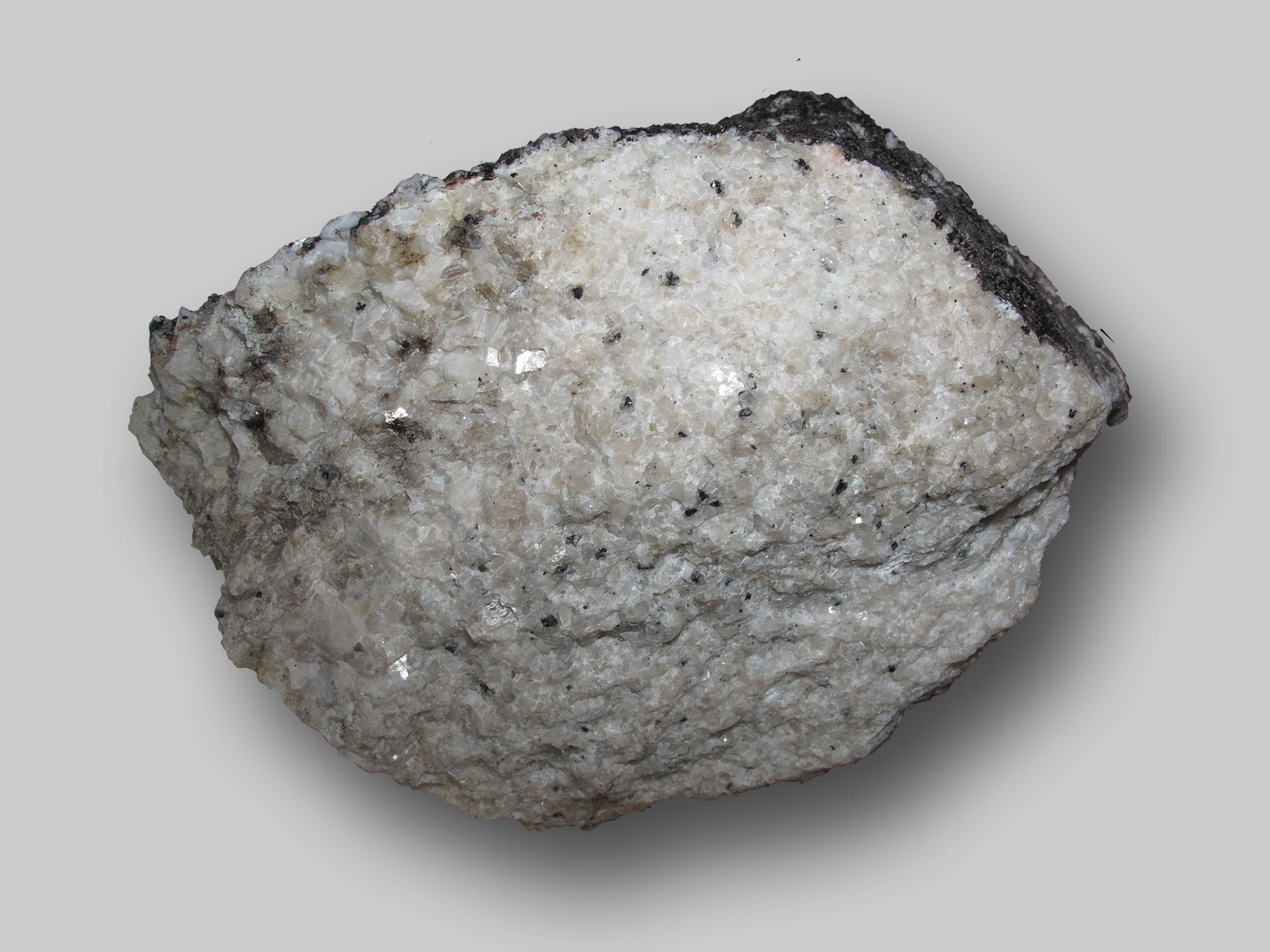
The Great Atlantic deposit hosts 2P reserves of 95.0 million tonnes grading 95.9% sodium chloride purity, sufficient for the project's planned 24.3-year mine life at full production rates. Beyond this reserve base, the property contains 868 million tonnes of inferred resources grading 95.2% sodium chloride that remain excluded from the current mine plan but could support production rate increases or mine life extensions pending additional drilling and engineering.
The salt occurs in three distinct geological horizons designated 1-Salt, 2-Salt, and 3-Salt, ranging from 68 to 340 meters in thickness with average thickness of approximately 200 meters. This exceptional continuity and predictability simplify mine planning, reduce grade risk during production ramp-up, and minimize development waste compared to structurally complex deposits.
The deposit's shallow depth of 180 to 220 meters below surface represents a fundamental competitive advantage over legacy North American operations. By comparison, Compass Minerals' Goderich mine extends approximately 600 meters beneath Lake Huron, Cargill's Whiskey Island operation works 550 meters beneath Lake Erie, and Nutrien's recently restarted Picadilly mine in New Brunswick operates at 1,000 meter depths.
Shallow mining depth translates to three operational advantages. First, mine access via decline rather than vertical shaft eliminates $80 to $120 million in shaft sinking costs and 18 to 24 months of development time typical of deep operations. Second, shorter haulage distances reduce diesel consumption and truck fleet requirements, lowering operating costs by approximately $3 to $5 per tonne. Third, simplified ventilation requirements and reduced hoisting costs further enhance operating margins throughout the mine life.
De-Risked Economics
Atlas's September 2025 Updated Feasibility Study represents a substantial de-risking milestone, incorporating lessons from the Environmental Assessment process, optimizing production sequencing, and updating capital and operating cost estimates based on firmed equipment quotations and construction contractor bids.
Key economic metrics include after-tax net present value at 8% discount rate of $920 million, after-tax internal rate of return of 21.3%, payback period of 4.2 years, and life-of-mine average annual free cash flow of $188 million. For context, this $920 million NPV8 represents 12.3 times Atlas's current enterprise value of approximately $64 million, implying substantial valuation upside as project de-risking proceeds through financing, construction, and production ramp-up phases.
The updated study shortened mine life from 34 years in the 2023 Feasibility Study to 24.3 years by accelerating production ramp-up and sustaining nameplate capacity throughout operations. This front-loading of cash flows reduces reliance on long-term price forecasts, decreases exposure to tail-year operational risks, and improves project bankability from lender perspectives. Average annual production increases 63% to 4.0 million tonnes from 2.5 million tonnes in the prior study, dramatically improving capital efficiency and overhead absorption.
Initial capital expenditure totals $589 million, with life-of-mine sustaining capital of $609 million. While the initial capital increased 23% from the 2023 estimate, this reflects engineering advances including more detailed mine design, incorporation of environmental monitoring systems required by permits, and inflation in steel, concrete, and electrical components. Importantly, the capital increase is more than offset by operational improvements that increased NPV by 66% and internal rate of return by 280 basis points.
Operating costs of $28.20 per tonne shipped position Atlas competitively against established producers despite lacking scale economies. All-in sustaining costs of $34.90 per tonne compare favorably to industry benchmarks of $40 to $50 per tonne for underground operations, reflecting advantages of shallow mining, hydroelectric power access, and elimination of shaft hoisting.
The study employs conservative pricing assumptions, with base case selling price of $81.70 per tonne in 2025 dollars escalating at 3% annually. This pricing sits at the low end of recent spot transactions and below contract pricing secured by comparable producers, suggesting meaningful upside to base case economics if North American supply tightness persists.
Strategic Partnerships & Execution
Atlas has secured three foundational partnerships that substantially de-risk commercial, technical, and operational execution.
First, the August 2024 Memorandum of Understanding with Scotwood Industries LLC establishes a framework for offtake of 1.25 to 1.5 million tonnes per annum, representing 31% to 38% of planned production. Scotwood operates as the largest distributor of packaged retail de-icing salt in the United States with established distribution networks across the Northeast, Mid-Atlantic, and Midwest regions. Beyond volume commitments, Scotwood's extensive customer relationships provide Atlas with immediate market access and credit quality that enhances project finance attractiveness.
Second, the September 2024 agreement with Sandvik Mining and Construction encompasses supply and financing for $73 million of underground mining equipment plus ongoing engineering support. Sandvik ranks among the world's leading underground equipment manufacturers with particular expertise in room-and-pillar operations in soft rock environments. The agreement includes potential vendor financing that could reduce equity requirements while Sandvik's engineering support de-risks equipment selection and mine design.
Third, the November 2025 Memorandum of Understanding with Hatch Ltd. establishes Hatch as Lead Engineering Partner and Integrated Project Delivery Partner. Hatch brings proven experience delivering the world's largest soft-rock mines including potash operations in Saskatchewan and salt facilities in eastern Canada. The Integrated Project Delivery model aligns financial incentives between owner and engineering firm, reducing cost overrun risk through shared accountability and gain-sharing arrangements. Hatch's existing Newfoundland presence through multiple industrial projects provides immediate access to local engineering resources and construction management expertise.
Environmental & Social Performance
Environmental, social, and governance performance increasingly drives capital allocation decisions across institutional investor bases. Atlas's Great Atlantic Salt Project exhibits sector-leading ESG characteristics that position it favorably for sustainability-focused capital.
The operation will utilize a fully electric underground mining fleet powered exclusively by Newfoundland's hydroelectric grid, which generates over 95% of provincial electricity from renewable sources. This eliminates diesel particulate emissions in the underground environment, improving worker health and safety while dramatically reducing scope 1 and scope 2 greenhouse gas emissions.
Total scope 1 emissions of approximately 79 tonnes CO2 equivalent per year, primarily from surface mobile equipment, compare to just four typical Newfoundland households. On a production intensity basis, this equates to approximately 950 tonnes CO2 equivalent per million tonnes of production, representing 95% lower emissions than base metal mining and 98% lower than oil sands operations.
The mining process generates zero tailings and utilizes purely physical processing methods without chemical reagents. Crushed salt will be screened, washed with recycled water, and dried, with all process water recycled in closed loops. This eliminates tailings storage facilities, reduces water consumption, and prevents chemical discharge that plagues many mineral processing operations.
Atlas's August 2024 ESG Report, prepared by independent consultants, projects substantial economic contributions including $2.7 billion in tax revenue over mine life with significant portions flowing to municipal and provincial governments, $1.9 billion in household spending across Newfoundland and Labrador, $90 million in direct municipal revenues, and over 170 permanent jobs with average wages exceeding $80,000 annually.
Sector Valuations: Transaction Comparables
Recent transactions provide clear benchmarks for salt asset valuations and highlight the substantial valuation gap between Atlas's current market pricing and demonstrated transaction multiples.
In December 2025, ContextLogic Inc. announced the acquisition of US Salt from Emerald Lake Capital Management for total consideration of $907.5 million. US Salt operates a vertically integrated evaporated salt production facility in Watkins Glen, New York, with over 100 years of remaining reserves. The company generates approximately $131 million in annual revenue with EBITDA margins near 42%, implying acquisition multiples of 16.5 times EBITDA and 6.9 times revenue.
The transaction attracted participation from prominent institutional investors including Blackstone Group, BC Partners, Abrams Capital Management, and Emerald Lake, demonstrating sophisticated capital's conviction in salt sector fundamentals. ContextLogic's investor presentation emphasized salt's recession-resistant demand profile, stable cash flows, and inflation-hedging characteristics as primary investment rationales.
Applied to Atlas's projected steady-state financial performance, comparable transaction multiples suggest substantial value. The company's feasibility study projects average annual revenue of $407 million with EBITDA margins exceeding 45%, implying EBITDA of approximately $183 million annually. At 16.5 times EBITDA, this would support enterprise values exceeding $3.0 billion, or 40 times current market capitalization. Even applying more conservative 10 times to 12 times EBITDA multiples typical for development-stage assets implies fair values of $1.8 billion to $2.2 billion, representing 24 times to 29 times upside from current levels.
The May 2020 sale of K+S's Americas operations to Stone Canyon Industries for $3.2 billion at 12.5 times EBITDA provides additional context. These mature assets with established market positions, extensive distribution networks, and fully depreciated infrastructure commanded premium multiples, suggesting development-stage projects with superior cost structures and growth potential merit comparable or higher valuations upon production commencement.
Atlas currently trades at approximately 0.07 times after-tax NPV8, well below the 0.4 to 0.9 times range typical for construction-stage mining projects. Comparable development companies including Artemis Gold traded at 0.5 times NPV upon feasibility study release in 2021, re-rated to 0.6 times upon securing project financing in early 2023, and reached 0.9 times during construction ramp-up in 2024. This progression implies potential for 8 times to 12 times appreciation as Atlas advances through similar de-risking milestones over the next 24 to 36 months.
Investment Risks & Mitigation Strategies
No investment proposition is without risks, and Atlas faces several execution challenges common to mine development projects. Thoughtful investors must weigh these risks against potential returns and assess management's mitigation strategies.
Construction execution risk represents the primary concern for any $589 million capital project. Mining history contains numerous examples of cost overruns, schedule delays, and performance shortfalls that destroy shareholder value. Typical risks include underestimated earthwork quantities, unforeseen ground conditions, equipment delivery delays, contractor insolvencies, and scope changes driven by permit conditions.
Atlas's mitigation approach centers on several factors. Hatch's Integrated Project Delivery model aligns contractor incentives with project outcomes through shared risk-reward arrangements, reducing adversarial relationships that often drive change orders. Sandvik's turnkey underground equipment package, based on standard designs proven in similar operations, eliminates custom engineering risk. Management's collective experience delivering over $2 billion in completed mine construction provides operational discipline and lessons learned.
Permitting risk could delay or prevent project advancement despite provincial Environmental Assessment approval. Outstanding federal permits under Fisheries and Oceans Canada jurisdiction, Transport Canada navigable waters approvals, and potential Indigenous consultation requirements could extend timelines by 12 to 24 months or impose additional conditions that affect economics.
Mitigation factors include the project's minimal environmental footprint with zero tailings, no chemical processing, and no water discharge after initial development, simplifying environmental impact assessments. The absence of endangered species habitat or critical fish habitat within the mine footprint eliminates common permitting obstacles. Government designation of salt as a critical mineral provides policy support for streamlined approvals. Atlas's proactive engagement approach, including voluntary commitments exceeding regulatory requirements, builds goodwill with regulators.
Market price risk from weather volatility represents an inherent characteristic of de-icing salt demand. Abnormally mild winters, such as 2019 to 2020 when temperatures remained above freezing across much of the northeastern United States, reduce consumption by 15% to 20% and depress spot pricing. Conversely, severe winters drive spot prices 30% to 50% above long-term averages as supply chains strain to meet demand spikes.
Atlas's mitigation strategy emphasizes long-term offtake agreements providing volume and price certainty. The Scotwood MOU targets 1.25 to 1.5 million tonnes per annum on multi-year terms, reducing merchant exposure to approximately 60% of production. North America's structural import deficit and ongoing supply contractions support price floors of $60 to $70 per tonne even in mild winter scenarios. Diversification opportunities into industrial salt markets, chemical feedstock applications, and food-grade products provide volume flexibility if de-icing markets soften.
Financing risk in higher interest rate environments could constrain debt availability or impose prohibitive costs that compress returns. If project debt pricing rises to 10% to 12%, substantially above the 6% to 7% rates common in 2021 to 2022, project economics deteriorate and equity returns diminish.
However, Atlas's robust 21.3% unlevered internal rate of return provides substantial cushion to absorb higher financing costs while maintaining acceptable equity returns. Endeavour Financial's formal engagement as project finance advisor suggests debt markets remain accessible for high-quality mining projects with firm offtake agreements and proven management teams. Alternative financing structures including equipment leasing, vendor financing through Sandvik, and potential strategic equity from industry participants could reduce debt requirements below the assumed 60% debt to 40% equity structure.
Why Now? The Investability Window
Three converging factors make 2025 and 2026 an optimal entry point for salt sector investors seeking early-stage exposure before broader market recognition drives valuations higher.
Valuation Disconnect Creates Opportunity
Development-stage mining companies historically re-rate 200% to 400% from feasibility study completion through construction commencement as execution risk declines and production visibility improves. Atlas currently trades at 0.07 times NPV versus 0.6 to 0.9 times for peers at comparable development stages, suggesting 8 times to 12 times appreciation potential as the company advances through financing, construction, and commissioning milestones.
This valuation gap exists because Atlas remains under-followed by institutional analysts, trades on a junior Canadian exchange limiting U.S. investor access, and competes for attention against more fashionable battery metal and critical mineral stories. As project de-risking proceeds and larger investors build positions, this valuation inefficiency should correct toward peer multiples.
Near-Term Catalysts Are Clustering
Expected milestones over the next 12 to 18 months create multiple re-rating opportunities. Securing project financing through Endeavour Financial or alternative lenders would validate project economics and provide capital markets endorsement, historically generating 20% to 30% share price appreciation. Converting the Scotwood MOU to a binding offtake agreement removes volume risk and enhances financing attractiveness, typically worth 15% to 25% valuation improvement. Obtaining remaining federal permits eliminates regulatory uncertainty, often producing 10% to 20% gains. Commencing Early Works construction demonstrates execution momentum, historically rewarded with 25% to 40% re-ratings.
Each catalyst independently warrants higher valuations, while successful achievement of all milestones could compound to generate 100% to 200% returns before a single tonne of salt is produced.
Macro Setup Favors Infrastructure Commodities
The U.S. Bipartisan Infrastructure Law allocates $110 billion for roads and bridges over five years, directly increasing de-icing salt demand through expanded road networks and enhanced maintenance standards. Canadian infrastructure commitments including $188 billion over 12 years similarly support demand growth.
Government policy increasingly favors domestic sourcing for infrastructure-critical commodities. Canadian investment tax credits of 30% for clean technology capital expenditures under Bill C-59 directly improve Atlas's after-tax returns by approximately $40 to $60 million. U.S. Buy America provisions require that state and federal transportation projects source materials domestically where possible, creating de facto import barriers that benefit North American producers.
Trade policy uncertainty and supply chain resilience concerns following pandemic-era disruptions have elevated supplier reliability as a procurement criterion. Customers increasingly value geographic proximity, supply diversification away from dominant suppliers, and ESG performance that Atlas's project delivers but legacy producers and international suppliers cannot match.
Key Takeaways: The Salt Investment Thesis
The industrial salt sector combines defensive demand characteristics with compelling supply-demand fundamentals that position it as an attractive portfolio diversifier. Unlike cyclical bulk commodities or speculative battery metals, salt consumption directly correlates with non-discretionary infrastructure spending and weather patterns that persist regardless of economic conditions.
North American supply constraints, driven by aging infrastructure, mine closures, and capital flight by incumbent producers, create meaningful opportunities for new entrants with modern designs and strategic positioning. Atlas Salt's Great Atlantic project exemplifies this opportunity set, offering top-decile economics, sector-leading ESG performance, and strategic location advantages that legacy producers cannot replicate.
Current valuations of 0.07 times NPV for development-stage companies like Atlas represent compelling entry points for patient capital willing to hold through 36 to 48 month construction and ramp-up periods. Recent transaction multiples of 12 times to 16 times EBITDA demonstrate institutional capital's recognition of salt's investment merits, validating premium valuations that imply substantial upside from current trading levels.
The clustering of near-term catalysts, including project financing, binding offtake agreements, remaining permits, and construction commencement, provides multiple re-rating opportunities over the next 18 to 24 months. Each milestone achieved incrementally de-risks the investment proposition and typically generates 15% to 30% share price appreciation, compounding to potentially generate 100% to 200% returns before commercial production begins.
For investors constructing portfolios positioned for infrastructure spending growth, supply chain reshoring, and ESG-conscious capital allocation, salt mining merits serious consideration as a defensive-growth allocation. The sector offers institutional-quality returns with volatility profiles substantially lower than precious metals or base metals, making it suitable for both growth-oriented and income-focused investment mandates.
Atlas Salt represents the first new North American salt mine in nearly three decades, positioned in a top-tier mining jurisdiction with established infrastructure, targeting a market with demonstrated supply deficits and stable long-term demand. The combination of compelling project economics, experienced management with proven execution track records, and strategic partnerships with industry leaders positions the company as a potential category winner in the emerging North American salt development space.
As global supply chains reorient toward resilience over pure cost efficiency, commodities like salt that combine essential demand with geographic proximity advantages merit increased portfolio allocations. The sector offers opportunities for asymmetric returns while providing downside protection through recession-resistant demand fundamentals that few mining investments can match.
Analyst's Notes





Subscribe to Our Channel



Stay Informed


