




A Multi-Deposit Gold System Takes Shape Along Dryden’s 20km Gold Rock Corridor


Dryden Gold expands Gold Rock to 15 mineralised structures, funds 32,000m of 2026 drilling, and targets a multi-million ounce string-of-pearls gold system in Ontario.
- Dryden Gold Corp. (TSXV:DRY) is advancing an 80,000-hectare property in northwestern Ontario hosting very high-grade gold mineralisation of up to 53,700 g/t over 0.55m, with its primary Gold Rock target area having expanded from three to 15 identified parallel mineralised structures over two years of systematic exploration.
- New drilling at Gold Rock has confirmed structural continuity across 500 metres of strike and extended the Big Master system to a true depth of 460 metres (more than four times its previously drilled extent) effectively doubling the vertical target size and demonstrating meaningful depth potential.
- The company's 2026 exploration programme comprises 32,000 metres of fully funded drilling directed at multiple high-priority targets, including two untested anomalies along the 20-kilometre Gold Rock trend, as part of a "string of pearls" deposit model that management believes could underpin a multi-million ounce resource.
- A completed property-wide soil geochemistry programme has independently validated the company's structural targeting model and identified a significant new 4-kilometre anomalous footprint at the Hyndman target on the eastern side of the property, prompting the addition of 10,000 hectares to the land package.
- Management is deliberately deferring a formal resource estimate until a sufficiently large discovery footprint has been established, prioritising geological credibility over near-term optics and targeting a resource scale that is likely to attract institutional investor attention.
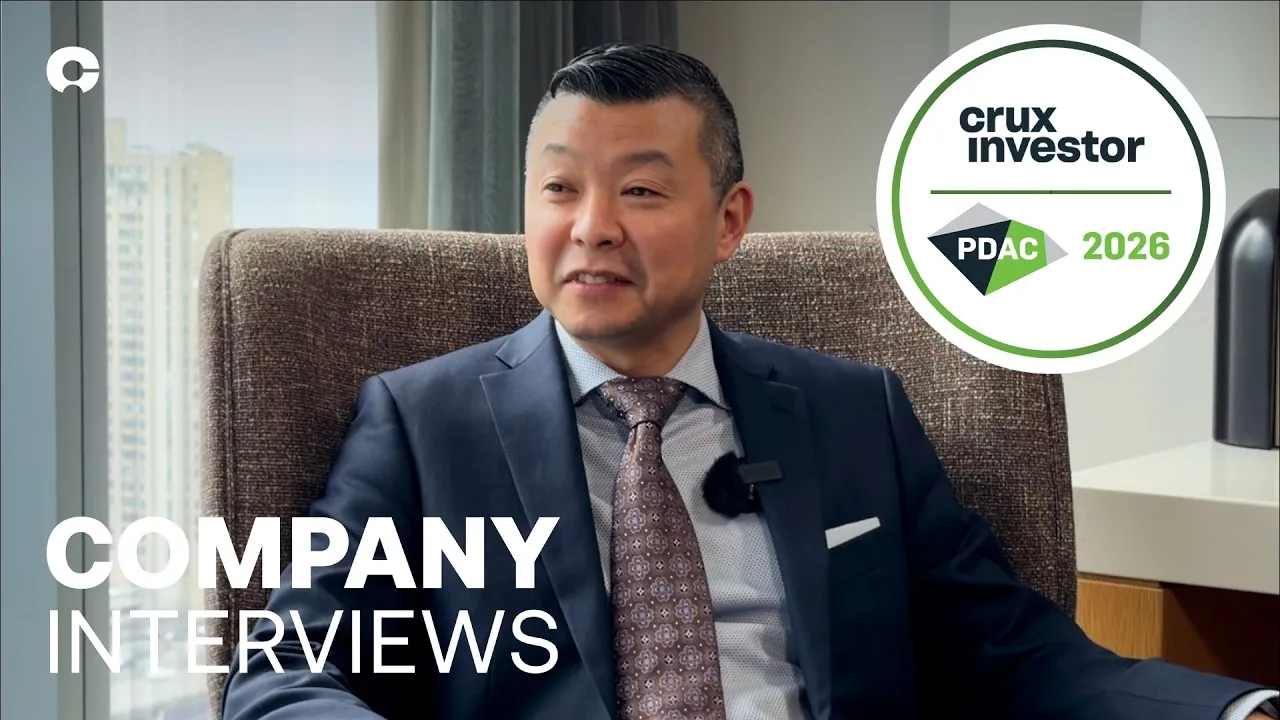
Dryden Gold is entering 2026 with material exploration momentum, a fully funded 32,000-metre drill programme, and a growing body of geological evidence pointing to the potential for a multi-deposit gold system in northwestern Ontario. Maura Kolb, President of Dryden Gold, outlined the company's current exploration status, its evolving understanding of the Gold Rock target area, and its strategic rationale for deferring a formal resource estimate while continuing to build the discovery footprint.
For investors evaluating early-stage gold exploration companies, the interview provides a useful window into Dryden Gold's geological thesis, capital allocation philosophy, and management approach which are material considerations in assessing junior resource companies at the discovery stage.
The Gold Rock Target: From Three Structures to Fifteen
The Gold Rock target area represents the company's primary exploration focus. When the company began systematic exploration of this area two years ago, geologists had identified three mineralised structures. That number has now grown to 15 parallel structures, a development that Kolb described as central to the significance of the most recent drill results. The spatial consistency is significant: it suggests that the mineralised system has lateral continuity over a meaningful distance, rather than representing isolated or sporadic occurrences. The latest hole also pierced the Big Master system, a secondary gold system within Gold Rock, at a true depth of 460 metres, compared to the previous maximum of approximately 100 metres. That result effectively doubles the vertical extent of that target and opens up the question of depth potential across the broader system.
As Kolb explains, drawing on her eight years of experience working in the Red Lake gold camp:
"In high-grade gold, you can drill a whole lot, and if you don't understand the pattern early, you will waste a lot of money [...] You have to be very systematic. You have to understand these patterns quickly to make your drill money really count."
Kolb was clear that the geological significance of the results extends beyond the headline numbers. The team has now begun constructing long sections for each of the 15 structures, and early analysis is showing a consistent pattern of higher-grade mineralisation appearing as vertical continuity within each structure as what Kolb described informally as "towers" of high grade repeating across multiple structures.
The String of Pearls Model and the Path to a Resource
Dryden Gold's broader exploration thesis rests on what Kolb describes as a "string of pearls" model along the 20-kilometre strike length of the Gold Rock corridor. The analogy is drawn from the Red Lake gold camp in Ontario where separate mines represent a repeating pattern of high-grade gold occurrences along a single geological trend. Dryden Gold's hypothesis is that Gold Rock will ultimately host multiple discrete deposits along the same trend.
Evidence for this model has been building as the company discovered the Mud Lake target, which displays a similar geological footprint to the Gold Rock target area. In 2026, the company plans to test two additional anomalies along strike, with Kolb expressing confidence that at least one further deposit-scale discovery will be made.
It is within this context that management's decision to defer a formal resource estimate becomes more legible. Kolb was direct about the reasoning:
"One of the reasons I'm hesitant to do a resource too early is you cap the potential," Kolb explained. "In this market, even though gold's crazy high, you don't really care until you're at a bigger [multi] million-ounce resource."
In the current gold price environment, where market interest in the sector is elevated, the company believes the more value-accretive path is to continue expanding the discovery footprint before committing to a resource process. The implication for investors is that Dryden Gold is explicitly managing its exploration programme toward a resource that is large enough to attract meaningful institutional attention, rather than optimising for an early but potentially modest estimate.
Soil Geochemistry: A New Layer of Targeting Precision
In addition to drilling, Dryden Gold completed a soil geochemistry programme across the entire property in the preceding programme period. Soil sampling is a relatively low-cost technique that maps chemical anomalies at surface as a proxy for underlying mineralisation, and when calibrated against known deposits on the same property, it can provide a statistical basis for predicting where the next discovery is likely to occur.
The results from Dryden Gold's soil programme have been notable on two fronts: the anomalies align strongly with the major structural intersections that the company's geological model identifies as the most prospective areas for high-grade gold, ans the Hyndman target on the eastern side of the property produced a particularly striking result with multiple high-grade soil anomalies extending over a 4-kilometre strike length.
The strength of the Hyndman anomalies prompted the company to add 10,000 hectares of adjacent ground to its land package. Hyndman has now seen its first-ever drill programme. The soil data suggests that the initial drilling tested only a portion of the anomalous footprint, and the company is approaching the broader Hyndman target with expanded ambitions as a result.
Interview with Maura Kolb, President of Dryden Gold Corp.
Capital Allocation and Team Structure
One aspect of Dryden Gold's operating model that distinguishes it from many junior exploration companies is its approach to overhead. The company does not maintain a corporate office; management and technical staff are based in Dryden alongside the project, which Kolb argues provides advantages in geological responsiveness, logistical efficiency, and community relations. Approximately 80% of all capital raised has been directed into the ground rather than into corporate overhead.
This capital allocation discipline is supported by the company's strategic shareholder structure. Centerra Gold holds a 9.9% stake in Dryden Gold, having invested in the company's first year as a strategic partner with an explicit interest in seeing new discoveries made. The backing of a credible strategic partner adds a degree of third-party validation to the geological thesis.
Market Context and Investor Positioning
The backdrop for Dryden Gold's 2026 programme is a gold market that is drawing considerably more generalist investor interest than in recent years. Gold prices remain elevated, and PDAC 2026 reflected that dynamic, with Kolb noting strong foot traffic at the company's core shack and significant interest in the visible gold specimens on display. For a high-grade discovery story, the combination of elevated gold prices and growing market engagement represents a constructive environment in which to be advancing exploration.
Management has indicated that it would like to see the share price appreciate meaningfully before undertaking a larger financing to fund a resource-delineation programme, suggesting that the company's near-term priority is exploration-led value creation through continued discovery, rather than dilutive capital raising at current levels.
The Investment Thesis for Dryden Gold
- Dryden Gold holds an 80,000-hectare land package in northwestern Ontario with demonstrated very high-grade gold mineralisation up to 53,700 g/t providing the grade foundation that underpins economic viability in underground gold mining scenarios.
- The Gold Rock target has expanded from three to 15 identified parallel structures in two years, with spatial continuity confirmed over 500 metres of strike, suggesting a robust and growing mineralised system rather than isolated occurrences.
- The 2026 drill programme of 32,000 metres is fully funded, reducing near-term financing risk and allowing the company to focus capital on the highest-priority targets across the property.
- The "string of pearls" deposit model, supported by the Mud Lake discovery and two additional untested anomalies on the 20-kilometre trend, provides a credible pathway to a multi-million ounce resource, a scale threshold at which institutional interest typically becomes significant.
- A completed property-wide soil geochemistry programme has materially improved targeting precision and identified new high-priority areas, including the Hyndman target, which has seen only preliminary drilling against a 4-kilometre anomalous footprint.
- Strategic backing from Centerra Gold at 9.9% provides third-party geological and financial validation without creating excessive near-term dilution pressure.
- Management's deliberate deferral of a resource estimate until sufficient footprint is established reflects disciplined project stewardship and positions the company to publish a resource at a scale that is more likely to attract institutional interest.
- Approximately 80% of capital raised has been deployed directly into exploration, reflecting a lean corporate structure and a preference for geological value creation over corporate overhead.
- Investors with a high-risk tolerance and a longer-dated time horizon (12–24 months) should monitor the 2026 drill results closely, particularly any announcements relating to the two untested strike anomalies and the ongoing Hyndman programme, as these represent the most material near-term catalysts for re-rating.
- Position sizing should reflect the early-stage, discovery-phase nature of the asset; Dryden Gold is a speculative investment appropriate for portfolios with dedicated junior exploration exposure rather than as a core holding.
Macro Thematic Analysis
Gold's resurgence as a focus asset for both institutional and retail investors has created a more receptive environment for junior exploration companies than at any point in the past decade. At PDAC 2026, that shift in sentiment was tangible, with high-grade gold projects attracting a level of generalist interest that was notably absent from the previous two conferences.
"Everyone is asking about gold, and if they aren't a shareholder, they're looking at you." - Maura Kolb, President of Dryden Gold Corp.
For discovery-stage companies operating in this environment, the strategic implications are significant. Elevated gold prices improve the economic sensitivity of high-grade underground deposits, widening the range of geological outcomes that translate into viable mining scenarios. They also increase the pool of available capital, as generalist investors seeking exposure to gold's upside increasingly look beyond the majors and mid-tiers to the junior exploration sector, where leverage to gold price movements is most pronounced.
Dryden Gold's positioning within this thematic is well-considered. High-grade gold as the company's defining characteristic is precisely the asset type that generates the most interest in a bull market for the metal, because it implies lower unit mining costs and stronger margins at any given gold price. The company's focus on building a multi-deposit system in a proven Canadian jurisdiction, with established infrastructure and a supportive community relations framework, addresses several of the risk factors that have historically caused generalist investors to shy away from junior exploration.
TL;DR
Dryden Gold is a discovery-stage junior explorer with a high-grade gold project in northwestern Ontario. In two years, its primary target has grown from three to 15 mineralised structures, a new hole has extended the Big Master system to 460 metres depth, and a property-wide soil programme has opened up significant new targets. The 2026 programme is 32,000 metres fully funded, with no resource estimate planned until the full "string of pearls" footprint has been established. Management is lean, technically credible, and deploying approximately 80 cents of every dollar raised directly into exploration. The gold price environment is supportive, institutional interest in the sector is growing, and the key catalysts: results from two untested anomalies on the 20-kilometre trend and the expanded Hyndman programme, are expected to materialise through the 2026 field season. This is a speculative, early-stage investment with a 12–24 month horizon for meaningful news flow.
Frequently Asked Questions (FAQs) AI-Generated
Management has made a deliberate decision to defer a formal resource estimate until the full extent of the Gold Rock corridor has been more thoroughly delineated. The reasoning is that publishing a modest, early-stage resource risks capping market expectations at a point when the geological system may be substantially larger than what has been drilled to date. The company's "string of pearls" model — targeting multiple deposits along a 20-kilometre trend — requires additional discovery work before a resource estimate would reflect the true scale of the potential system. A resource process is being targeted for 2027, by which point the company expects to have a clearer picture of how many deposits the trend may host.
The "string of pearls" is management's geological model for the Gold Rock corridor, drawing on the analogy of the Red Lake gold camp, where three separate mines each representing a discrete high-grade deposit are hosted along a single geological trend. Dryden Gold's hypothesis is that the 20-kilometre Gold Rock trend will ultimately host multiple such deposits. The Mud Lake discovery last summer provided the first independent confirmation of this model. For investors, the significance is that a multi-deposit system of this type has the potential to support a resource measured in multiple millions of ounces at which institutional capital typically engages.
The 32,000-metre 2026 programme is fully funded. Management has indicated a preference for the share price to appreciate meaningfully before undertaking a larger financing to fund a resource-delineation programme, suggesting that near-term dilutive capital raising is not anticipated at current levels. The strategic 9.9% stake held by Centerra Gold, established in the company's first year, provides a degree of financial stability and third-party validation without creating dilution pressure in the near term.
Hyndman is a target on the eastern side of Dryden Gold's property that emerged as a high-priority area following the completion of the property-wide soil geochemistry programme. The target features multiple high-grade soil anomalies extending over a 4-kilometre strike length — a footprint comparable in scale to the Gold Rock target area at an equivalent early stage of exploration. The strength of the Hyndman anomalies prompted the company to add 10,000 hectares of adjacent ground. Hyndman has now seen its first-ever drill programme, but the soil data indicates that initial drilling tested only a portion of the anomalous system, making it a significant source of potential near-term newsflow.
Several factors distinguish Dryden Gold from a typical junior explorer. The grade of the mineralisation up to 53,700 g/t gold is at the high end of what is encountered in the junior exploration space. The company has no corporate office, with management and technical staff based in Dryden alongside the project, and has directed approximately 80% of all capital raised directly into exploration rather than overhead. The technical team has direct experience in high-grade gold systems, specifically Red Lake, which management argues is essential for interpreting and efficiently drilling a complex, multi-structure system. A strategic partnership with a credible institutional shareholder at 9.9% further differentiates the company's profile relative to peers at a comparable stage of development.
Analyst's Notes





Subscribe to Our Channel










Stay Informed






















