




Why P2 Gold Is Running Its 2026 Programmes in Parallel & What It Is Targeting in Return


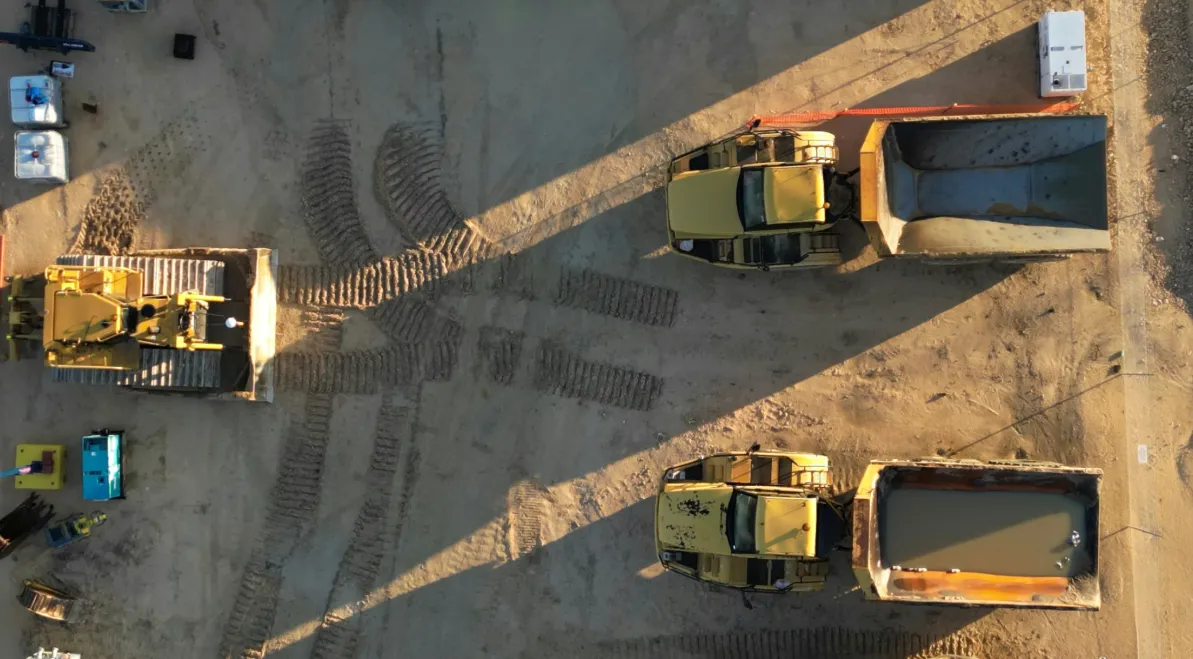
P2 Gold's CEO outlines the parallel workstream strategy behind Gabbs' 2026 schedule and what a completed feasibility study could mean for the stock.
- P2 Gold is running its 2026 drill program, metallurgical and geotechnical work, permitting studies, and feasibility study (FS) simultaneously, a parallel workstream strategy designed to compress the development timeline toward a construction start in late 2027 and first production in 2028 to 2029.
- The infill and expansion drill program has been expanded from approximately 15,000 metres to closer to 25,000 to 30,000 metres, with an updated mineral resource estimate (MRE) targeted by the end of summer 2026, feeding directly into the FS targeting year-end completion.
- The October 2025 preliminary economic assessment (PEA) outlined an after-tax net present value of US$942.9 million at a 5% discount rate (NPV5%) against a March 2026 market capitalisation of C$175.6 million, with management targeting a re-rating toward C$250 to C$1 billion through completion of the FS.
- P2 Gold has started environmental baseline studies ahead of finalising its Mining Plan of Operations, an acknowledged execution risk that management has accepted in order to accelerate the permitting timeline toward construction.
- Gabbs is one of a limited number of advanced development projects in Nevada capable of producing more than 100,000 ounces of gold annually, with paved highway access, a transmission line, secured water rights, and a copper by-product providing infrastructure and revenue diversification.
Setting the Agenda: What Investors Want to Hear
At an industry conference, Joseph Ovsenek, President and Chief Executive Officer of P2 Gold Inc. (TSX-V: PGLD | OTCQB: PGLDF), fielded a familiar set of questions: What does the company expect to achieve in 2026, and when could production begin? He indicated that the company’s objective is to advance the Gabbs project to a stage where gold and copper production is possible. That framing set the context for a discussion covering drilling progress, permitting strategy, potential throughput options, and the gap between the company’s current valuation and where management believes it could stand following a completed feasibility study (FS).
An Aggressive Target Is Still a Target
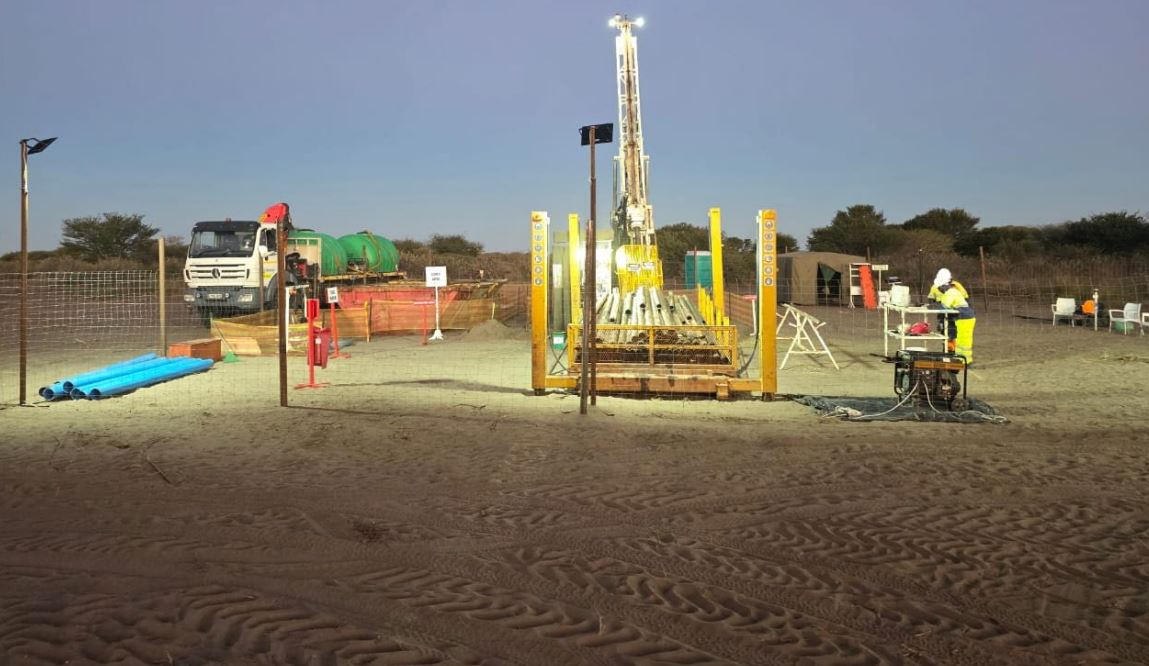
The 2026 work plan at Gabbs is not a light schedule. An infill and expansion drill program that started at approximately 15,000 metres has been expanded to closer to 25,000 to 30,000 metres, reflecting confidence in results to date. The expansion reflects results that have met or exceeded expectations. Recent drilling at the Lucky Strike Zone returned intercepts of up to 1.61 grams per tonne gold and 0.49% copper over 21.34 metres, supporting the decision to increase the program scope. Metallurgical and geotechnical drilling is running in parallel. An updated mineral resource estimate (MRE) is targeted by the end of summer, feeding directly into an FS targeting completion by year-end. Permitting work as environmental baseline studies, a filed Mining Plan of Operations, and active engagement with the Bureau of Land Management is running alongside all of it.
Ovsenek noted the company's approach to goal-setting:
"We set our targets, often they're very aggressive, but we'd rather have an aggressive target and maybe miss it by a bit than set something way out and float along."
That philosophy is evident in how the 2026 programme is structured. Rather than waiting for each workstream to finish before starting the next, the team is running them concurrently, a deliberate choice that compresses the overall schedule but introduces coordination complexity and increases the probability of rework, particularly on permitting inputs that may need revision once the final mine plan is confirmed.
The Permitting Bet: Start Early, Accept the Risk
The critical path for Gabbs, as management framed it, is environmental permitting. Nevada is a top-tier mining jurisdiction, ranked number two in the world for mining, but baseline environmental studies take time, and the standard sequence is to wait for a finalised Mining Plan of Operations before commissioning them.
P2 Gold is not following the standard sequence. The company has hired local consulting firms with direct Nevada mining experience to run baseline studies in advance of the finalised mine plan. The company has acknowledged the risk that some work may need to be repeated and has decided it is worth accepting.
Ovsenek was direct about the logic:
"We'll take that risk in order to save time because, as you say, time is money."
The targeted outcome is a construction start in late 2027, with first production in 2028 to 2029, subject to financing and permitting.
The Valuation Gap & What Closes It
The October 2025 preliminary economic assessment (PEA) outlined a 14.2-year mine life at 9 million tonnes per year, averaging 109,000 ounces of gold and 15,000 tonnes of copper annually, with an after-tax net present value of US$942.9 million at a 5% discount rate (NPV5%) and an after-tax internal rate of return (IRR) of 33.8%, at base case metal prices of US$2,350 per ounce gold and US$4.50 per pound copper. Total preproduction capital is estimated at US$382.7 million. At the March 2026 market capitalisation of C$175.6 million, the gap between current trading value and the PEA's base case NPV is substantial.
Ovsenek's view is that the FS is the mechanism that begins to close it. Management is targeting a re-rating toward C$250 to C$1 billion through completion of the FS. That re-rating depends on whether the market finds the study credible. As Ovsenek put it, a feasibility study must be rooted in reality rather than serving as a marketing document, the distinction he draws between a study that can support a construction decision and one that cannot. The company is also evaluating increasing throughput to 12 million tonnes per year, targeting approximately 150,000 ounces of gold and 45 million to 50 million pounds of copper annually, a scenario that would strengthen the NPV case if confirmed in the FS.
Scarcity as a Structural Advantage
Underpinning the valuation thesis is a supply argument management returned to more than once. Capital flowing into the gold sector has been moving down the risk curve, from majors to mid-tiers to juniors, and now into developers. But the pool of advanced development projects capable of producing more than 100,000 ounces of gold annually in a stable jurisdiction is limited. As Ovesenek stated:
"There's not really a lot of projects of size where you can get north of 100,000 ounces of gold in Nevada."
Gabbs has asset-level characteristics that reinforce that argument: paved highway access, a transmission line crossing the property, secured water rights, and a copper by-product that adds revenue diversification. Nevada's regulatory environment is predictable as Ovsenek contrasted it directly with jurisdictions like Mexico, where the company stopped operating in 2009.
When asked about the prospect of a takeover before Gabbs reaches production, Ovsenek was clear about the company's intent:
"Our motto or formula is you build it. You plan on building it. And if somebody wants to come along and pay that the shareholders like, well then they can have it. But in the meantime, you create value, you have to move forward."
The management team brings a track record of advancing assets at Pretium Resources Inc. and Silver Standard Resources Inc., possessing experience directly relevant to what Gabbs requires over the next three years. Management and board ownership stand at 15.9% of shares outstanding as of March 2026. The FS due at year-end will determine whether the re-rating Ovsenek is targeting materialises and whether the parallel workstreams running through 2026 have held together on schedule.
FAQs (AI-Generated)
To compress the development timeline. Management has accepted the risk that some baseline work may need to be repeated, judging that starting early saves more time than the potential rework costs.
At a March 2026 market capitalisation of C$175.6 million against a PEA base case after-tax NPV of US$942.9 million, the gap is substantial. Management is targeting a re-rating toward C$250 to C$1 billion through completion of the FS by year-end 2026.
He is distinguishing a study rooted in operational reality, one that a construction decision can be based on, and one that presents optimistic assumptions without grounding in what the project can actually deliver.
Management is targeting a construction start in late 2027 and first production in 2028 to 2029, subject to financing and permitting. The MRE due by the end of summer 2026 and the FS due by year-end are the two sequential milestones that must hold for that schedule to remain on track.
Few advanced development projects in Nevada can target production above 100,000 ounces of gold annually. Gabbs combines that scale with paved highway access, an on-site transmission line, secured water rights, and copper by-product revenue - infrastructure and diversification attributes that are not easily replicated at comparable development-stage assets.
Analyst's Notes





Subscribe to Our Channel





Stay Informed






















