




$5 Billion to Stand Still: BHP's Escondida Replacement & the Supply Gap



BHP's results imply about $40,000 a ton for new copper capacity. Fitzroy Minerals targets Buen Retiro production in early 2028 on a low-capex route.
- BHP's copper division reported margins of around 70% on an EBITDA basis, up 54% year on year, in a year when its own copper output fell 3%.
- Guidance points to copper production of 1.6 million to 1.8 million tons next year, down from 1.95 million tons.
- Growing BHP's copper output by 600,000 tons a year implies a cost of about $40,000 per ton of installed annual capacity.
- At Escondida, $5 billion in spending on a replacement concentrator returns production to its starting level.
- Fitzroy Minerals is targeting production at Buen Retiro in early 2028, with a maiden mineral resource estimate due in the first quarter of 2027.
BHP released its full-year results on August 18, 2026, and the copper numbers inside them point in two directions at once. Management puts the copper division's EBITDA margin at around 70%, up 54% year on year, in a reporting year in which the division's copper production fell by 3%. That combination is the starting point for a reading of the copper market from Fitzroy Minerals (TSXV: FTZ | OTCQX: FTZFF | FSE: C3Y), which is working toward copper production in Chile in early 2028. The argument turns on the cost of building a ton of new copper capacity.
A Falling Production Line Behind the Margins
The production numbers underneath BHP's margin expansion move in the opposite way to the margins themselves. Management's read of the results has BHP producing 1.95 million tons of copper in the year just reported, against guidance for the coming year of 1.6 million to 1.8 million tons. The company's own forecast is therefore for a decline in a market where BHP and other commentators predict a 10 million-ton-per-annum supply deficit by 2035.
Demand is not the variable in question. According to management, non-traditional copper demand is growing at 6.5% per annum, and the deficit forecast assumes that growth will continue. What the results describe is a supply side that cannot meet it, and the reason shows up in the capital budget instead of in the geology.
The Price of a Ton of New Capacity
BHP's growth spending shows what the industry pays for additional supply. Based on management's figures, BHP is committing $11 billion per annum over the next 9 years, of which about $4 billion per annum goes to growth capital. Copper accounts for 55% of that growth capital, rising to 66% when non-operated joint ventures are included. Against that spending, the stated target is to lift copper output from 1.4 million tons a year to 2 million tons by 2035, an increase of 600,000 tons.
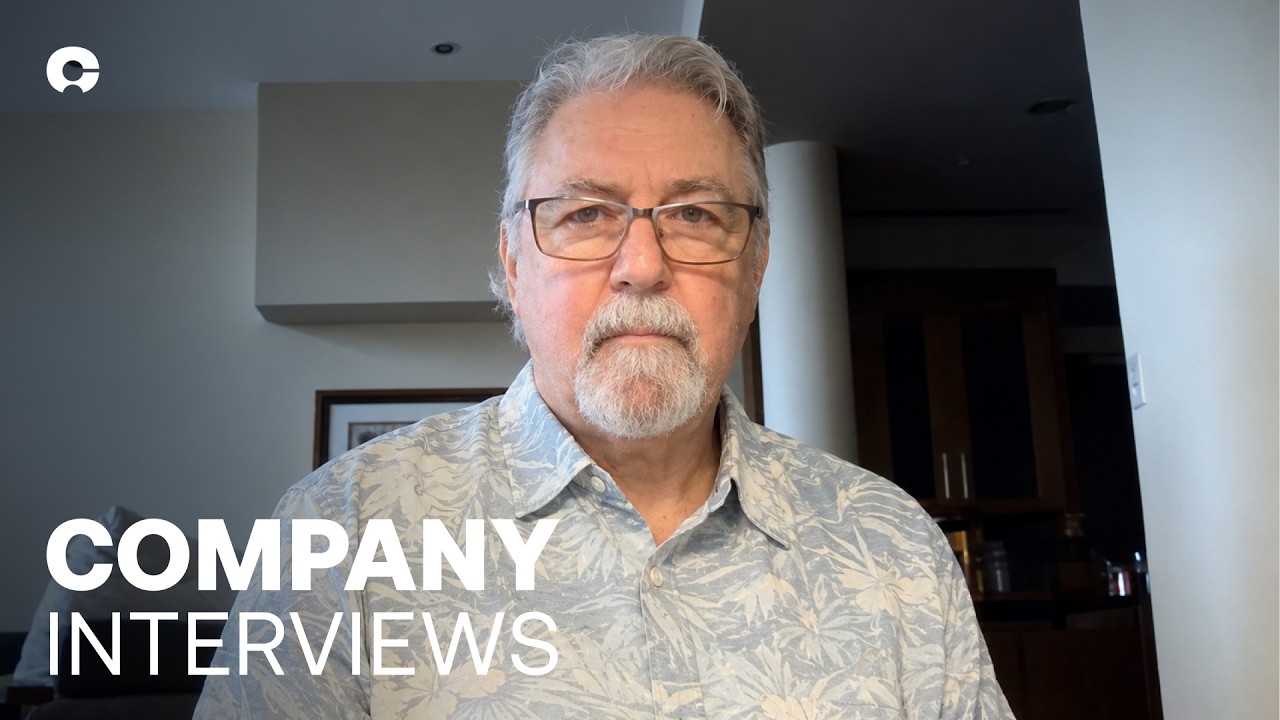
President and Chief Executive Officer of Fitzroy Minerals, Merlin Marr-Johnson, measures BHP's growth capital against that 2035 target:
"You can effectively do some maths and show that they're going to spend $24 billion to get about 600,000 tons of new copper production, which equates to a cost of around $40,000 per ton of installed annual capacity."
The same arithmetic runs more slowly in the South Australian copper division. Management's calculation takes production there from 320,000 tons to 500,000 tons for a low-case $9 billion, which puts installed capacity at around $50,000 per ton at best and $75,000 per ton on mid-case capital and mid-case output. That project has not yet been sanctioned.
Escondida, Spence & Capital That Buys No New Supply
A second category of spending does not add tons to the market at all. Escondida produces 1.3 million tons per year, and management estimates that replacing its aging concentrator would cost around $5 billion. The production path through that replacement drops from 1.1 million tons to 800,000 tons, then returns to 1.1 million tons.
Marr-Johnson reduces the problem to that single concentrator:
"So, they're spending $5 billion to stand still. And that is the copper industry in a nutshell."
Spence looks cheaper and is not. The project there adds 40,000 to 60,000 tons per year for $600 million to $900 million, according to management, which, on paper, represents a capital intensity of $11,000 to $18,000 per ton of installed capacity. That spending extends the life of an asset that is otherwise declining, so the tons are maintenance and not new production. Neither category of spending lifts world copper mine production, which is the constraint behind the deficit forecasts.
Buen Retiro & the Low-Capex Route to Output
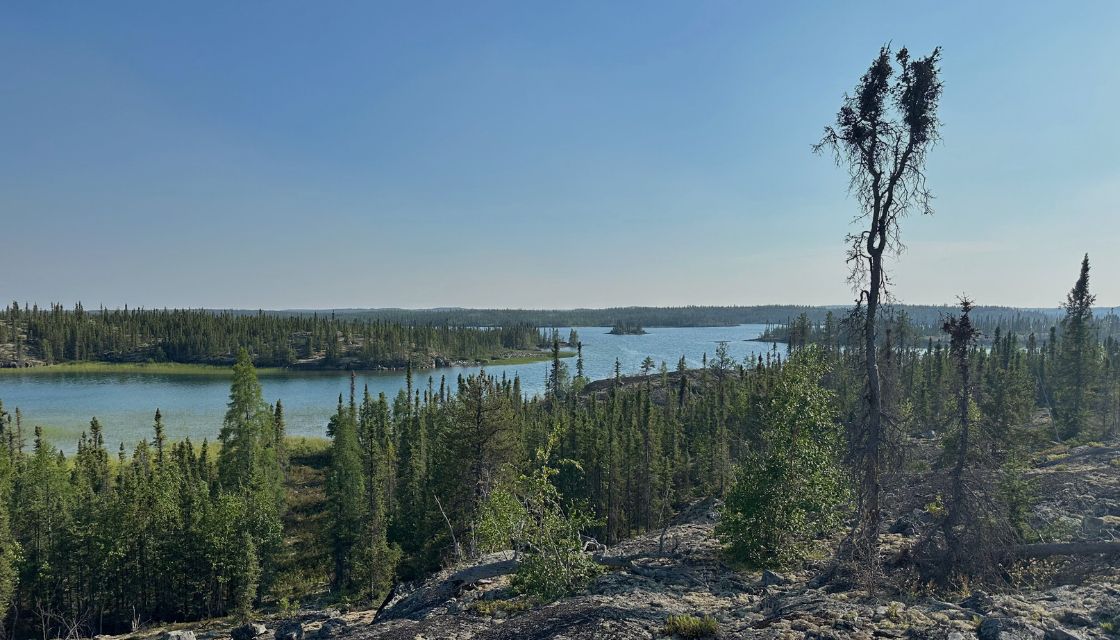
Fitzroy's project works the opposite way. Buen Retiro is an iron oxide copper gold deposit near Copiapó, Chile, with a deposit style similar to the nearby Candelaria and Mantoverde mines, and the development route is heap leaching. The ground is district-scale in its mineralization, low-lying, served by existing infrastructure, and uninhabited.
Processing is the part that avoids a build. Under a joint development plan with Pucobre, the Planta Biocobre plant has offered 80% availability, and it is one of three underutilized plants within a 90-kilometer (km) radius, with operating cost data shared on an open-book basis. Management also puts the industry build time at about 20 years for a copper project, given the complexity of social and environmental permitting.
Marr-Johnson places his own project on the other side of that arithmetic:
"We've got near-term production planned at Buen Retiro. It's low CapEx."
Fitzroy also holds the Caballos copper porphyry project in Chile, where a second phase of drilling is planned from the fourth quarter of 2026.
Drilling Closed Out for the Resource Estimate
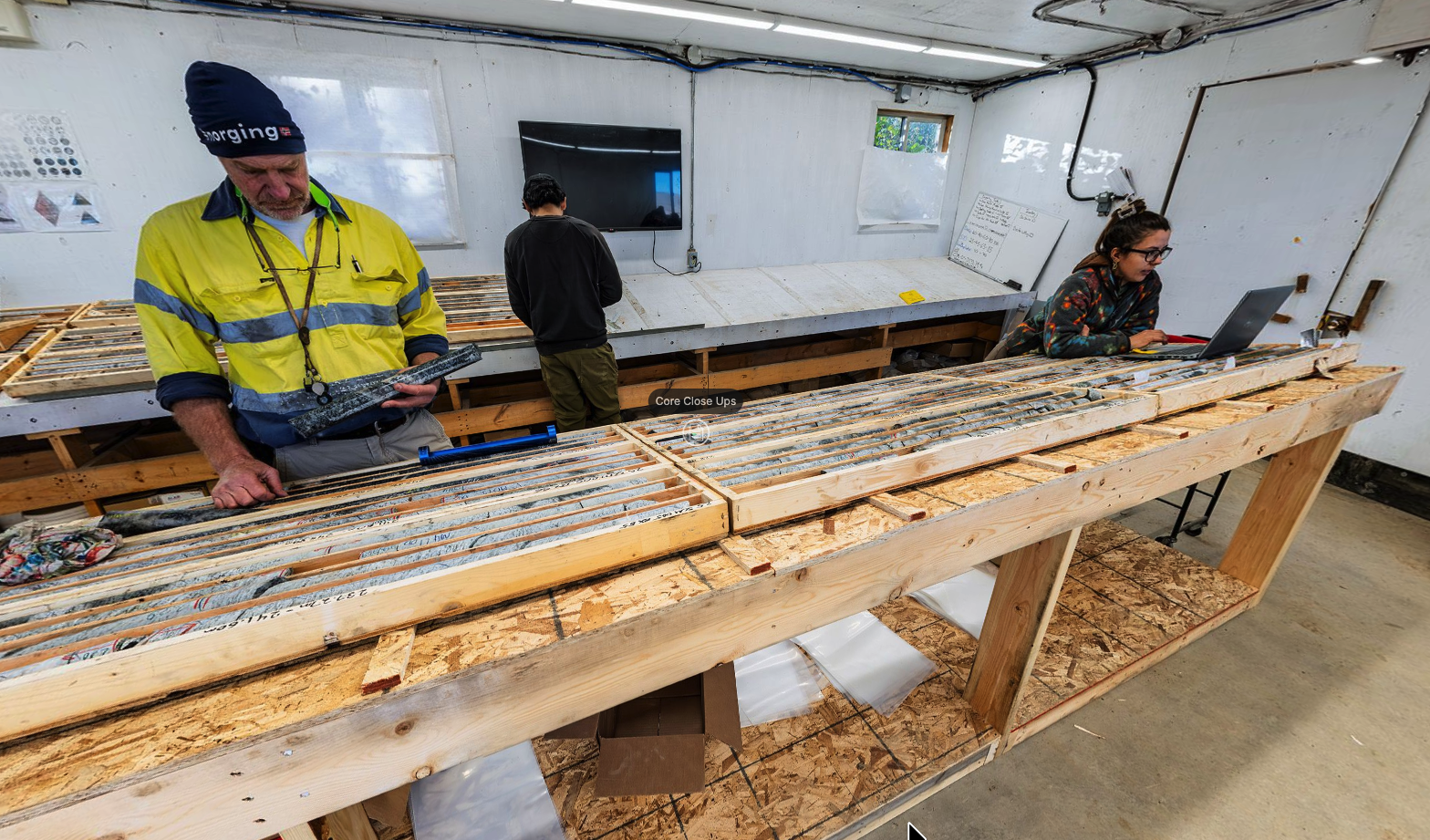
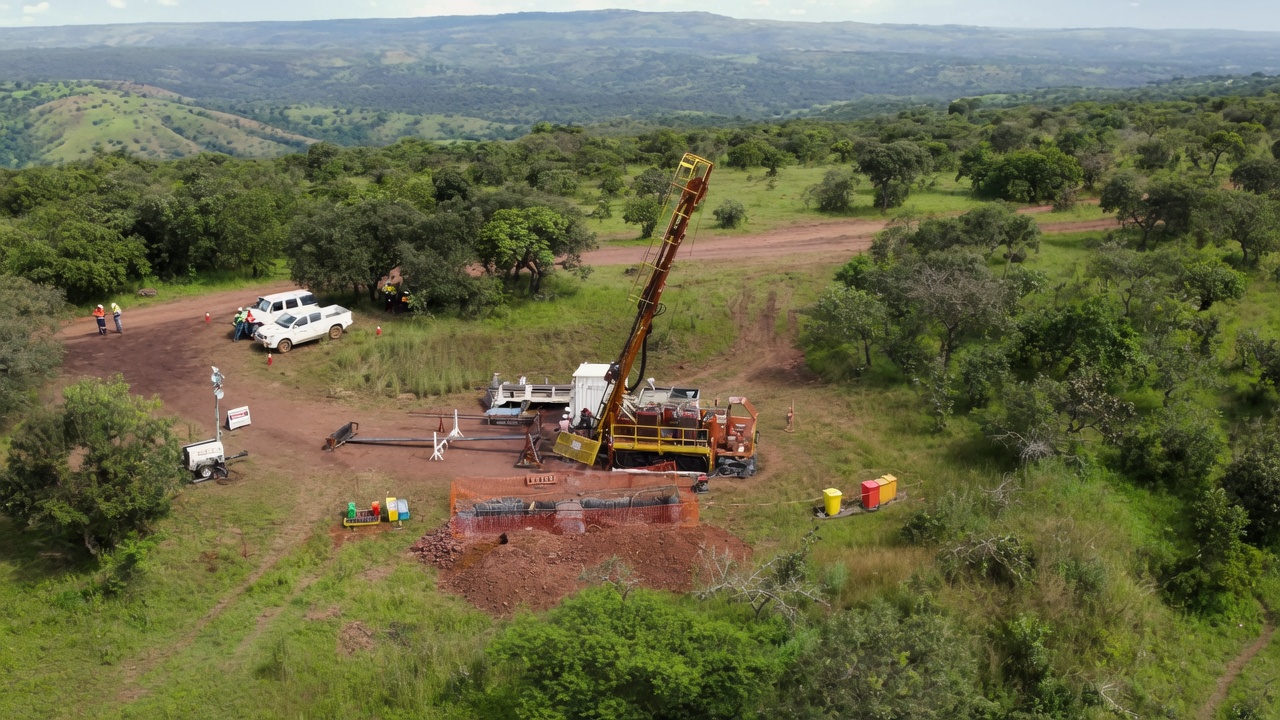
The current program at Buen Retiro is being closed out and not extended. Fitzroy has completed 92 diamond drill holes for 16,376 meters (m) since the start of February 2026, is on track for 22,000 m across the year with a further 6,000 m to go, and has 4 rigs on site. Two diamond rigs are expected to leave in September, having reached a data cut-off that allows time for logging, assaying, and inclusion in the maiden mineral resource estimate (MRE). From the fourth quarter of 2026, the site drops to 2 rigs, one on shallow regional targets and one on deep targets, with the stated focus on defining measured and indicated resources able to support a profitable development plan.
The results feeding that estimate include 8.8 m at 3.70% copper from 30 m, within which 1 m graded 21.84% copper, the highest grade recorded to date at Buen Retiro. Elsewhere, 105 m at 0.74% copper from 58 m extended the eastern part of the Tenorita area 100 m north, and 83 m at 0.46% copper from 69 m came from the boundary between the Manto Negro and Nativo areas. A rig using reverse circulation drilling, which returns rock chips instead of solid core, hit native copper at 239 m depth and took the main mineralized trend 200 m further, to 1.9 km along strike.
Two of those results are still pending assay: the reverse circulation intersection and one hole with little visible mineralization. No mineral resource, capital cost, or operating cost has been published for Buen Retiro, so the comparison to BHP's dollars per ton is limited to a qualitative level.
What to Watch Over the Next Three Quarters
Three documents govern the next twelve months at Buen Retiro. The environmental submission is targeted for the fourth quarter of 2026, the MRE for the first quarter of 2027, and the pre-feasibility study (PFS) for the second quarter of 2027, with financing behind them. The drill-out of the Tenorita area was due to be completed in August, the step that closes the data set on which the MRE is built.
FAQs (AI-Generated)
Analyst's Notes





Subscribe to Our Channel









.jpg)
Stay Informed


