




Marimaca Copper's 13-Year Plan Front-Loads Grade, Margin & Cash Flow


Marimaca Copper's study holds grade and margin to year 10, then steps down. Stockpiled ore feeds the tail, and district material would extend the plan.
- Marimaca Copper's definitive feasibility study (DFS) on the Marimaca Oxide Deposit (MOD) supports a 13-year mine life from reserves of 179 million tonnes (Mt) at 0.42% total copper.
- Head grade holds between 0.42% and 0.54% through year 10, then falls to 0.26% in year 11 and 0.18% in years 12 and 13.
- Earnings before interest, taxes, depreciation, and amortization (EBITDA) margin declines from 69% in year 4 to 25% in year 12.
- Mining ends in year 11, while processing continues through year 13 on stockpiled ore.
- District material that could extend the plan has no mineral resource estimate, with a maiden Pampa Medina figure targeted for early 2027.
The Reserve Base Behind the 13-Year Plan
Marimaca Copper (TSX: MARI | ASX: MC2) built the 13-year schedule for the Marimaca Oxide Deposit (MOD) on classified material alone. The definitive feasibility study (DFS) draws on proved and probable reserves of 179 million tonnes (Mt) at 0.42% total copper for 748,000 tonnes of contained copper, with the production target 52% underpinned by the proved category and 48% by the probable category. Measured and indicated resources reach 214 Mt at 0.40% copper for 854,000 tonnes of contained metal, reported inclusive of the declared reserve at a cut-off grade of 0.10% total copper.
Inferred material of 21.2 Mt at 0.29% copper is excluded from the reserve, from the production target, and from the forecast financials, and it moves through the pit as waste. Conversion has run in one direction for a decade: measured and indicated tonnes rose from 59% of the total in 2017 to 93% in 2025, supported by more than 135 kilometres (km) of drilling since 2016, and 88% of the resource converted to reserve. Both estimates take an effective date in August 2025, which precedes the 2026 drilling that the company's growth case depends on, so nothing found this year contributes a tonne to the 13-year schedule.
Grade & Throughput Across the Mine Plan
The two halves of the study's own comparison are not alike. Across the first 5 years of steady state, years 2 to 6, head grade averages 0.52% copper at 77% recovery, delivering 50,000 tonnes per annum (tpa) of recovered copper against a production target of 50,000 tonnes per annum of copper cathode. Over the full life of mine, the same three measures read 0.42%, 72% and 43,000 tpa. The average annual processing rate moves in the opposite direction, rising from 12.4 Mt in the early window to 14.1 Mt over the life of mine.
Year by year, the decline concentrates at the end. Head grade remains within a band of 0.42% to 0.54% from year 1 through year 10, finishing that stretch at 0.45%. It then drops to 0.26% in year 11 and 0.18% in each of years 12 and 13. Throughput does not fall with it: processing holds at 16,000 kilotonnes (kt) every year from year 7 through year 12, before a final 11,035 kt in year 13.
The cathode target reflects the same split. Steady-state production of 50,000 tpa applies to years 2 to 8, and the first 10 years average 48,000 tpa, including a 1-year ramp-up period.
Feed Sources in the Final 3 Years
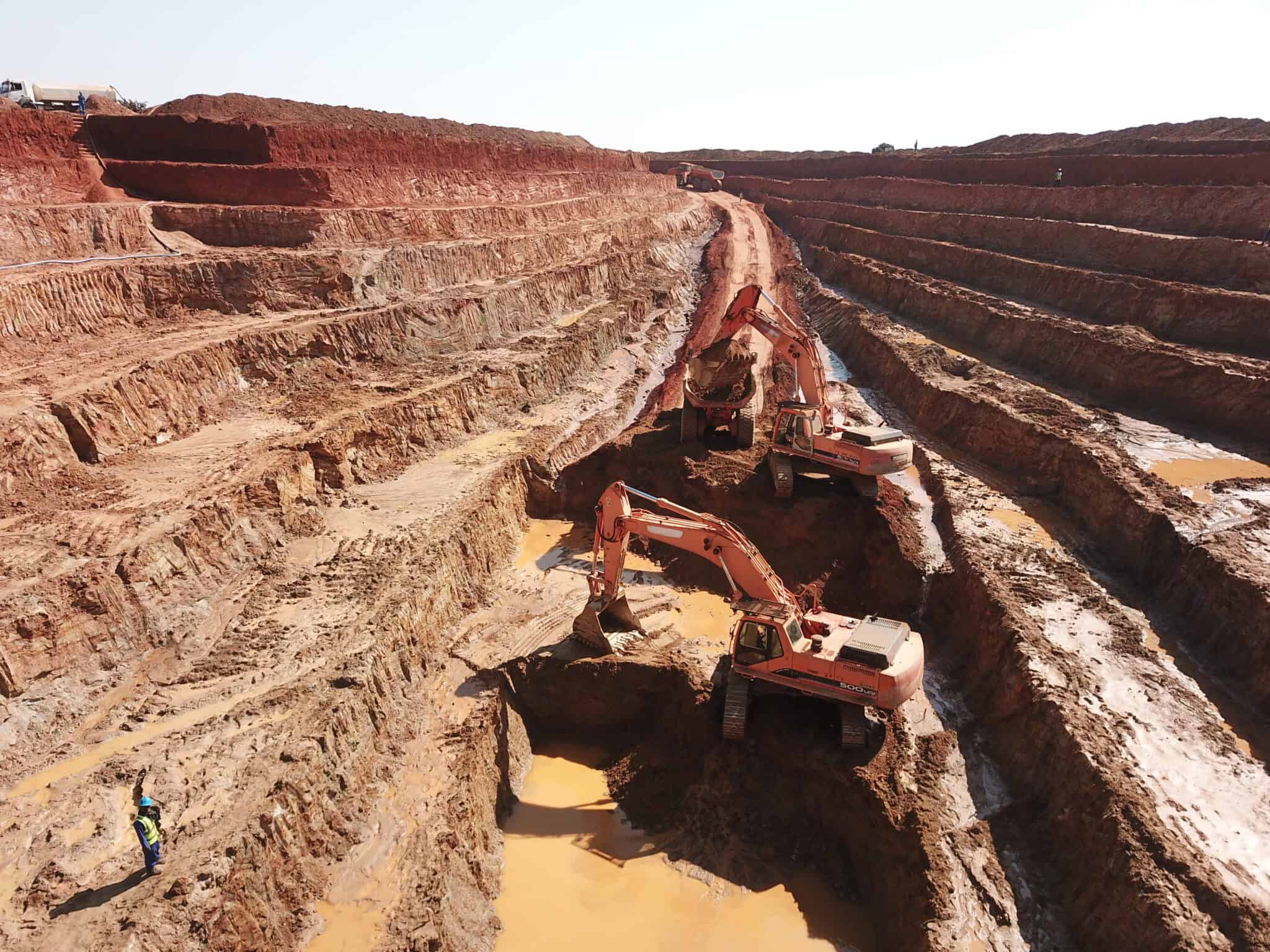
Mining and processing stop on different schedules, and the gap between them defines the tail. The mining series ends in year 11, when 6 Mt of combined ore and waste is moved, against 35 Mt in year 9 and 28 Mt in year 10. Processing continues for 2 years after the last material leaves the pit.
The strip ratio traces the same wind-down, easing from 1.23 in years 4 and 6 to 0.53 in year 10 and 0.24 in year 11, against a life-of-mine figure of 0.82x including pre-stripped material. Over the first 5 years of steady state, that ratio is 0.91x, so the early plan moves proportionally more waste than the life-of-mine average would imply, and the deferred stripping that supports it accounts for US$64 million in sustaining capital.
Mill feed in the closing years comes off the stockpile. The processing profile separates ore drawn from the pit from ore drawn from the stockpile, and stockpiled material dominates years 12 and 13 and most of year 11. The company does not publish the tonnage split between the two series, so the stockpile volume, its grade, and its rehandle cost are all absent from the disclosed plan.
Margin Structure Across the Two Halves of the Plan
At a long-term copper price of US$4.30 per pound, the study yields a post-tax net present value (NPV8%) of US$709 million, a 31% internal rate of return (IRR), and a 2.5-year payback. Priced at the 3-month average of US$5.05 per pound for copper as of August 25, 2025, with a US$0.10-per-pound cathode premium, the same plan returns US$1.1 billion, 39%, and 2.2 years. A sensitivity grid running operating cost against copper price puts the return between 15% and 43%.
Those are averages over a profile that does not hold flat. Earnings before interest, taxes, depreciation, and amortization (EBITDA) reach US$335 million in year 4 at a 69% margin and stay above US$300 million through year 6. By year 9, the figure is US$236 million at 53%, and by year 11, it is US$85 million at 33%. Years 12 and 13 deliver US$51 million and US$39 million at margins of 25% and 27%, respectively.
Post-tax unlevered free cash flow peaks at US$283 million in year 3 and holds above US$140 million in every year from year 2 through year 10, then falls to US$76 million, US$33 million, and US$34 million across years 11 to 13, closing with a US$48 million outflow in year 14. Unit costs move against the profile: C1 cash costs average US$1.45 per pound across the first 5 years of steady state and US$1.84 per pound over the life of mine, while the all-in sustaining cost (AISC) climbs from US$1.97 to US$2.29 per pound on those same two bases. Average annual EBITDA falls from US$326 million to US$241 million between the two windows, and post-tax average annual free cash flow falls from US$222 million to US$160 million.
Plant Capacity Specified Above the Reserve
Initial capital of US$587 million provides for throughput that the approved reserve does not supply. The estimate comprises US$437 million in direct costs, US$80 million in indirect costs, US$17 million in owner costs, and US$53 million of contingency, with a further US$77 million of expansion capital carried outside it. The primary and secondary crushers are oversized to enable cost-effective expansion in year 6. Dump capacity is specified as sufficient for mine-life extensions. The estimate falls within the accuracy guidelines of -20% to +25%, with budget quotes obtained for 80% of mechanical equipment and a 10% contingency applied to direct and indirect costs.
Mine and plant capacity step up together. Initial mine production capacity of 25 Mt per annum expands to a peak of 35 Mt in year 4 to facilitate crusher expansion, and a second-phase expansion within the study increases the tertiary crushing circuit from 2,009 tonnes per hour to 2,679 tonnes per hour and adds 2 heap leach cells to the initial 12. The solvent extraction and electrowinning facility, which strips copper from solution and plates it as a cathode, is designed for nominal production of 50,000 tpa. Sustaining capital of US$529 million includes US$259 million of infrastructure, and the initial capital intensity of US$11,700 per tonne of copper production capacity places the project second among 6 North and South American developments benchmarked by the company, behind El Pilar at US$9,400.
Chief Executive Officer of Marimaca Copper, Hayden Locke, connects the current drilling to the resource that headroom would draw on:
"All of the drilling that we've done at Pampa Medina has extended that oxide resource."
The oxide material behind that drilling is outside the reserve supporting the 13-year schedule, and a hub-and-spoke district plan is the route by which it would reach the plant. Pampa Medina lies approximately 28 km east of the deposit, which itself is within 25 km of the Port of Mejillones.
The District Inventory & What It Lacks
The inventory that would fill the plant's spare capacity is uneven in quality. Five near-mine oxide exploration targets carry conceptual ranges: Cindy and Mercedes at 30 Mt to 40 Mt each grading 0.3% to 0.4% total copper, Robles and Tarso at 20 Mt to 30 Mt each grading 0.2% to 0.3%, and Sierra at 20 Mt to 30 Mt grading 0.3% to 0.4%. Those ranges are volumetric calculations built on drilling completed at each target and a density assumption of 2.6 grams per cubic centimetre. They date from January 2022, and the company states they have insufficient drill density to define a mineral resource and are too speculative to meet reporting standards.
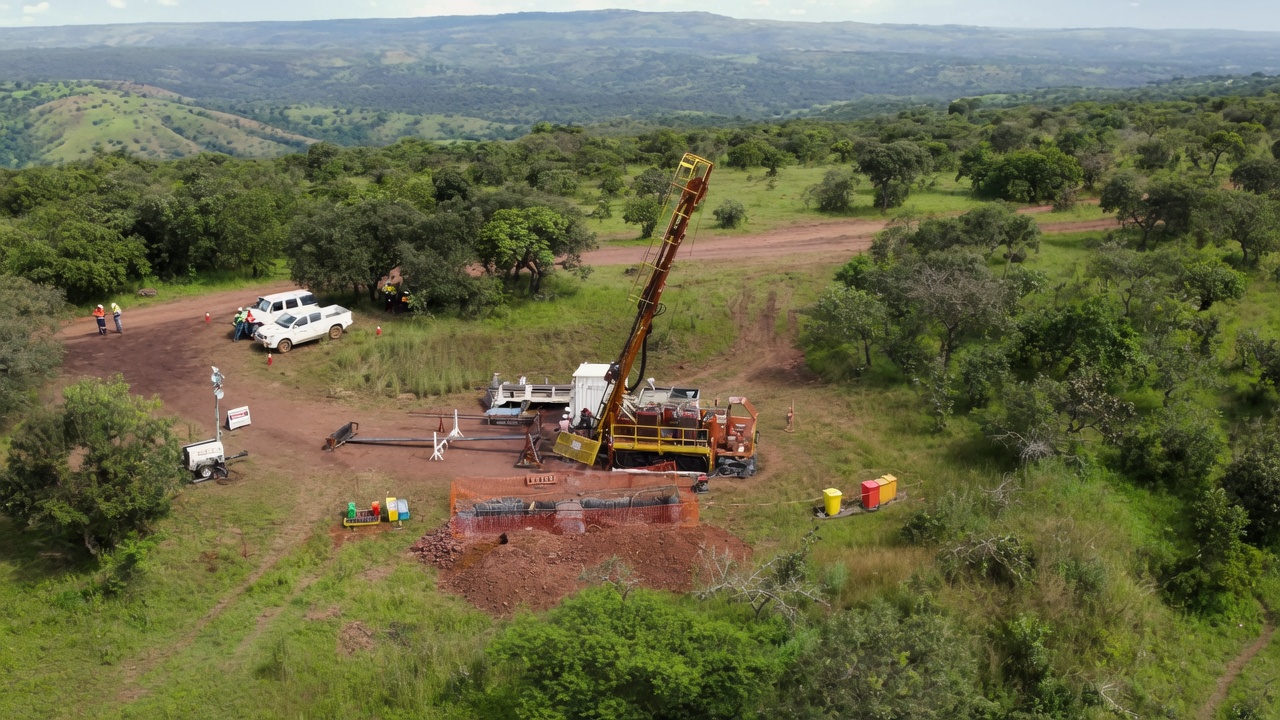
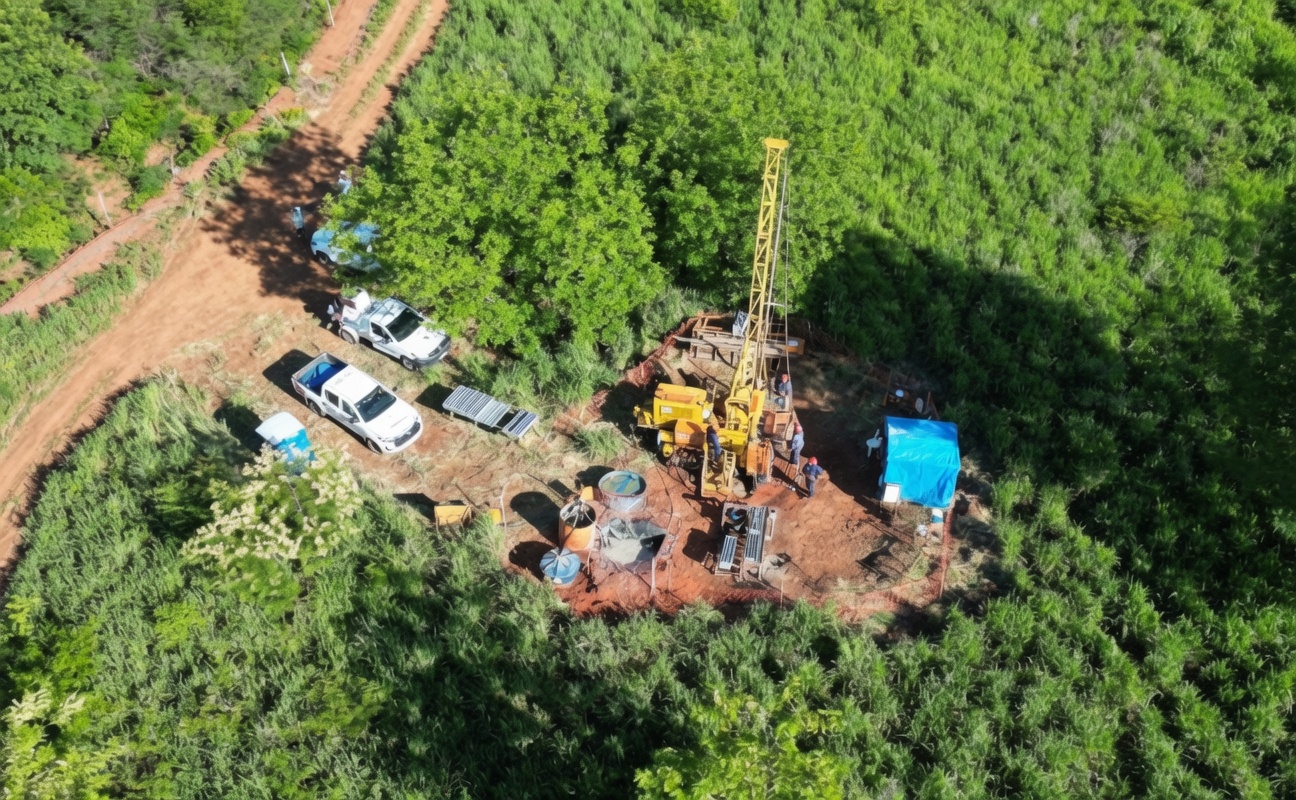
Pampa Medina and Madrugador are described by the company as high-grade, shallow, apparently open-pitable mineralization complementary to the development. A 30,000-metre extensional program, with 6 rigs active on site in July 2026, is working to define the deposit footprint. The 2026 campaign has 3 priorities: defining the high-grade central area, delineating the identified oxide extensions, and step-out drilling to test the broader system identified by geophysics.
Locke grounds the oxide case on drilling density instead of a published figure:
"We have an existing oxide resource, which we have very high confidence in. It's got a lot of drilling into it."
The company has no current published estimate that attaches a tonnage or grade to the Pampa Medina oxides. A maiden mineral resource estimate is targeted for 2027. There is no metallurgical recovery of district material through the heap leach, no capital cost for connecting a satellite deposit to the plant, no economic study for the Pampa Medina oxides, and no sensitivity analysis showing how additional feed would affect the study's returns. Recovery and delivery dates are unstated, and the only scale management has put on the oxides is 20,000 to 25,000 tonnes per year of additional cathode, against the 50,000 tpa plan. The grade step-down it would offset arrives at a fixed point in the schedule.
Financing, Construction & the Maiden Estimate
The sequence that would settle these questions is short. A project financing package for the deposit is targeted for announcement before the end of 2026, with an initial capital requirement of US$587 million, and the process is underway, with market conditions supporting a competitive outcome. Work through the year covers detailed design and engineering, with an execution strategy still to be defined; auxiliary permits progressing against the master schedule; site early works ahead of a final investment decision; and long-lead items with delivery beyond 50 weeks. Environmental approval was granted in the fourth quarter of 2025, following a submission in December 2024.
Marimaca Copper is targeting a 2027 construction start, a 24-month build, and first copper cathode in 2029, a date it says it could bring forward. The growth case gets its first number earlier, from a maiden mineral resource estimate for the Pampa Medina oxides and sulfides in early 2027. That estimate would attach a first formal size to the material, which the current plan does not account for.
Locke looks to the next phase of work for the extension:
"We think there's going to be material extensions to our mine life as we jump through the next phase of development."
The targeted construction start and the first published tonnage behind those extensions land in the same year.
The Investment Thesis for Marimaca Copper
- Permitted and studied, with environmental approval received in the fourth quarter of 2025 and a definitive feasibility study giving a post-tax net present value of US$709 million at a long-term price of US$4.30 per pound for copper.
- Front-loaded grade holding between 0.42% and 0.54% copper through year 10 before falling to 0.26% and then 0.18% across the final 3 years of the plan.
- Margin decline in the tail, taking earnings before interest, taxes, depreciation, and amortization from US$335 million at a 69% margin in year 4 to US$51 million at a 25% margin in year 12.
- Stockpile-fed closing years, with mining ending in year 11, while processing continues through year 13, and no published split between pit and stockpile feed.
- Capacity built ahead of feed, with the primary and secondary crushers oversized for a year 6 expansion, and dump capacity specified as sufficient for mine-life extensions.
- Unsized growth inventory, where near-mine exploration targets remain conceptual, ranges from January 2022, and the first formal figure on Pampa Medina is targeted for early 2027.
The project's first decade is strong, and its final 3 years are thin, and the company has already sized the plant against the assumption that something will fill the gap. What has not yet been established is a mineral resource estimate, a recovery assumption, or a timing for that replacement feed. For investors, the near-term catalysts are financial and procedural, but the one that speaks to the shape of the plan is the maiden resource estimate.
TL;DR
Marimaca Copper holds a permitted, fully studied copper development whose approved 13-year plan concentrates on grade, margin, and cash flow in its first decade. Head grade falls from a peak of 0.54% to 0.18% by year 12, EBITDA margin from 69% to 25%, and post-tax free cash flow from US$283 million to US$34 million, with mining stopping in year 11 and the mill running on stockpiled ore thereafter. The company has provisioned capital for expansion, oversized crushers, and dump capacity for feed that the current reserve does not contain. That feed consists of conceptual exploration targets dated January 2022 and an undisclosed oxide resource at Pampa Medina, none of which has a mineral resource estimate, a recovery assumption, or a delivery date. The maiden resource estimate targeted for early 2027 is the first disclosure that would size it.
FAQs (AI-Generated)
Analyst's Notes





Subscribe to Our Channel







Stay Informed


