ATHA Energy's All-Canada Uranium Portfolio Is a Jurisdictional Advantage


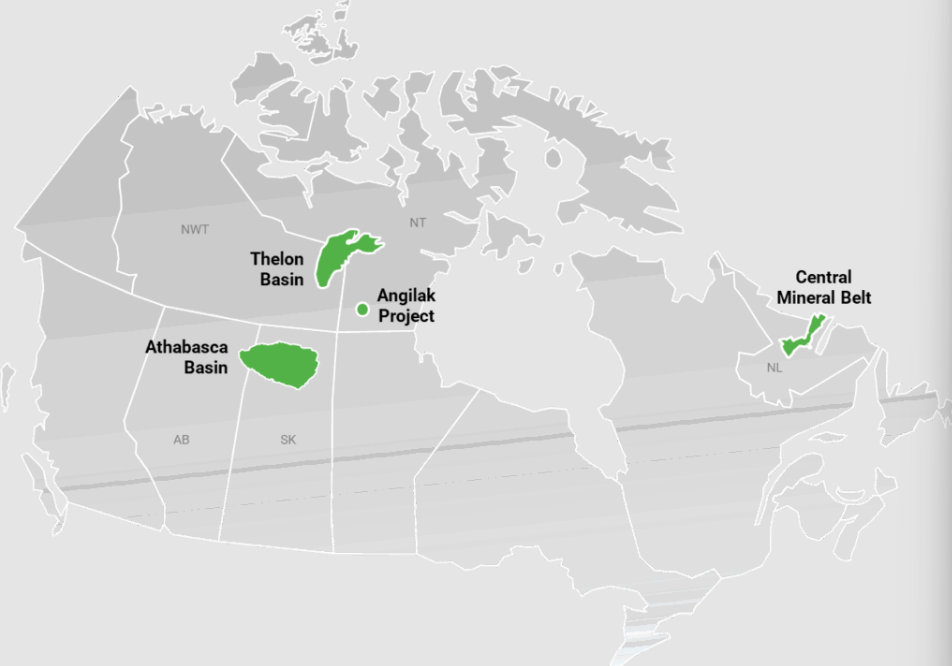
ATHA Energy’s all-Canada uranium portfolio spans 6.8M acres under a regulator, with C$63M in funding and technical reports filed before resource definition begins.
- ATHA Energy Corp.'s entire 6.8 million-acre uranium portfolio is located in Canada and is regulated by a single federal regulator, the Canadian Nuclear Safety Commission (CNSC).
- ATHA has already filed National Instrument 43-101 (NI 43-101)-compliant technical reports for its Angilak and Central Mineral Belt projects, ahead of any resource definition at either project.
- Chief Executive Officer and Director Troy Boisjoli credits Canada's uranium mining history, dating back to the early 1950s, with the country's regulatory efficiency.
- That efficiency alone did not prevent a prior slowdown: Athabasca Basin exploration budgets fell from $200 million to $250 million down to $85 million to $100 million between 2011 and 2023.
- A C$63 million financing in the first quarter of 2026 funds roughly 24 months of exploration capital that the last down cycle largely lacked.
Every acre that ATHA Energy Corp. (TSXV: SASK | FRA: X5U | OTCQX: SASKF) holds is located in Canada and is regulated by a single national regulator. That single-country structure is easy to overlook next to the drill results, balance sheet, and geology the company is usually discussed for, but it comes paired with a second, verifiable detail: ATHA already has direct experience filing technical disclosure within that system, before Angilak has a defined resource. That combination is a more durable basis for a jurisdictional argument than the commentary of Chief Executive Officer and Director Troy Boisjoli, which credits Canada's regulatory quality.
One Country, One Regulator, Three Basins
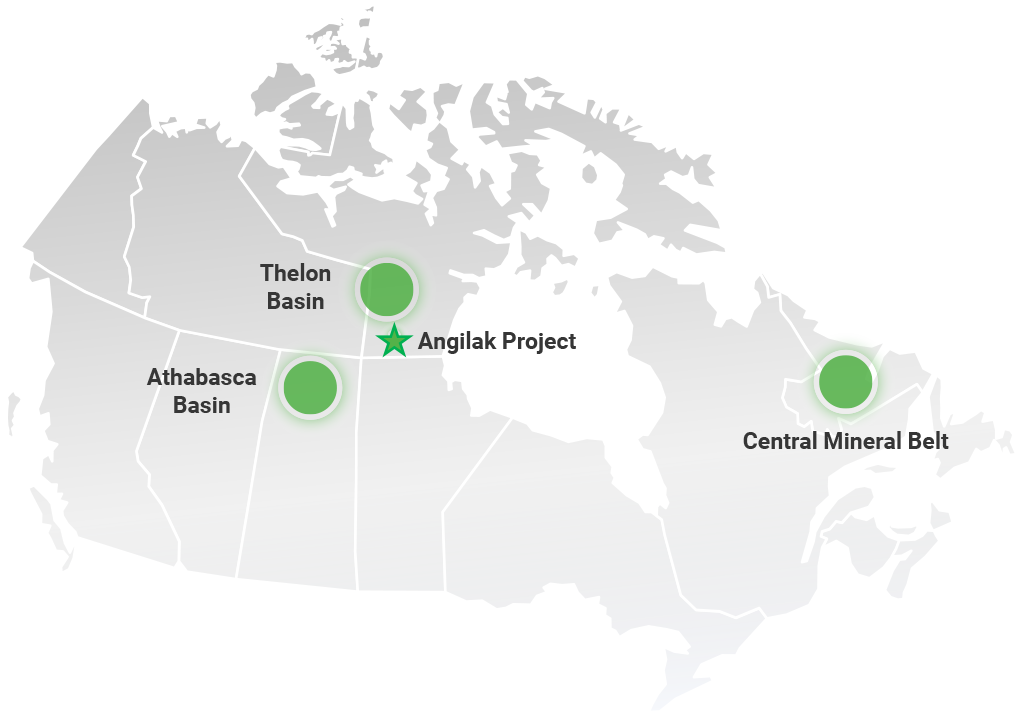
Many uranium developers assemble multi-jurisdiction portfolios, spreading regulatory, currency, and political risk across several national systems. ATHA's approach is the opposite. Its 6.8 million-acre land package covers 3 distinct regions: more than 3 million acres in the Athabasca Basin in Saskatchewan, more than 3 million acres across the Angikuni, Thelon, and Yathkyed Basins in Nunavut, and roughly 250,000 acres in the Central Mineral Belt in Labrador. Every one of those regions falls under the same federal regulator.
Boisjoli framed the rationale for leaning into that single-jurisdiction structure directly:
"I would actually position it that Canada is in the best position globally to be able to accelerate and maximize efficiency within a regulatory process."
Boisjoli ties that claim to a specific marker: Canada has been mining uranium since the early 1950s, giving its regulator decades of life cycle experience to draw on. That structure means the relationship compounds rather than resets. The company's institutional knowledge of the Canadian Nuclear Safety Commission (CNSC) and the CNSC's institutional knowledge of ATHA carry over from project to project, rather than starting over with each new jurisdiction. It is a structural advantage, and one that has nothing to do with sentiment about any one commodity cycle.
The Company Has Already Cleared Part of That Path
Boisjoli's argument about regulatory experience is easier to evaluate against what ATHA has actually filed than against what he said about it. The company has technical reports on file for 2 of its 3 core jurisdictions, well ahead of any resource definition. The Technical Report on the Angilak Property, prepared by a qualified person in accordance with National Instrument 43-101 (NI 43-101), has an effective date of October 14, 2025. The Technical Report on the Central Mineral Belt Property in Newfoundland and Labrador, prepared by a separate qualified person under the same standard, carries an effective date of June 14, 2025.
Neither report defines a mineral resource. Angilak's only disclosed figure remains a conceptual exploration target of 60.8 million to 98.2 million pounds of uranium oxide at Lac 50, which the company states explicitly is not NI 43-101 compliant and carries no assurance that further exploration will convert it into one. What the 2 filed reports demonstrate instead is procedural. ATHA's technical team has already put the company's own data through Canada's disclosure framework twice, on 2 separate projects, with the Angilak report prepared by qualified person Matt Batty and the Central Mineral Belt report prepared by qualified person Dr. Stefan Kruse, before either project has a resource to show for it. That track record answers part of the regulatory question; the pace of the broader cycle is not.
Timing Matters as Much as the Regulator
Regulatory quality alone did not shorten the last cycle of Canadian uranium project development. The most recent Canadian uranium projects to move from discovery through to final regulatory approval or a final investment decision (FID) spanned multi-year periods, one from 2014 through 2021 and another from 2011 through 2022 and 2023, a period Boisjoli called one of the most challenging in the commodity cycle.
The exploration data explains why. Across the Athabasca Basin, exploration budgets fell from approximately $200 million to $250 million down to roughly $85 million to $100 million during that stretch. The work that continued was concentrated at the Patterson Corridor, where Fission Uranium and NexGen Energy were active, and at Denison Mines' Wheeler River project. A well-regarded regulator was available throughout; capital to test ground against it largely was not.
That is the useful caveat to Boisjoli's framing, and it is also why the current setup looks different. ATHA's C$63 million financing, completed in the first quarter of 2026, funds roughly 24 months of exploration against a backdrop of uranium prices Boisjoli described as touching all-time highs, pairing that procedural head start with the capital the 2011 through 2022 and 2023 cycle largely lacked.
Consolidation Optionality Without Needing to Be the Dealmaker
A single-country, single-regulator portfolio also shapes ATHA's positioning if the sector consolidates. Asked directly about mergers and acquisitions activity, Boisjoli pointed to strategic assets moving into production globally and raised the possibility of consolidation across the Americas.
Boisjoli described the pattern he is watching:
"I look at the assets that are moving into production, the most strategic assets in the world, and then I look at what's going on across the Americas, the US in particular, and whether that's a space that's ready for a bit of consolidation. It would not surprise me."
ATHA does not need that prediction to prove correct to benefit from it. The company's 10% carried interest in Athabasca Basin exploration lands, operated by NexGen Energy and IsoEnergy, already provides indirect exposure to activity by 2 of the sector's most closely watched developers. That exposure comes without ATHA having to initiate or fund a transaction itself. If consolidation does reach Canadian ground, a company with an entirely domestic, single-regulator asset base is a structurally simpler counterparty, for a partnership or otherwise, than one juggling multiple national permitting regimes.
The Investment Thesis for ATHA Energy
- ATHA Energy holds its entire uranium portfolio within a single country under a single federal regulator, the Canadian Nuclear Safety Commission, rather than a fragmented, multi-jurisdictional footprint.
- The company has already filed National Instrument 43-101-compliant technical reports for 2 of its 3 core projects, well ahead of any resource definition at either project.
- A C$63 million financing completed in the first quarter of 2026 funds approximately 24 months of exploration capital, which the sector's last prolonged downturn largely lacked.
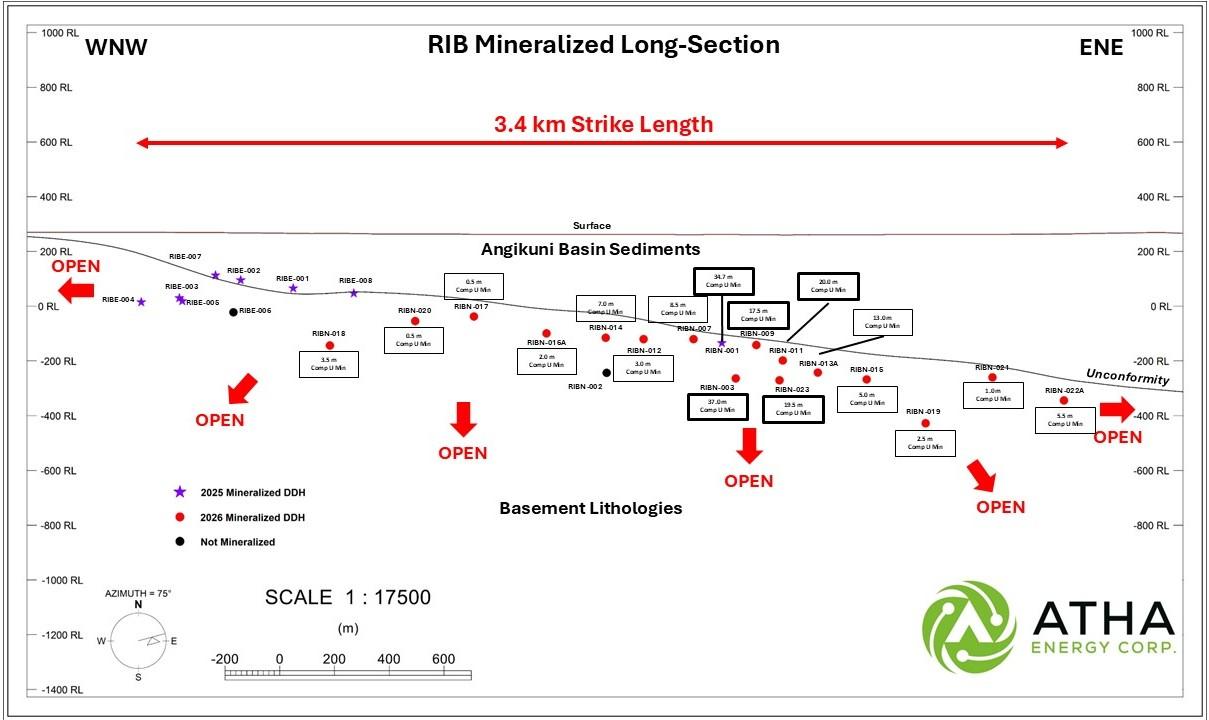
- Multiple active discovery corridors at the Angilak Uranium Project, including the Lac 50 Deposit Corridor and the Mineralized RIB Corridor, offer district-scale optionality within a single jurisdiction.
- A 10% carried interest in Athabasca Basin exploration lands operated by NexGen Energy and IsoEnergy provides indirect exposure to further consolidation or development activity without additional capital outlay.
That advantage still comes with a boundary: the project remains in the exploration stage, with no mineral resource, feasibility study, or project economics yet disclosed. One regulator, 2 technical reports already filed, and exploration capital already in place amount to a long-duration underwrite for the investment case, one that will not be tested until Angilak has a resource to permit.
TL;DR
ATHA Energy's uranium portfolio sits entirely within Canada under a single federal regulator, and the company has already filed technical reports for 2 of its 3 core projects well ahead of any resource definition, a verifiable head start on regulatory familiarity that stands apart from management's own commentary on Canada's regulatory quality. The last industry downturn shows that advantage only compounds when capital is also in place, which is the position ATHA's C$63 million financing puts it in today.
FAQs (AI-Generated)
Analyst's Notes





Subscribe to Our Channel


Stay Informed