




Avoiding the 20-Year Clock from Discovery to Production Pays Dividends for This Miner


Copper deficit forecasts assume supply can answer. Permitting and construction set a 20-year clock, and only one of the two can be engineered around.
- Copper's binding constraint is the time needed to turn a known deposit into an operating mine, not the number of deposits.
- BHP produced 1.95 million metric tons of copper in the year just reported and guides to 1.6 - 1.8 million metric tons for the year ahead.
- Replacing the aging concentrator at Escondida will cost around US$5 billion and restore production to its starting level.
- A developer can take plant construction off the critical path when underutilized processing capacity is already nearby.
- Chile legislated in September 2025 to cut permit times by 30% to 70%, an objective not yet measured.
Introduction
BHP and other market commentators forecast a 10 million metric ton per annum copper supply deficit by 2035, and BHP puts non-traditional copper demand growth at 6.5% per annum. A deficit forecast is a statement of shortfall, not an account of how the shortfall gets filled. Filling it requires new mines, and the interval between a known deposit and a producing one is now measured in decades, not years.
Fitzroy Minerals estimates the current build time for a copper project at about 20 years, attributing it to the complexity of social and environmental permitting. The figure describes a procedure, not geology. The delays it names sit ahead of any decision to build, which means a deposit can be fully understood and still be 2 decades from the market.
The span has 2 components, and they behave differently. Permitting duration belongs to the jurisdiction and changes only when the jurisdiction changes it. Construction time reflects what a project has to build, and a developer that does not have to build a processing plant can take that block out of its own schedule. Which projects reach production first depends on how much of the interval each one can remove.
Industry Context
Capital spending in copper is not the same thing as new supply, and one producer's full-year results show the size of the gap. BHP produced 1.95 million metric tons of copper in the year just reported, a 3% decline, and guides to 1.6 - 1.8 million metric tons for the year ahead. The company is targeting a 600,000 metric tons per annum increase in copper output by 2035, and Fitzroy Minerals estimates that the growth spending required implies a cost of around US$40,000 per metric ton of installed annual capacity.
Escondida shows what a large share of that spending buys. Replacing the mine's aging concentrator costs around US$5 billion. Through the replacement, output at the asset moves from 1.1 million metric tons to 800,000 metric tons, then back to 1.1 million metric tons, so the capital restores production to its starting level and adds nothing to the world market.
Spence looks cheaper on the same arithmetic, and the underlying condition is the same. An addition of 40,000 to 60,000 metric tons per annum, at US$600 million to US$900 million, works out to US$11,000 to US$18,000 per metric ton of installed capacity on paper. The spending extends the life of an asset that is otherwise declining, so those metric tons are maintenance and not an addition to supply. The South Australian copper division, which has not reached a final investment decision (FID), needs a low-case US$9 billion to lift output from 320,000 metric tons toward 500,000 metric tons, or around US$50,000 per metric ton at best and US$75,000 per metric ton on mid-case capital and mid-case output.
Emerging Practices & Industry Progress
One workaround for construction time is to use the existing processing capacity. Where a mining region already has plants running below their throughput, a developer can contract access instead of building its own, and one Chilean copper district holds 3 underutilized plants within a 90-kilometer radius of a single development-stage project. One of them is rated at 800 metric tons per month, or 9,600 metric tons per annum, and its operator has offered 80% availability.
Access is governed by a letter of intent (LOI) for joint development and potentially shared processing facilities. The LOI provides for open-book sharing of operating cost data, which would give a developer visibility of the cost base it would be feeding before it commits any material to the plant. No tonnage, price, or term has been published.
The study sequence that follows is correspondingly short. One published 18-month production plan carries 4 workstreams: metallurgical test work, a mineral resource estimate (MRE), an environmental permit, and a pre-feasibility study (PFS). Plant construction does not appear on it.
Remaining Challenges
Taking plant construction off the critical path leaves the permitting sequence untouched. An environmental submission is targeted for the fourth quarter of 2026, a maiden MRE for the first quarter of 2027, an initial PFS for the second quarter of 2027, and financing and FID across the second and third quarters of 2027. The steps overlap across 4 quarters, and none of them is shortened by a processing arrangement.
The processing access itself is the largest open item. An LOI records intent, and the 80% figure attached to it is an offer, not a contract. No processing agreement has been signed, so the schedule's assumption about where the material goes is an intention and not a secured capacity.
The economics are unpublished as well. No mineral resource, capital cost, or operating cost has been released. The environmental submission in the fourth quarter of 2026 comes before any public figure for the project's costs.
Company or Project Examples
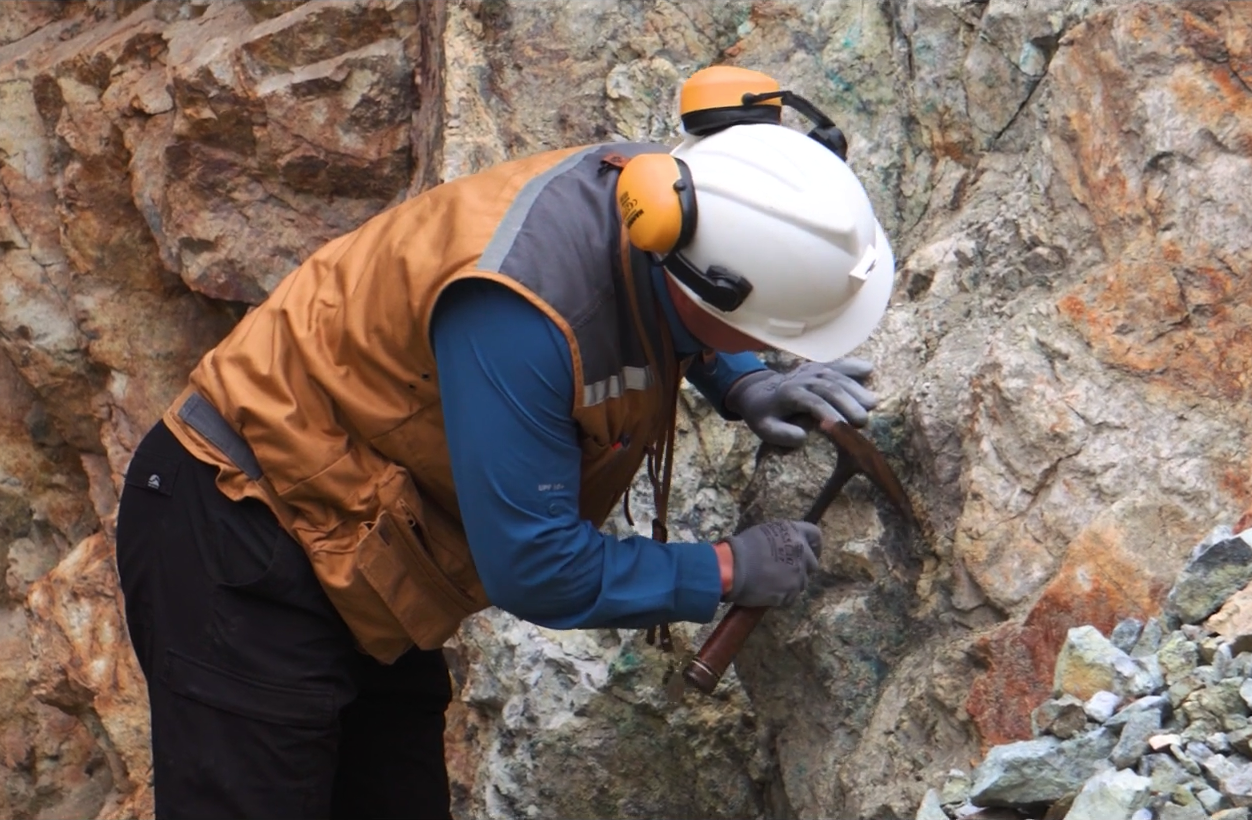
Fitzroy Minerals (TSXV: FTZ | OTCQX: FTZFF | FSE: C3Y) is developing Buen Retiro, an iron oxide copper gold (IOCG) deposit near Copiapó in Chile, on a heap leach route in which crushed ore is stacked and a solution percolates through it to dissolve the copper. The ground is district-scale in its mineralization, at low elevation, served by existing infrastructure, and uninhabited. Two IOCG deposits lie in the same district, Candelaria and Mantoverde, held 80% by Lundin Mining and 70% by Capstone Copper.
President and Chief Executive Officer of Fitzroy Minerals, Merlin Marr-Johnson, puts a date on production at Buen Retiro and calls the capital cost low:
"We've got near-term production planned at Buen Retiro. It's low CapEx. It's projected to be in production into early 2028."
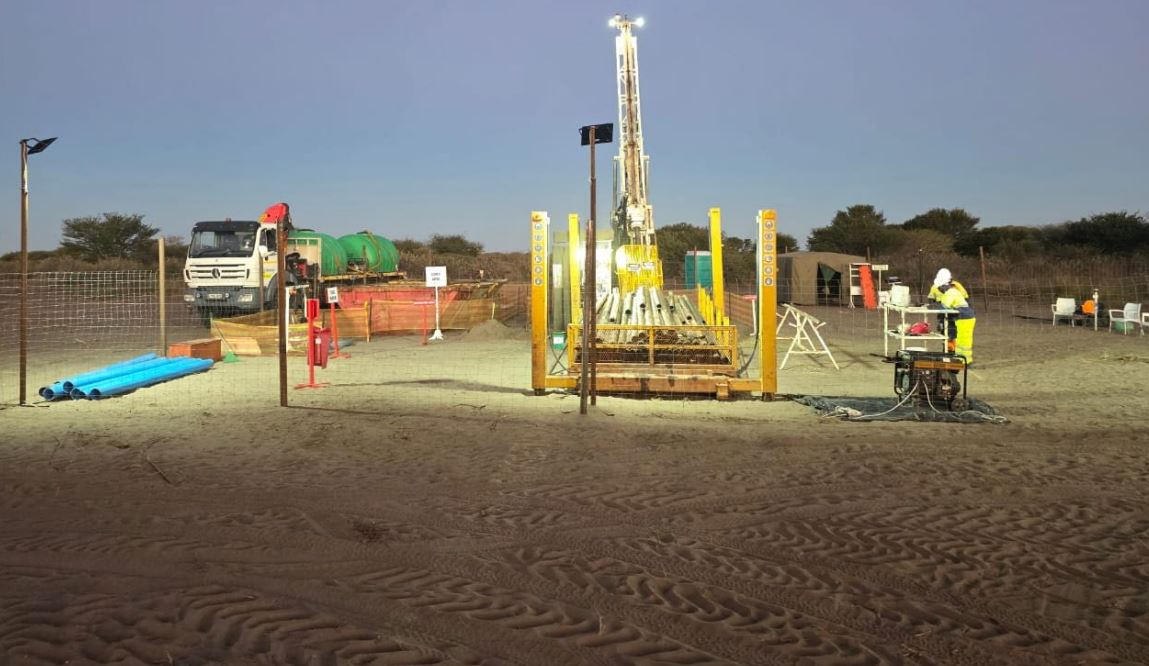
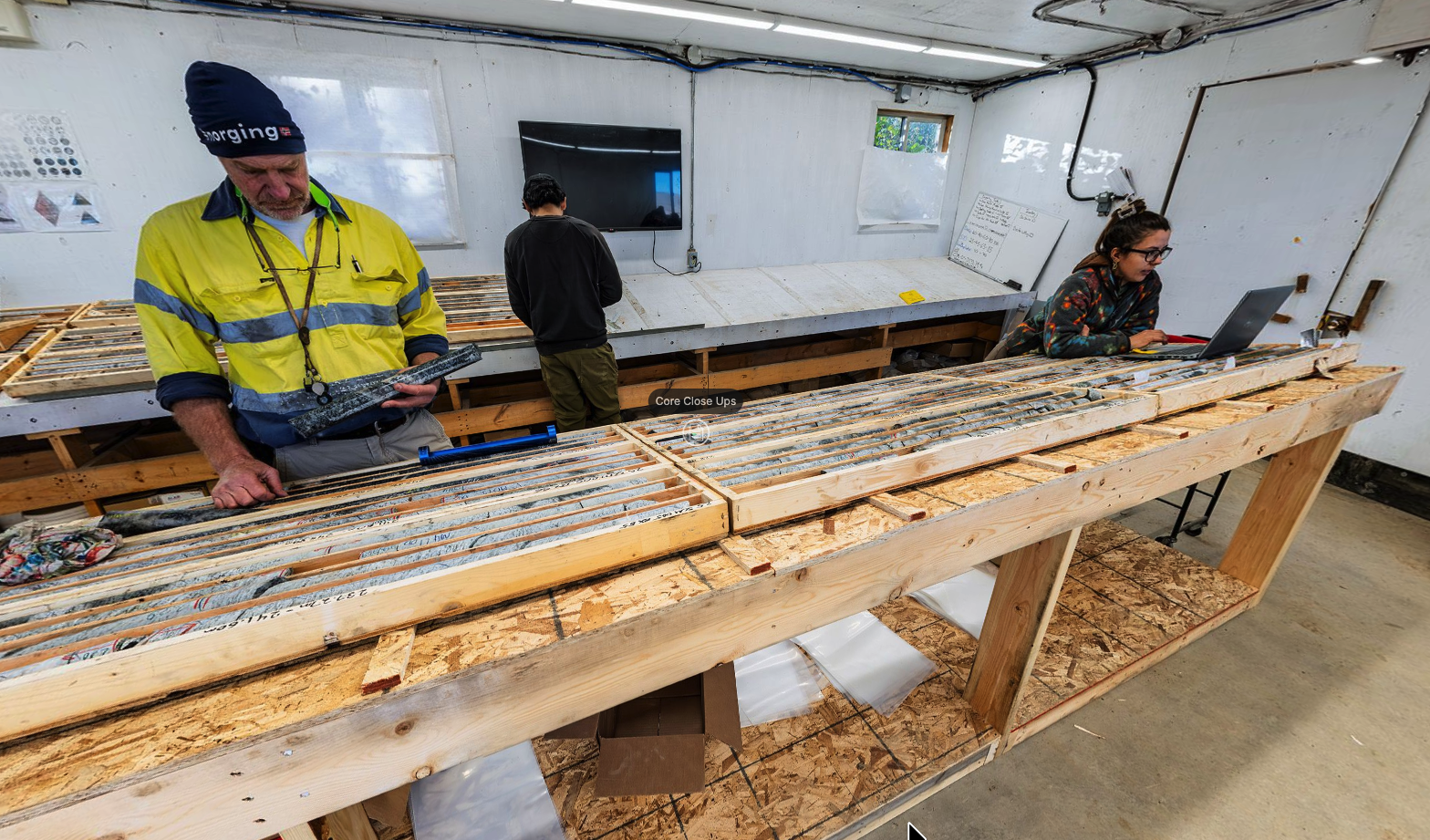
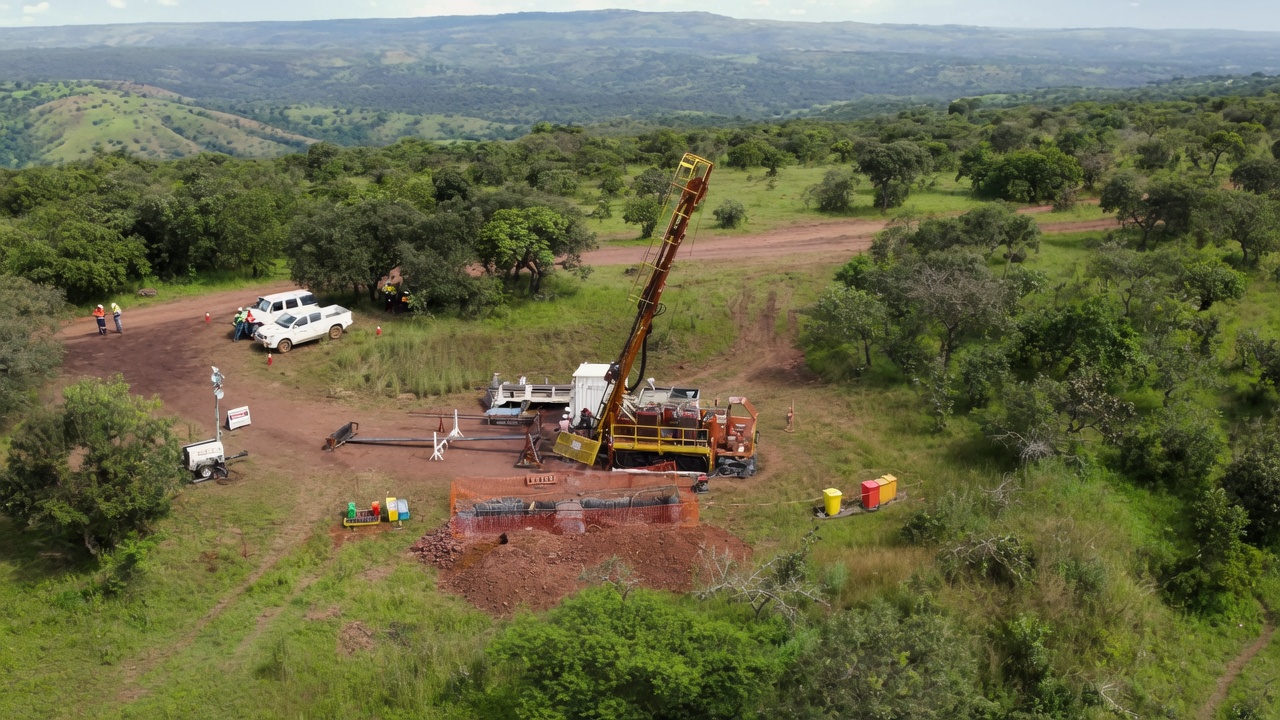
The drilling behind that date has run since February 2026 and covers 92 diamond drill holes for 16,376 meters (m), with 4 rigs on site and a further 6,000 m to complete against a 22,000 m program for the year. Two diamond rigs were scheduled to leave in September 2026, having reached a data cut-off that allows time for logging, assaying, and inclusion in the maiden MRE. From the fourth quarter of 2026, the site drops to 2 rigs: one testing shallow regional targets and one testing deep targets. The drill-out of the Tenorita area was targeted for completion in August 2026, and as of August 2026, the company held C$23.9 million in cash.
Marr-Johnson ties the production date to what the output is meant to pay for:
"We'll be using the cash flows, the considerable cash flows from that, to fund our exploration, and we've got a multiple of extremely large exploration targets."
Those cash flows do not exist yet. The plan that would produce them still has an environmental submission, a maiden MRE, and a study pending.
Regional or Jurisdictional Perspective
Chile is large enough in copper that its permitting rules act as an industry variable rather than a local one. The country supplies 23% of global copper mine production, 5.3 million metric tons in 2025, and mining accounts for 59% of total exports, of which 80% is copper. Copper mining accounts for 10% to 14% of gross domestic product (GDP) and around 20% of indirect GDP. Announced capital spending to 2034 is US$105 billion, of which 90% is for copper.
The permitting rules changed once during that period. A permitting law passed in September 2025, under the previous government, aims to reduce permit times by 30% to 70% through streamlining, standardization, and digitization. No figure for the actual permit duration before or after that law was published, so the 30% to 70% range is what the law aims for, not what it has delivered.
What followed addresses taxation, not permitting. A bill introduced on April 22, 2026, would reduce the corporation tax rate by 1% per year to 23% by 2029 and provide a 25-year stability pact, neither of which affects how long an environmental submission takes. President Kast has stated a policy direction of fewer permits and more investment, a state acting as a facilitator of private development, and the elimination of unnecessary regulation, and none of those positions is itself an enacted measure affecting permit duration.
Industry Outlook
The gap between a known deposit and a producing mine determines whether supply can respond to a price signal at all, and at about 20 years, it cannot respond within the period covered by the current forecasts. A deficit projected for 2035 falls inside that gap, so the supply response to it has to come from projects already partway through the sequence. Nothing discovered from here reaches the market in time to affect it.
The projects that arrive first will be the ones that took construction out of their own sequence, because construction is the only component a developer controls.
The constraint is geographic as much as geological. A modest deposit near spare processing capacity can reach the market on a shorter clock than a larger one that has to build its own plant, and no distinction between the two appears in the deficit forecasts. An industry that measures its pipeline in contained metal is measuring the wrong thing.
FAQs (AI-Generated)
Analyst's Notes





Subscribe to Our Channel











Stay Informed


