




BGR Pact Targets ValOre's Weathered PGE Ore Ahead of Pedra Branca PEA


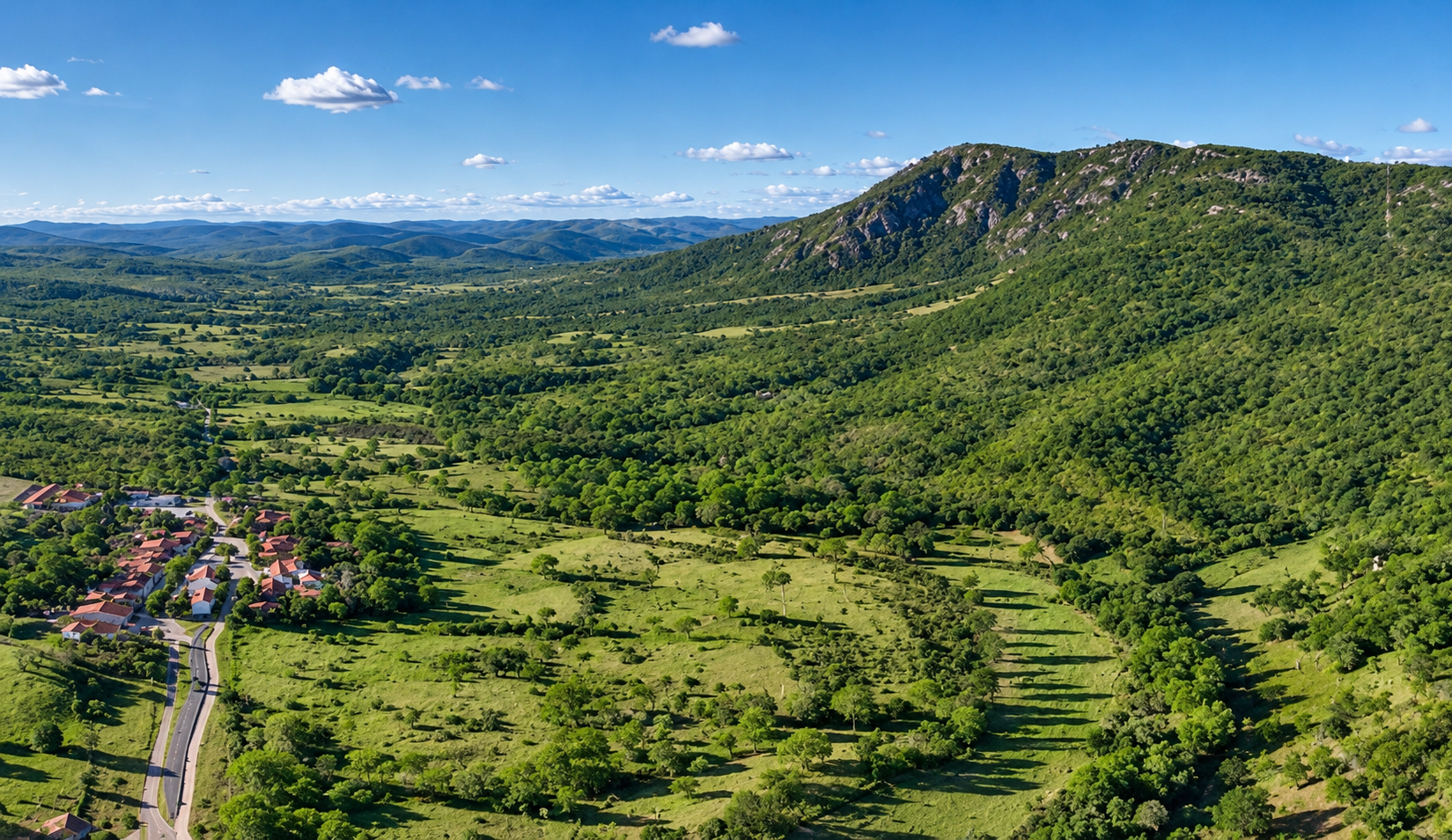
ValOre's 5-year BGR agreement targets bioleaching of weathered PGE ore at Pedra Branca, ahead of a fourth-quarter 2026 preliminary economic assessment.
- ValOre Metals signed a 5-year memorandum of understanding (MoU) with Germany's Federal Institute for Geosciences and Natural Resources and its subdivision, the German Mineral Resources Agency.
- The work will initially focus on bioleaching and hydrometallurgical processing of weathered platinum group element mineralization at the 100%-owned Pedra Branca project in Ceará State, Brazil.
- The collaboration runs under BioPlat, a German research project funded by the Federal Ministry of Research, Technology and Space, with each party covering its own costs.
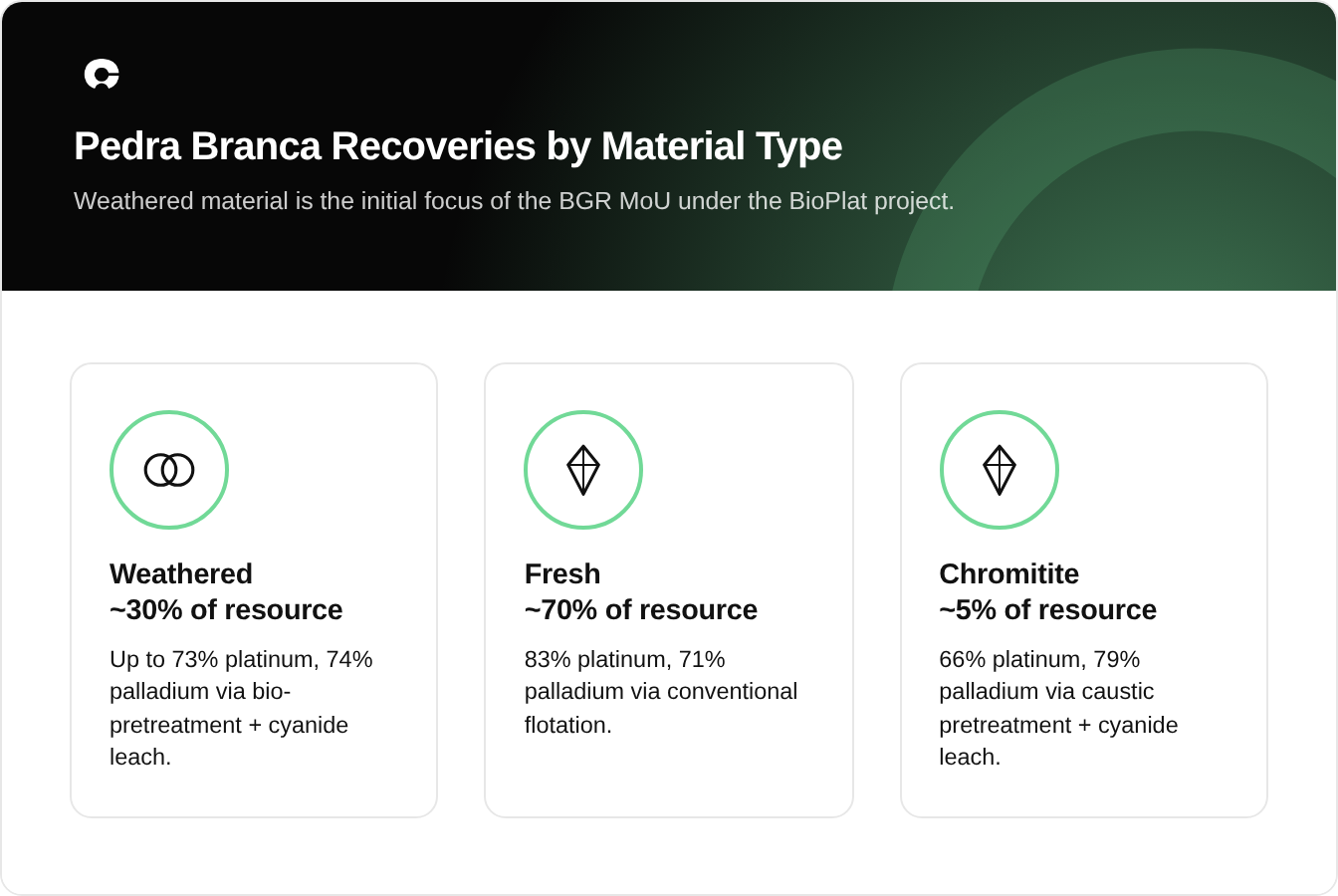
- Weathered material accounts for about 30% of the resource. Previous testwork returned up to 73% platinum and 74% palladium extraction through bio-pretreatment and cyanide leaching.
- ValOre holds less than $0.8 million in cash and is targeting a preliminary economic assessment (PEA) for Pedra Branca in the fourth quarter of 2026.
ValOre Metals Corp. (TSX-V: VO | OTCQB: KVLQF | FSE: KEQ0) has brought a German government-funded research program onto the weathered material at its Pedra Branca platinum group element (PGE) project in Brazil. In testwork, this material has been treated by bio-pretreatment and cyanide leaching, while fresh material has been tested with conventional flotation. Under a 5-year Memorandum of Understanding (MoU) announced on November 10, 2026, Germany's Federal Institute for Geosciences and Natural Resources (BGR) will collaborate with ValOre on metallurgical and mineral processing technologies for PGE mineralization at Pedra Branca, initially focusing on weathered material using bioleaching and hydrometallurgy. BGR's subdivision, the German Mineral Resources Agency, is also a party. The agreement comes as ValOre advances a preliminary economic assessment (PEA) targeted for the fourth quarter of 2026.
Memorandum of Understanding Terms & the BioPlat Consortium
The MoU places Pedra Branca inside an existing German research effort. BioPlat is a research project on low-emission processing of unconventional PGE ores. The Federal Ministry of Research, Technology and Space funds it under the EGARoh program. G.E.O.S. Ingenieurgesellschaft mbH coordinates the project, with TU Bergakademie Freiberg and the Natural History Museum Bern taking part.
ValOre is expected to provide samples, technical data and logistical support, and each party covers its own costs. The partners will jointly develop a detailed work program setting out responsibilities, deliverables and timelines. No budget, test schedule or results date has been disclosed.
ValOre presents the agreement as confirmation of its metallurgical work. BGR presents it in terms of European supply.
Chief Executive Officer of ValOre Metals, Nick Smart, described selection as an industry partner in BioPlat as validation of the team's work at Pedra Branca. He tied it to the company's testwork to date:
"Our recent metallurgical work has demonstrated encouraging platinum and palladium extraction from weathered material."
President of BGR, Tim Vietor, described Pedra Branca as one of the few platinum group metals (PGM) projects globally at a very advanced stage. He said that in the medium term the project could help bridge supply gaps, particularly for palladium, for Europe and Germany.
Where Weathered Material Fits at Pedra Branca
Pedra Branca hosts an NI 43-101 Inferred resource of 2.198 million ounces of platinum, palladium and gold in 63.6 million tonnes grading 1.08 grams per tonne of the 3 metals combined. The resource spans 7 deposit areas and has an effective date of March 8, 2022. ValOre holds 45 exploration licenses covering 51,096 hectares in northeastern Brazil.
The company divides the resource into 3 material types, each with its own share of the resource and its own processing route. Fresh material represents about 70% of the resource at 1 to 2 grams per tonne of combined platinum, palladium and gold, and returned 83% platinum and 71% palladium through conventional flotation. High-grade chromitite represents about 5% at 5 to 10 grams per tonne and returned 66% platinum and 79% palladium using caustic pretreatment and cyanide leaching. Weathered material is near-surface and represents about 30% of the resource, grading 1 to 3 grams per tonne. Testwork on weathered material from the Esbarro deposit, reported on March 26, 2026, achieved up to 73% platinum and 74% palladium extraction using bioleaching pretreatment followed by cyanidation. The BGR collaboration will investigate further bioleaching and hydrometallurgical processing technologies for this material.
BGR becomes a third technical group in a program already running flotation and leaching testwork with the University of Cape Town and Lycopodium South Africa. ValOre is also evaluating a low-cost hydrometallurgical process. Processing flowsheet design is one of 6 workstreams in the PEA now underway.
Funding & Supply Context
As of November 1, 2026, ValOre had 255 million shares outstanding and a $12 million market capitalization at $0.05 per share, with less than $0.8 million in cash. The cost-sharing arrangement gives ValOre access to the BioPlat research framework without a disclosed direct funding commitment from the company. Its stated contribution consists of samples, technical data and logistical support, although the associated costs have not been quantified.
No funding to ValOre, offtake arrangement or equity participation has been disclosed under the MoU. The agreement does not by itself establish commercially viable recoveries, lower processing costs or a completed flowsheet.
On supply, ValOre cites the US Geological Survey Mineral Commodity Summaries 2026, which show South Africa and Russia holding 97.1% of world PGM reserves. The company also presents the platinum and palladium market as facing a multi-year deficit of 500,000 to 700,000 ounces. Vietor's comments link Pedra Branca to European palladium supply concerns at the level of a German federal agency.
Work Program & PEA Timing
The immediate milestone is the joint work program, which will set the responsibilities, deliverables and timelines for the BGR collaboration. Its results will need to show whether bioleaching and hydrometallurgical processing can improve the treatment of weathered material within Pedra Branca's broader flowsheet. ValOre has not said whether BioPlat work will feed into the PEA.
The larger milestone is the PEA, targeted for the fourth quarter of 2026. Pedra Branca's resource is entirely Inferred. 2 questions are open ahead of that study: whether all 3 material types can be processed through commercially viable routes, and how ValOre will fund the work required to advance the project.
FAQs (AI-Generated)
Analyst's Notes





Subscribe to Our Channel




Stay Informed


