




Can Policy Offset a 20% Drop in Battery Metals Investment?



Nickel quotas, lithium export rules and proposed price floors make policy and project costs central to battery metals valuations after investment fell 20%.
- Indonesia raised its benchmark ore price for nickel by 1.89% to US$16,960 per tonne for the second half of August 2026, according to Shanghai Metals Market (SMM), while three-month nickel on the London Metal Exchange (LME) fell 1.1% to US$16,750 per tonne on August 17, raising Indonesian smelter feedstock costs despite a weaker exchange price.
- Indonesia is controlling nickel volume alongside price by setting its 2026 ore quota at 260 million to 270 million tonnes, down 29% to 31% from the 379 million tonnes approved in 2025, limiting supply growth from a country that produces more than 60% of global mined nickel.
- On August 7, 2026, the US Treasury confirmed that the Agreement on Trade in Critical Minerals is targeting phased-in, mineral-specific price floors adjusted at the border, which would raise the effective cost of imports priced below those floors and improve price certainty for qualifying producers in partner countries.
- Developers with projected costs in the lowest 25% of the global cost curve would model wider operating margins if an administered floor raises realized prices, reducing their dependence on a higher exchange price.
- Battery metals capital spending fell more than 20% in 2025, the largest decline in over a decade, according to the International Energy Agency’s (IEA) Global Critical Minerals Outlook 2026, slowing the development of new supply needed to respond to higher prices.
Indonesia Raises Nickel Ore Costs & Restricts Supply, Squeezing Margins
On August 17, 2026, Indonesia’s Ministry of Energy and Mineral Resources raised its benchmark mineral price (HMA) for nickel by US$314 per tonne, or 1.89%, to US$16,960 per tonne for the second half of August from US$16,646 in the first half. Over the same period, three-month LME nickel fell US$189 per tonne, or 1.1%, to US$16,750 per tonne on August 17. Because Indonesia’s domestic ore benchmark (HPM) is calculated from the HMA, the increase raised the ore price used in Indonesian smelter contracts while the LME price used to value nickel output declined, narrowing operating margins.
The opposite movements in Indonesia’s benchmark price and the LME price show that the ministry can raise domestic ore costs independently of exchange prices. Indonesia is also controlling volume through its 2026 work plan and budget (RKAB) quota of 260 million to 270 million tonnes, down from 379 million tonnes in 2025, while withholding permits for new nickel pig iron and high-pressure acid leach (HPAL) capacity, limiting how quickly mine and processing supply can expand. Because Indonesia supplies more than 60% of global mined nickel, these measures affect the cost and availability of additional supply across the global market.
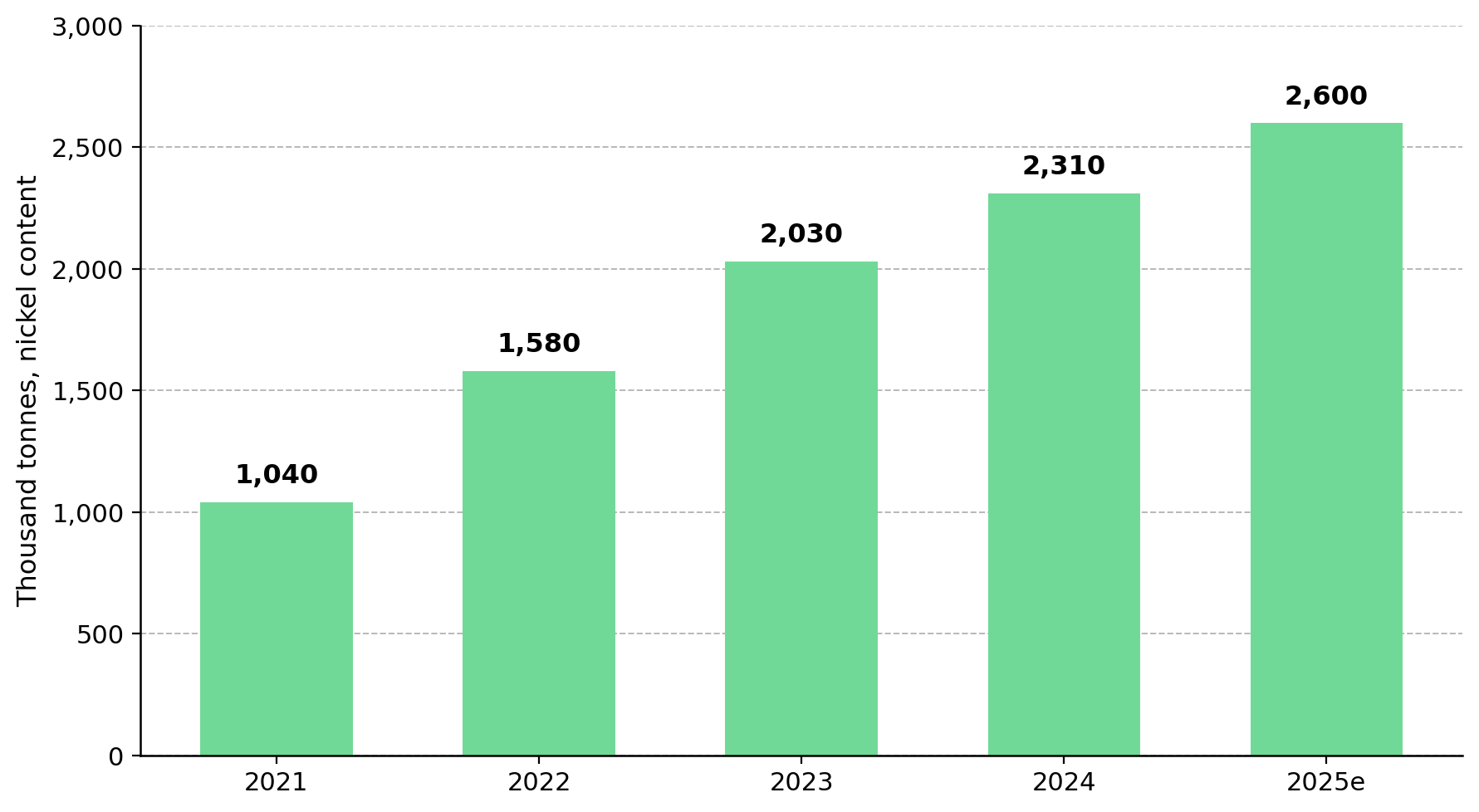
As Indonesia raises the cost of additional supply through ore pricing and quotas, project valuation gives more weight to the gap between projected all-in sustaining cost (AISC), which includes sustaining capital, and the nickel price supported by those policies, because a wider gap provides a larger margin cushion. On August 13, 2026, the Indonesia Nickel Miners Association stated that supplementary quota additions are limited to smelters facing feedstock shortages and recommended adding 30 million tonnes, which would lift the 2026 allocation toward 300 million tonnes. Approvals above 300 million tonnes would weaken the supply constraint and reduce the price support created by the quota policy.
Proposed US Price Floors & EU Strategic Project Status Support Battery Metals Valuations
Western policy is targeting border-adjusted price floors rather than Indonesia-style mine quotas, shifting support from domestic supply controls to trade measures. On August 7, 2026, the US Treasury confirmed that the Agreement on Trade in Critical Minerals is targeting phased-in, mineral-specific price floors enforced through border adjustments and common standards among partner countries. S&P Global’s first published reference prices cover gallium, germanium, tungsten, antimony, and two rare earths, neodymium and praseodymium, while lithium and nickel remain outside the initial phase.
Lithium and nickel remain eligible for future US measures under Section 232, including tariffs, import limits, or minimum prices, while EU Strategic Project status under the Critical Raw Materials Act (CRMA) can prioritize permitting and financing. A US minimum price could strengthen lenders’ revenue assumptions, while EU status could shorten approval timelines or improve financing access, supporting higher project valuations without requiring higher spot metal prices.
EU Strategic Project Application & Development Finance Broaden Funding Options
Lifezone Metals strengthened the financing path for the Kabanga Nickel Project during the first half of 2026, with political-risk insurance due diligence completed, multiple strategic-equity offers received, and financing institutions across Africa, Europe, and North America indicating available funding, broadening the project’s potential funding base. Its European Union Strategic Project application and US$55.6 million in total liquidity at June 30 support ongoing project work and financing discussions toward an expected first-quarter 2027 final investment decision.
Ingo Hofmaier, Chief Financial Officer of Lifezone Metals, shows how Indonesia’s supply controls strengthen lender confidence:
“What’s happening in Indonesia is, of course, positive for us, and lenders and investors have realized that this is a policy shift that they are not going to go away from. We have been in an oversupplied market for years, and there is a strong consensus that 2026 is going to be in deficit.”
Higher Acid Costs & Lower Ore Grades Widen Sulfide Cost Advantage
Sulfuric acid overtook energy as the largest cost component in some critical-mineral operations after China restricted sulfuric acid exports in May 2026, according to the IEA. HPAL plants face the greatest exposure because they use acid to produce mixed hydroxide precipitate (MHP), an input for battery-grade nickel sulfate. Indonesia’s principal nickel ore grade, which represents roughly half of global supply, fell 8% in 2025; processing lower-grade ore requires more acid per unit of nickel, raising production costs and widening the cost gap with sulfide projects.
Canada Nickel increased its proposed private placement from C$15 million to as much as C$21 million following strong demand, with proceeds planned for permitting, engineering, debt repayment and working capital. At Crawford, projected life-of-mine all-in sustaining costs (AISC) of US$1.54 per pound place the project in the first quartile of the nickel cost curve, while its 3.8 million tonnes of contained nickel reserves rank second globally. The planned financing supports near-term development work, while Crawford’s scale and low projected costs provide greater resilience across a wider range of nickel prices.
Mark Selby, Chief Executive Officer of Canada Nickel, explains why tighter supply strengthens non-Chinese nickel projects:
“With Indonesia basically limiting supply going forward and nickel demand growing at 5% plus a year, which is another almost 200,000 tons of nickel per year, we’re in great shape. People want supply from somewhere other than Chinese-controlled entities.”
Lithium Processing Rules Raise Costs & Favor Countries With Global Trade Access
Governments are also influencing lithium supply and demand through export restrictions and taxes rather than direct price floors. Zimbabwe, which supplies approximately 15% of the spodumene shipped to China, will ban exports of lithium concentrate that has not been processed domestically from January 2027, redirecting processing activity toward local plants. Zimbabwean producers have committed roughly US$1.45 billion to domestic processing, but only one US$400 million lithium sulfate plant was operating by April 2026, creating a capacity constraint before the ban takes effect. On the demand side, China’s Ministry of Finance, General Administration of Customs and State Taxation Administration jointly imposed a 2% consumption tax on lithium-ion batteries effective September 1, 2026, increasing to 4% from September 1, 2027.
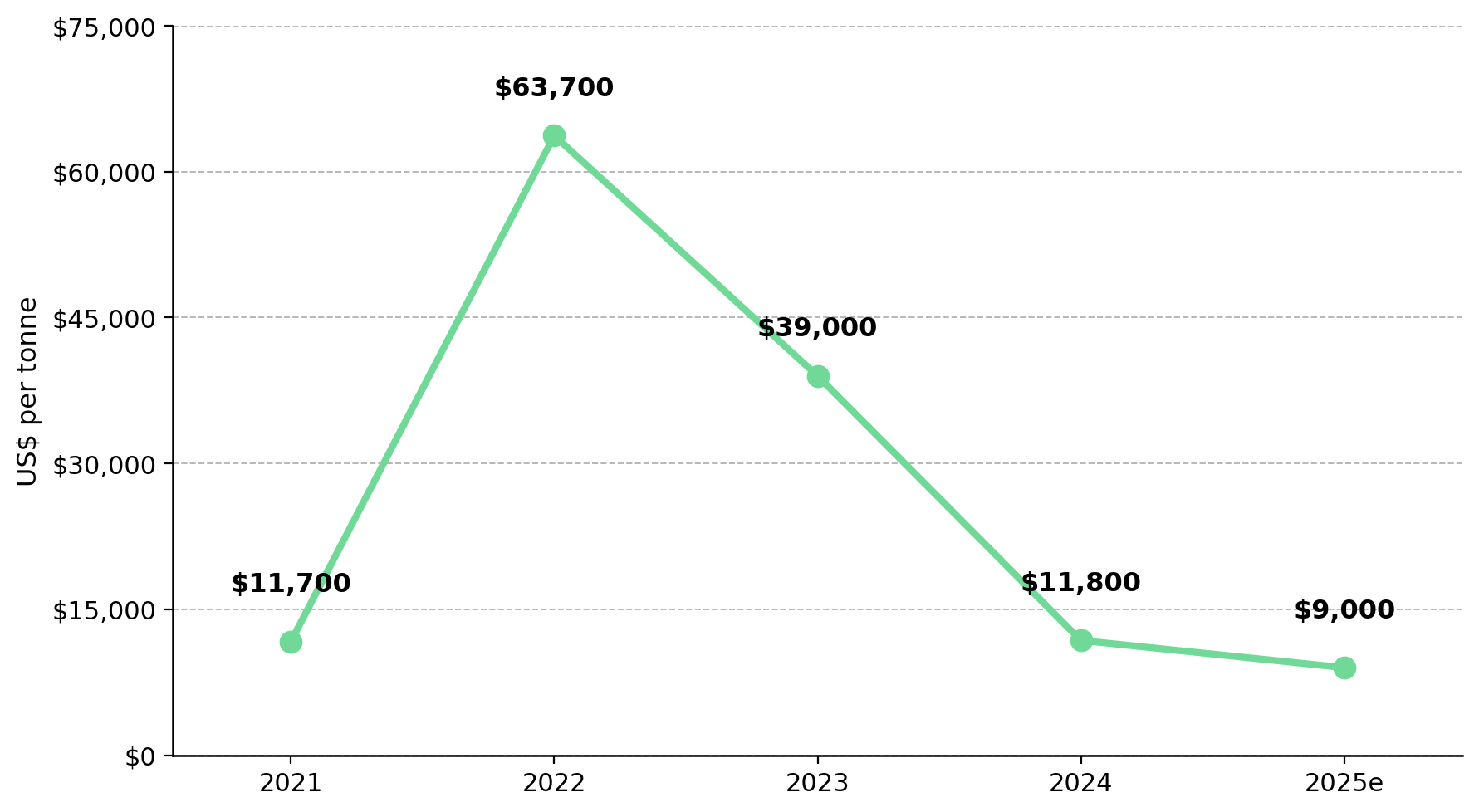
Lithium Ionic agreed to sell its Salinas properties for US$37.5 million in cash, comprising US$30.0 million at closing and US$7.5 million deferred. By directing the non-dilutive proceeds toward early works, procurement, and construction readiness at its wholly owned Bandeira project while retaining a 2.0% royalty on future spodumene sales, the transaction concentrates capital on its flagship asset without issuing shares and preserves exposure to future Salinas production and lithium prices.
Blake Hylands, Chief Executive Officer of Lithium Ionic, links lithium demand growth to Brazil’s trade access:
“There’s a huge disconnect between supply and demand in this market right now. The truth is China continues to grow at multiples. Brazil is a unique trading jurisdiction where you can trade globally.”
Tax Credits & Faster Permitting Improve Nickel Project Returns Without Higher Nickel Prices
Canada is lowering eligible critical minerals project costs through tax credits and shorter permitting timelines rather than supporting metal prices. Its carbon capture, utilization and storage (CCUS) investment tax credit provides 50% of qualifying spending from 2022 through 2035 and 25% from 2036 through 2040, while the federal Major Projects Office and Ontario’s One Project, One Process framework target faster approvals, reducing upfront capital requirements and the time before construction.
Tax credits improve project returns by reducing the initial capital required before production, while design changes that reduce pre-production waste can bring higher-value ore forward and shorten payback. For long-life nickel projects, lower upfront capital and CCUS credits can increase net present value (NPV) and internal rate of return (IRR) without requiring a higher nickel-price assumption, making capital requirements and tax-credit eligibility central when comparing projects.
Government Policy & Underinvestment Increase Nickel & Lithium Valuation Sensitivity to Supply Decisions
Indonesian ore quotas and benchmark prices, Zimbabwe’s domestic processing requirement, proposed US border price floors, and China’s battery consumption tax can restrict unprocessed exports, raise production or import costs, and increase battery taxes, making government policy a separate input into nickel and lithium valuations alongside spot prices.
Battery metals capital spending fell more than 20% in 2025, the largest decline in over a decade, while lithium companies cut investment by around 40% and exploration spending across lithium and nickel fell roughly 45%. These reductions leave fewer projects advancing toward production and lengthen the supply response to higher prices, increasing nickel and lithium valuations’ sensitivity to Indonesian quota decisions and future US price-floor measures.
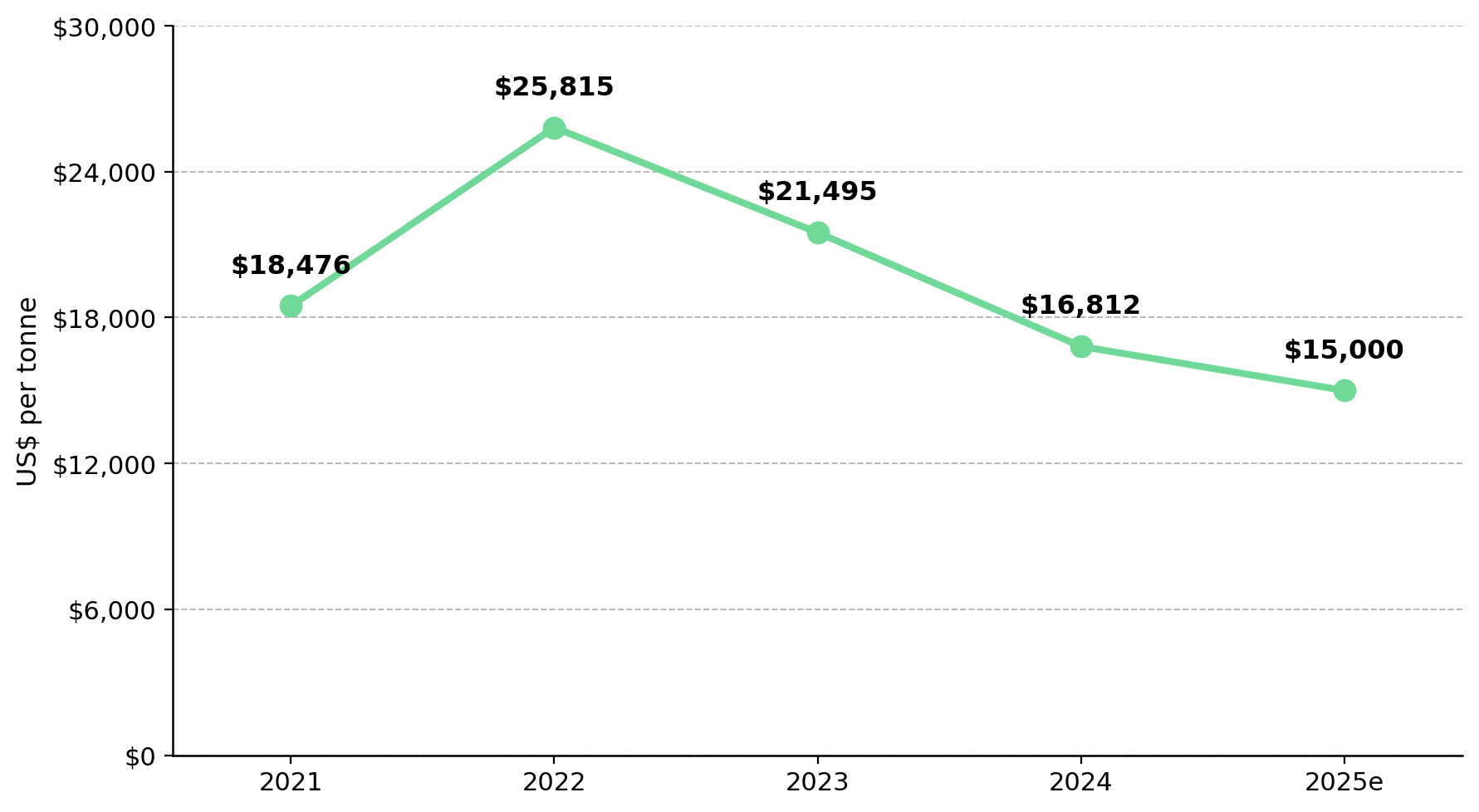
Approvals above 300 million tonnes for Indonesia’s revised 2026 RKAB allocation, compared with the current 260 million to 270 million-tonne base, would add ore supply and weaken quota-driven price support. On August 18, 2026, the LME cash-to-three-month spread stood at US$198 per tonne in contango and stocks totaled 264,732 tonnes; a move to immediate nickel trading above the three-month price alongside falling stocks would indicate tighter physical supply. A Section 232 decision without a minimum price for processed lithium and nickel would leave both commodities outside additional US price-floor support, keeping project valuations more dependent on exchange prices and cost positions.
The Investment Thesis for Battery Metals
- Indonesia’s benchmark ore price rose 1.89% to US$16,960 per tonne for the second half of August 2026, while three-month LME nickel fell 1.1% to US$16,750 per tonne on August 17, showing that government policy can raise smelter feedstock costs even when the exchange price declines.
- Developers with projected all-in sustaining costs in the lowest 25% of the global cost curve would model wider operating margins under an administered price floor without assuming a higher exchange price, reducing their valuation sensitivity to nickel prices.
- Investment tax credits lower upfront capital requirements, while faster permitting can reduce development timelines and financing costs, increasing project NPV without requiring higher commodity-price assumptions.
- Strategic Project designation can shorten permitting timelines, while development finance institution participation can improve access to long-term funding and political-risk insurance, lowering financing risk for projects that diversify supply beyond dominant producing countries.
- Rules requiring lithium to be processed domestically before export increase project capital needs and execution risk, which can shift funding toward jurisdictions with established production and fewer restrictions on concentrate exports.
- Developers and recyclers awaiting government agreements or funding approvals face schedule and financing risk; when a final investment decision has already been postponed, valuations and position sizes should account for further delays and additional funding needs.
Because ore quotas, benchmark prices, tax credits and permitting support can change project revenue, costs and financing, battery-metals valuations now depend on government decisions alongside exchange prices. For projects that benefit from administered price support, the gap between the supported price and AISC determines modeled operating margin, making cost position more useful than a single spot-price forecast. Development-stage projects still face permitting delays, funding gaps, dilution, and policy reversals that can prevent production, so position sizes should reflect each project’s costs, funding runway and reliance on government approvals.
TL;DR
Battery metals capital spending fell more than 20% in 2025, limiting the supply response as governments take a larger role in pricing, trade and project finance. Indonesia raised its nickel ore benchmark while cutting 2026 quotas by 29% to 31%, lifting feedstock costs despite a lower LME price. Proposed US price floors and EU Strategic Project status could improve revenue certainty and financing access, while Canadian tax credits and faster permitting can improve project returns. Zimbabwe’s lithium processing requirement and China’s battery tax add jurisdiction and demand risks. Low-cost projects with secure funding and global market access remain better positioned, although permitting, dilution and policy reversals remain key risks.
FAQs (AI-Generated)
Analyst's Notes





Subscribe to Our Channel




.png)




Stay Informed


