




Lifezone's Mine-First Strategy Backs Kabanga's $854 Million Build-Out


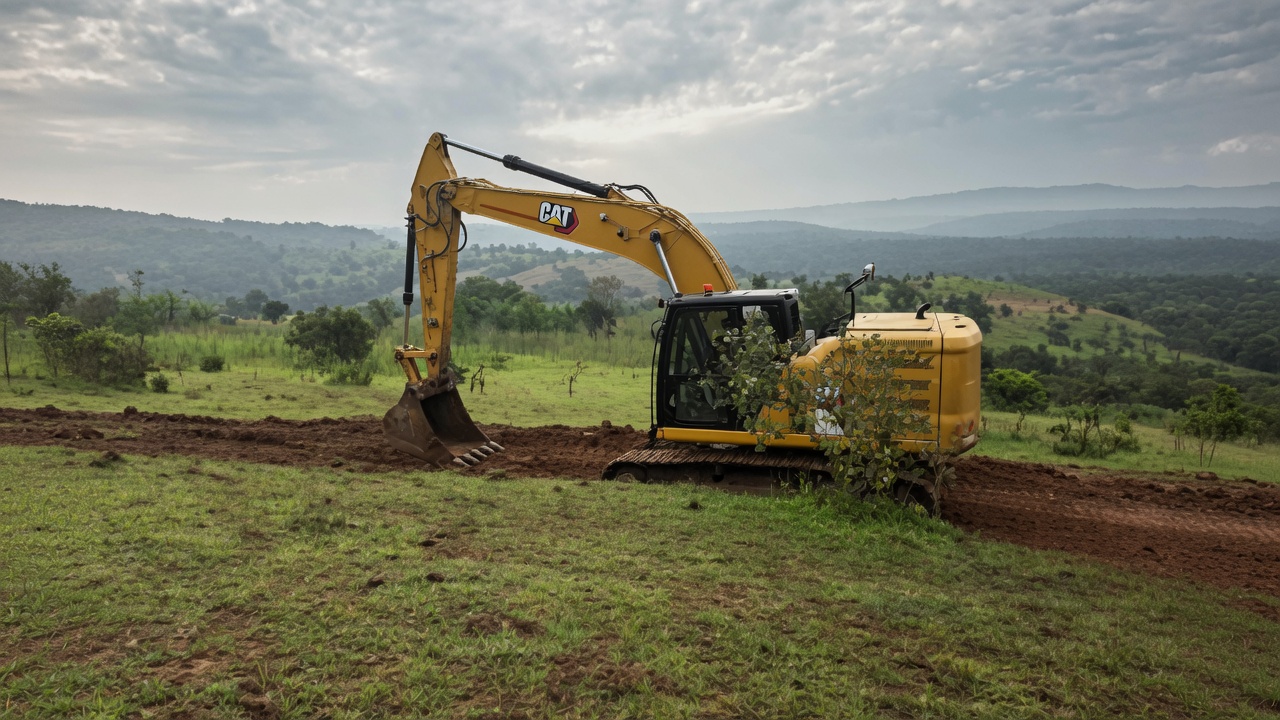
Lifezone sequences Kabanga mine-first: $854 million in contracts and $55.6 million in liquidity precede beneficiation spending.
- Lifezone Metals is building Kabanga in the sequence its leadership has described: mine and concentrator first, downstream beneficiation later.
- The company released approximately $854 million in Kabanga contracts to market in the first half of 2026, covering engineering, procurement and construction management, mining and bulk earthworks tenders, while studies for Kabanga's own in-country beneficiation pathway remained at an early scoping stage.
- Cash reached $37.3 million as of June 30, 2026, up from $20.1 million 6 months earlier, with total liquidity of approximately $55.6 million once the undrawn Taurus Mining Finance bridge facility is included.
- The Taurus bridge facility's remaining $18.3 million is available only until November 29, 2026, a deadline that arrives before any of the three longer-term financing processes has a stated closing date.
- The project's final investment decision moved from a 2026 target to the first quarter of 2027 as talks to amend the Framework Agreement with the government of Tanzania progressed more slowly than expected.
Lifezone Metals (NYSE: LZM) is building the Kabanga Nickel Project in a specific order: mine and concentrator first, refining and beneficiation later, even as Tanzania and other producing-country governments push for faster in-country beneficiation. That sequencing, stated directly by the company's leadership, is the lens through which the first-half 2026 results are best read. At Kabanga specifically, that sequencing showed up in the numbers: $854 million in contracts released to market, geotechnical drilling advanced, and the workforce scaled up, while studies for the project's in-country beneficiation pathway remained at an early scoping stage.
Why Lifezone Builds the Mine Before the Refinery
Host governments across Africa are pushing mining companies toward faster in-country value addition, and Tanzania is no exception. Chief Executive Officer of Lifezone Metals, Chris Showalter, addressed that pressure directly at a September 2026 panel on US-Africa minerals diplomacy hosted by the Center for Strategic and International Studies, pointing to Indonesia's 20-year run as a mining jurisdiction before it moved downstream as the template Tanzania has not yet had the chance to follow:
"You need to have a mine before you can go downstream. It's the staging, the required capital and time. There's an impatience for value addition, beneficiation right away."
Showalter framed that sequencing as deliberate, not as a delay, describing the staged approach behind Kabanga's development in those same remarks. His comments describe a general principle rather than Lifezone's first-half spending itself, but the interim results show that principle applied in dollar terms. The Framework Agreement amendment with the government of Tanzania, the financing condition for moving Kabanga past the mine-building stage, is still under negotiation; talks included a June 9, 2026 meeting with Tanzanian President Samia Suluhu Hassan, attended by Lifezone's Chairman, Keith Liddell, and TNCL's Chief Executive Officer, Benedict Busunzu, alongside Tanzania's Minister of Minerals and Treasury Registrar. Lifezone said those talks progressed more slowly than expected, pushing the final investment decision (FID) from a 2026 target to the first quarter of 2027, though it could move earlier or later depending on lender assessment of the amended agreement.
Procurement Scales Ahead of Financing Close
First-stage commitment scaled up alongside financing. Cash stood at $37.3 million as of June 30, 2026, up from $20.1 million 6 months earlier, with total liquidity of approximately $55.6 million once the $18.3 million undrawn on the Taurus Mining Finance bridge facility is added in. Against that liquidity, the company approved 59 expressions of interest for major packages through Tanzania's Mining Commission and released contracts worth approximately $854 million to market, covering engineering, procurement and construction management, mining, and bulk earthworks tenders, with contractors’ site visits concentrated in July and August.
Geotechnical work moved in step with the tender process: 194 of 237 planned test pits were complete by June 30, 2026, along with 3,300 of 3,743 meters of drilling, and vent raise drilling finished across the project footprint. The Kabanga Nickel Project's Integrated Owner's Team scaled up over the period to support that pace of engineering and procurement, while camp upgrades progressed to accommodate the workforce ramp-up needed for resettlement and early works.

Three Financing Tracks Fund Stage One
Lifezone is running three financing processes at once to carry the mine through to construction. Societe Generale's project finance effort has selected pathfinder lenders, development finance institutions and export credit agencies from Africa, Europe and North America, with indications of liquidity already received; the US Development Finance Corporation (DFC) completed its environmental and social due diligence during the period, with commercial engagement advancing in parallel. Separately, a strategic equity process led by Standard Chartered Bank is in an advanced stage, with multiple offers received for an investment in the Kabanga Nickel Project itself.
The nearer-term number is the bridge facility. Of the $60 million Taurus Mining Finance facility, Lifezone had drawn $41.7 million by June 30, 2026, including $21.7 million during the first half, leaving $18.3 million available only until November 29, 2026. A $25 million registered direct offering closed April 23, 2026, issuing 5.7 million shares at $4.40 per share for net proceeds of $23.3 million, directed toward exploration in Burundi and Tanzania, the PGM Recycling Project, and general working capital. None of the three longer-term tracks has a stated closing date, which puts the bridge facility's November deadline ahead of, not behind, the processes it was meant to backstop until the mine stage is funded through to construction.
FAQs (AI-Generated)
Analyst's Notes





Subscribe to Our Channel








Stay Informed


