




US-China Mining Capital Race Highlights Brazil’s Growing Lithium Pipeline



Brazil’s expanding lithium pipeline sits at the center of rising US-China mining capital, growing regional supply, and tighter project financing.
- China remains the larger cumulative source of mining investment in Latin America, at US$10.05 billion from 2014 through September 2026 versus US$8.38 billion from the US, while US investment has led since 2022 at US$4.50 billion versus China’s US$2.77 billion.
- Brazil is attracting US and Chinese mining capital while approximately 99% of its lithium exports went to China in 2025, linking foreign investment interest with an established downstream market for Brazilian lithium.
- Latin America and the Caribbean already produce around one-quarter of global lithium supply, while its regional output is projected to rise nearly 50% by 2030, increasing the region’s contribution to future lithium supply.
- Brazil’s lithium output is projected to increase 23% in 2026 to 63,757 tonnes of lithium carbonate equivalent, adding another source of hard-rock supply within Latin America’s expanding lithium base.
- Lower lithium-sector investment means access to capital, viable project economics, commercial agreements, infrastructure, and execution readiness remain central to determining which exploration assets can progress toward future supply.
US Mining Capital Growth Intensifies Latin American Mineral Competition
China invested US$10.05 billion in Latin American mining from 2014 through September 2026, compared with US$8.38 billion from the US, leaving China with the larger cumulative position. Since 2022, US mining investment has reached US$4.50 billion, exceeding China’s US$2.77 billion, due to a broader US effort to secure critical minerals such as lithium and copper through regional supply relationships.
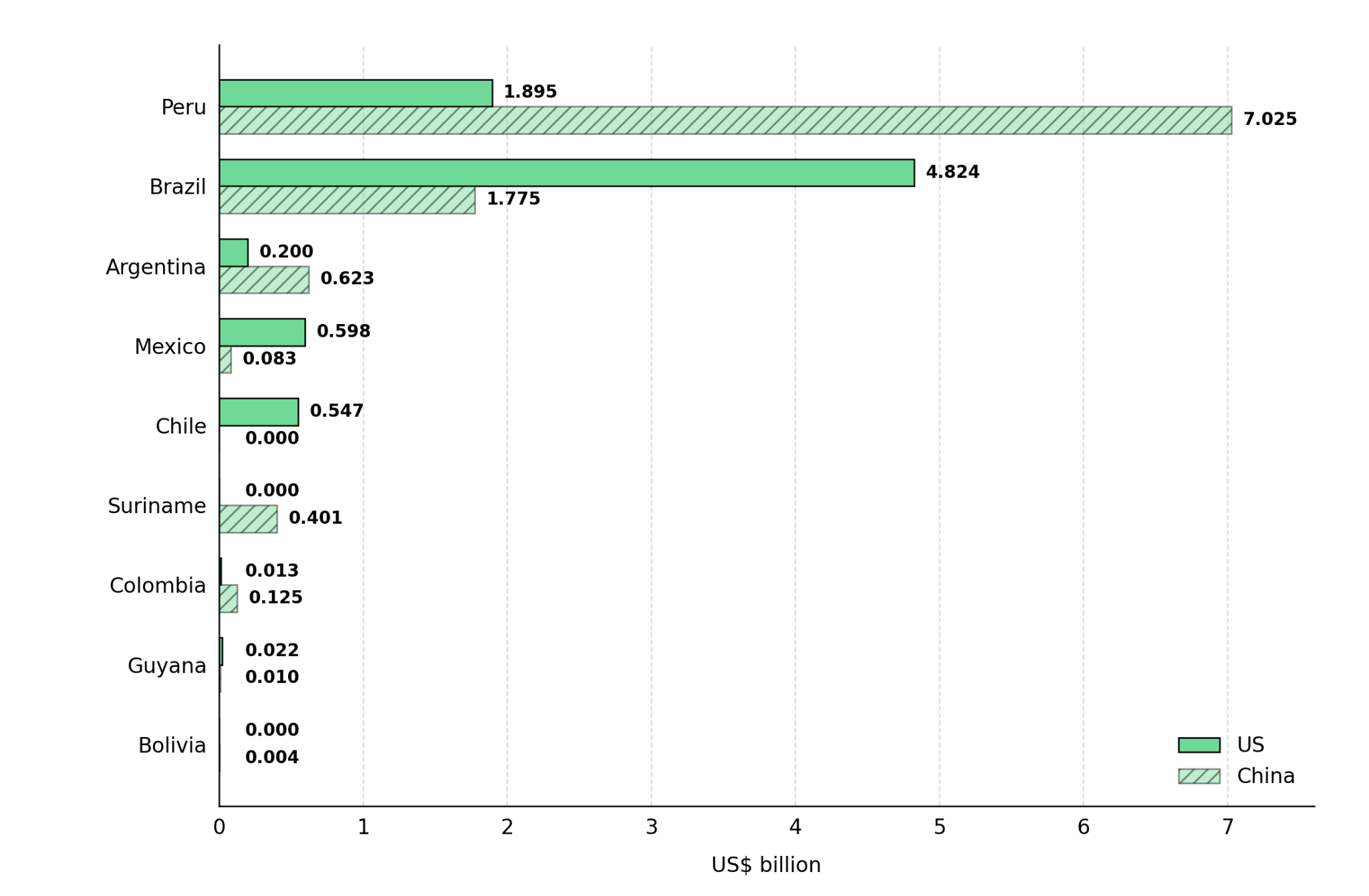
The Economic Commission for Latin America and the Caribbean (ECLAC) recorded 1,152 announced foreign direct investment projects in Latin American minerals and metals worth US$230.065 billion between 2005 and 2024. Critical minerals accounted for 24% of project announcements but 42% of announced investment value, showing that they captured a disproportionate share of regional mining capital.
Brazil sits at the center of this capital competition, hosting a US$2.56 billion US mining acquisition, while Chinese companies invested a combined US$1.8 billion in Brazilian copper, gold, and tin projects. Brazil, Chile, Peru, and Argentina together accounted for 84% of announced regional minerals and metals foreign direct investment value from 2005 through 2024, placing Brazil at the intersection of international mining capital and an expanding domestic lithium sector.
Brazil Lithium Growth Expands Latin America’s Hard-Rock Supply
Brazil already produces hard-rock lithium and sells into established downstream markets, giving the country a more direct role in the regional supply chain. In 2025, about 99% of Brazil’s lithium exports went to China, linking Brazilian upstream supply to China’s battery and conversion industries.
Brazilian spodumene pricing also tracks North Asian benchmarks, meaning changes in Chinese demand and conversion capacity can affect domestic project economics. Brazilian lithium production is projected to reach 63,757 tonnes of lithium carbonate equivalent in 2026, up 23% from 51,694 tonnes in 2025, expanding Brazil’s contribution to Latin America’s hard-rock supply.
Minas Gerais is supporting that expansion through its Lithium Valley initiative, launched in 2023 to attract investment and strengthen the state’s lithium value chain. Subsequent infrastructure and regional development programs around the mining cluster support a project pipeline concentrated in Minas Gerais, reinforcing the state’s role in Brazil’s future lithium production.
Tripling Lithium Demand Raises Latin America’s Future Supply Role
Latin America and the Caribbean currently produce around one-quarter of global lithium supply, while regional output is projected to rise nearly 50% by 2030. Financing, infrastructure, regulation, environmental management, technical capacity, and stakeholder engagement will determine how much of that planned output reaches the market.
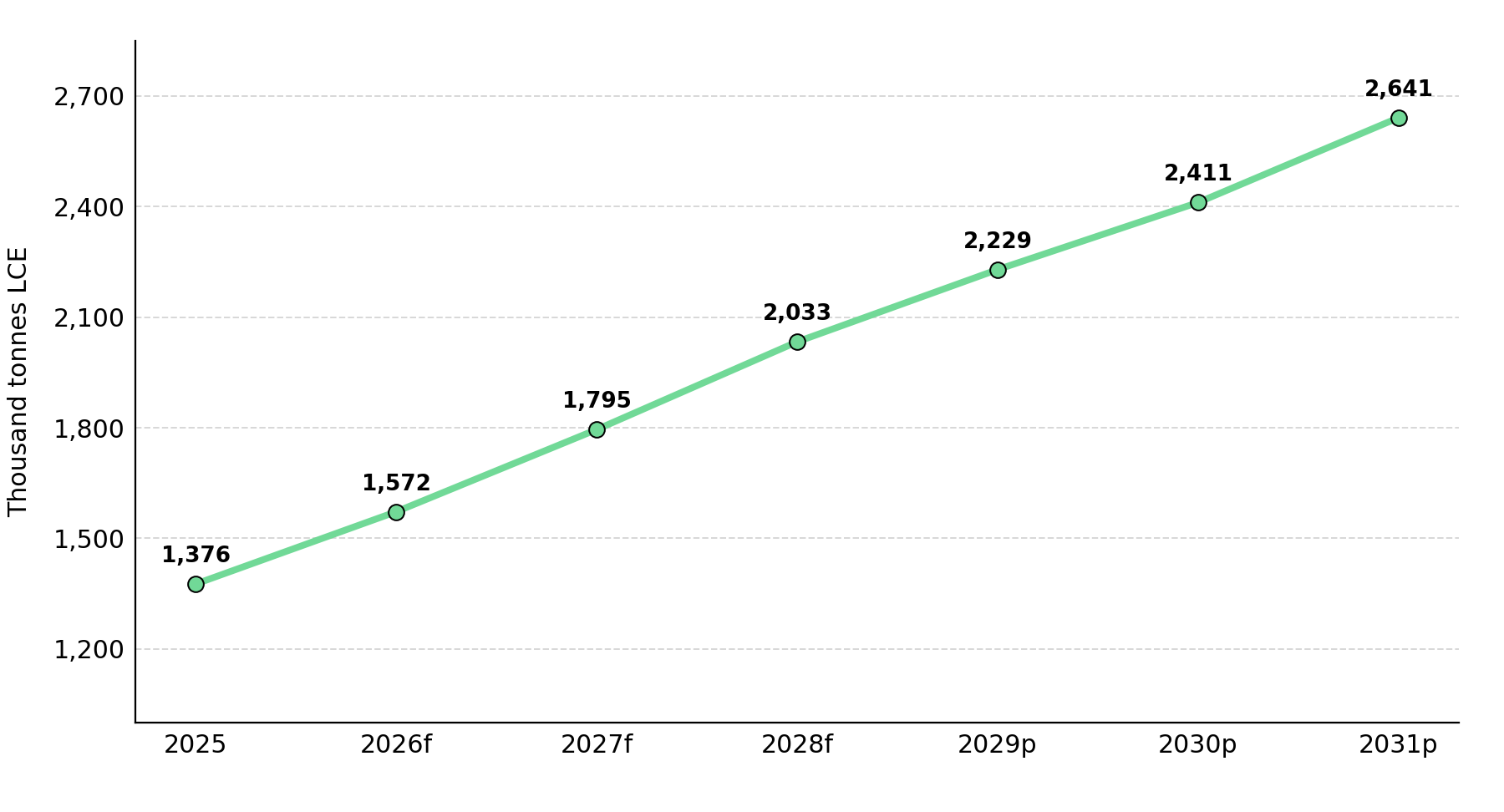
Brazil contributes to regional lithium growth through existing hard-rock production and a project pipeline concentrated in Minas Gerais. The Geological Survey of Brazil identifies producing assets, feasibility-stage deposits, and undeveloped lithium resources in the state, linking project development in Minas Gerais directly to Latin America’s future lithium supply. Global lithium demand is projected to more than triple through 2040, meaning exploration and development decisions made during weaker price periods can influence how much new supply is available as demand grows.
Investment Cuts Increase the Importance of Financeable Projects
Critical-mineral investment fell 9% in 2025, while spending by battery-material companies declined more than 20% and lithium-focused companies cut investment by around 40%. Lower spending can delay exploration, engineering, permitting, and construction, reducing the number of projects able to advance toward production.
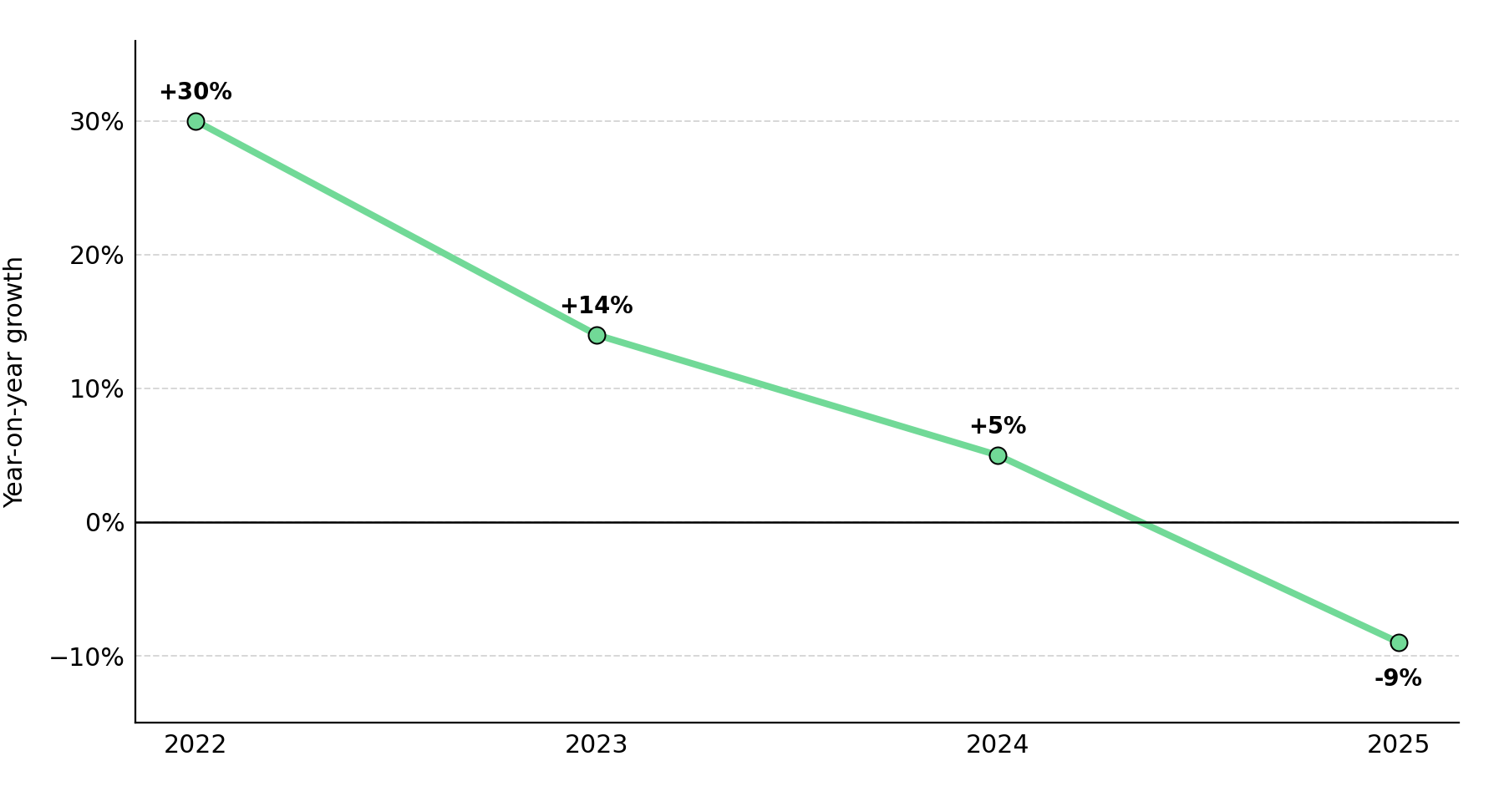
Brazil is attracting lithium-focused capital as sector spending declines, with the Minas Gerais government announcing R$220 million of international investment in lithium refining capacity in February 2026. The investment adds downstream processing capital to the state’s Lithium Valley initiative, expanding financing beyond mine development alone.
As lithium-sector capital becomes more selective, projects with credible economics, commercial support, infrastructure access, and defined development pathways are better positioned to secure the financing required to convert resources into future supply.
Refining Growth Makes Secured Offtake Critical to Future Supply
Brazil’s lithium sector shows why upstream diversification still depends on access to established downstream markets. Approximately 99% of Brazil’s lithium exports went to China in 2025, while mining diversification outside China is advancing faster than refining and downstream processing. This makes Brazilian projects with secured commercial access, credible offtake partners, and a clear route into existing conversion capacity particularly relevant as global capital increasingly targets Latin America’s lithium supply.
Lithium Ionic has secured binding five-year offtake agreements with Yahua Group and Grand Chen covering approximately 170,000 tonnes per year of spodumene concentrate, alongside a US$20 million pre-payment facility that supports project financing. The Chinese integrated battery supplier gives Bandeira a direct commercial link to an established downstream market while the agreements’ US$1,000-per-tonne floor and no-ceiling structure provide added revenue visibility as the project advances.
Blake Hylands, Chief Executive Officer of Lithium Ionic, explains why processing growth is tightening lithium supply:
“The capacity and refiners that are being built now are being built in the scale of five to 10 times the current consumption or capacity. These expansions don't take 10 years in China. They can move very quickly.”
Regional Supply Growth Makes Execution the Key Test for New Lithium
Minas Gerais is supporting lithium development through investment in electricity distribution and high-voltage capacity under its Lithium Valley initiative. Combined with established hard-rock production, access to Chinese downstream markets, and international mining capital, that infrastructure strengthens Brazil’s ability to support additional lithium projects as regional supply expands.
The growing US and Chinese interest in Latin American mining adds another source of capital to that development base. Within this setting, projects that combine resource potential with commercial agreements, infrastructure access, and defined development plans are positioned to play a larger role in converting Brazil’s lithium pipeline into future supply.
The Investment Thesis for Lithium
- Latin America already supplies roughly one-quarter of global lithium, while projected regional output growth of nearly 50% by 2030 increases the value of exploration assets positioned to contribute to future supply.
- Brazil combines existing hard-rock lithium output with growing production, international trade, infrastructure investment, and an expanding project pipeline concentrated in Minas Gerais.
- US mining investment in Latin America has accelerated since 2022, while China retains substantial cumulative capital exposure and remains the dominant destination for Brazilian lithium exports.
- Lower lithium-sector spending places greater importance on defined project economics, commercial support, infrastructure access, and clear financing pathways across exploration-stage assets.
- Greater Western capital exposure to Latin American mining does not reduce the importance of established Chinese conversion markets, increasing the relevance of global market access and secured offtake.
- Future lithium supply depends on pairing resource potential with permitting, financing, engineering, infrastructure, construction, and commercial execution.
Brazil links Latin America’s expanding lithium supply base with competing sources of international mining capital and established downstream demand in China. Its combination of hard-rock resources, infrastructure investment, commercial market access, and a developing project pipeline gives the country multiple pathways to expand its role in global lithium supply. As capital becomes more selective across the sector, projects that combine resource potential with commercial alignment, infrastructure access, and defined development plans are positioned to benefit from the region’s growing strategic importance.
TL;DR
Latin America is becoming more important to global lithium supply as regional output expands and international mining capital increases. Brazil combines growing hard-rock lithium production, established Chinese downstream demand, infrastructure investment, and a developing Minas Gerais project pipeline. US mining investment in Latin America has accelerated since 2022, while China retains larger cumulative exposure and remains the dominant destination for Brazilian lithium exports. At the same time, lower lithium-sector spending is making project economics, commercial agreements, infrastructure access, and financing pathways increasingly important. Rising refining capacity and long-term lithium demand reinforce the role of commercially connected projects in supplying future markets.
FAQs (AI-Generated)
Analyst's Notes





Subscribe to Our Channel



.jpg)


Stay Informed


