




Cartier Resources: The Last Junior Standing in Quebec's Consolidating Gold Belt



Cartier: last independent junior in Quebec's Val-d'Or corridor, 3.2M oz resources growing, 100,000m drill program underway, seniors reviewing data rooms.
The consolidation of Quebec's Abitibi Greenstone Belt has left Cartier Resources in an unusual position: it's the only remaining independent junior explorer in the 50-kilometre corridor between Val-d'Or and Malartic, surrounded by C$200 billion worth of senior gold producers actively seeking to extend mine life.
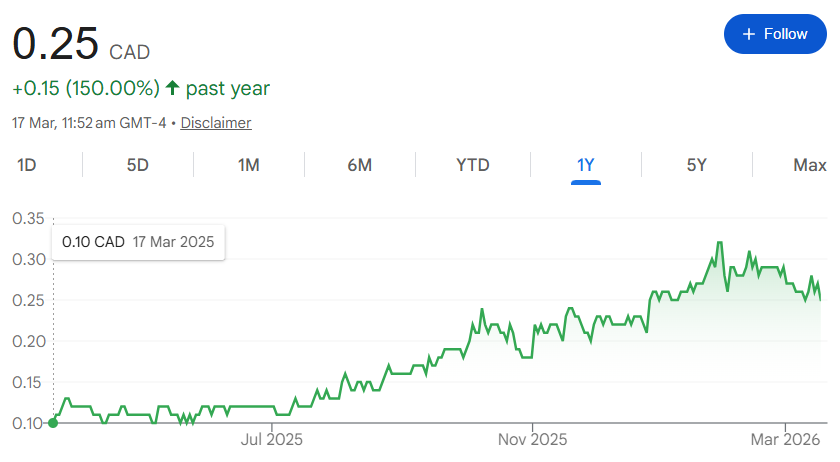
The scarcity hasn't gone unnoticed. Cartier's share price rose 150% over the past year to C$0.25, and retail investors are clamouring for aggressive expansion. But Philippe Cloutier, the company's founder and CEO, is resisting the pressure.
"We're under pressure to grow the program, raise money, bring in more drills. Right now we have to keep a cool head and focus on what we can control - build value per share through the drill bit."
It’s a deliberate strategy aimed not at retail speculators but at the long-game and senior miners that Cartier aims to attract. Indeed, Cloutier confirmed, some majors are already in their data room.
The 80-Year Dataset
Cartier isn't exploring blind. The company inherited over 600 historical drill holes totalling more than 100,000 metres across a 15-kilometre stretch of the Cadillac Fault - an archive spanning eight decades of intermittent work around the former Chimo mine. Most of the historical discoveries were tested locally but never systematically explored at depth or along strike.
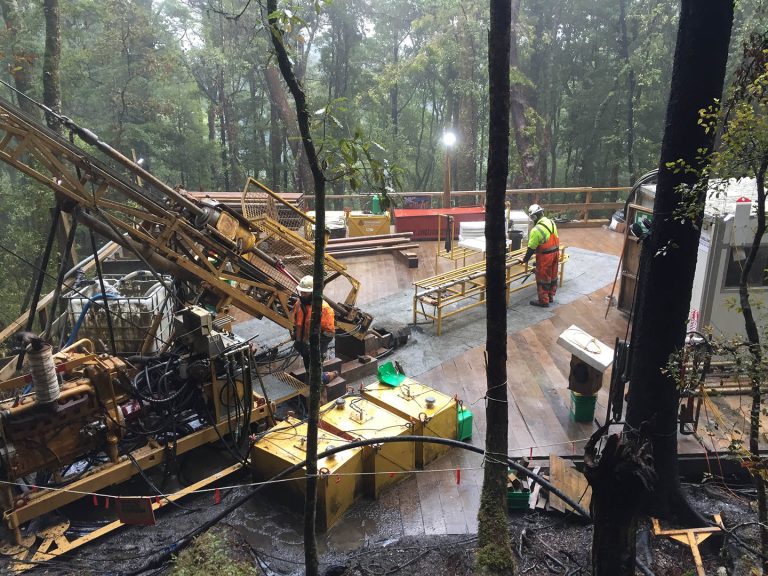
The ongoing 100,000-metre program treats that legacy data as infrastructure. Roughly two-thirds of the drilling targets resource expansion at known zones; one-third pursues new discoveries guided by litho-structural models and VRIFY's AI targeting. Each new hole gets assessed in real time against the broader dataset. The team constantly re-ranks and re-prioritises targets based on incoming results, Cloutier explained - assessing each drill hole against the broader dataset to decide whether to expand known zones or pivot to test new ideas.
The ten targets under evaluation represent four mineralisation styles along a single fault corridor: visible gold in mafic volcanics, visible gold in sediments, coarse sulphides in iron formation, and fine sulphides in felsic intrusions. It's not a shotgun approach - it's an effort to build a geological model comprehensive enough to interest acquirers thinking in decades, not quarters.
Cloutier's thesis is simple: mining districts aren't planned, they emerge.
"You find a mine, then a decade later you find another one. After 50 years, somebody says 'look at that cluster. Had we known, we probably would have organised the infrastructure differently."
Fresh Results, Growing Footprint
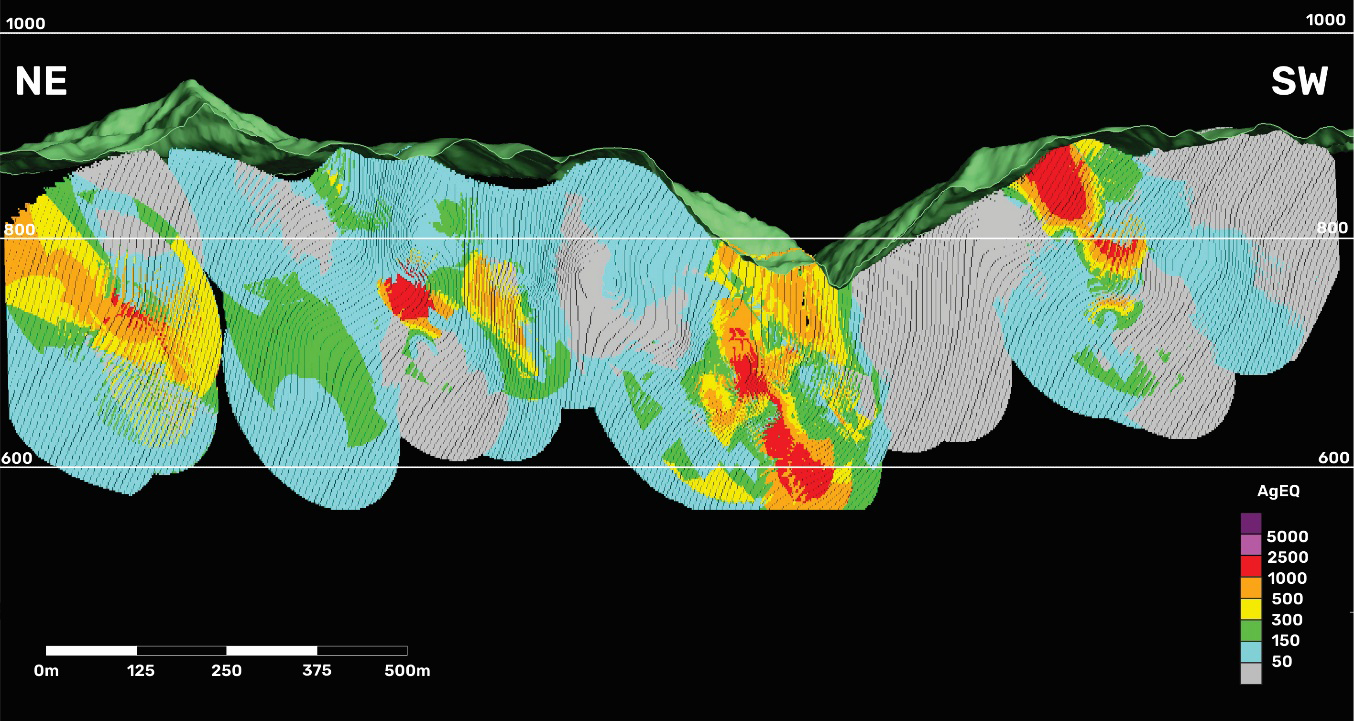
December's resource update showed 767,800 ounces Measured and Indicated - up 7% - and 2.4 million ounces Inferred, a 48% jump. The Main Sector, a three-kilometre system anchored by the old Chimo workings, now hosts 87% of total gold and remains open at depth.
Recent drilling has delivered intercepts like 111.5 g/t gold over 2.0 metres and 30.2 g/t over 2.5 metres at the Contact Sector's North Contact Zone, plus 29.6 g/t over 1.7 metres at newly defined zones in the Main Sector. These aren't flukes - they're expanding known envelopes and confirming structural continuity across a system that extends to at least 1,600 metres vertical depth.
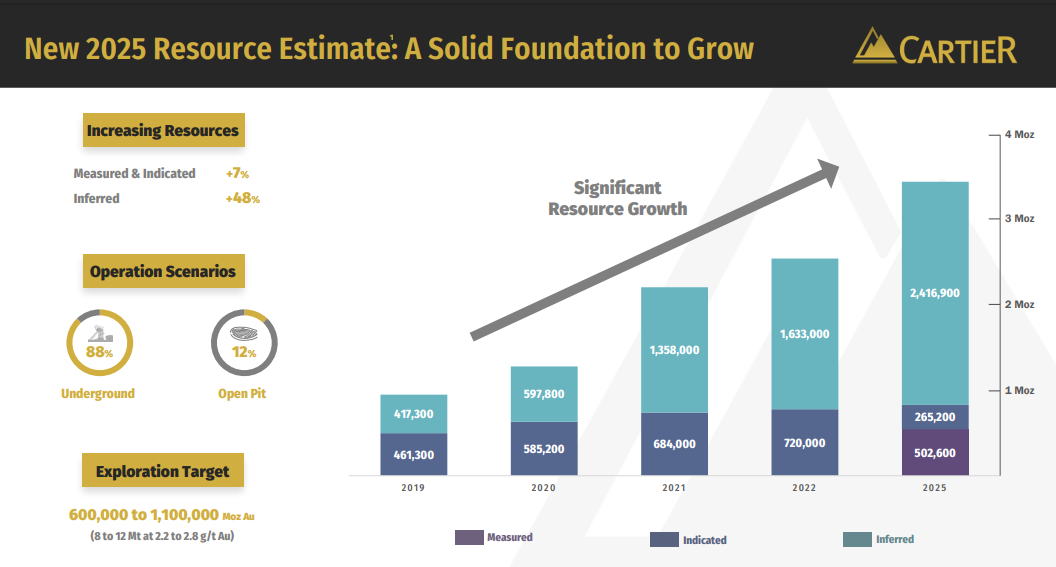
The Contact Sector itself is new to the resource inventory. Sitting on the Héva Fault rather than the main Cadillac structure, it contributed 136,700 ounces of Inferred resources in December - all of it shallow, near infrastructure, and potentially suitable for low-cost open-pit extraction. That optionality matters when you're trying to maximise NPV for a buyer evaluating multiple development paths.
What's Queued for 2026
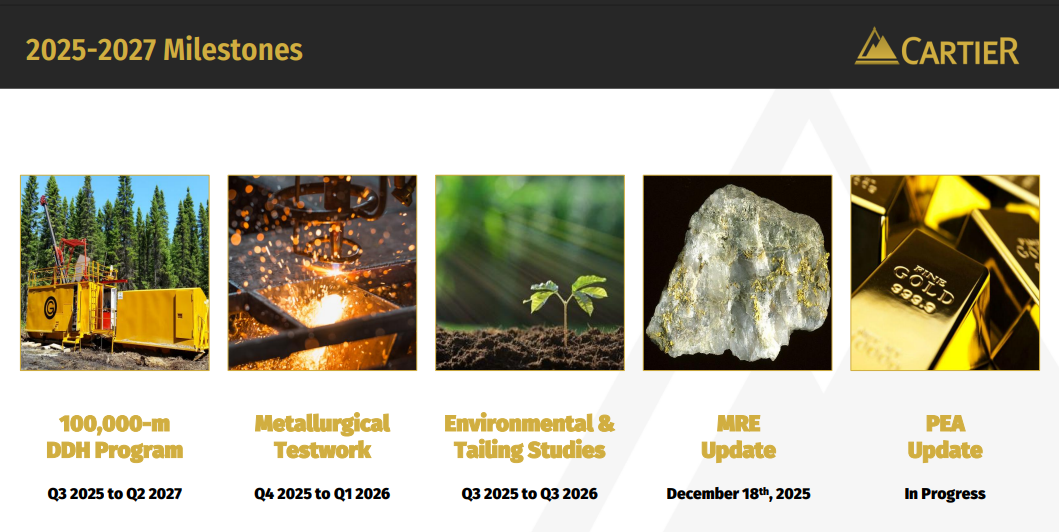
Drilling is only one catalyst. Metallurgical test work launched late last year will feed into an updated Preliminary Economic Assessment, refreshing the 2023 study that assumed US$1,750 gold. With spot prices near record highs, the revised economics should look materially different.
Environmental baseline studies and tailings characterisation are also underway - unglamorous work that de-risks permitting and lays groundwork for scenarios ranging from toll milling with nearby operators to building proprietary infrastructure. The Portal target's proximity to existing mills makes it relevant for near-term cash flow discussions, while newly accessible ground south of the main corridor has opened exploration of Canadian Malartic-type targets - the large, lower-grade sediment-hosted systems that underpin Agnico's multibillion-dollar Odyssey development.
"Are we going to do toll milling? Build a mill ourselves? Bring in a partner? Continue exploring? There's a lot on the drawing table."
When Senior Producers Pull the Trigger
Cloutier was careful not to overpromise on M&A timing, but confirmed that senior companies are actively reviewing Cartier's data. What they're looking for, he noted, isn't flashy grades - it's mine life.
"Senior companies look at things that have 20, 30 years of mine life. That's precisely why we're enthusiastic about what we've set up - a camp-scale program."
The recent M&A wave in Quebec supports the logic. Fresnillo acquired Probe Gold, IAMGold bought Northern Superior, Orezone purchased Hecla assets, and Newmont rationalised its portfolio - all within the past year. Quality juniors in tier-one jurisdictions are thinning out, and Cartier sits directly in the path of companies seeking inventory.
Agnico Eagle's 27.2% position adds another wrinkle. As the world's third-largest gold producer and dominant landholder in the region, Agnico's involvement signals technical validation - but also complicates any competitive takeout scenario.
Interview with Philippe Cloutier, CEO, Cartier Resources
The Retail Message: Ignore the Armchair Quarterbacks
For investors who rode the stock from C$0.095 to C$0.25, Cloutier's advice was pointed: tune out the noise.
"The biggest challenge is not getting distracted by armchair quarterbacks that want to organise your exploration program… If all of a sudden you’re doing some rare earth when you said you’re focused on gold on a prolific fault… that’s confusing."
Cartier allocates 85% of its budget to ground-based work, carries zero debt, and holds roughly C$10 million in cash - enough to fund operations through the current program without near-term dilution. It's not the dramatic narrative some retail investors crave, but it's designed to appeal to strategic buyers with balance sheets that can finance development.
"If you do what you say you're going to do, that always helps."
The Year Ahead
Continuous drill results will sustain newsflow through 2027, with metallurgical data expected mid-year and another resource update likely by December. The refreshed PEA will provide updated economics and scenario analysis, potentially including starter-pit configurations or staged development options.
Cloutier emphasised the team won't cut corners to chase market reactions.
"Once you're creating value per share, you can't destroy that simply because you've surrendered to some impatience in the market."
The setup is straightforward: major producers are consolidating the district, gold is near all-time highs, and the junior landscape in Quebec's most prolific belt has been stripped down to a single independent player sitting on 3.2 million ounces of resources with significant upside.
Senior companies move when they're ready, not when juniors want them to. But as the neighbor pool shrinks and Cartier's technical case strengthens, the question isn't whether the company becomes part of someone's mine-life extension plan - it's who moves first, and at what premium.
Analyst's Notes





Subscribe to Our Channel





Stay Informed






















