




Cartier's 2026 Roadmap: Building Camp-Scale Value While Abitibi Consolidates Around Them


Cartier Resources: Only junior in Val-d'Or corridor, camp-scale gold discovery potential, senior data rooms active, multiple 2026 catalysts, $130M vs $200B majors
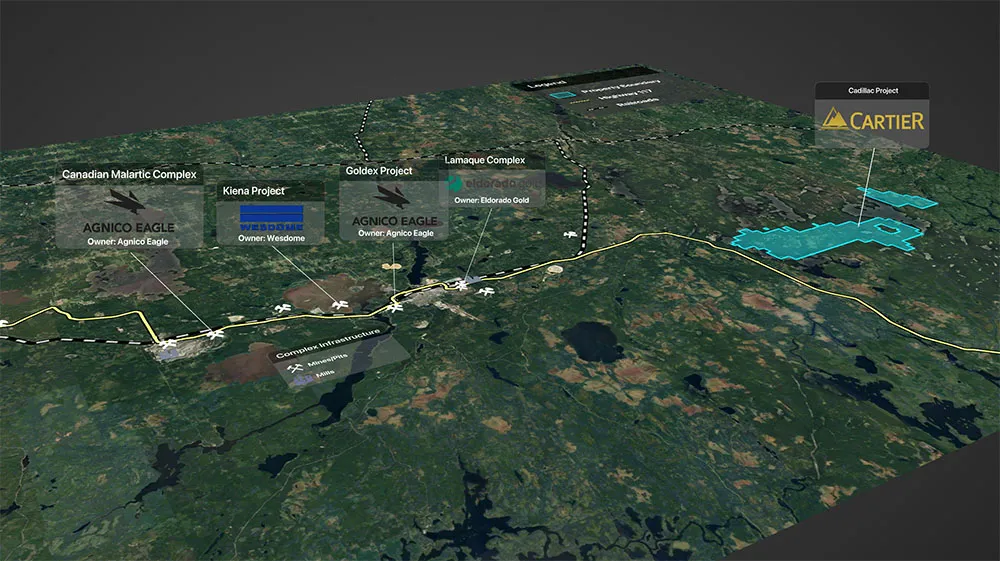
- Cartier Resources is the only remaining junior explorer in the 50-kilometer stretch between Val-d'Or and Malartic, surrounded by major producers with $200 billion combined market cap versus Cartier's $130 million valuation
- The company is pursuing 10 targets across four mineralisation types along a single fault corridor, building 100,000+ meters of drill data from 600+ diamond drill holes spanning 15 kilometers
- 2026 priorities include continuous drilling, metallurgical test results, updated resource estimate, and refreshed preliminary economic assessment using current gold prices (versus $1,750 used in 2023 PEA)
- Management is evaluating multiple paths including toll milling, building proprietary mill infrastructure, direct shipping ore scenarios, and strategic partnerships with neighboring majors
- Data room activity already underway with senior producers seeking long mine-life assets (20-30 years), while recent M&A consolidation in Quebec's Abitibi region continues to thin the available junior asset pool
As gold prices reach record levels and M&A activity accelerates across Quebec's prolific Abitibi Greenstone belt, junior exploration companies face mounting pressure from retail investors demanding faster action and aggressive drilling campaigns. Philippe Cloutier, President and CEO of Cartier Resources, confronts this challenge directly while maintaining focus on a disciplined, data-driven exploration strategy designed to maximise per-share value rather than chase short-term market sentiment.
Speaking from PDAC 2026, Cloutier outlined how Cartier is navigating the delicate balance between building a camp-scale discovery that attracts major producers and managing retail investor expectations in an overheated market. With the company positioned as the sole remaining junior in a 50-kilometer corridor now dominated by billion-dollar producers, the stakes for executing this strategy have never been higher.
The Pressure Cooker: Resisting Market Noise
The current gold market environment creates unique challenges for exploration-stage companies. Cloutier acknowledged that rising share prices and positive drill results generate immediate pressure to expand programs, raise additional capital, and deploy more drill rigs. However, he emphasised the critical importance of maintaining strategic discipline.
"The biggest challenge is sticking to your game plan and not being distracted by the hype that's being built in. Right now we have to keep a cool head and focus on what we can control, which is build value per share through the drill bit."
This approach directly contradicts the instincts of many retail investors who view increased drilling as the primary value driver. Instead, Cartier's management prioritises thoughtful allocation of drilling resources based on continuous reassessment of results against their comprehensive geological database. The company currently operates two drill rigs: one targeting the Portal zone proximal to existing infrastructure, and another exploring Canadian Malartic-type mineralisation in Pontiac sediments to the south.
Camp-Scale Thinking: The Ten-Target Strategy
Cartier's exploration program focuses on 10 distinct targets, which may initially appears to suggest insufficient geological confidence. However, Cloutier reframed this characterisation by explaining these targets represent four mineralisation types along a single fault corridor, all related to historical discoveries surrounding a past-producing gold mine.
The targets emerged from over 80 years of intermittent exploration in the area, with each representing a historical discovery that was either poorly tested, inadequately explored at depth, or left untested laterally. Rather than prospecting with the drill bit, Cartier is systematically evaluating these known occurrences to develop a comprehensive geological model that could define a mining camp.
"A mining camp is this: You find a mine and then a decade later you find another one. A decade later you find another one. And after 50 or 60 years, somebody says, 'Look at that. There's a cluster of mines in this eight or 10 kilometer stretch.' And then some engineer says ‘had we known we probably would have organised the infrastructure differently to optimise’."
This camp-scale vision requires thinking beyond individual deposits and considering how multiple mineralised zones could be developed through shared infrastructure. It also necessitates patient capital and willingness to accept criticism from "armchair quarterbacks" who favour more aggressive, less systematic approaches.
The company employs a continuous assessment process to its drill plans where each new drill result is evaluated against the broader dataset to determine whether drilling priorities should be adjusted. This iterative approach allows for real-time strategic pivoting while maintaining focus on the overarching geological model.
Currently, the company has shifted one drill rig away from the Contact target to explore Canadian Malartic-type mineralisation – large, lower-grade systems hosted in sedimentary rocks. This target type became accessible only recently when Cartier acquired the relevant ground position, opening exploration potential similar to the discovery that led to Agnico Eagle's current deep drilling program at the Odyssey deposit.
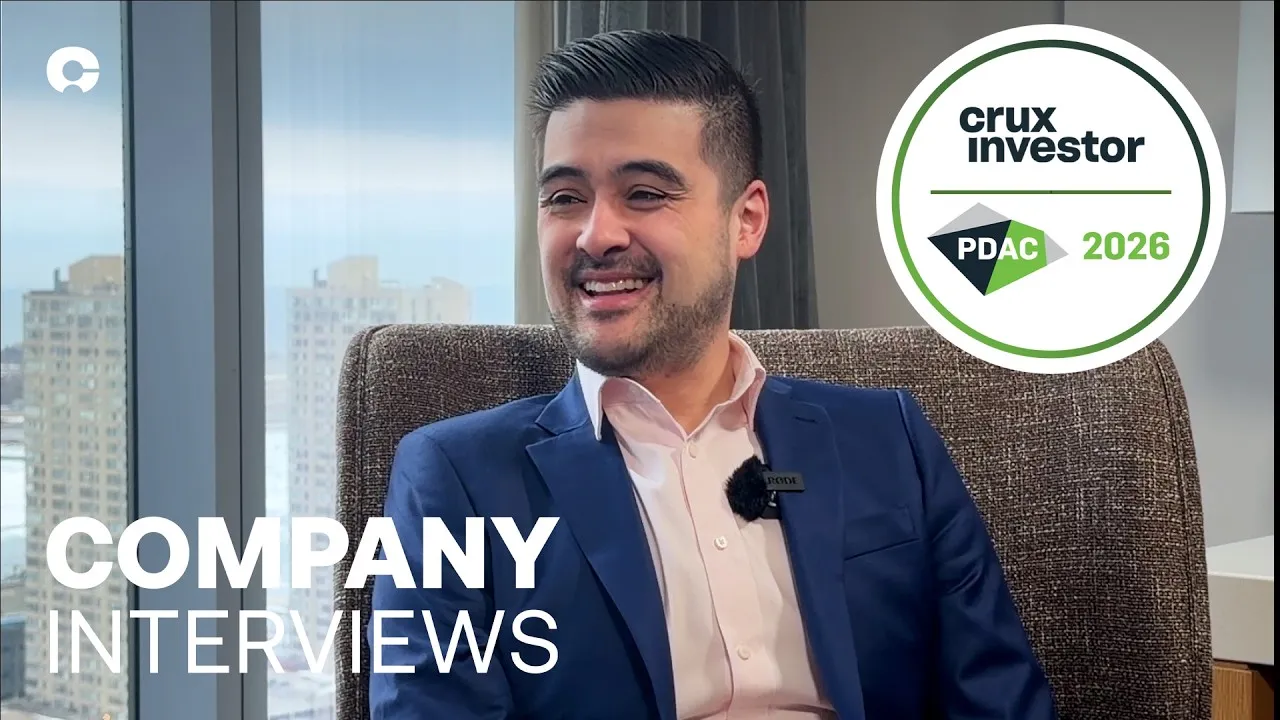
Interview with Philippe Cloutier, CEO, Cartier Resources
The Val-d'Or Consolidation Context
Cartier operates in an increasingly consolidated competitive environment. The company described itself as "the only junior left standing in that small 50 kilometer stretch from Val-d'Or to Malartic," surrounded by Agnico, Wesdome, El Dorado, and Fresnillo - companies with a collective $200 billion market cap compared to Cartier's $130 million valuation.
This positioning creates both challenges and opportunities. Senior producers make decisions on vastly different timescales than junior explorers and evaluate projects based on criteria that emphasise long mine life (20-30 years) over near-term production potential. Consequently, Cartier cannot afford to produce work that might be perceived as "fluffy" by sophisticated technical teams at these major companies.
Recent M&A activity underscores the thinning junior landscape. Fresnillo’s acquisition of Probe Gold, IAMGold's purchase of Northern Superior, Orezone's acquisition of Hecla assets, and Newmont's portfolio rationalisation all point toward consolidation among quality Canadian gold assets. Cloutier suggested that as M&A activity continues, "the quality M&A will be in our jurisdiction and I think we're going to be one of them."
2026 Priorities: Multi-Front News Flow
The company's 2026 work program encompasses several parallel workstreams designed to advance the project toward development decisions. Continuous drilling will remain the primary activity, with 85% of the budget directed toward ground-based work. Metallurgical test results launched in fall 2025 will be integrated into economic assessments, providing critical data about processing characteristics and recovery rates.
Cartier plans to update its resource estimate and refresh the preliminary economic assessment originally completed in 2023 using a $1,750 gold price. With current gold prices substantially higher, this updated PEA could materially improve project economics and support various development scenarios being evaluated.
These scenarios include toll milling arrangements with nearby operations, construction of proprietary mill infrastructure, bulk sampling programs, and direct shipping ore opportunities. Each pathway offers distinct advantages depending on near-surface mineralisation characteristics and proximity to existing infrastructure. The Portal target's location near infrastructure makes it particularly relevant for near-term monetisation scenarios.
Strategic Optionality and Senior Company Engagement
Cloutier confirmed that senior companies are already reviewing Cartier's data room, a significant validation of the project's technical merit. However, he emphasised that major companies move according to their own triggering mechanisms, which Cartier cannot directly control beyond presenting high-quality results.
"Senior companies, unlike retail and smaller companies, look at things that have a long mine life, because they've learned through the past that it's the long game that gets them to where they are at. So they're looking at things that have 20, 30 year mine lives. And so that's precisely why we're very enthusiastic and happy about what we've set up at Cadillac, a camp-scale ambitious program."
The company is simultaneously stepping up marketing efforts in Europe and Asia to broaden its investor base beyond North American retail. This expanded reach could create additional competitive tension among potential acquirers while building the shareholder support necessary to maintain strategic patience during the exploration phase.
Managing the Long Game
For retail investors, Cartier's message emphasises execution consistency and strategic discipline rather than dramatic near-term action. The company stressed the importance of doing what was promised - focusing on gold exploration along a prolific fault corridor without chasing trendy commodities or deviating from the stated plan.
Each of the company's 2026 deliverables - drill results, metallurgical data, updated resource estimates, and refreshed economic assessments - has potential to create step-change value depending on results. The shift toward exploring Canadian Malartic-type mineralisation represents particularly high-impact potential given the success Agnico Eagle achieved with similar geology.
Cloutier's closing comments emphasised the CEO's primary challenge: filtering noise and maintaining focus on controllable factors. Whether from product vendors at PDAC, geopolitical uncertainties, or impatient shareholders, distractions abound. The successful path forward requires staying "designed and built to do, which is to grow the value of your assets and be ready at all times to transact and or develop."
The Investment Thesis for Cartier Resources
- Scarcity Value: Only remaining independent junior in 50km Val-d'Or to Malartic corridor, surrounded by $200B of senior producer market cap (Agnico, Wesdome, El Dorado, Fresnillo) seeking long-life assets
- Multiple Value Catalysts in 2026: Continuous drill results, metallurgical testing outcomes, updated resource estimate, and refreshed PEA using current gold prices (vs. $1,750 in 2023 study) create sustained news flow
- Development Optionality: Near-infrastructure Portal target enables multiple pathways including toll milling, bulk sampling, DSO scenarios, or full mill construction, reducing single-path dependency
- Camp-Scale Discovery Potential: Systematic exploration of 10 targets across four mineralisation types along single fault corridor targets multi-decade mine life attractive to senior acquirers
- Canadian Malartic Analogue Exposure: Recent ground acquisition enables exploration of large, lower-grade sediment-hosted systems similar to discoveries that created Agnico's Odyssey program
- Capital Allocation Discipline: 85% of budget directed to ground-based exploration maximises shareholder value per drill meter while resisting pressure for unfocused program expansion
- Jurisdiction Quality: Quebec's Abitibi Greenstone belt provides tier-one political risk profile, established infrastructure, skilled workforce, and proven mining camp geology
Quebec's Abitibi Greenstone belt is experiencing an accelerating consolidation phase driven by senior producers seeking to extend mine life in a proven jurisdiction as global gold prices reach historic highs. Major companies have rationalised portfolios and refocused capital on tier-one assets, creating intense competition for the diminishing pool of advanced-stage junior projects. With permitting timelines extending globally and political risks rising in emerging jurisdictions, established mining camps like Val-d'Or offer reduced development risk and infrastructure leverage. Cartier's positioning as the sole remaining independent junior in a corridor now controlled by $200 billion of senior producer market cap places it at the epicenter of this consolidation trend, particularly as companies seek multi-decade mine life extensions rather than short-term production additions.
TL;DR: Executive Summary
Cartier Resources is systematically exploring camp-scale gold potential along an 15km fault corridor in Quebec's Val-d'Or district, leveraging 100,000+ meters of historical data to prioritise 10 targets across four mineralisation types. As the only remaining independent junior in a corridor now dominated by $200 billion of senior producer market cap, the company is advancing multiple 2026 catalysts including continuous drilling, metallurgical results, updated resource estimates, and a refreshed PEA while senior companies actively review data rooms. Strategic optionality includes near-infrastructure development scenarios and Canadian Malartic-type discovery potential in recently acquired ground.
FAQs (AI Generated)
The 10 targets represent four mineralisation types along one fault corridor surrounding a past-producing mine. Cartier is systematically evaluating 80 years of historical discoveries to build a comprehensive camp-scale geological model attractive to senior producers seeking long mine lives.
Cartier prioritises data-driven decision-making over drilling volume, continuously reassessing results against 100,000+ meters of historical data. Management resists market pressure for rapid program expansion, instead focusing on maximising per-share value through systematic exploration and maintaining work quality acceptable to sophisticated senior company technical teams.
Recent ground acquisition enabled targeting large, lower-grade sediment-hosted systems similar to the discovery that led to Agnico's Odyssey program. This represents high-impact potential analogous to the 2003-2006 Canadian Malartic discovery that transformed the district and created decades of mine life.
Options include toll milling with nearby operations, bulk sampling programs, direct shipping ore from near-surface zones, building proprietary mill infrastructure, or strategic partnerships. The Portal target's proximity to infrastructure makes it particularly relevant for early monetisation while exploration continues elsewhere.
Eighty-five percent of budget is directed to ground-based exploration work. The company is increasing marketing presence in Europe and Asia but maintains discipline around capital allocation, prioritising drill-based value creation over promotional spending or unfocused program expansion.
Analyst's Notes





Subscribe to Our Channel









Stay Informed






















