Oil’s 2% Drop Lifts Gold Above US$4,000, Offering Miners Potential Cost Relief



Lower oil eases rate-hike pressure on gold and could cut mining costs as fuel contracts reset, while cash reserves let producers wait without issuing shares.
- Spot gold rose 0.5% to US$4,014.49 per ounce on 26 October, recovering from US$3,975 as Brent fell 2% to around US$114 a barrel.
- Metals Focus’ 24 August report put Q1 2026 average all-in sustaining costs at US$1,785 per ounce, up 16% year on year, with royalties the largest contributor.
- On 26 October, CME FedWatch priced hike probabilities at 9% for 28 October and 80% for 9 December, limiting gold’s appeal against interest-paying assets.
- Lower oil prices could support gold by reducing inflation pressure and cut mine operating costs as fuel contracts reset, giving producer margins two potential sources of recovery.
- At US$3,975 gold, unchanged Q1 2026 costs imply a US$1,477-per-ounce margin at the 90th cost percentile; higher gold prices or lower costs would widen that margin.
Oil’s Retreat Helps Gold Reclaim US$4,000
Spot gold rose 0.5% to US$4,014.49 per ounce, recovering from Friday’s US$3,975 low. Brent fell 2% to around US$114 a barrel, reducing inflation pressure that could otherwise support further Fed rate hikes.
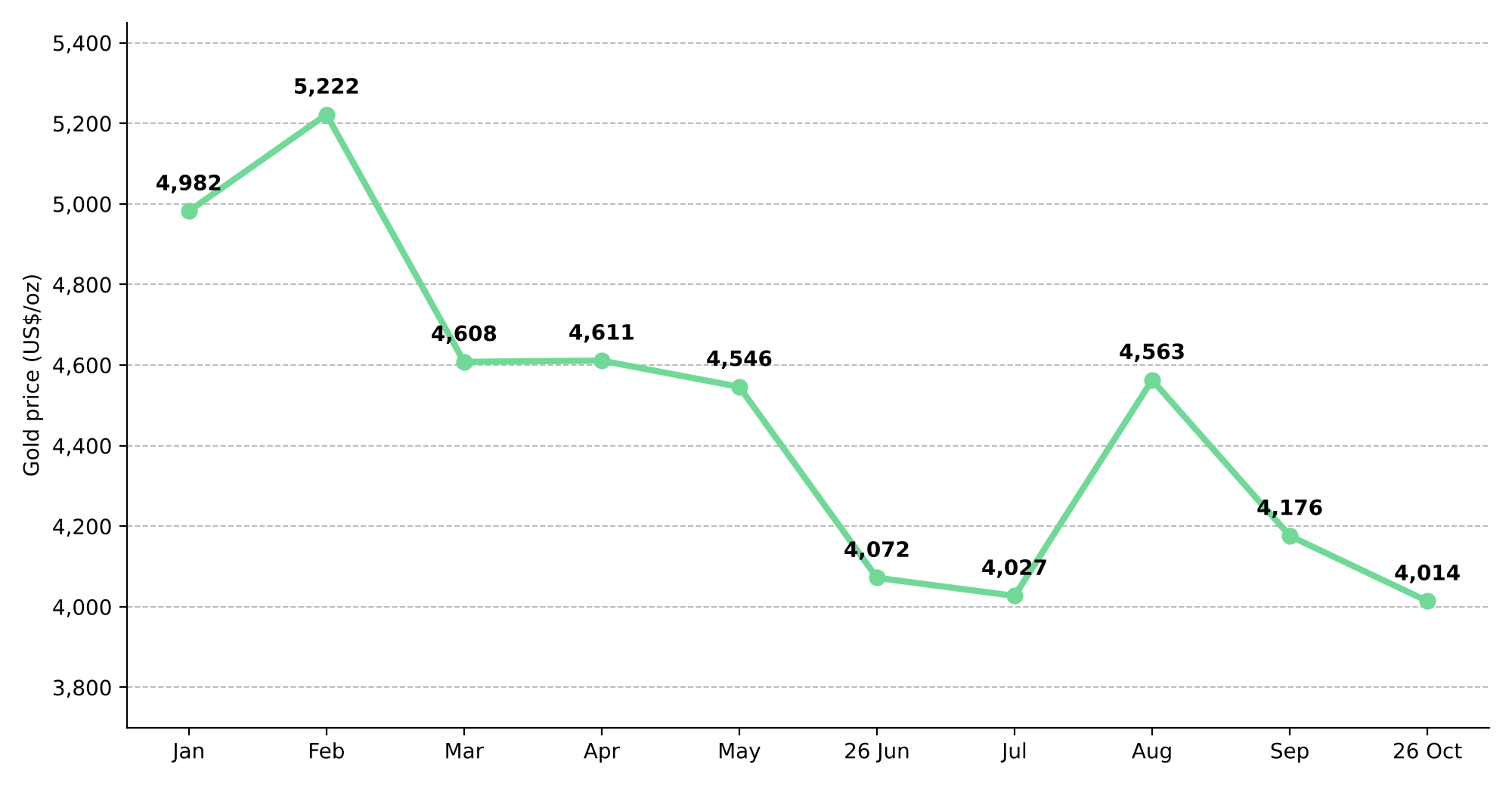
Gold remains about 28% below its January spot record of US$5,595.47. It fell 8.5% in September as the US 10-year Treasury yield rose 53 basis points to 5.3%, making bonds more competitive with gold. Lower gold prices cut unhedged producers’ revenue per ounce, while fuel savings can take longer to reach mine budgets, leaving potential margin gains if oil stays lower.
Lower Energy Prices Could Relieve Mining Cost Pressure
Global average AISC rose 16% year on year to US$1,785 per ounce in Q1 2026, led by higher royalties. US diesel prices ended the quarter 54% higher, while energy and shipping disruptions increased freight and processing costs. Contracts and hedging can delay these increases reaching mine budgets.
Higher oil prices can also raise inflation and Fed rate expectations, making interest-paying assets more competitive with gold. The Fed raised its target range to 3.75%-4% in September, while funds reduced net gold futures positions by US$12 billion that month. Sustained lower oil prices could help producer margins recover by reducing operating costs and inflation pressure.
Fuel Contract Resets Could Turn Cheaper Crude Into Savings
Fuel contracts and diesel refining margins can delay savings from lower crude prices. Brian Tabolt, Executive Vice President and Chief Financial Officer at Newmont, said diesel prices remained slow to fall, partly reflecting refining margins. Newmont’s 22 October Q3 results target Q4 by-product AISC of US$1,900 per ounce, within a ±5% guidance range, using US$4,500 gold and US$70 Brent assumptions.
For a mine at the 90th cost percentile, Metals Focus’ Q1 data imply costs of US$2,498 per ounce. Holding those costs constant, US$4,014.49 gold implies a US$1,516 AISC margin, 36% below Q1’s US$2,363. At US$3,975 gold, that margin falls to US$1,477. These are price scenarios, with subsequent cost changes excluded.
Lower rate expectations could support gold, while cheaper diesel could widen margins as contracts reset. Renewed oil increases and further Fed hikes could instead squeeze margins through higher costs and weaker gold prices. Upcoming Fed decisions and US inflation data could change gold pricing; Q4 results will help establish whether fuel savings have reached mine costs.
Cash Reserves Help Miners Avoid Dilution During Gold’s Pullback
Unhedged producers’ revenue per ounce tracks gold prices, while contracts can delay changes in fuel and reagent costs. Diesel-powered equipment and long haul routes increase mines’ exposure to fuel prices.
Newmont’s 22 October Q3 results estimate US$50 million of additional indirect costs for each US$10-per-barrel rise in Brent from its US$70 assumption. Disclosed fuel sensitivity, available cash and debt payments help establish whether a producer can absorb higher costs without issuing shares.
In a fixed-cost scenario, US$4,000 gold and a US$1,500-per-ounce AISC margin mean a 10% gold-price decline cuts that margin by about 27%. The same sensitivity offers proportionately larger margin gains if gold recovers. Cash sufficient to cover operations, committed spending and debt payments reduces the need to issue shares during the squeeze, preserving shareholders’ exposure to any recovery.
How Lower Oil Rebuilds Mining Margins
For unhedged, higher-cost producers, a gold recovery could deliver larger percentage margin gains if costs remain unchanged. Cash reserves covering operations, committed spending and debt payments reduce the need to issue shares while fuel savings take time, preserving shareholders’ exposure to the potential recovery.
Analyst's Notes





Subscribe to Our Channel




Stay Informed