Falling Real Yields Cut Gold's Opportunity Cost Despite Uneven Demand



Mixed gold fund flows show that lower Treasury yields have not secured stronger demand, while mine upgrades offer opportunities for higher sales and cash flow.
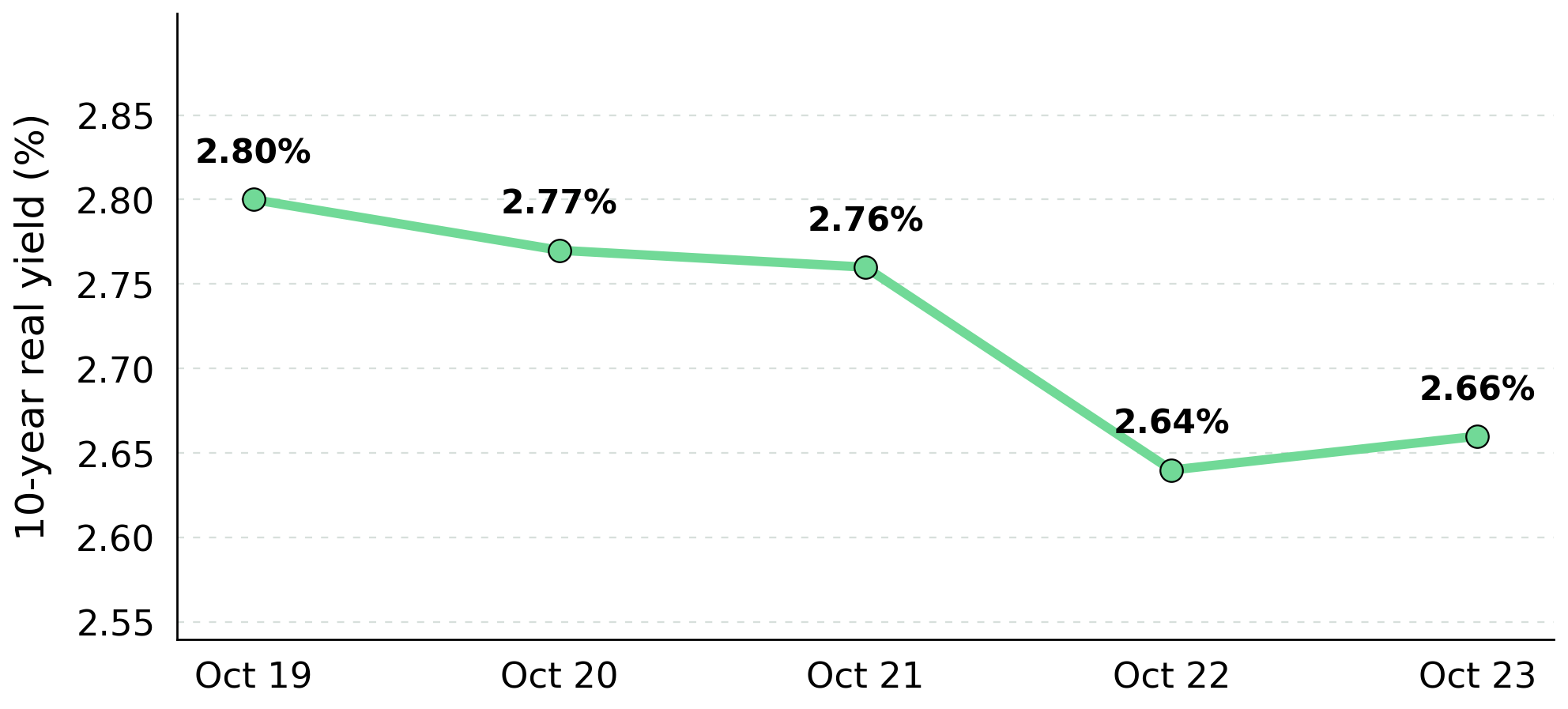
- US 10-year nominal Treasury yields declined from 5.15% to 5.00% during October 19-23, while real yields dropped from 2.80% to 2.66%, lowering gold's opportunity cost.
- Market-implied odds of an October Fed rate hike fell from about 70% to below 10% in one month, changing gold's competition with interest-bearing assets.
- Global gold exchange-traded funds (ETFs) attracted US$31 billion in the third quarter, but more recent North American outflows show that falling yields do not guarantee additional gold demand.
- Producing mines offer exposure through actual gold sales and potential cash flow, with processing investments and accessible mineralization supporting further output.
- September inflation and third-quarter US economic growth data due October 29 could change Treasury yields and gold's appeal relative to interest-bearing assets.
Falling Real Yields Cut Gold's Opportunity Cost
Market-implied odds of an October Fed rate hike fell from about 70% on September 26 to below 10% on October 26, according to the World Gold Council (WGC). Ahead of the October 28 policy decision, the lower probability reduced the likelihood of higher interest rates increasing gold's opportunity cost.
The US Department of the Treasury recorded a decline in the 10-year nominal Treasury yield from 5.15% on October 19 to 5.00% on October 23, while the 10-year Treasury Inflation-Protected Securities (TIPS) yield fell from 2.80% to 2.66%. The 14-basis-point decline in real yields reduced the inflation-adjusted return forgone by holding physical gold, which pays no interest.
WGC attributed the Treasury rally mainly to buying during weakness in AI-related equities, rather than lower inflation expectations. The Bureau of Economic Analysis (BEA) reported annual personal consumption expenditures (PCE) inflation of 3.4% in August, while WGC cited a 3.6% forecast for September, indicating that lower Treasury yields were not driven by confirmed declines in inflation.
Mixed Fund Flows Signal Uneven Gold Demand
The London Bullion Market Association (LBMA) afternoon gold benchmark fell 4.2% to approximately US$4,013 per ounce during the week ending October 23. The decline occurred despite lower real Treasury yields, indicating that reduced opportunity costs alone did not lift gold prices.
Gold-backed ETFs attracted US$10 billion globally in September and a record US$31 billion in the third quarter. WGC's subsequent provisional weekly estimates showed 13.1 tonnes of North American outflows against 4.3 tonnes of European inflows, indicating uneven gold buying despite lower US Treasury yields.
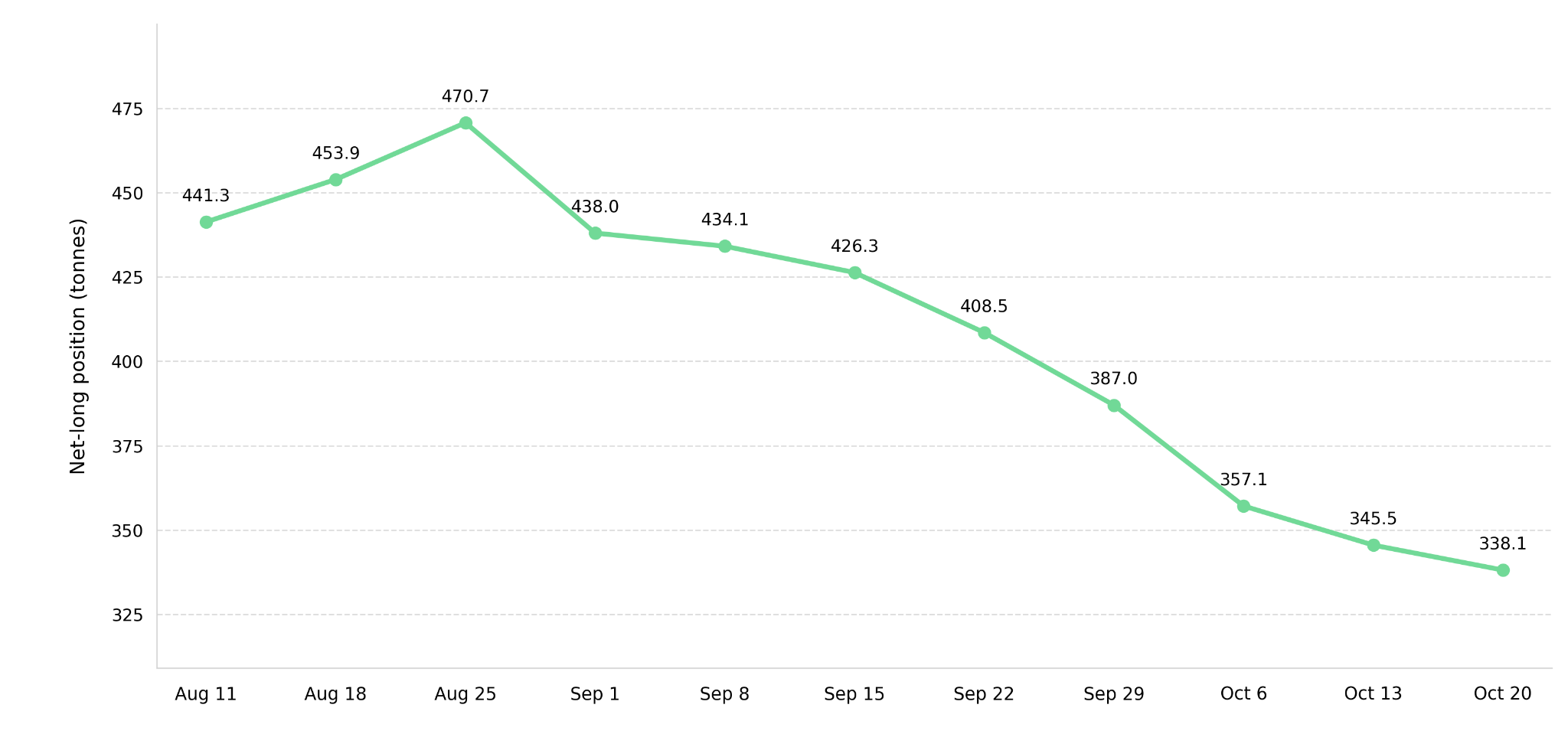
Commodity Futures Trading Commission (CFTC) data showed managed-money net-long gold futures positions falling from 345.5 tonnes on October 13 to 338.1 tonnes on October 20. Combined with mixed regional ETF flows, the decline indicates that lower Treasury yields had not produced consistent buying across gold funds and futures markets.
Higher Gold Prices Expand Margins Despite Cost Pressure
Uneven gold investment demand highlights the importance of examining mining companies' operating performance. Unlike physical gold, producing mines can generate revenue through gold sales, making production growth and sales volumes useful measures of their financial potential.
Mineros S.A. produced 62,565 ounces of gold in the third quarter, up 14% year over year, and raised its 2026 production guidance for the second time to 235,000-245,000 ounces. Higher output at Hemco and improved recovery at Nechí helped lift quarterly gold sales 11.7% to 61,281 ounces, while Hemco's stockpiled ore containing approximately 18,856 ounces of gold provides additional material for future production.
Daniel Henao, President and Chief Executive Officer of Mineros S.A., explains how rising gold prices affect mining costs:
"If gold goes up to 5,000, then that puts a ton of cost pressure. At the same time, it expands our margins. So our cost is heavily indexed to the gold price."
While lower Treasury yields improve gold's relative appeal, mining companies can also strengthen their financial performance through higher production and gold sales. This shifts attention to operational improvements that allow existing mines to increase output and generate additional revenue.
Mine Upgrades Lift Output While Prices Shape Plans
Integra Resources produced 17,652 ounces of gold at Florida Canyon in the third quarter, up 8% from the previous quarter and 40% from the first quarter. Ore placed on the processing pads increased 25% quarter over quarter, supporting higher gold output. With US$119.5 million in cash as of September 30, the company can fund continued mine improvements and advance plans to access higher-grade ore in 2027.
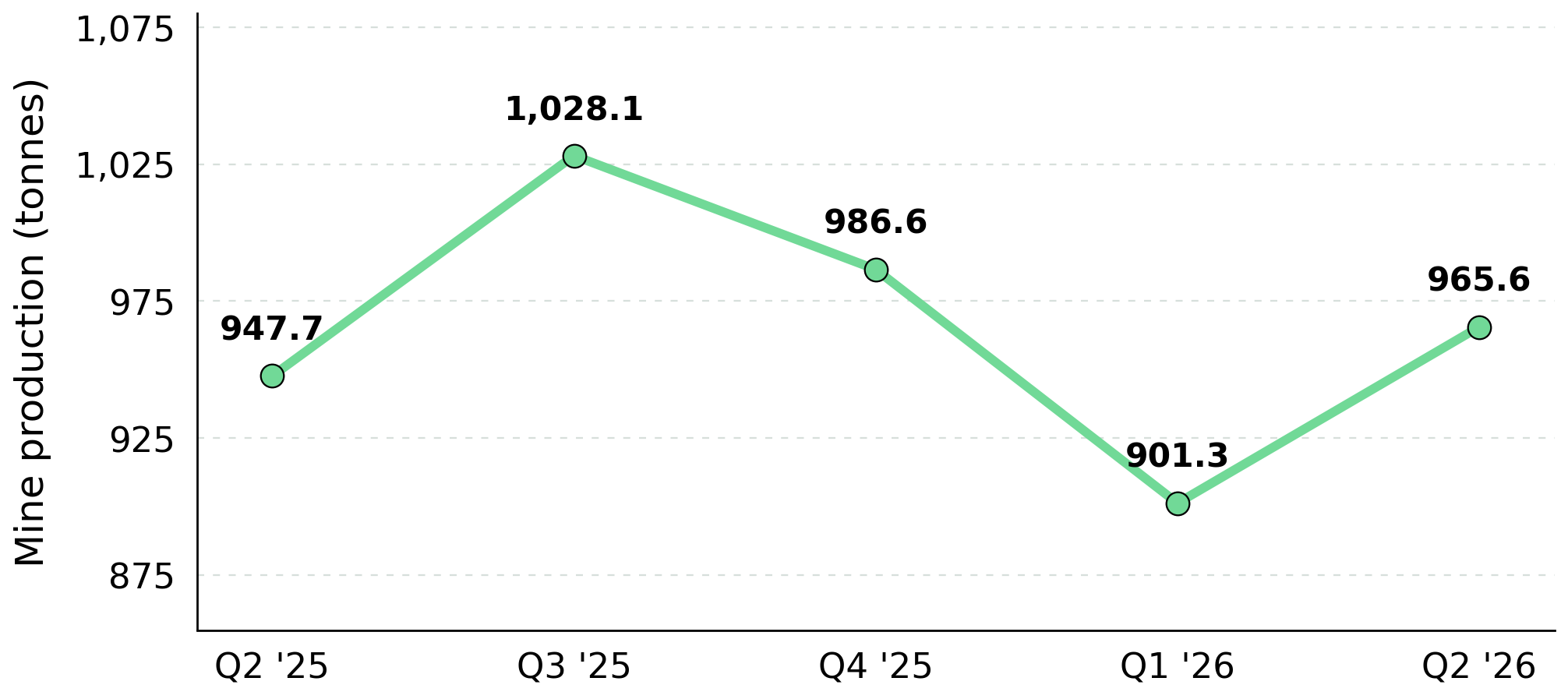
Operating improvements can increase gold output at individual mines even as broader supply growth remains measured. WGC recorded 965.6 tonnes of global mine production in the second quarter of 2026, up 2% year over year. Expanding processing capacity offers another route to higher production and potential gold sales.
TRX Gold produced 29,650 ounces of gold in fiscal 2026, up 57% year over year, while the annual average market gold price increased 46% to approximately US$4,386 per ounce, supporting expectations of higher revenue. Upgrades at Buckreef have improved processing capacity and gold recovery, while the planned 3,500-tonne-per-day milling expansion provides potential for further production growth.
Stephen Mullowney, Director and Chief Executive Officer of TRX Gold, explains how gold prices influence mine planning decisions:
"The mining business is about getting as much good ore to the mills quickly as possible and having a decent size mill with good grade. Given the change in gold price, it makes more sense to do an open pit longer and then go underground thereafter."
Mill Expansions Support Future Gold Output
With global gold mine production growing at a measured pace, processing expansions at existing mines offer another route to increasing supply. Higher processing capacity can support additional gold production and sales when sufficient ore is available and recovery rates are maintained.
Serabi Gold produced 11,008 ounces of gold in the third quarter and completed the installation of its fourth ball mill at Palito on schedule and within budget. The expansion is expected to increase annual processing capacity to 330,000 tonnes in 2027, supporting higher gold production once additional Coringa approvals are secured. With US$63.2 million in cash and no debt, the company has financial capacity to continue funding its growth plans.
Near-Mine Drilling Supports Future Production
Beyond processing capacity, access to additional gold-bearing material can support production growth at existing mines. With real Treasury yields still positive, discoveries near established underground infrastructure may offer a more direct path to future gold sales and cash flow.
West Red Lake Gold Mines reported high-grade drilling results at its Madsen mine, including 176.04 grams of gold per tonne over 5.3 meters and 128.32 grams per tonne over 4.5 meters. The results support the potential addition of gold-bearing areas to its 2027 mine plan. A previously unmined 200-meter-by-200-meter zone near existing underground infrastructure could also support more efficient extraction and future gold production.
Access to existing mining infrastructure can help bring future gold production forward, while established processing facilities offer another way to shorten development timelines. Earlier production can accelerate potential gold sales and cash flow, improving the value of projected earnings.
Existing Mills Bring Gold Sales Forward
New Found Gold's revised preliminary economic assessment (PEA) for Queensway estimates after-tax NPV at a 5% discount rate (NPV5%) of C$1.728 billion and an internal rate of return (IRR) of 126%, using a base-case gold price of US$3,600 per ounce. Its Measured and Indicated resource increased 38% to 1.920 million ounces. Hammerdown is in production, while the existing Pine Cove mill is being prepared for Queensway feed targeted for the fourth quarter of 2027.
Keith Boyle, Director and Chief Executive Officer of New Found Gold, explains how existing mills accelerate future gold production:
"Considering the permitting time, the development time, and then the production time on site at Queensway, we accelerated that production by 3 years. We'll be sending first ore to the expanded Pine Cove Mill, which we own, from Queensway. That'll be in the fourth quarter of 2027."
Existing processing infrastructure can shorten the path to gold sales, while reaching initial production brings projects closer to generating recurring revenue. Expanding processing throughput can then support higher output and future cash flow.
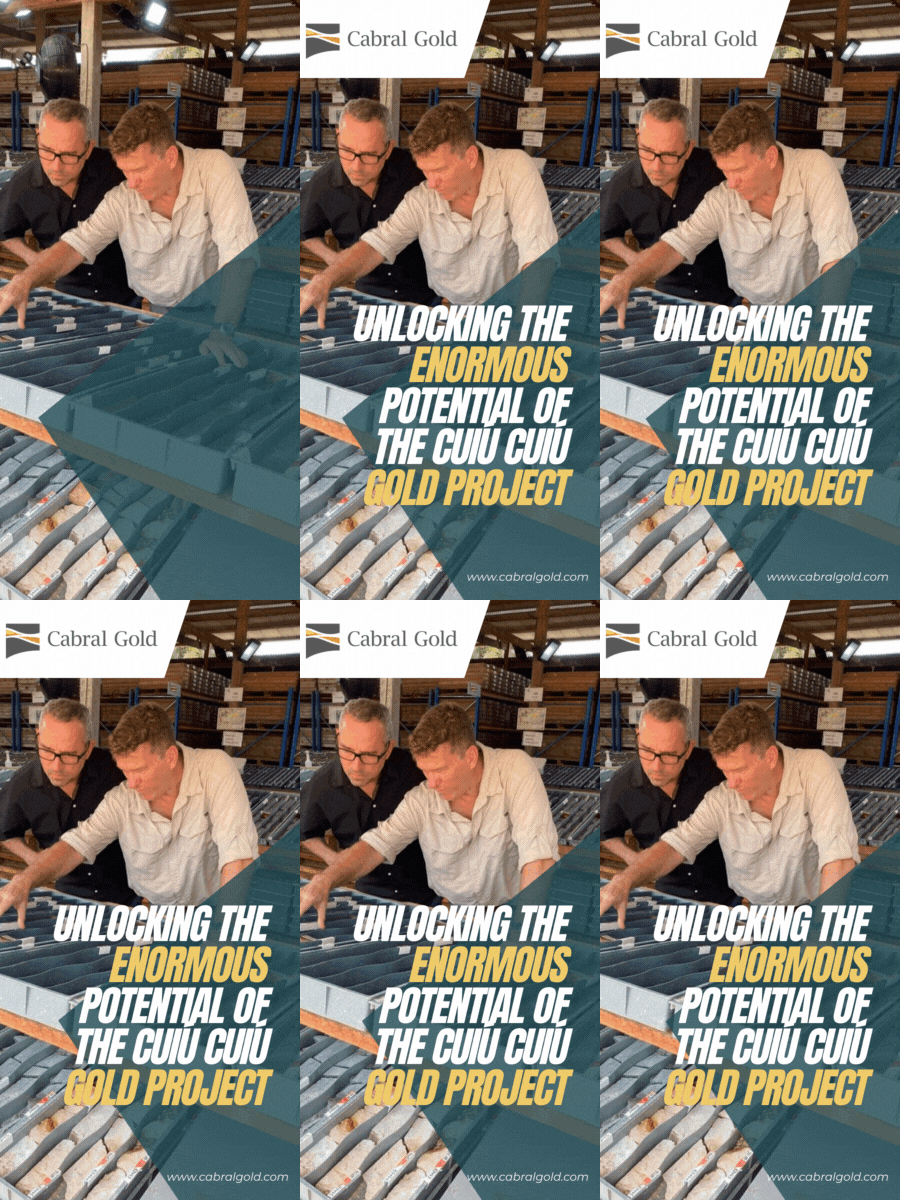
Cabral Gold completed its first gold pour at Cuiú Cuiú and expects commercial production in November 2026, bringing its first mine closer to sustained gold output. Additional near-surface gold discoveries have prompted the company to consider doubling processing throughput within approximately 12 months. Six active drill rigs and a planned year-end resource update could also support further production growth.
How Could Fed Policy Shift Gold's Appeal
The Fed's October 28 decision will determine whether rates rise despite market-implied hike odds below 10%, potentially affecting gold's opportunity cost. September PCE inflation and third-quarter US gross domestic product (GDP) figures, due October 29, will test forecasts of 3.6% annual inflation and 3.2% annualized growth, potentially influencing Treasury yields.
Real Treasury yields will indicate whether the upcoming Fed decision and inflation data change gold's opportunity cost, while ETF flows and futures positions will show whether gold buying strengthens. Gold producers' earnings depend on ounces sold, realized prices, and operating costs, with processing expansions supporting cash flow when additional revenue exceeds the associated costs.
The Investment Thesis for Gold
- Lower Fed hike expectations and falling Treasury yields have reduced gold's opportunity cost, making bullion more competitive with bonds without guaranteeing stronger demand.
- Positive real Treasury yields preserve bonds' income advantage over physical gold, keeping inflation-adjusted returns central to bullion's relative appeal.
- ETF flows and futures positioning indicate whether lower Fed rate expectations are accompanied by sustained gold buying.
- Operating gold mines can generate revenue and cash flow from production, differentiating mining equities from holding non-yielding bullion.
- Processing expansion, accessible mining inventory, and existing infrastructure can support production growth when ore supply, recovery, and capital requirements remain controlled.
- Consistent output, payable costs, and disciplined reinvestment are essential to evaluating producing mines across changes in interest rates and gold demand.
Lower Fed hike expectations and declining Treasury yields have improved gold's appeal relative to bonds, while sustained fund inflows would provide clearer evidence of stronger demand. Higher gold production and processing capacity can also increase sales and cash flow, creating a separate source of value. The stronger investment case emerges when sustained bullion demand supports gold prices and mining operations convert production gains into cash flow that can finance further growth.
TL;DR
Market-implied odds of an October Fed rate hike fell below 10%, while declining real Treasury yields reduced gold's opportunity cost relative to bonds. However, gold prices weakened despite lower yields, and mixed regional exchange-traded fund flows showed that demand remained uneven. Gold mining companies offer additional financial potential through higher production, processing expansions, and access to gold-bearing material near existing infrastructure. Recent operating results demonstrate how mine improvements can increase output, while existing mills can shorten production timelines. The Fed's upcoming policy decision and US economic data could influence gold's relative appeal, but sustained bullion demand and mining cash flow remain important drivers of gold-related valuations.
FAQs (AI-Generated)
Analyst's Notes





Subscribe to Our Channel














Stay Informed