Cobra Resources: Independent Molybdenum at Manna Hill Signals an Unpriced Byproduct Credit


Cobra Resources' Manna Hill project shows standalone molybdenum mineralisation that current disclosures have not yet priced into project valuation.
- Cobra Resources is advancing a fully funded six-hole diamond drilling programme at the Manna Hill porphyry-skarn project in South Australia.
- Molybdenum mineralisation at the project's Blue Rose prospect occurs independently of the copper-gold skarn system and is tied to a separate monzogranite intrusive phase.
- Management describes the standalone molybdenum as exceeding 1% on a copper-equivalent basis, with the potential to be processed as a separate parcel rather than as part of a copper-molybdenum concentrate.
- No cost-offset, net smelter return, or formal economic study figures for the molybdenum component have been disclosed in any released material.
- The current drilling programme tests both a newly defined large-scale porphyry target and the depth extension of known skarn mineralisation, and is expected to be completed within approximately 40 days.
Manna Hill Project Overview & Current Drilling Programme
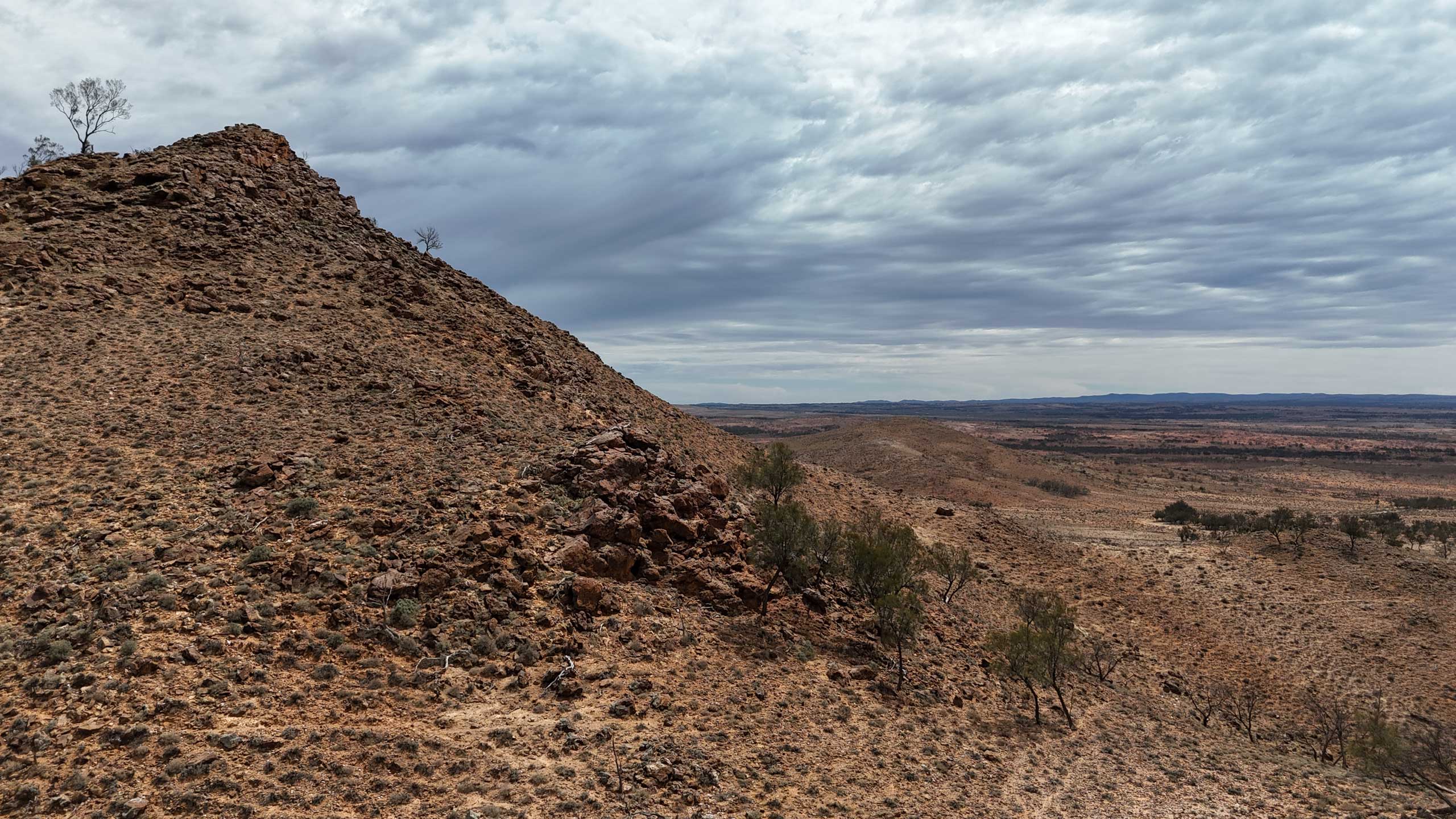
The current drilling campaign is Cobra Resources' (LSE: COBR) first diamond-drilling test of a system that it has previously interpreted through reverse-circulation (RC) drilling, geophysics, and surface mapping. The project is described as South Australia's premier early-stage porphyry and skarn prospect, read as an intrusive-related porphyry copper system. Every metre drilled functions as foundational data intended to support future resource definition and extensional targeting, building on the RC drilling, geophysics, and geochemistry already completed.
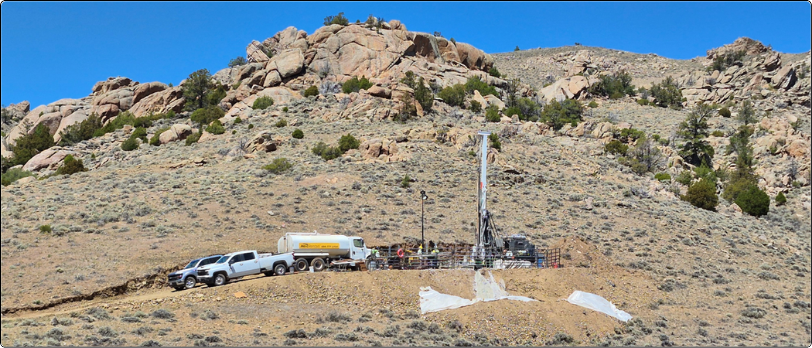
The programme underway is fully funded and comprises up to six diamond holes totalling approximately 1,800 metres, run on double shifts to compress the timeline. Completion is expected within roughly 40 days of commencement, putting a dated catalyst directly ahead of the market rather than an open-ended exploration commitment.
Access to the ground itself is governed by a binding option structure. A Cobra subsidiary has the right to acquire 100% of Hamelin Gully, the entity holding the Manna Hill licences, with the exercise requiring A$1 million in Cobra shares and reimbursement of £0.53 million (audited) for substantiated project expenditure. The seller retains a 26% equity interest in any future mining special purpose vehicle, subject to put and call options, meaning the project's ultimate ownership structure remains partially contingent even as drilling proceeds.
Molybdenum Mineralisation Distinct From the Copper-Gold System
The geochemistry at Manna Hill separates into two distinct intrusive signatures rather than one. Molybdenum mineralisation is associated with monzogranite intrusions, while copper mineralisation is associated with a diorite-type porphyry whose age coincides with a period of reversed magnetism.
The Blue Rose discovery has confirmed broad zones of shallow, high-grade copper-gold skarn mineralisation, including 74 metres at 1.02% copper and 0.25 grammes per tonne gold. Within that same system, drilling has also returned a standalone interval of 10 metres at 0.12% molybdenum from a depth of 144 metres, occurring apart from the copper-gold skarn rather than within it.
Managing Director of Cobra Resources, Rupert Verco, is direct about what the standalone intersections signal for the wider system:
"We have standalone molybdenite intersections of up to 10 to 12 metres at 0.1%, which is pretty high grade, and that's showing us that we're in a very fertile porphyry system."
At Netley Hill, intervals of 350 metres show 0.1% copper, 0.05% molybdenum, and 1 gramme per tonne silver, alongside narrower zones grading up to 0.3% copper and 0.02% molybdenum. Anabama includes historic intersections of 27 metres at 0.2% copper and 24 metres at 0.06% molybdenum.
Drilling Targets: Depth Extension & New Target Testing
The current programme splits its six holes between two distinct hypotheses rather than repeatedly testing a single target. Two holes are directed at the Black Baccara target, a large-scale porphyry interpretation defined by coincident induced polarisation chargeability and resistivity anomalies. The remaining four holes test the depth extension of Blue Rose skarn mineralisation and are designed specifically to evaluate whether a deeper porphyry source feeds the shallow high-grade intervals already intersected.
Diamond core recovery across both target sets is intended to deliver structural, alteration, and petrophysical information that will refine future targeting models beyond what assay results alone can provide.
Verco is precise on this point when describing the depth-extension priority:
"From the results that we have so far, we can step back and add a lot more value by testing the defined zone with greater depth. There's already a standout target defined, and that's one of the first next targets we'll be looking to drill out, directly below what we've already intersected."
With the drilling programme expected to be completed within approximately 40 days, the market has a near-term window in which the depth-extension hypothesis and the Black Baccara porphyry concept are both independently testable against drill data.
Independent Molybdenum as a Byproduct Credit Mechanism
Standalone molybdenum at Manna Hill carries a different economic character than molybdenum found inside a copper concentrate. Management points to the intersection at 10 metres at 0.12% molybdenum as direct evidence of porphyry system fertility, rather than relying solely on molybdenum as a geological pathfinder.
The separation from copper and gold is the operative detail. On a copper-equivalent basis, management describes the standalone molybdenum grade as reaching above 1%, a threshold that changes how the material could be handled downstream. Because the molybdenum is not locked into a copper-molybdenum concentrate, it can potentially be sold as a separate parcel, avoiding some of the challenges associated with combined copper-molybdenum concentrates, as described by management.
Verco frames it plainly as a separate-parcel economic opportunity:
"The amazing thing about what we've intersected to date is that the moly is independent of the copper and the gold, so that's really interesting and really unique, because the grades are high, like above 0.1%. On a copper-equivalent basis, that's getting up to over a percent. So what's that mean? Well, it means that you can treat that material as a separate parcel, and it removes some of those challenges that you have with a copper moly concentrate, so that's a pretty exciting opportunity for us as well."
This separate-parcel framing is the mechanism by which an exploration result becomes a distinct economic input, before any formal study quantifies its value.
Absence of Disclosed Economic Studies for the Molybdenum Component
No cost-offset, net smelter return, or formal economic study figures exist for Manna Hill's molybdenum component in any released material. No preliminary economic assessment, pre-feasibility study, or feasibility study has been disclosed for the project as a whole, and no specific study of the economics of molybdenum recovery has been produced.
Metallurgical test work and permitting information specific to molybdenum recovery are similarly absent from disclosure to date. This leaves the separate-parcel economic logic resting entirely on the qualitative executive framing of the opportunity rather than on any quantified study output.
The practical consequence is that a potential byproduct credit currently exists outside any published valuation framework for the project. Until a cost-offset or net smelter return figure is disclosed, the standalone molybdenum represents upside that has been identified but not yet measured in dollar terms.
Manna Hill in the South Australian Copper Province
Manna Hill sits within a recognised cluster of South Australian copper systems rather than as an isolated exploration target. The project is mapped regionally alongside Kalkaroo, Olympic Dam, Prominent Hill, Oak Dam West, Carrapateena, Hillside, and Kanmantoo, placing it within a province containing multiple established South Australian copper deposits.
That regional context provides scale support for the exploration ambition rather than a direct read-through on Manna Hill's own economics. The presence of major copper systems nearby supports the geological premise that intrusive-related porphyry mineralisation is regionally productive.
Investment Thesis for Cobra Resources
- Cobra Resources is testing a porphyry-skarn system at Manna Hill through a fully funded six-hole diamond drilling programme expected to be completed within approximately 40 days.
- Molybdenum mineralisation at Blue Rose occurs independently of the copper-gold skarn system and is tied to a distinct monzogranite intrusive phase.
- Management has described the standalone molybdenum grade as exceeding 1% on a copper-equivalent basis, a level high enough to support treatment as a separate saleable parcel.
- Separate-parcel treatment of molybdenum would avoid some of the challenges associated with combined copper-molybdenum concentrates.
- No cost-offset, net smelter return, or formal economic study has yet quantified the molybdenum component, leaving this byproduct credit entirely outside current published valuations.
- The drilling programme tests two independent hypotheses simultaneously: a newly defined large-scale porphyry target and the depth extension of known skarn mineralisation.
The investment case rests on a sequencing gap rather than a resolved valuation. Standalone molybdenum mineralisation has been identified and economically framed by management, but no study has yet attached a figure to it, meaning one economic input is acknowledged qualitatively and remains untested quantitatively. The near-term drilling results serve a dual purpose: testing at the geological scale and, by extension, the size of the molybdenum opportunity that sits alongside it.
TL;DR
Cobra Resources is advancing a fully funded six-hole drilling programme at Manna Hill, a porphyry-skarn project in South Australia, expected to be completed within approximately 40 days. Independent molybdenum mineralisation at the Blue Rose prospect occurs separately from the copper-gold skarn system, and management has described its grade as exceeding 1% on a copper-equivalent basis, sufficient to support separate-parcel processing to avoid some of the challenges associated with copper-molybdenum concentrates. No cost-offset, net smelter return, or formal economic study has yet quantified this molybdenum component, leaving it outside any published valuation of the project. The current drilling programme tests both a new large-scale porphyry target and the depth extension of existing skarn mineralisation, the results of which will bear directly on the scale of this economic input.
FAQs (AI-Generated)
Analyst's Notes





Subscribe to Our Channel




Stay Informed