




Coringa's Unexplored Strike: The Case for a 1.5-Million-Ounce Deposit Still Taking Shape



Serabi Gold’s Coringa hosts 800koz with most of its strike undrilled, supporting a potential 1.5Moz expansion and 2027 production growth.
- Serabi Gold's January 2026 resource estimate for Coringa records approximately 800,000 ounces across Measured, Indicated, and Inferred categories, all defined within 1.5 kilometres of an 8-kilometre artisanal trend and approximately 250 metres of vertical depth.
- More than 80% of the artisanal trend at Coringa has not been drilled, and a geochemical anomaly on the property carries no drill holes, together forming the geological basis for management's target of 1.5 million ounces for Coringa alone.
- Ore sorting technology projected to reject more than 98% of feed mass and produce a grade exceeding 12 grams per tonne makes trucking the sorted product to the Palito Complex economical, removing the need for a standalone process plant or tailings dam at Coringa.
- A $5 million ball mill installation at the Palito Complex, sourced from dormant inventory acquired with the Coringa asset, is being commissioned to raise throughput from 650 to approximately 900 tonnes per day (tpd), ahead of a planned production step-up exceeding 60,000 ounces per annum in 2027.
- The final Coringa operating licence remains pending, with legal counsel projecting receipt by the end of 2026 or early 2027. Both a full updated resource estimate and an exploration update are expected ahead of that decision.
What Has Happened
Serabi Gold (AIM: SRB | TSX: SBI | OTCQX: SRBIF) published an updated resource estimate for its Coringa gold project in Brazil in January 2026, recording 304,000 ounces in the Measured and Indicated (M&I) category at 8.9 grams per tonne and 495,000 ounces in the Inferred category at 8.8 grams per tonne. The combined inventory of approximately 800,000 ounces marks a clear step up from the roughly 500,000 ounces the project held before the update.
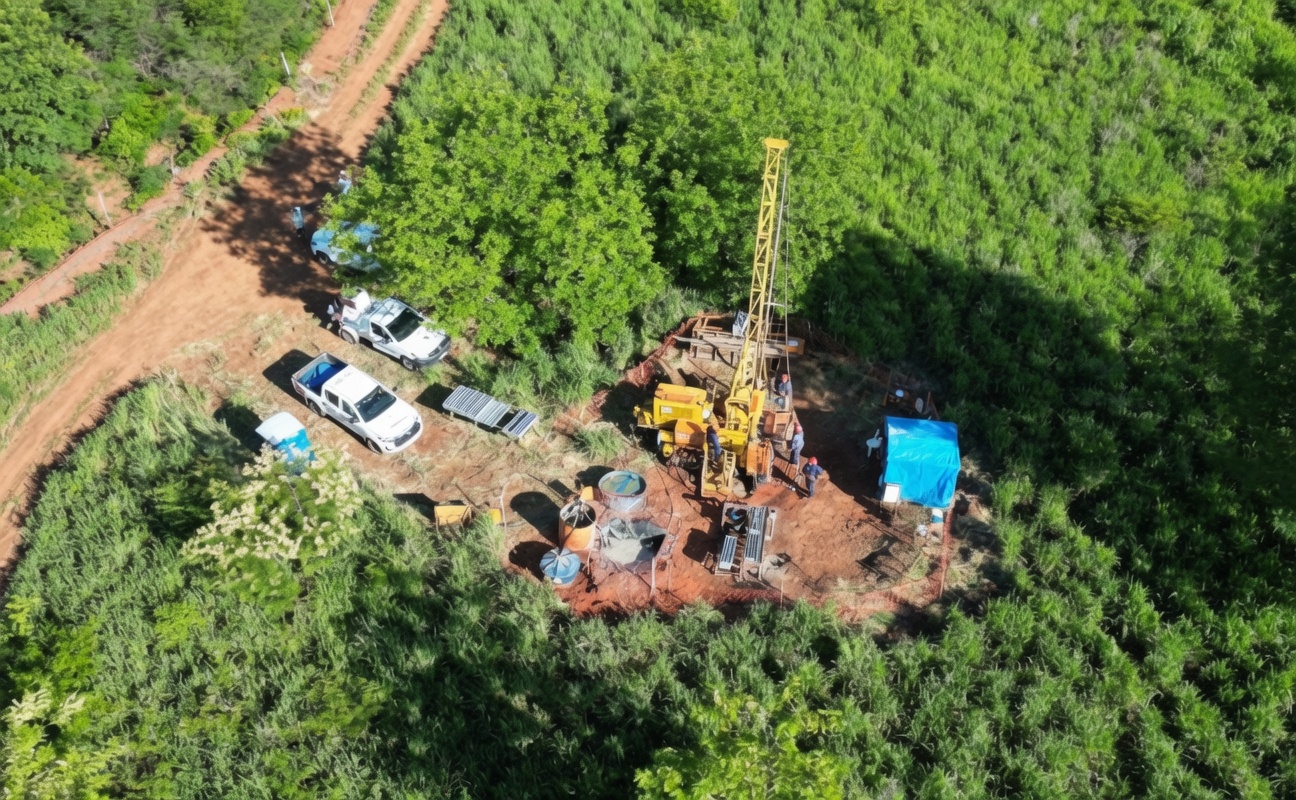
Drilling has covered 1.5 kilometres of an 8-kilometre artisanal trend to approximately 250 metres depth, with the remaining strike and a geochemical anomaly carrying no drill holes.
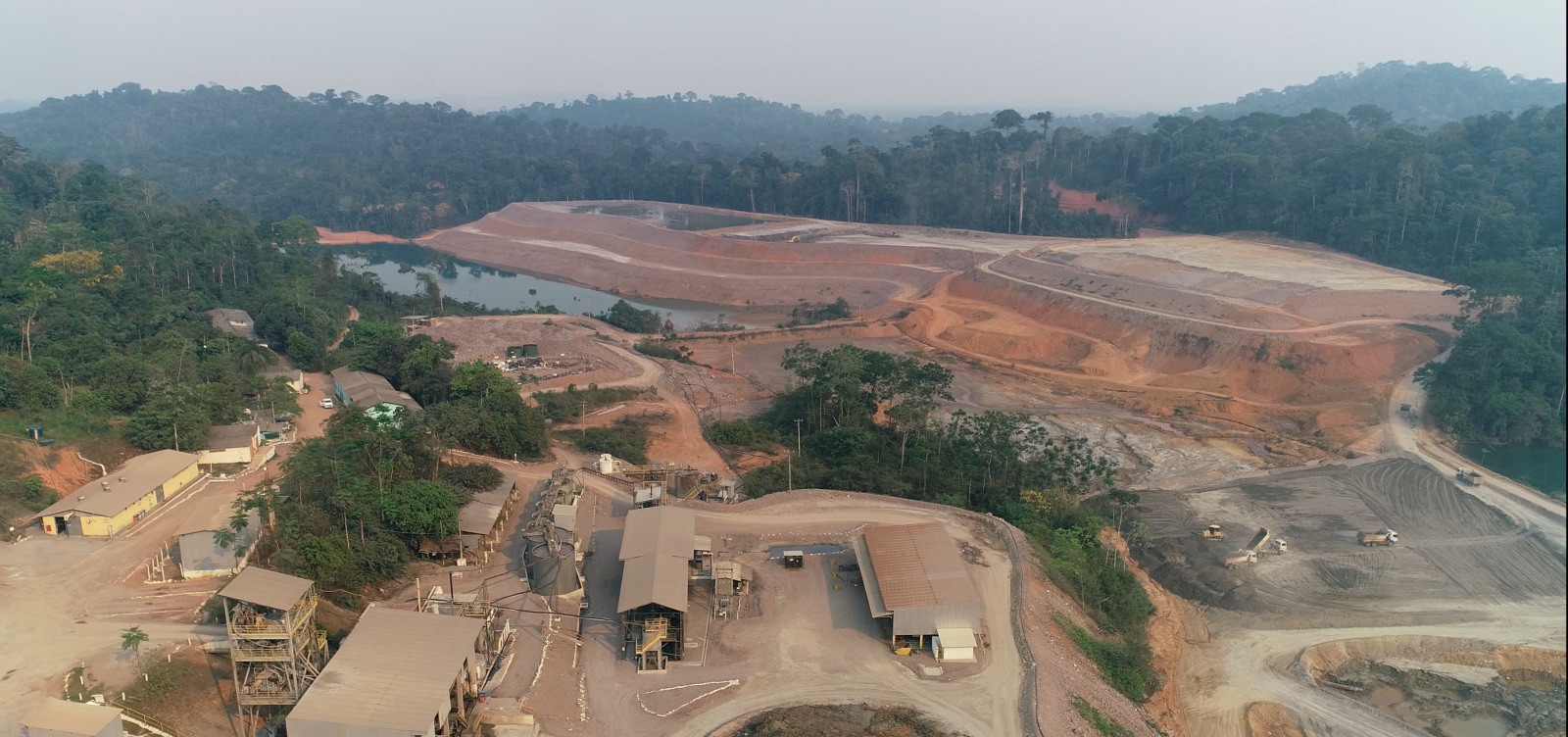
In early 2026, Serabi committed $5 million to install an additional ball mill at the Palito Complex, sourced from dormant inventory and being commissioned ahead of the final Coringa operating licence.
Coringa's Current Resource & Deposit Architecture
The January 2026 resource establishes the current inventory within the limits of the systematically drilled area. That entire inventory sits within 1.5 kilometres of artisanal strike and approximately 250 metres of vertical depth, both boundaries defined by drilling coverage rather than by where the geology ends.
The deposit is internally complex. Coringa operates as four distinct mining units, each requiring its own equipment. Seven parallel and discrete vein structures have been identified across the property: Serra Norte, Serra Sul, Meio, Galena, Mae de Leite, Valdete, and Demetrio. A deposit architecture distributed across that many structures within a 1.5-kilometre drilled zone describes a mineralising system where gold has spread across a network of veins rather than concentrating in a single dominant lode.
The Undrilled Extent: Strike Length & Depth
The case for a deposit substantially larger than the current resource rests on the relationship between what has been drilled and what the Coringa property contains. Of the 8-kilometre artisanal trend, 1.5 kilometres have been systematically drilled, a fraction of the total strike length. The undrilled portion, which is more than four times the length of the drilled section, has no drill coverage. In depth, the resource ceiling of approximately 250 metres leaves the system open and untested below that level.
Together, the undrilled artisanal trend and the geochemical anomaly beyond it define a geological footprint that dwarfs the 1.5-kilometre drilled section from which the current resource was built, and that disproportion is the structural basis for the 1.5-million-ounce target.
Chief Executive Officer of Serabi Gold, Mike Hodgson, is direct about the scale of what remains untested:
"We've got an 8-kilometre strike length of a structure, of which only 1.5 kilometres has been drilled. On top of that, we've got another 20 kilometres of anomaly that hasn't even had a drill hole. I look at Coringa and think that can easily be a 1.5 million ounce deposit alone."
Exploration Programme Design & Operating Constraints
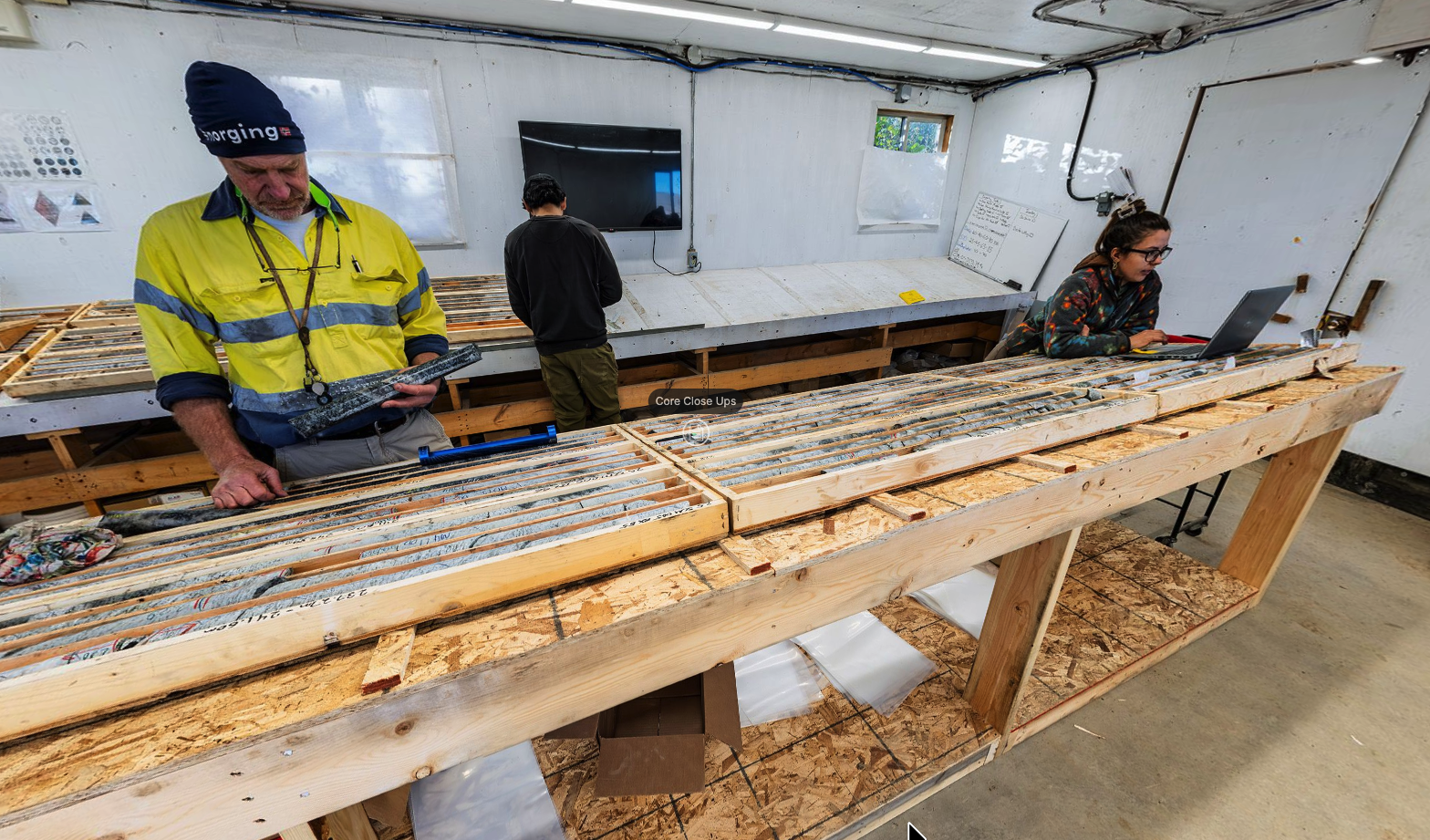
The active campaign across the Palito Complex and Coringa operates six rigs and delivers approximately 3,000 metres of core per month, split evenly between underground and surface. Underground drilling targets extensions within the existing mine workings, while surface drilling tests strike and depth continuity beyond the current resource boundary. This allocation maintains parallel advancement of near-mine conversion and regional extension drilling within a single coordinated programme.
The programme is operating at the effective limit of geological processing capacity: adding rigs would exceed the bandwidth to log, sample, and interpret results rather than accelerate output.
Hodgson frames the resource growth campaign and its endpoint:
"We grew the resource from 1 million to 1.4 million ounces. We're going to continue that campaign to the end of 2026 and see where we get to. We hope we can get close to 1.8 to 2 million ounces. From that, we're going to look at the reserve content and say, 'Okay, the sustainable level of production for this business is going to be this.'"
The reserve conversion work that follows will define the sustainable production rate for the operation, with the June 2026 resource update serving as the first formal input, and the first externally visible indication of how drilling beyond the current footprint is translating into resource growth.
Ore Sorting Economics & Processing Consolidation
The economics of consolidating all Coringa ore processing at the Palito Complex rest on the ore's performance through a sorter rather than on haulage logistics alone. Ore sorting uses sensor-based detection to separate high-grade material from waste at the coarse particle level, reducing the volume that reaches the mill. For Coringa, projected performance shows the sorter producing a grade exceeding 12 grams per tonne while rejecting more than 98% of the feed mass. The material being discarded has a grade below 0.5 grams per tonne, indicating minimal gold losses in the reject stream.
With more than 98% of feed mass rejected on site, the volume trucked to Palito is a small fraction of run-of-mine tonnage, a condition that makes remote processing viable without local infrastructure.
The capital consequences extend beyond haulage. A conventional processing route at Coringa would require both a standalone process plant and a conventional tailings dam. Ore sorting removes both requirements. The deposit is configured as a satellite of the Palito Complex, processing its ore through shared infrastructure, rather than as a standalone operation carrying its own plant capital.
Plant Expansion & Production Sequencing
The $5 million ball mill installation at the Palito Complex prepares the processing circuit for the production scenario that the Coringa ramp-up is designed to support. The mill is sourced from dormant inventory acquired as part of the original Coringa transaction, reducing the cost below what new equipment would require. When installed, it will raise Palito's throughput from 650 tonnes per day (tpd) to approximately 900 tpd, with commissioning targeted for the fourth quarter of 2026.
At the current 650 tpd, the near-term target is a run rate approaching 55,000 ounces per annum, near the existing infrastructure ceiling of approximately 60,000 ounces. The 900 tpd configuration is designed to support production exceeding 60,000 ounces per annum from 2027, with a longer-term objective above 100,000 ounces per annum driven by the Coringa ramp-up. The plant commitment preceded the arrival of the final operating licence at Coringa.
Hodgson sets out the sequencing rationale.
"We're moving one of those ball mills to Palito now. In fact, we're not waiting to get to the end of an exploration campaign. We anticipate the final permit will be awarded at Coringa before the end of this year, possibly in the first part of next year. That's what our legal counsel is advising. We've already started work on an expansion in the plant, which will be ready in 2027."
Permitting Status, Open Risks & Upcoming Catalysts
Coringa is producing under a three-year trial mining licence while the final operating licence remains outstanding. Delays in the permitting process have been attributed to manpower shortages within the Instituto Nacional de Colonização e Reforma Agrária (INCRA) and the Fundação Nacional dos Povos Indígenas (FUNAI), two Brazilian government agencies whose input is required for licensing.
Legal counsel advises that the final licence will be received by the end of 2026 or early 2027. That timeline aligns with the period when the expanded ball mill at Palito is being commissioned and when Serabi is preparing for the 2027 production step-up. A full, updated mineral resource estimate, expected in June 2026, will arrive ahead of the permit decision, providing the first systematic view of how the deposit is responding to drilling beyond the current resource boundaries before the regulatory question is settled.
The exploration update, June resource estimate, and permit decision together form the evidence sequence that will determine whether the production plan stays on schedule.
What to Watch Next
The June 2026 resource update will be the first external measure of how drilling beyond the current 1.5-kilometre footprint is translating into additional ounces. The final Coringa operating licence, projected by legal counsel for receipt by the end of 2026 or early 2027, determines whether the 2027 production ramp-up proceeds on schedule. Commissioning of the ball mill at the Palito Complex, targeted for the fourth quarter of 2026, will confirm whether the processing circuit is ready to receive Coringa ore ahead of that ramp-up.
FAQs (AI-Generated)
Analyst's Notes





Subscribe to Our Channel






Stay Informed






















