




Dune Oil Corp. & Block M47 Onshore Pivot: 7 Things You Need to Know


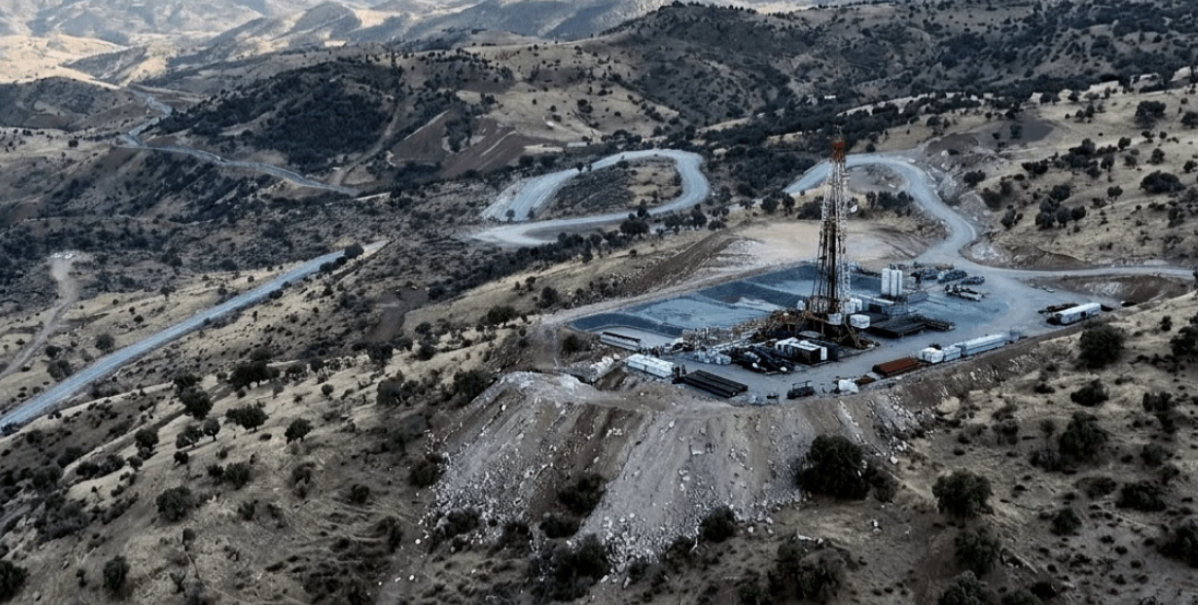
Dune Oil Corp.'s onshore Türkiye pivot highlights a 27.6 million-barrel gross 2C oil resource base, active tenders & seismic acquisition program on the M47 Block.
Project Overview
Dune Oil Corp. (Canadian Securities Exchange (CSE): DUNE | OTCQB Venture Market (OTCQB): TRLEF | Frankfurt Stock Exchange (FSE): Z62), formerly known as Trillion Energy International Inc., is transitioning from Black Sea gas to a focus on onshore conventional light oil development in southeastern Türkiye. The company is actively executing its technical work program to commercialize a conventional oil discovery on Block M47, capitalizing on Türkiye's domestic oil deficit and high pricing netbacks.
Formally Dune Oil Corp. & the 27.6 Million-Barrel Gross 2C Resource Base
By completing its official corporate rebranding and transitioning its ticker symbol to 'DUNE' on the Canadian Securities Exchange (CSE) effective August 4, 2026, the developer cleared US$25 million of outstanding balance-sheet debt through the divestment of its offshore Black Sea subsidiary. This 5:1 share consolidation and wholesale exit from the offshore SASB natural gas field concentrated 100% of the company's financial resources on onshore oil development, reducing overhead.
The core valuation anchor of this onshore portfolio is a conventional light oil discovery at the North Prospect on Block M47. An independent resource evaluation prepared by Chapman Petroleum Engineering Ltd., effective December 31, 2025, assigned a best-estimate contingent resource of 27.641 million barrels gross and 24.186 million barrels net. This audit assigns an unrisked pre-tax net present value (NPV10), of US$733.5 million, which compares with the developer's current implied valuation of US$0.21 per 2C contingent barrel on an enterprise-value basis.
President of Dune Oil Corp., Scott Lower, explained the significance of this discovery:
"What changed everything was the discovery in a new basin, in a previously undiscovered region that is now a tremendous producer. It's the biggest oil-producing area in Turkey at this point. There was a discovery there on a block called M47, and that discovery has given us 27 million barrels net to us of recoverable oil contingent resource, with an 80% chance of commerciality. We're strongly focused on that opportunity."
The Çetinkaya-1 Mechanical Hazard & MPD Sidetrack Solution
Drilled in 2025, the Çetinkaya-1 vertical well encountered 32.4° API conventional light oil and over 70 meters of gross oil pay, including 38.0 meters of net pay. However, the well experienced total drilling-fluid losses at 2,452 meters upon encountering the fractured reservoir, leaving approximately 100 meters of the prospective Mardin Group carbonate unpenetrated due to swelling Germav shale in the vertical hole.
While the original production test demonstrated reservoir viability by recovering 900 barrels of light oil over a 4-to-5-day period via swabbing, the reservoir's low-pressure characteristics require the installation of electrical submersible pumps (ESPs) to sustain commercial flow rates. Swabbing mechanically lifts fluids to clear drilling debris, but long-term production requires cementing, perforating, and running ESPs inside an 8-meter target zone.
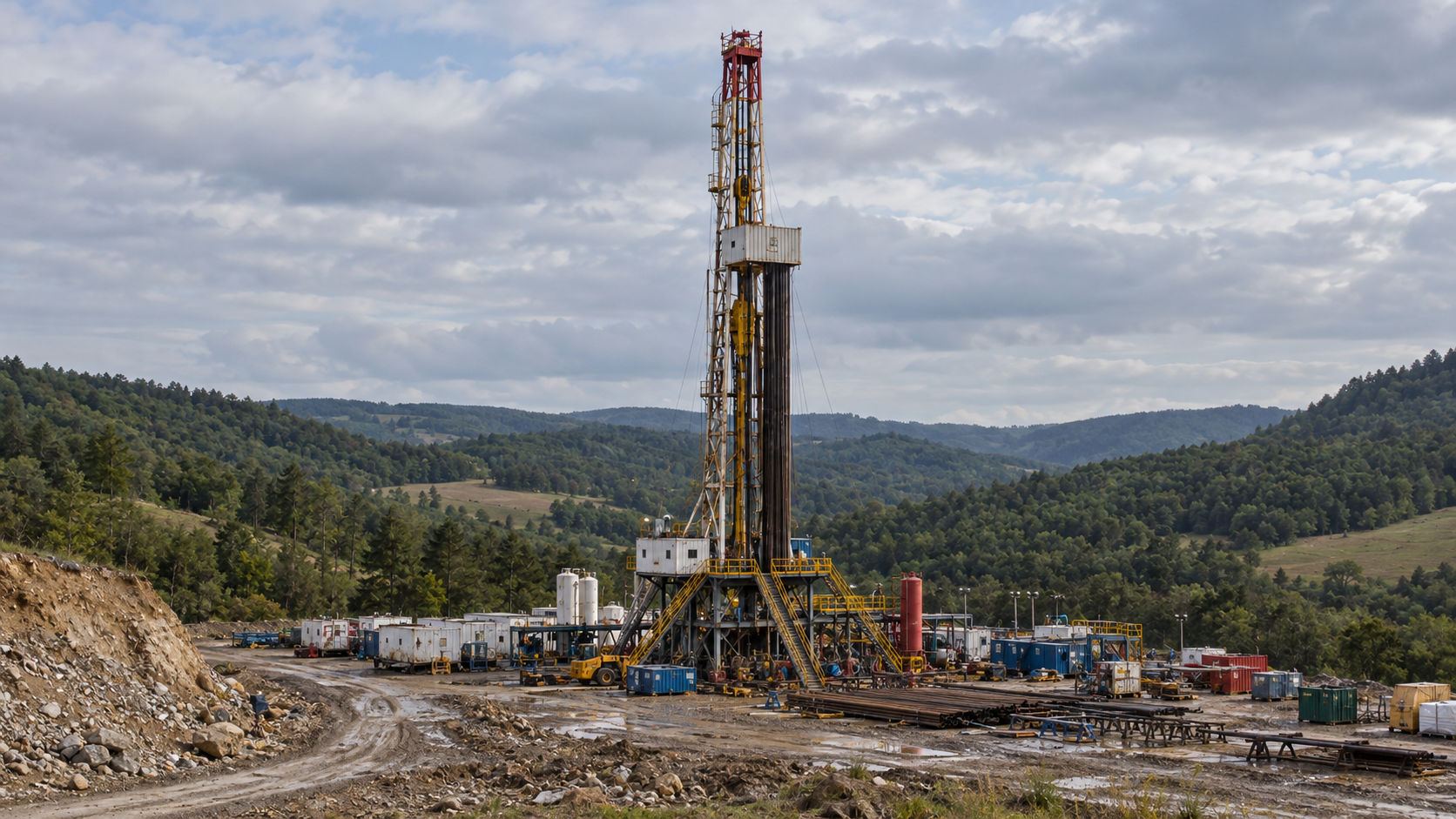
To overcome the lost-circulation zones that halted the 2025 drilling campaign, Dune will deploy managed-pressure drilling (MPD) systems on the Çetinkaya-1 sidetrack. The planned sidetrack will kick off below the swelling Germav shale interval, allowing the problematic section to be cased off completely. The operator will then deploy non-damaging MPD to control wellbore pressure while drilling through the fractured carbonate pay zone, avoiding the fluid losses that halted the original vertical hole.
Lateral Drilling Completions & Well Pad Economics
Following vertical flow tests, Dune intends to execute vertical seismic profiling (VSP) inside the sidetrack wellbore to evaluate reservoir dimensions before initiating lateral horizontal completions. The company plans to use open-hole packers and sliding sleeves to isolate individual zones, enabling selective flow testing and targeted acid stimulation to enhance carbonate permeability.
Deploying lateral drilling technology targets a 4-fold increase in well productivity compared to vertical wells. While vertical wells in the local 8-meter pay zone are targeted to produce a couple of hundred barrels of oil per day, lateral sections extending 300 to 500 meters can increase reservoir contact and multiply flow rates.
Sequential horizontal drilling from a single pad reduces civil engineering and well-pad construction capital expenditures (CAPEX) by approximately US$500,000 per well. By using a single well pad, Dune can drill up to 8 lateral wells sequentially, reducing surface construction costs and preventing water breakthrough.
Low Capital Expenditure Route to Market & Projected Economic Models
Under the initial model, oil volumes produced during flow testing will be trucked 130 kilometers to the Tüpraş Batman refinery using 250-barrel tanker trucks, bypassing upfront capital costs for water-separation facilities. To support long-term production scaling, a regional oil pipeline completed in 2026 provides capacity of more than 150,000 barrels of oil equivalent per day directly into the Esma Çevik pipeline system.
This trucking model yields a projected operating netback of US$50 per barrel, supporting a projected 2-month well payback period. At a Brent crude benchmark price of US$72 per barrel, the projected US$50 operating netback is calculated as the realized price minus a US$9 state royalty, US$8 in direct operating costs, and US$5 in trucking costs. These figures represent company-derived economic sensitivity models based on Brent assumptions rather than realized historical results.
Estimated corporate netbacks are US$44, US$53, and US$61 per barrel at Brent benchmark prices of US$65, US$75, and US$85 per barrel, respectively. Under these models, Dune estimates a year-1 netback of US$5.5 million per well, although actual cash generation remains subject to transport delays or changing refinery discount rates.
Near-Term Earn-In Funding Commitments & Partnership Terms
Under the farm-in agreement with local partners Derkim and Güney Yıldızı (GYP), Dune is earning up to a 29.0% working interest by funding US$15 million in work commitments over a 2-year period. To date, Dune has advanced US$800,000 against this commitment, but the company faces a critical capital milestone of US$4.35 million due on September 15, 2026, to fund the current operational phase.
The joint-venture structure provides direct financial advantages by securing immediate access to Güney Yıldızı's (GYP) fleet of 20 active drilling rigs, thereby reducing standard regional drilling costs by 40.0%. Derkim, the 51.0% block licensor, is headed by a local politician who is deferring operatorship, allowing Dune to manage all carbonate completions.
To illustrate the technical & financial leverage of this structure, Scott Lower explained the operational benefits of local partnerships:
"We also have the benefit of one of the 20% partners in this field being a drilling company, and they have rigs. Where they're operating and drilling, they provide the rig cost, which is about a 40% savings for the program. That's a very, very good partnership there because they have 20 rigs, and it brings your drilling cost down."
August 2026 Operational Catalysts & Regional Offset Success
On July 29 and 30, 2026, prospective seismic contractors and service providers completed preliminary field site visits across Block M47. These inspections reviewed terrain access and logistics, completing the basis for the active 40-kilometer 2D seismic tender.
The seismic survey is targeted to mobilize in late summer 2026 to image the undrilled portions of the Block. The tender represents the first phase of a broader 90-kilometer 2D program designed to refine 3 priority exploration areas: the South Lead, the Mid-Lead, and the North Field. The upcoming survey will focus heavily on the South Lead, which contains a P50 prospective resource of 7.895 million barrels net to Dune.
The southern portion of Block M47 has been de-risked by regional drilling activity, as Türkiye Petrolleri Anonim Ortaklığı (TPAO) successfully completed the Yatağankaya-1 offset well on Block M48 in June 2026, located just 500 meters outside the M47 block boundary. Surface anticlines and gravity surveys completed in May and June 2026 indicate that the majority of this productive structure extends directly onto Dune’s M47 license area. This makes the upcoming seismic grid critical for finalizing Fındık-2 appraisal coordinates.
Residual Concession, Operational & Dilution Risks
While technical catalysts on Block M47 are defined, several operational, financial, and geopolitical risks remain unresolved. Financially, executing the forward work program depends on securing capital. Since the developer's cash position is limited to recent US$2.5 million equity inflows, funding the remaining US$14.2 million of the farm-in commitment will require dilutive equity placements or debt facilities if cash flow is delayed.
Operationally, the sidetracking campaign faces technical execution risks. Although managed-pressure drilling (MPD) is designed to mitigate fluid loss, it does not guarantee successful reservoir penetration or sustained commercial flow rates. Furthermore, actual reservoir productivity remains unproven, and lower commodity prices directly depress returns, as shown by the company's sensitivity model, where a decline in Brent to US$65 reduces the projected netback to US$44 per barrel.
Finally, the project is subject to localized operational and geopolitical risks in southeastern Türkiye. Proximity to regional borders can introduce logistical and security complexities, while regulatory changes or disruptions to pipeline infrastructure could delay equipment mobilization or interrupt trucking deliveries to the Tüpraş Batman refinery.
Key Takeaway for Investors
Dune Oil Corp. represents an onshore development-stage explorer transitioning to a commercial operations model in southeastern Türkiye's premier petroleum province. The company's transition from offshore natural gas to onshore conventional light oil has successfully eliminated US$25 million of outstanding debt and concentrated all operational and capital focus on Block M47. With a best-estimate contingent resource of 27.641 million barrels gross, Dune Oil Corp. is positioned to unlock an unrisked NPV10% of US$733.5 million. This commercial model relies on low CAPEX trucking infrastructure and high netbacks to support self-funded development drilling across the block's multi-lead inventory.
Analyst's Notes





Subscribe to Our Channel

Stay Informed


