Energy Fuels' Navajo Nation Agreement & ESG Strategy: De-Risking the Asset That Powers Everything


Energy Fuels' 2025 Navajo agreement and clean energy foundation reduce permitting risks for the White Mesa Mill ahead of its Phase 2 rare earth oxide expansion.
- Energy Fuels signed a 2025 agreement with the Navajo Nation covering uranium ore transport and the processing of legacy mine remediation material at the White Mesa Mill, supporting operational continuity as the company advances its rare earth strategy.
- The White Mesa Mill is the only operating conventional uranium mill in the US and the only US facility licensed to process monazite into separated rare earth oxides, making it the cornerstone of Energy Fuels' integrated critical minerals strategy.
- The San Juan County Clean Energy Foundation, funded by a $1 million initial contribution and 1% of annual Mill revenues, aligns local economic benefits with the Mill's long-term success and expansion plans.
- The Phase 2 rare earth separation expansion has a $1.9 billion net present value at an 8% discount rate (NPV8%), a 33% internal rate of return (IRR), and $410 million in capital expenditure (CAPEX), with permitting underway and commissioning targeted for 2028–2029.
- Upon full Phase 1 and Phase 2 commissioning, the White Mesa Mill is targeted to produce 6,229 tonnes per year of neodymium-praseodymium oxide, 80 tonnes of terbium, and 288 tonnes of dysprosium, supported by long-term monazite feedstock from projects including Vara Mada in Madagascar.
The Single Asset Behind a $1.9 Billion Thesis
Energy Fuels' (NYSE: UfUUU | TSX: EFR) rare earth ambitions are worth $1.9 billion on paper, but only if a single processing facility receives permits and maintains community support. In 2025, the company made two moves designed to address exactly that.
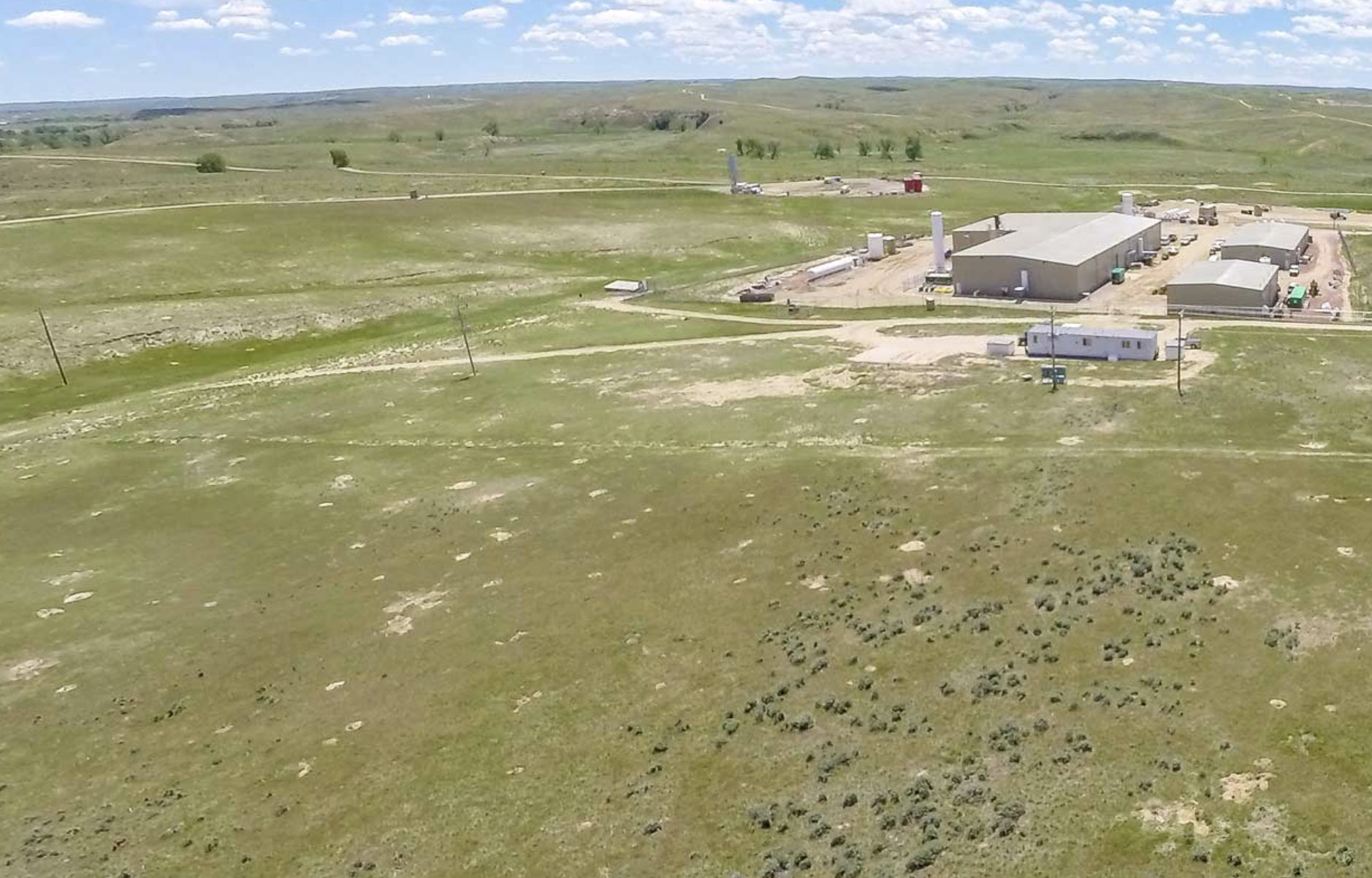
The White Mesa Mill in Blanding, Utah, holds a licensed capacity to produce over 8 million pounds of uranium per year and has operated for over 45 years. It is the only operating conventional uranium mill in the US and the only US facility capable of processing monazite to produce separated rare earth element (REE) oxides, covering both light rare earths, such as neodymium-praseodymium, and heavy rare earths, such as dysprosium and terbium. The advancement of the Phase 2 expansion, including the $410 million capital expenditure (CAPEX), the $1.9 billion net present value at an 8% discount rate (NPV8%), the 6,229 metric tonne per annum neodymium-praseodymium production target, and the integration of monazite from the Donald and Vara Mada projects, requires the Mill to receive its Phase 2 permits on schedule.
San Juan County, Utah, where the Mill is located, is described as one of the most economically challenged regions in the US. Energy Fuels employs approximately 100 people at the Mill, roughly half of whom are Native American, and 35 each at the Pinyon Plain Mine in Arizona and the La Sal Mine Complex in Utah. The Phase 2 expansion is targeted to add 50 to 150 permanent employees and is described as likely the largest private investment in San Juan County history. Those employment and investment figures establish the economic context for the company's two community engagement initiatives.
The Navajo Nation Agreement: Remediation & Ore Transport
The 2025 agreement with the Navajo Nation covers two operational matters: uranium ore transport corridors and the processing of legacy cleanup material from uranium mines at the White Mesa Mill. By assisting in the cleanup of legacy uranium mines, Energy Fuels is actively helping to address a historic legacy in the region. The Mill could begin receiving that clean-up material today. The ore transport dimension carries a direct financial consequence. Pinyon Plain ore has a production cost of approximately $23 to $30 per pound of uranium, compared with a spot price of $86.25 per pound as of May 1, 2026, per TradeTech.
Outgoing Chief Executive Officer of Energy Fuels, Mark Chalmers, described the centrality of uranium revenue:
"We are doing something world significant with the bridge of the uranium. To get to the full rare earth business completely off the ground, you're looking at like 28, 29, 30-ish to ramp that up. In the meantime, it's all about uranium revenue, so there's no story like it."
The Clean Energy Foundation: Aligning County Economics with Mill Performance
The San Juan County Clean Energy Foundation receives a $1 million initial contribution from Energy Fuels and 1% of annual White Mesa Mill revenues on an ongoing basis. Its mandate covers education, environmental initiatives, health and wellness, economic advancement, and Native American priorities in San Juan County. The 1% revenue linkage ties the foundation's funding directly to the Mill's financial performance, making San Juan County a direct financial beneficiary of the Mill's expanded production.
The Phase 2 expansion carries projected average annual earnings before interest, taxes, depreciation, and amortisation (EBITDA) of $311 million over the first 15 years of operation, per the January 2026 AACE International Class 3 Bankable Feasibility Study (FS). At that revenue level, the foundation's annual contribution would represent a material transfer. The $1 million initial contribution and the 1% ongoing mechanism operate alongside the company's active Phase 2 permitting process, which carries a 33% internal rate of return (IRR) and a 40-year modelled project life.
Feedstock Pipeline & Competitive Differentiation
Energy Fuels has secured monazite feedstock from Donald, Vara Mada, Bahia, and Chemours, supporting long-term Phase 2 supply requirements. The company relies on the White Mesa Mill's operating status to process the secured feedstock, as the Mill is the only US facility capable of processing monazite to produce separated REE oxides. The mineral composition of monazite produces a different REE output profile than bastnaesite.
Chalmers addressed the distinction directly:
"MP is focused on bastnaesite, and that does not have heavies. We're focused on monazite, which has the lights and the heavies, and now we're also opening that window for MREC so we can take material from like ionic clays or other sources. So, our wheelhouse is different than MP's wheelhouse, and it's complementary."
The Donald Project monazite carries 168 metric tonnes per annum of dysprosium and 29 metric tonnes per annum of terbium in its contained heavy REE profile, outputs that bastnaesite does not contain. The Phase 2 expansion is designed to increase neodymium-praseodymium capacity from the current 1,000 metric tonnes per annum to approximately 6,229 metric tonnes per annum, and to add 80 metric tonnes per annum of terbium and 288 metric tonnes per annum of dysprosium at commercial scale.
The Acquisition Logic: Acquired Skills Versus Organic Build Time
The planned acquisition of Australian Strategic Materials Limited (ASM), announced January 20, 2026 and targeting close as early as July 2026, adds an operating metals and alloys plant in Ochang, South Korea, a planned US alloying facility with an initial targeted capacity of approximately 2,000 metric tonnes per annum of alloy, and the Dubbo Project in New South Wales.
Chalmers explained the rationale:
"I think what people are seeing is that we've got this critical mass with those steps, and they don't just happen overnight. So you really have to acquire those skills, you can't just grow them organically because it'll take years."
The Korean Metals Plant currently produces approximately 1,300 metric tonnes per annum of neodymium-iron-boron alloy at 4 furnaces and 1 strip caster, with a Phase II expansion plan targeting approximately 3,600 metric tonnes per annum and a Phase III target of approximately 5,600 metric tonnes per annum. Acquiring that operating capability compresses the timeline for commercial alloy sales compared with building a new facility from the ground up.
The same logic applies to the White Mesa community strategy. Building the Navajo Nation agreement and the Clean Energy Foundation in parallel with the Phase 2 permitting process aligns with the company's broader approach of compressing timelines toward its 2028 to 2029 commissioning target. The acquisition of operating alloy capacity and the proactive community engagement strategy both address the same operational reality detailed by Chalmers: integrating this supply chain organically requires years of execution.
Permitting, Jurisdictional Risk & What Could Break the Thesis
The Phase 2 REE separation expansion is in permitting, with commissioning targeted for 2028–2029, and a final investment decision (FID) has not yet been made, according to first-quarter 2026 results released May 6, 2026. The investment thesis depends on the timely development of key feedstock sources. Vara Mada in Madagascar requires a positive FID and a final agreement with the government covering tax, customs, foreign exchange, and the addition of monazite to its existing exploitation permit. The Donald Project joint venture in Australia is targeting construction in 2026 and first monazite deliveries by late 2027, subject to approvals. Delays at either project could reduce feedstock availability and slow the Phase 2 production ramp-up.
The project's economics remain sensitive to rare earth prices, capital cost inflation, and permitting outcomes. The Phase 2 economics are sensitive to neodymium-praseodymium oxide prices, while the estimated $410 million CAPEX could be affected by increases in construction costs before commissioning. In addition, the FID remains pending, and future permitting stages could introduce additional regulatory requirements despite the 2025 Navajo Nation agreement.
Investment Thesis for Energy Fuels
- The White Mesa Mill is the critical asset underpinning Energy Fuels' rare earth strategy. The success of the Phase 2 expansion depends on the Mill maintaining permits and operating continuity.
- The 2025 Navajo Nation agreement reduces a key permitting and operating risk. The agreement covering uranium ore transport and legacy mine remediation establishes a framework of cooperation with the region's most significant Indigenous stakeholder community as Phase 2 permitting advances.
- Local communities have a direct financial interest in the Mill's success. The San Juan County Clean Energy Foundation receives a $1 million initial contribution and 1% of annual White Mesa Mill revenues, aligning local economic development with a project expected to generate average annual earnings before interest, taxes, depreciation, and amortisation of $311 million during its first 15 years of operation.
- Monazite feedstock provides exposure to both the light- and heavy-rare-earth markets. The Donald Project contains dysprosium and terbium in addition to neodymium and praseodymium, positioning the White Mesa Mill to supply a broader range of magnet materials than bastnaesite-based competitors.
- The acquisition of Australian Strategic Materials accelerates downstream integration. The transaction adds approximately 1,300 metric tonnes per annum of operating neodymium-iron-boron alloy production and a Phase II expansion target of approximately 3,600 metric tonnes per annum, shortening the path to commercial alloy sales.
- A strong balance sheet supports execution without immediate dilution. Working capital of $956.6 million, including $802.2 million in marketable securities, provides funding capacity for Phase 2 permitting, feedstock project development, and the Australian Strategic Materials acquisition.
These initiatives address the region's historic legacies while the company advances the permitting timeline for its Phase 2 project. The four near-term decision points against which execution can be measured are: the Phase 2 final investment decision, the ASM transaction close, the Donald Project construction launch, and the Vara Mada fiscal framework resolution.
TL;DR
Energy Fuels' Navajo Nation agreement and San Juan County Clean Energy Foundation support the permitting and operating continuity of the White Mesa Mill, the cornerstone of the company's rare earth strategy. The Mill's Phase 2 expansion carries a $1.9 billion NPV and targets commissioning in 2028–2029, while uranium revenues help fund the transition toward large-scale rare earth production.
FAQs (AI-Generated)
Analyst's Notes





Subscribe to Our Channel








Stay Informed