Energy Fuels' US Uranium Execution Continues to Deliver: Why Reliable Domestic Supply Is Re-rating US Uranium Producers


Energy Fuels exceeds 2025 uranium production guidance, producing over 1M lbs U3O8. US utilities now prioritize execution credibility and domestic supply security over spot price exposure.
- US uranium supply security is moving from a policy objective to an execution-driven investment theme, as utilities prioritise reliability over marginal cost.
- Operators demonstrating repeatable production, cost discipline, and contracting success are increasingly differentiated in capital markets.
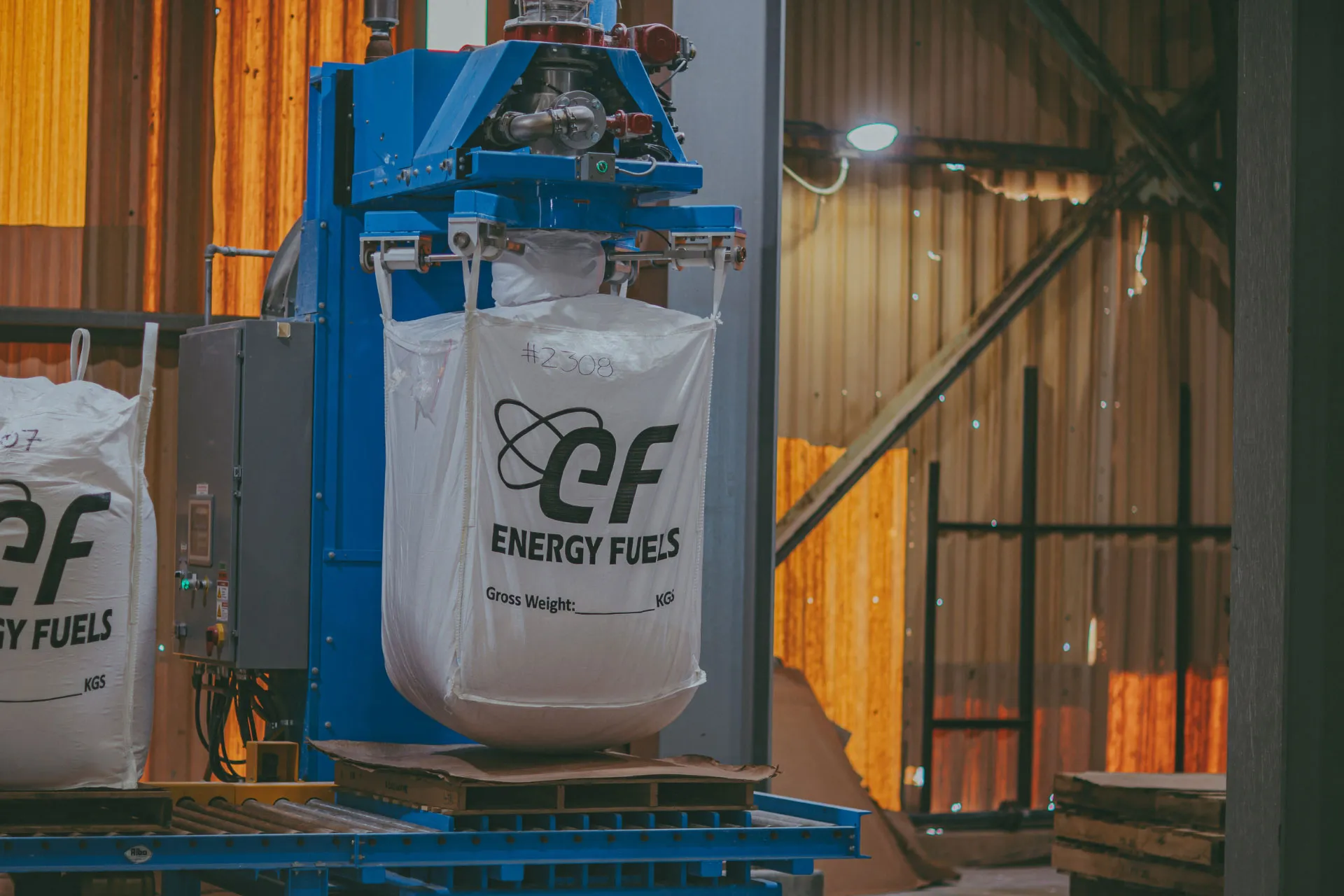
- Energy Fuels Inc. exceeded 2025 production and sales guidance, producing more than one million pounds of finished U3O8 during the year.
- Falling unit costs and long-term utility contracts point to margin expansion and cash-flow durability into the next contracting cycle.
- Investors are beginning to value operational credibility and jurisdictional certainty as re-rating factors, not just uranium price exposure.
From Price Optionality to Supply Assurance
The US uranium sector is undergoing a fundamental repositioning in how both utilities and investors evaluate domestic producers. What was once a market dominated by spot price speculation and policy-dependent narratives has evolved into one where execution credibility and deliverability determine capital allocation. This shift carries significant implications for how investors model risk and value in the sector.
Why Utilities Are Prioritising Execution Over Spot Exposure
The supply disruptions following Russia's invasion of Ukraine in 2022 fundamentally altered utility procurement behaviour. Geopolitical uncertainty, particularly around Russian and Kazakh supply chains, exposed the fragility of just-in-time fuel sourcing strategies. US utilities, which consume approximately 50 million pounds of uranium annually while domestic production capacity reaches only 5 to 8 million pounds at full ramp, face structural supply deficits that cannot be resolved through spot market purchases alone.
This reality has driven a pronounced shift toward contracting with producers who can demonstrate consistent delivery against commitments. Utilities are placing increasing weight on jurisdictional security, permitting certainty, and historical contract compliance. The implication for investors is clear: producers with proven operating track records command valuation premiums that pure exploration or development-stage companies cannot access.
Policy Tailwinds Are Necessary, But Execution Determines Valuation
US policy support for domestic uranium sourcing and fuel cycle resilience has become a baseline expectation rather than a differentiator. Legislation supporting domestic production, strategic reserve programmes, and restrictions on Russian fuel imports provide foundational support for the sector. However, markets are increasingly rewarding companies that convert policy into pounds, distinguishing operators who deliver against guidance from those still navigating permitting, financing, or restart uncertainty.
The transition from speculative restart narratives to operational scorecards represents a maturation of the investment thesis. Capital markets are now applying different discount rates to companies based on demonstrated execution rather than resource optionality alone.
Mark Chalmers, Chief Executive Officer of Energy Fuels, emphasises the company's positioning within the uranium and REE landscape:
"Energy Fuels is a company that is unique from all others because we are focused on building a critical mineral hub that is built around our uranium business but also includes the rare earth suite of elements."
When Guidance Becomes a Floor: What Beating Production Targets Signals to Investors
Production guidance serves as a foundational credibility metric in capital-intensive extractive industries. When operators consistently meet or exceed targets, it signals operational control, effective risk management, and management teams capable of navigating the inherent complexities of mining and processing. For uranium specifically, where restart timelines and permitting pathways create asymmetric uncertainty, guidance outperformance carries particular weight.
Why Production Outperformance Matters More Than Absolute Volume
Beating guidance functions as a proxy for execution quality that extends beyond raw production figures. Investors modelling net asset value and enterprise value per pound metrics adjust discount rates based on perceived operational risk. Companies demonstrating consistent delivery compress these risk premiums, while those missing targets face widening discounts regardless of resource quality.
The contrast with peers still navigating permitting delays, financing constraints, or restart uncertainty is becoming increasingly pronounced. In a sector where development timelines often extend beyond initial projections, operators who deliver on schedule establish credibility that translates directly into valuation support.
Operational Scaling in US Uranium Production
On 29 December 2025, Energy Fuels announced it had exceeded previously disclosed guidance for finished uranium production, mined uranium ore, and uranium concentrate sales. The company produced more than one million pounds of finished U3O8 during 2025, with December alone contributing over 350,000 pounds. This execution trajectory reinforces forward sales visibility during a critical utility contracting window.
Mark Chalmers underscores the financial foundation this creates:
"The uranium side of the business is self-sustaining and actually is in a turning point. We're starting to generate material cash... That cash will fund all our G&A as a company, also funds our rare earth aspirations and strategy as well as our heavy mineral science side of the business."
Cost Curves Are Flattening: Why Margins, Not Just Pounds, Drive Re-Rating
Production volume alone does not determine equity value in uranium. Cost structures, margin trajectories, and the timing of cost inflection points often prove more significant for valuation than headline production figures. Understanding these dynamics requires examining the specific economics of restarted US mines and processing facilities.
Understanding Uranium Cost Structures in Restarted US Mines
Uranium production economics involve substantial fixed-cost components that create operating leverage as throughput increases. Mill access, maintenance of licensed facilities, and regulatory compliance represent baseline costs that remain relatively constant across varying production levels. Variable costs, including mining, haulage, and processing reagents, scale more directly with output.
This cost structure means that operators with access to processing infrastructure and proven ore bodies can achieve meaningful margin expansion as production rates stabilise. All-in sustaining cost and cost of goods sold trends become critical inputs for valuation models, particularly when assessing the sustainability of margins through commodity price cycles.
Inventory Dynamics & Margin Visibility
A timing mismatch often exists between when ore is mined, when it is processed, and when resulting uranium is sold. Low-cost ore entering inventory may not immediately appear in reported cost metrics, creating lag effects that can obscure near-term margin trajectories. Investors who understand these dynamics can identify cost inflection points before they manifest in earnings.
The White Mesa Mill, the only conventional uranium mill operating in the United States, is currently averaging approximately 250,000 pounds of U3O8 per month and is expected to maintain this rate through the first half of 2026. Low-cost Pinyon Plain ore is expected to begin processing in Q1 2026, at which point cost of goods sold is expected to trend lower.
Mark Chalmers characterises the company's cost position:
"We'll continue to be the largest producer of uranium in the United States and will continue to be the lowest cost producer."
Contracting Discipline & Revenue Quality in the Next Uranium Cycle
Contract structure and pricing mechanisms significantly impact how uranium producers translate production into durable cash flows. The quality of contracted revenue, measured through pricing terms, counterparty strength, and tenor, influences valuation multiples and balance sheet resilience.
Hybrid Pricing Structures & Downside Protection
Sophisticated uranium contracts increasingly incorporate floor-and-ceiling pricing mechanisms that provide structured exposure to spot upside while maintaining downside protection. These hybrid arrangements allow producers to participate in price appreciation while offering utilities the predictability required for fuel budgeting. For investors, such structures reduce cash-flow volatility and support more reliable EBITDA forecasting.
Utilities increasingly prefer these structured contracts over pure spot exposure, recognising that supply security requires partnering with financially sustainable producers. This alignment of interests between utilities and producers creates contracting environments that favour operators with strong balance sheets and execution track records.
Long-Term Contract Portfolios as Valuation Anchors
Multi-year contracts function as valuation anchors that reduce dependence on spot price movements. Companies with substantial contracted positions trade at premiums to uncontracted optionality, reflecting the reduced risk profile and enhanced visibility into future cash flows. The contrast between contracted and uncontracted production becomes particularly significant during periods of price volatility, when contracted revenue provides stability that supports ongoing operations and capital allocation decisions.
Infrastructure Scarcity & the Strategic Value of US Processing Capacity
The uranium value chain extends beyond mining to encompass processing, conversion, and enrichment. Within the United States, processing infrastructure represents a scarce strategic asset that commands premium valuations and creates optionality beyond primary production.
Why Processing Infrastructure Is the Real Bottleneck
Mining restarts can proceed relatively quickly given favourable economics and permitting, but milling and processing capacity constrains the rate at which production can reach markets. Licensed, operating mills in the United States are exceptionally rare, creating strategic value that extends beyond current throughput.
This scarcity has implications for industry consolidation, toll-processing arrangements, and the strategic positioning of infrastructure owners. Companies controlling processing capacity hold leverage in negotiations with miners seeking access and with utilities seeking supply security.
Optionality Beyond Uranium Without Diluting the Core Thesis
Processing infrastructure designed for uranium can potentially accommodate adjacent materials, creating optionality that enhances strategic value without compromising core operations. Energy Fuels has operationalised this optionality through its rare earth separation capabilities, with Phase 1A NdPr separation now operational and 37,000 kilograms of finished separated NdPr in inventory as of September 2025. The company is piloting dysprosium and terbium separation, with commercial-scale heavy rare earth production planned for later in 2026.
Mark Chalmers addresses the jurisdictional dimension of this infrastructure advantage:
"If you can produce non-China material, people are paying a premium for that today… If the United States wants to reshore the ability to be independent of China, particularly on rare earth, or reduce dependency on Russia, we have a facility in the United States that's constructed, permitted, and operating to do that."
Jurisdictional Certainty as a Capital Allocation Advantage
Geopolitical risk has become an increasingly significant input in uranium investment decisions. The concentration of global uranium supply in jurisdictions facing sanctions risk, political instability, or regulatory uncertainty has elevated the value of production from stable, rule-of-law jurisdictions.
US Uranium vs. Global Supply Risk
Approximately 40% of global uranium supply originates from Kazakhstan, with additional significant volumes from Russia, Uzbekistan, and Niger. Each of these jurisdictions presents varying degrees of geopolitical risk that factor into utility procurement decisions and investor valuations. US production, by contrast, occurs within a transparent regulatory framework with established permitting pathways and legal protections.
Permitting visibility, regulatory stability, and rule of law function as valuation inputs that reduce required investor returns for US-based production relative to higher-risk jurisdictions. This jurisdictional premium has expanded as supply chain security has risen on utility and government agendas.
Social License & Regulatory Alignment
Community agreements, federal permitting relationships, and environmental compliance track records contribute to the durability of operating licenses. Companies with established social license and aligned regulatory relationships face lower risks of operational disruption and benefit from compressed discount rates in valuation models.
Capital Strength & Balance Sheet Optionality in a Volatile Cycle
Uranium markets exhibit pronounced cyclicality, with extended periods of price weakness punctuated by sharp upward movements. Navigating these cycles requires capital structures that provide operational flexibility without forcing dilutive equity issuances at inopportune moments.
Why Liquidity Matters More Than Leverage in Uranium
Capital-intensive extractive industries historically exhibit sensitivity to financing conditions. Companies with strong liquidity positions can fund growth internally, avoiding the serial capital raises that dilute existing shareholders and constrain strategic flexibility. This becomes particularly valuable during periods of commodity price weakness when equity financing is most expensive.
Strategic Capital as a Competitive Weapon
Strong balance sheets enable counter-cyclical project advancement, strategic acquisitions at attractive valuations, and preservation of shareholder optionality. The ability to act opportunistically during market volatility distinguishes well-capitalised operators from those constrained by financing requirements.
In October 2025, Energy Fuels completed a $700 million senior convertible note offering at a 0.75% annual coupon rate. The offering was oversubscribed by more than seven times, adding approximately $625 million in net post-quarter liquidity after purchase of capped call options and fees.
Mark Chalmers describes the outcome:
"The appetite and timing was perfect and we're really excited with the outcome… It was oversubscribed more than seven times. We've got this convert with a three-quarters of a percent coupon. We really are in an absolutely strong position from a balance sheet and revenue generation looking forward for the next several years."
The Investment Thesis for Energy Fuels
- Execution credibility among companies delivering against guidance reduces operational risk premiums and supports tighter valuation multiples.
- Margin visibility through falling unit costs and contracted sales provides EBITDA durability through commodity price cycles.
- Contract quality anchored by long-term utility agreements provides cash-flow predictability that reduces financing risk and supports ongoing capital allocation.
- Infrastructure scarcity in processing capacity enhances strategic value beyond mine output alone and creates optionality for toll arrangements and consolidation premiums.
- Jurisdictional certainty through US supply chains lowers geopolitical and regulatory risk relative to production from higher-risk global jurisdictions.
Why Delivery, Not Discovery, Is Driving the Next Phase of US Uranium Valuations
The US uranium investment thesis has evolved from resource optionality and policy speculation toward execution-driven value creation. Utilities, facing structural supply deficits and heightened awareness of supply chain risk, are contracting with producers who demonstrate reliable delivery and cost discipline. Capital markets are following, applying tighter discount rates to companies with proven operational track records.
Energy Fuels' 2025 production outperformance, combined with its infrastructure advantages and strengthened balance sheet, exemplifies the characteristics driving re-rating among proven US uranium operators. For investors seeking uranium exposure, the distinction between execution-backed opportunity and speculative positioning has become a primary factor in portfolio construction and capital allocation decisions.
TL;DR
US uranium investment is shifting from speculative price exposure to execution-driven valuation. Utilities facing structural supply deficits now prioritize producers demonstrating reliable delivery and cost discipline over spot market purchases. Energy Fuels exceeded 2025 guidance, producing more than one million pounds of U3O8 and positioning itself as the largest, lowest-cost US producer. The White Mesa Mill—America's only operating conventional uranium mill—provides infrastructure scarcity value and rare earth optionality. A $700 million convertible note offering (oversubscribed 7x at 0.75% coupon) strengthens capital allocation flexibility. Falling unit costs, long-term utility contracts, and jurisdictional certainty are driving re-rating among proven domestic operators.
FAQs (AI-Generated)
Geopolitical disruptions following Russia's 2022 invasion of Ukraine exposed vulnerabilities in just-in-time fuel sourcing. With US consumption at approximately 50 million pounds annually versus domestic capacity of only 5–8 million pounds, utilities now prioritize jurisdictional security, permitting certainty, and proven delivery track records over marginal cost savings.
Exceeding guidance demonstrates operational control and effective risk management. In uranium, where restart timelines create asymmetric uncertainty, consistent delivery compresses risk premiums in valuation models, distinguishing proven operators from companies still navigating permitting or financing challenges.
As the only conventional uranium mill operating in the United States, White Mesa represents scarce processing infrastructure that constrains how quickly production reaches markets. This scarcity creates leverage in toll-processing negotiations and supports premium valuations beyond current throughput.
The company's processing infrastructure enables rare earth separation, with Phase 1A NdPr separation now operational. This creates non-China critical mineral supply optionality that commands market premiums without diluting the core uranium business.
With approximately 40% of global uranium supply from Kazakhstan and significant volumes from Russia, Uzbekistan, and Niger, US production within a transparent regulatory framework reduces geopolitical risk. This jurisdictional premium has expanded as supply chain security has risen on utility and government agendas.
Analyst's Notes





Subscribe to Our Channel













Stay Informed