




Everything New Found Gold Drilled in 2025 Lands in One 2026 Technical Report



New Found Gold's updated resource estimate and technical report, due in the second half of 2026, folds its 2025 and much of its 2026 Queensway drilling into one priceable model.
- New Found Gold's updated mineral resource estimate (MRE) and technical report, targeted for the second half of 2026, consolidate the 2025 and much of the 2026 Queensway drilling and channel sampling into one revised model.
- The current MRE holds 1.39 million ounces of indicated gold at 2.40 grams per tonne (g/t) and 0.61 million ounces of inferred gold at 1.77 g/t, effective March 2025, ahead of the 2025 results.
- The 2025 Lotto excavation and channel sampling were aimed at increasing confidence in resource areas that form part of the Phase 1 mine plan, while seven infill holes tested Phase 2 open-pit and underground inferred blocks inside a programme weighted towards Phase 1 conversion, with further Lotto infill drilling scheduled for the second half of 2026.
- The updated study is again a preliminary economic assessment (PEA), a study category that can carry inferred resources, so conversion raises the confidence behind the tonnage in the plan rather than deciding how much of the resource the study may include.
- First ore to the Pine Cove mill is targeted for the fourth quarter of 2027, with the updated technical report the nearer catalyst in the second half of 2026.
Queensway's Resource Base & the Inferred Component
The re-rating case for New Found Gold (TSXV: NFG | NYSE American: NFGC) does not turn on the next drill hole. It turns on how much of the Queensway Gold Project's resource moves into a category that the mine plan can rely on. The current mineral resource estimate (MRE), effective March 2025, holds 1.39 million ounces of indicated gold at 2.40 grams per tonne (g/t) and 0.61 million ounces of inferred gold at 1.77 g/t, and a defined slice of that inferred tonnage still sits inside the development plan.
The split is where the mechanism lives, and it is reported for the project as a whole. The open pit carries 1,249,000 indicated ounces at 2.25 g/t against 358,000 inferred ounces at 1.24 g/t, while the underground holds 142,000 indicated ounces at 5.76 g/t against 250,000 inferred ounces at 4.44 g/t. The resource is reported at cut-off grades of 0.3 g/t for the open pit and 1.65 g/t underground, at a US$2,500 per ounce gold price. The preliminary economic assessment (PEA) draws only on the Appleton Fault Zone Core, where the open-pit indicated resource is 1,219,000 ounces at 2.34 g/t. The underground tonnage is the higher-grade material, while the conversion work is directed at the open-pit areas that carry the bulk of the ounces in the early mine plan.
Raising the confidence on that inferred tonnage is the work of the past two drill seasons. The March 2025 MRE predates the 2025 channel sampling and infill drilling, as well as the 2026 programme, so none of the past year's results are included in the figure yet. About 75% of the 2025 programme was directed at Phase 1 conversion and 25% at exploration, and the 2026 programme splits 55% to conversion and 45% to exploration, so the drilling feeding the update is weighted towards firming the plan rather than extending it.
The 2025 Channel & Infill Conversion Programme
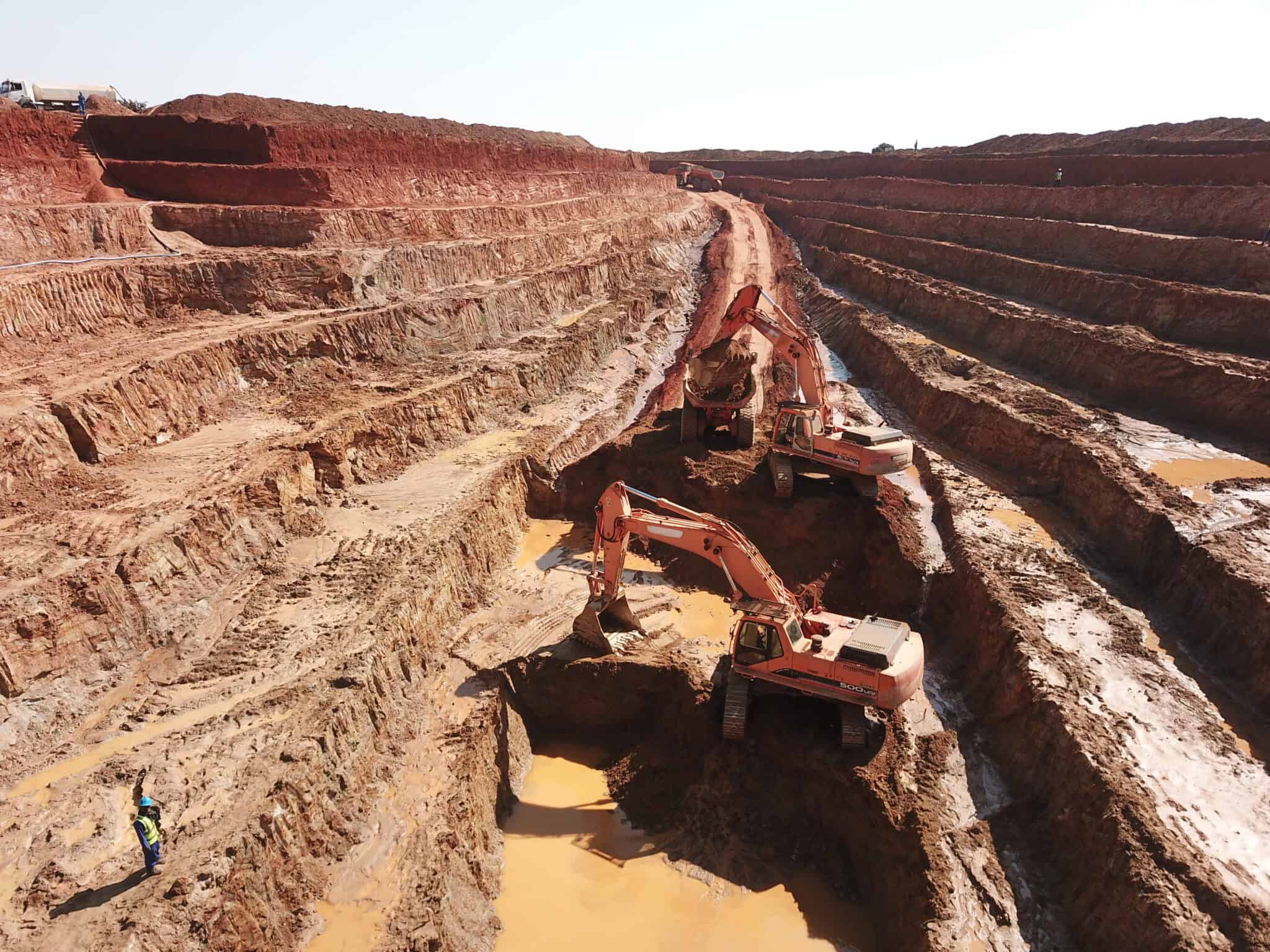
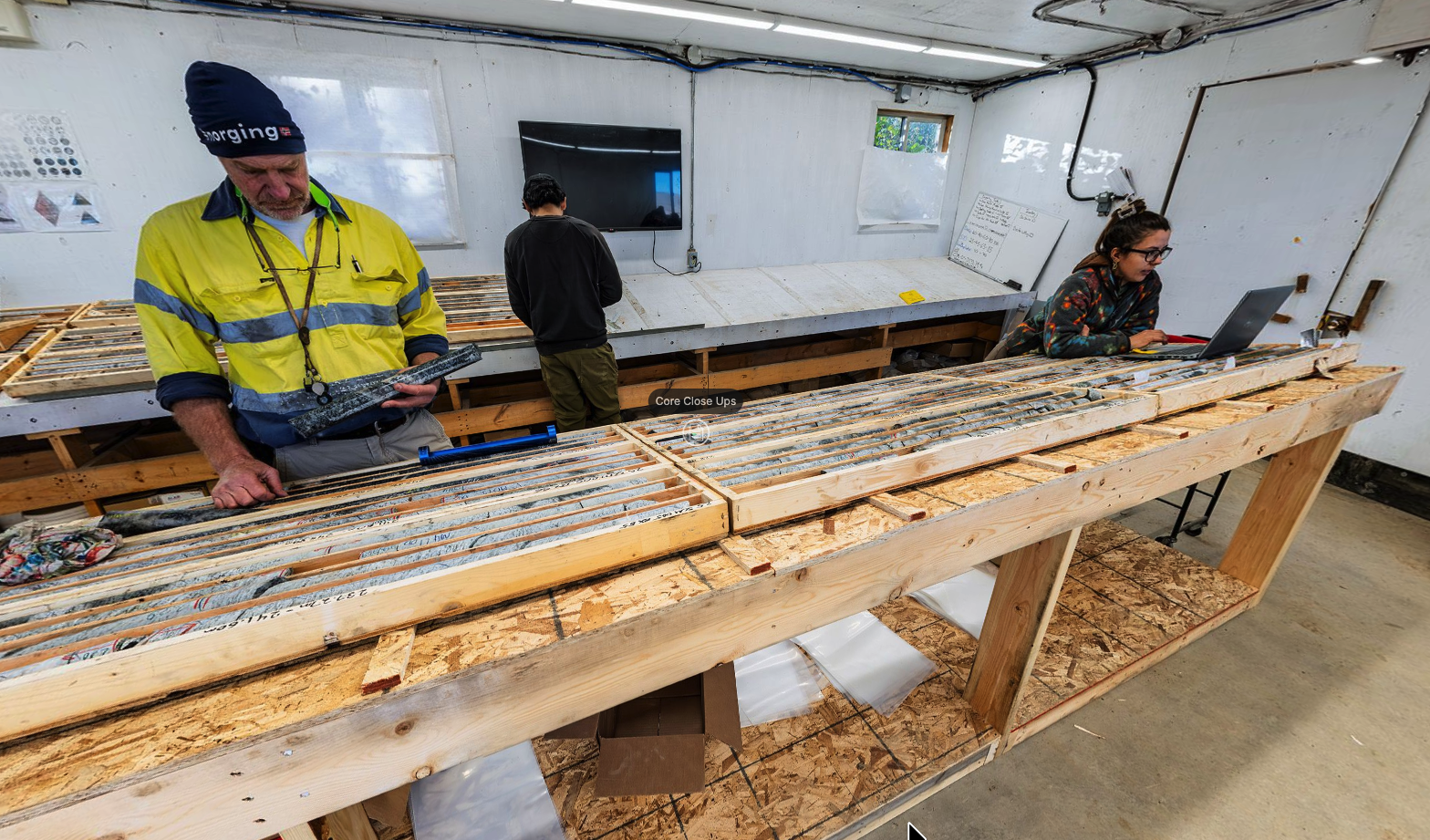
The 2025 work at Lotto was built to attack that zone directly. New Found Gold stripped 2.5 to 9 metres (m) of overburden to expose bedrock over a 210 by 70 m area, then cut 729 m of channel samples across 57 lines at 7.5 m spacing. The same excavation-and-channel method had already been run at the Keats and Iceberg zones before reaching Lotto, building a comparable surface dataset across the core mining area rather than a series of isolated tests. Sampling at 7.5 m spacing across the exposed bedrock informs the geological model on how grade varies across the top of the zone, and seeing the veins in place rather than reconstructing them from core removes a layer of interpretation from the model.
The drilling alongside it was aimed as much at the resource category as at the grade. Seven infill holes totalling 1,928 m tested Phase 2 open-pit and underground inferred blocks, supporting the conversion of those areas of the block model from the inferred to the indicated category. Those seven holes are a small part of a programme weighted towards Phase 1 conversion. Category conversion is the point of the exercise.
The conversion is not finished. Additional Lotto infill is scheduled for the second half of 2026, inside a 2026 programme of 90,000 m focused on discovery and resource growth, of which about 40,100 m had been completed in 284 holes by July 2026. All of that data feeds the next resource estimate rather than a stream of separate announcements.
Resource Category & What Conversion Actually Changes
Category governs confidence rather than inclusion. The 2025 PEA is preliminary by definition, and its inferred resources are considered too geologically speculative to have economic considerations applied to them that would allow them to be categorised as mineral reserves. The company reports mineral resources only, and resources that are not reserves do not have demonstrated economic viability. The updated study is again a PEA, so the inferred ounces inside the plan stay in the economics. What conversion changes is the confidence attached to the tonnage the plan is built on, and the strength of the base from which reserves could later be defined.
Those economics set the bar against which the update will be measured. In the July 2025 PEA, at a base case of US$2,500 per ounce for gold, Queensway carries an after-tax net present value at a 5% discount rate (NPV5%) of C$743 million, an internal rate of return of 56%, and a payback under two years, built on initial Phase 1 capital of C$155 million, C$442 million of Phase 2 growth capital, and C$143 million for Phase 3. Phase 1 averages 69,300 ounces a year at an all-in sustaining cost (AISC) of US$1,282 per ounce over its first four years, and each US$100 per ounce increase in the gold price adds C$89 million to the NPV5%. In an upside case of US$3,300 per ounce for gold, the same assessment yields a C$1.45 billion NPV5% and a 197% internal rate of return, a sensitivity that the revised study inherits. Those are the numbers the updated technical report will revise.
Chief Executive Officer of New Found Gold, Keith Boyle, is precise on where the economics stand:
"We're right now in the midst of updating our capital cost, but it's within the range of what the PEA had mentioned."
Holding the capital estimate inside the PEA range keeps the value of the conversion work flowing to the resource rather than being offset by a rising build bill. The same assessment already models a second phase at 172,200 ounces per year at an AISC of US$1,090 per ounce over its first five years, so the tonnage the conversion firms up feeds a plan whose later, higher-volume years carry lower costs.
The 2026 Technical Report & Updated MRE
The updated technical report and MRE, targeted for the second half of 2026, are the point at which the scattered 2025 and 2026 results become a single figure. The report will incorporate the 2025 and much of the 2026 drilling, the 7.5 m channel data, and updated geological and resource models, updating the March 2025 MRE and the July 2025 PEA into a single revised base. Until it lands, the channel intervals, infill holes, and conversion drilling are individual data points rather than a model that an investor can price.
The volume of input behind it is already largely in hand. The 2025 drill programme ran 74,377 m across 614 holes, with roughly 6% of those results still outstanding as of July 2026. The Lotto results that feed the update returned 23.7 g/t gold over 15.88 m at surface and 43.5 g/t gold over 4.75 m in the underground infill, and both conform to the existing block model rather than redrawing it.
Boyle puts the early grade profile of the mine plan plainly:
"For the first couple of years, we're going to be processing higher grades, in the 12 to 12.5 grams per tonne range, and that's targeting more of the 100,000 ounces."
A front-loaded grade profile is the kind of detail the revised study can convert into the cash-flow profile that drives the plan's early years. That first-couple-of-years profile sits above the 69,300-ounce Phase 1 average, so the value in the update is as much in the shape of the production as in the ounce count.
Unresolved Conversion & Grade Variability
The Lotto results firm confidence rather than delivering a step-change in ounces at that zone. The 2025 dataset shows the local variability characteristic of a coarse, free-gold quartz vein system, with several channels and drill holes returning no significant values alongside the high-grade hits. Barren intervals sitting in the same dataset as the peak grades are a feature of the geology, not a flaw in the programme, but they cap how much a single round of channels can lift the modelled tonnage.
True widths are uncertain because secondary veins crosscut the moderately to steeply dipping host structures. Because the reported intervals are drill or channel lengths rather than true widths, the update refines geometry as much as grade, which is what firms the mineable shape the plan depends on. Per the company's own guidance, the channel and mapping results are not expected to significantly affect the future MRE, and the Lotto conversion still requires the additional infill scheduled for the second half of 2026 to complete. The read on the Lotto results, then, is a tighter, more defensible model across the core zones, with any change in overall tonnage coming from elsewhere in the programme.
Catalyst Sequence Into Late 2026 & 2027
The technical report appears early in a dated sequence, which makes it the first hard read on the project's trajectory. The second half of 2026 carries both the remaining Lotto infill and the updated report and MRE. Development then runs on a 700-tonne-per-day open pit feeding offsite milling, with the Pine Cove mill set to be doubled to process both the Hammerdown deposit and Queensway Phase 1, and first ore to the mill targeted for the fourth quarter of 2027.
The build itself is sequenced to take risk out at each step. Boyle is direct about the mining approach to the first ore:
"Having learned what we learned at Hammerdown, we're better off to just start with a contract miner, get the bugs worked out, and then we can bring a fleet of equipment and hire our own people."
Against that timeline, the second-half-of-2026 report is the nearest point at which two drill seasons of drilling, channel sampling, and infill work convert into a number the market can act on, well ahead of first production.
The Investment Thesis for New Found Gold
- The updated mineral resource estimate and technical report, targeted for the second half of 2026, is the single event that consolidates two drill seasons of Queensway drilling, channel sampling, and infill work into a single revised model.
- The re-rating lever is the conversion of inferred resources to indicated resources, with about 75% of the 2025 programme directed at Phase 1 conversion and 55% of the 2026 programme at conversion overall.
- The updated study is again a preliminary economic assessment, which can carry inferred resources, so category conversion lifts the confidence behind the plan rather than the volume the study is permitted to include.
- At a base case of US$2,500 per ounce for gold, the July 2025 preliminary economic assessment gives an after-tax net present value at a 5% discount rate of C$743 million and an internal rate of return of 56%, rising to C$1.45 billion and 197% in an upside case of US$3,300 per ounce, the figures the updated study will revise.
- Management is holding the Phase 1 capital estimate within the preliminary economic assessment range, keeping the value of the conversion work attached to the resource rather than offset by a higher build cost.
- The Lotto channel and mapping results are not expected to significantly affect the future mineral resource estimate, with coarse free-gold variability and the still-incomplete Lotto conversion setting the ceiling on what that zone alone can add.
The setup rewards a specific read: the near-term value at Queensway comes less from grade headlines than from the moment when two drill seasons settle into a single model that mine planning can use. First ore to the Pine Cove mill remains targeted for the fourth quarter of 2027, and the second-half-of-2026 technical report is the last major resource checkpoint before the project commits to that build.
TL;DR
Queensway's near-term catalyst is the updated mineral resource estimate and technical report, targeted for the second half of 2026, which consolidates the 2025 and much of the 2026 drilling and channel sampling into a single revised model. The lever is the conversion of inferred ounces to indicated, weighted towards the Phase 1 open-pit areas of the block model. Because the updated study is again a PEA, the inferred ounces stay in the economics, and conversion firms the confidence behind a plan whose July 2025 base case was a C$743 million after-tax NPV5% at US$2,500 per ounce for gold, rising to C$1.45 billion at US$3,300 per ounce. The Lotto results firm confidence rather than sharply lifting tonnage, and the update lands well ahead of the first ore targeted for the fourth quarter of 2027.
FAQs (AI-Generated)
Analyst's Notes





Subscribe to Our Channel






Stay Informed






















