




Fed Expectations Push Gold Below $4,100 While 89% of Central Banks Plan to Add Reserves


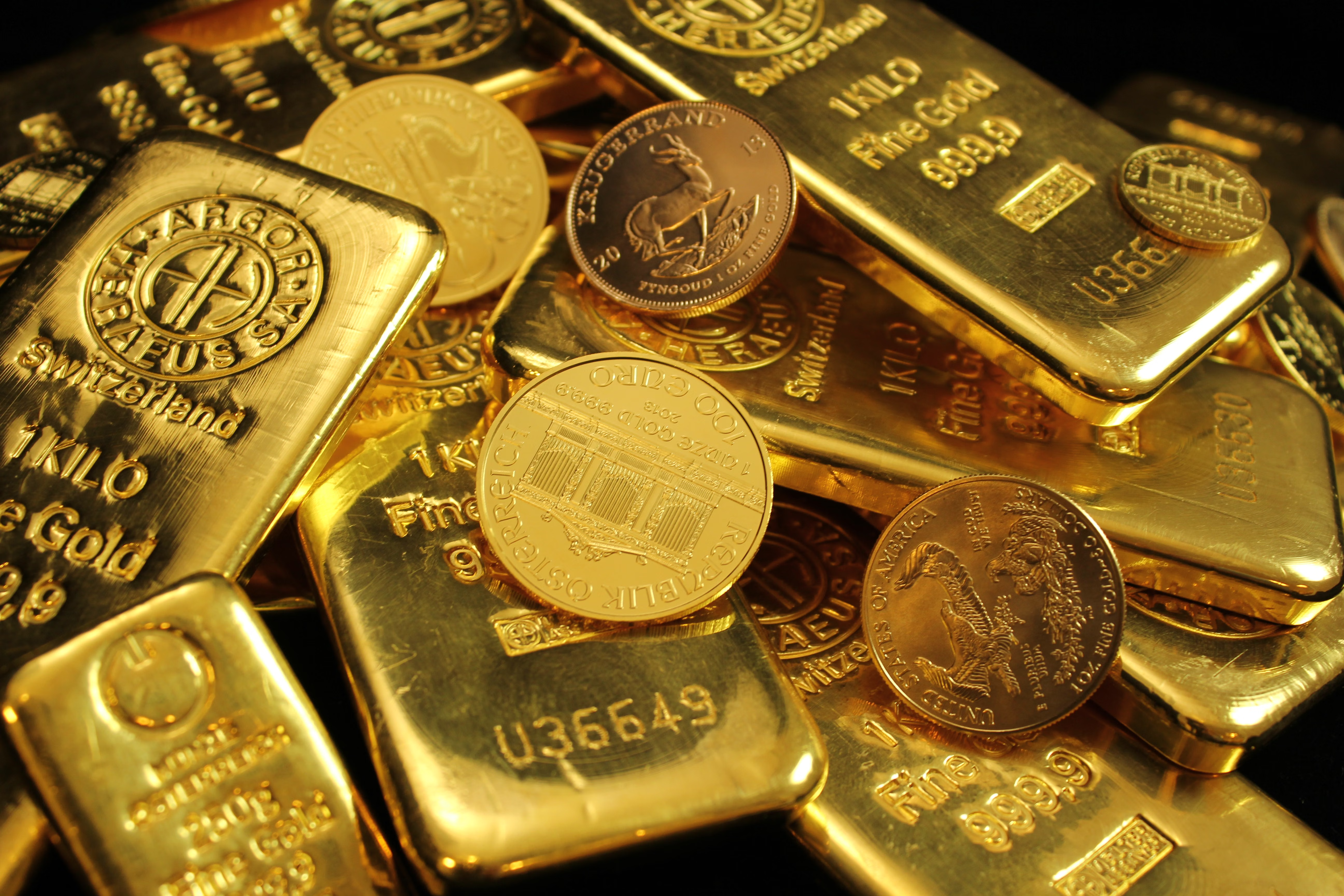
Gold fell below $4,100 as Fed hike expectations lifted the dollar, but strong central bank demand continues to support the long-term outlook.
- Spot gold fell 2.2% to $4,099.84 per ounce, while August gold futures declined 2% to $4,117.70. The selloff followed a rise in the dollar index to 101.13, its highest level since May 2025, which increased the cost of gold for non-US buyers.
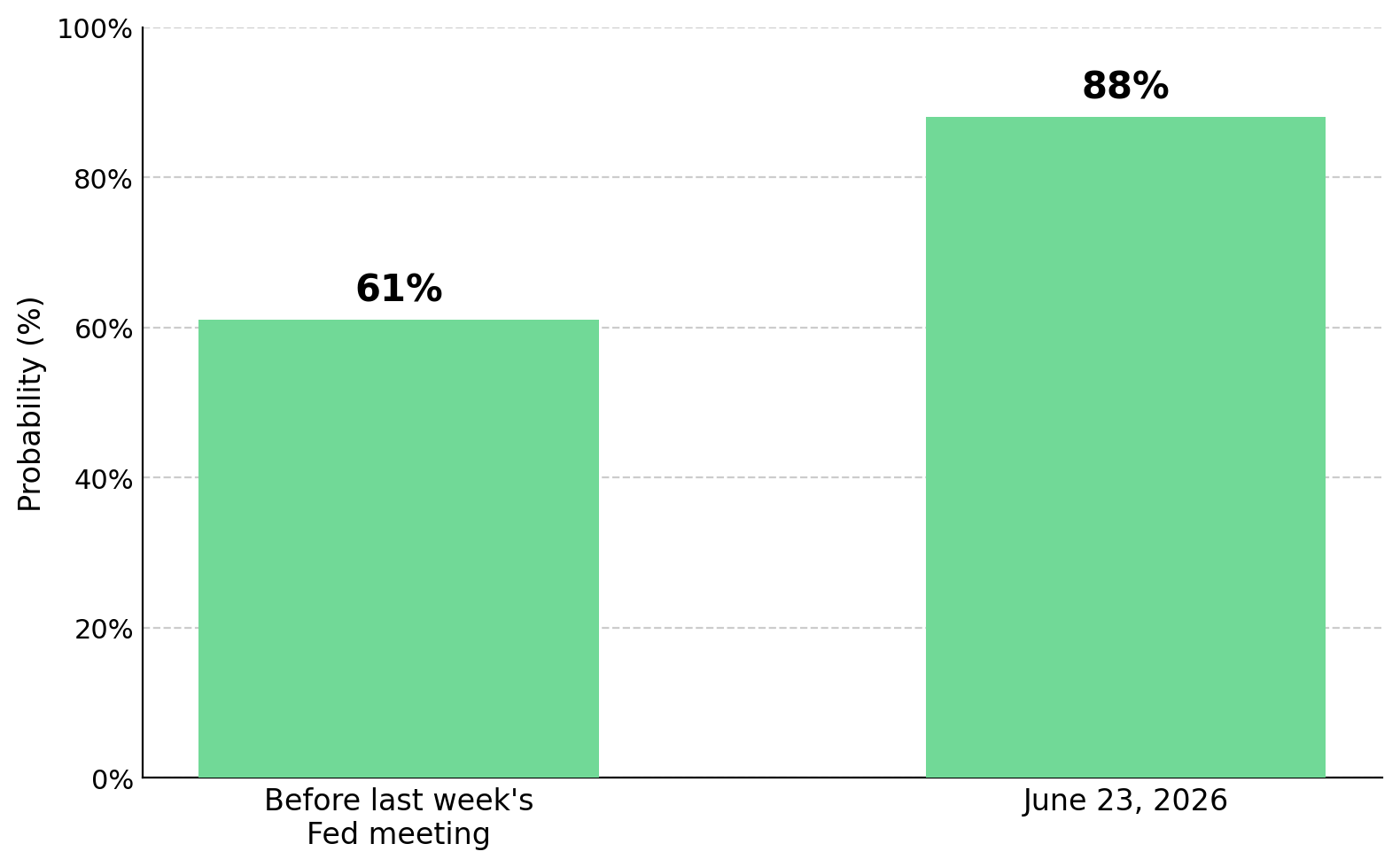
- Traders now price an 88% probability of a Fed rate hike by December, up from 61% before the Fed's latest meeting. Higher rate expectations have strengthened the dollar and increased pressure on gold prices.
- BofA Global Research and Deutsche Bank now expect a Fed rate hike this year, reversing earlier forecasts that policy rates would remain unchanged.
- The World Gold Council's Central Bank Gold Reserves Survey 2026 shows that 89% of central banks expect global gold reserves to increase over the next 12 months, with a record 45% planning to add to their own holdings.
- 84% of central banks expect gold to make up a larger share of reserves within five years, up from 76% a year earlier, while 74% expect the US dollar's share to decline.
Dollar Strength Pushes Gold Below $4,100
Spot gold fell 2.2% to $4,099.84 per ounce, while August gold futures declined 2% to $4,117.70. Silver fell 5% to $61.90 per ounce, platinum declined 3% to $1,628.55, and palladium dropped 2.9% to $1,229.28. The dollar index rose to 101.13, its highest level since May 2025.
Rising rate expectations and a stronger dollar outweighed support from lower oil prices. Traders now price an 88% probability of a December Fed rate hike, up from 61% before the Fed's latest meeting, strengthening the dollar and raising the cost of gold for non-US buyers.
Fed Hike Expectations Lift the Dollar & Pressure Gold
Fed funds futures now price more than an 80% probability of a rate hike by September. BofA Global Research and Deutsche Bank also now expect a Fed rate hike this year, citing continued economic strength. Higher rate expectations under Fed Chair Kevin Warsh pushed the dollar index to 101.13. The yen weakened to 161.48 against the dollar, while the South African rand fell 0.3% to 16.4525 per dollar, reflecting broad strength in the US currency.
A stronger dollar raises the cost of gold for buyers using other currencies, contributing to the decline in spot prices to $4,099.84 per ounce. Talks between Japanese and US officials on the yen's weakness produced no clear signal of currency intervention, leaving dollar strength and pressure on gold prices intact.
Central Banks Continue to Build Gold Reserves
The World Gold Council's Central Bank Gold Reserves Survey 2026 shows that 89% of central banks expect global gold reserves to increase over the next 12 months, with a record 45% planning to add to their own holdings. 84% of central banks expect gold to make up a larger share of reserves within five years, up from 76% a year earlier, while 74% expect the US dollar's share to decline.
Lower oil prices provided some support for gold, but rising Fed rate expectations and a stronger dollar remained the dominant drivers of price action.
In a six-month base case, an 88% market-implied probability of a December Fed rate hike could keep the dollar near current levels and gold trading around $4,100 per ounce, supported by continued central bank buying. In a bear case, a durable US-Iran peace agreement could reduce demand for gold as a geopolitical hedge, increasing the risk of further downside beyond this week's 2.2% decline.
Stronger Dollar Pressures South African Gold Miners
Gold producers reporting in US dollars face immediate margin pressure from the 2.2% decline in spot gold to $4,099.84 per ounce. For South African miners, the rand's 0.3% decline to 16.4525 per dollar offsets some revenue pressure in local-currency terms but increases the cost of dollar-denominated debt and equipment.
South Africa's producer inflation data and the 2035 government bond yield, which rose 4 basis points to 8.32%, will provide a near-term signal on financing costs for rand-exposed producers. Low-cost producers with flexible mine plans are better positioned to absorb currency swings and weaker gold prices than higher-cost operations near breakeven.
PCE Inflation Data Could Shape Gold's Next Move
The dollar index remains near 101.13, its highest level since May 2025, as markets price an 88% probability of a December Fed rate hike under Chair Kevin Warsh. A reversal in dollar strength would likely require either Japanese currency intervention or renewed geopolitical demand for gold. Uncertainty around US-Iran negotiations keeps both outcomes in play for gold markets.
The key data release to watch is US PCE inflation, the Fed's preferred inflation gauge, while South Africa's producer inflation data provides a secondary signal for rand-exposed miners.
Analyst's Notes





Subscribe to Our Channel






Stay Informed






















