




First Basement Mineralisation at Pampa Medina Opens a New Host Horizon at Depth


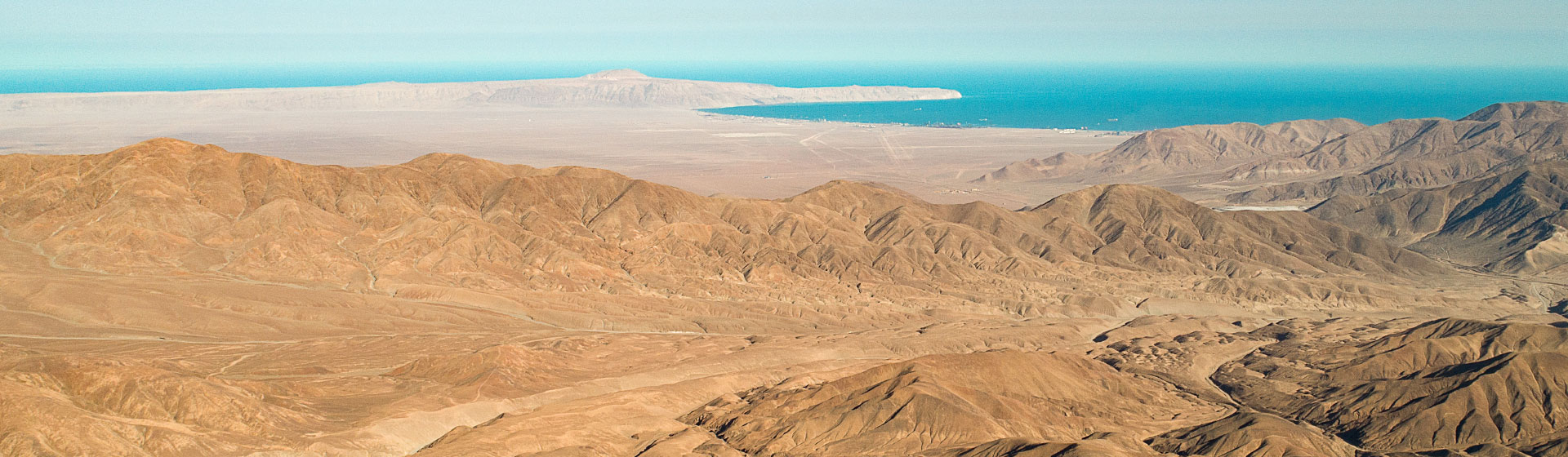
Marimaca Copper's deepest drilling at Pampa Medina intersects first basement mineralisation, extending prospective stratigraphy beyond the defined host units.
- Marimaca Copper's step-out drilling at Pampa Medina has intersected mineralisation in the basement metasediments for the first time.
- The basement complex sits below the lower sedimentary units that a 2024 geological reinterpretation defined as the priority target horizons.
- The basement returned 66 metres (m) of 0.70% copper from 802 m depth in the deepest drilling completed at the project to date.
- The nearby Cachorro discovery, owned by Antofagasta Minerals, is primarily hosted in basement tuffs and metasediments.
- A maiden inferred Mineral Resource Estimate (MRE) is targeted as a snapshot of a small subset of the central area and will not capture the entire deposit.
What Has Happened
Marimaca Copper (TSX: MARI | ASX: MC2) has intersected mineralisation in the basement metasediments at Pampa Medina for the first time, in step-out results released in July 2026. The intercept came from the deepest drilling completed at the deposit to date, with a 660-metre (m) intersection grading 0.41% copper and 1.8 grams per tonne (g/t) silver from a depth of 386 m, carrying multiple stacked mantos. The same batch of holes extended the central bornite-manto zone 300 m south of previously released drilling. Pampa Medina is a manto-style copper deposit in Chile's Antofagasta Region, approximately 28 kilometres (km) east of the Marimaca Oxide Deposit. The basement intersection expands the prospective stratigraphy beyond the previously defined host units, adding a depth dimension to a system that had been targeted on its sedimentary column.
The Defined Host Sequence at Pampa Medina
The stratigraphy at Pampa Medina runs through 3 units. Andesitic volcanics lie atop the middle Rencoret sedimentary unit, composed of sandstones, conglomerates, tuffs, and black shales. Beneath both lies an Upper Paleozoic basement complex of metamorphosed sediments, volcanics, and intrusions. A dyke swarm intrudes the key lithological units, and post-mineral normal faulting affects the sequence. The oxide domain carries atacamite, chrysocolla, azurite, and secondary chalcocite, while the primary domain carries bornite, chalcopyrite, variable covellite, chalcocite, and pyrite.
Marimaca consolidated the project area and surrounding claims in 2024, then reinterpreted all available geological information. That reinterpretation identified the lower sedimentary units, comprising interbedded sandstones, shales, tuffs, and conglomerates, as the priority target horizons. The basement complex sat below those horizons, outside the defined targets.
What the Basement Intercepts Returned
The deepest hole tracked grade through each domain on its way down. The mixed domain returned 98 m at 1.21% copper and 7.6 g/t silver from 386 m depth, including 16 m at 2.90% copper and 21.2 g/t silver. In the basement unit itself, the drilling returned a deeper interval of 66 m at 0.70% copper from 802 m depth, with the deeper intervals impacted by post-mineralisation dykes. A hole collared 300 m further south returned 30 m at 1.26% copper and 2.6 g/t silver from 440 m depth and 32 m at 0.85% copper and 4.4 g/t silver from 506 m depth between multiple barren dykes oriented west-northwest, before continuing into the metasediment unit at depth, where it returned 6m at 1.05% copper and 8.3 g/t silver from 1,006 m depth.
Speaking before the basement assays were returned, Chief Executive Officer of Marimaca Copper, Hayden Locke, was direct about what the deeper drilling implied:
"Some of the drilling that is to come is certainly extending deeper than we had originally thought. Obviously, we don't have any grades yet, but we're seeing evidence of mineralisation much, much deeper in some of the drilling that's coming out, which leads us to a conclusion that potentially we haven't drilled deep enough in the previous drilling."
The deeper intercepts indicate potential for further extension at depth across the Pampa Medina system.
Cachorro & the Basement Setting
The new basement mineralisation has a precedent in the neighbourhood. The nearby Cachorro discovery, owned by Antofagasta Minerals, is hosted primarily in basement tuffs and metasediments, sits at the base of the Rencoret sediments, and extends into the metasediments. Pampa Medina's new mineralisation occupies the same stratigraphic setting.
Locke frames the neighbouring analogue plainly:
"If we look at Cachorro, which is the Antofagasta deposit, that was hosted mainly at the bottom of the Rencoret sediments and into the metasediments. We're now starting to see evidence of mineralisation in the metasediments, and so that creates a whole new opportunity for us to further grow the endowment of this."
The setting match supports the basement unit's prospectivity at Pampa Medina.
Broader Context
The depth development occurs within a laterally held geological model. Drilling has confirmed economic widths and grades extending over more than 2 square kilometres, with potential to continue extending along strike. High-grade zones sit interbedded with lower-grade material that is almost never barren, except where late or post-mineral dykes cut the sequence.
Locke puts the three-unit picture this way:
"The stacked manto is very much intact. We're seeing mineralisation in multiple different horizons over all three of our main units, which are the upper volcanics, the middle Rencoret sedimentary unit, and the basement metasediments."
Mineralisation across all 3 units broadens the column to which the stacked-manto model applies, from the volcanics at the top to the metasediments at depth. The project comprises 12 concessions owned by SCM Elenita, over which Marimaca holds an option to acquire.
What to Watch Next
The 30,000 m step-out and delineation programme continues, with infill drilling currently at 150 m by 150 m spacing, and exploration work, including drilling and geophysics, running over the course of 2026. The campaign has 3 priority goals: defining the high-grade central area, delineating the identified oxide extensions, and conducting step-out drilling to test broader system extensions identified in geophysical work.
A maiden inferred Mineral Resource Estimate (MRE) is targeted as a snapshot over a relatively small subset of the central area, carrying preliminary economics and mining methods. It will not capture the entire deposit, which remains open. Two drill rigs are already extending the mineralised horizon along its northeast-southwest strike, and, after the central delineation is complete, testing turns to the lateral and depth extent of the broader Sierra de Medina land package, including the Madrugador oxide target. Separate satellite oxide targets, Mercedes, Robles, and Cindy, sit in immediate proximity to the Marimaca Oxide Deposit.
FAQs (AI-Generated)
Analyst's Notes





Subscribe to Our Channel



%20(1).png)


Stay Informed


