Founder Transition Strengthens Strategy as enCore Advances Production and Verdera Builds Scale


.webp)
William Sheriff transitions to Senior Adviser & Verdera Chair; enCore shareholders receive Verdera spinoff shares, gaining exposure to 80Mlb New Mexico uranium portfolio.
- enCore Energy (TSXV:EU),via a shareholding in Verdera Energy, holds approximately 80 million pounds of historic uranium resources across four deposits in New Mexico's Grants Mineral Belt, covering more than 400 square miles of private mineral rights - representing control of more than half of the seventh-largest uranium district in the world.
- enCore Founder William Sheriff is transitioning from Executive Chairman to Senior Adviser, refocusing his efforts on M&A advisory, corporate finance, and corporate development - the disciplines through which he built enCore from an explorer into a producing ISR uranium company.
- Existing enCore shareholders will receive Verdera shares automatically upon the filing of its US registration statement, providing free exposure to the New Mexico resource package without requiring additional capital investment.
- Sheriff has outlined a near-term development agenda for Verdera that includes producing NI 43-101 compliant resource estimates, remodelling deposits under current grade cutoffs, and identifying projects suitable for stope leaching — a faster and less regulatory-intensive production pathway than conventional ISR.
- Sheriff made clear that consolidation within the US ISR uranium sector is a strategic imperative, arguing that producers must scale well beyond one million pounds per year to attract institutional capital, and signalling that unsolicited tender offers — bypassing resistant management teams and going directly to shareholders — may become an increasingly common mechanism for achieving that scale.
enCore Energy (TSXV:EU | NASDAQ:EU), one of the few operating in-situ recovery (ISR) uranium producers in the United States, has announced a material change in management structure with enCore and Verdera Energy. William Sheriff, enCore's founder and Executive Chairman moves into a Senior Adviser role and will assume the position of Executive Chairman at Verdera Energy.
For investors in both companies, the announcement carries operational, strategic, and financial implications. Understanding what Sheriff is stepping away from, what he is stepping toward, and what the spinoff means for existing shareholders is essential context for evaluating the opportunity.
The Verdera Energy Spinoff
Verdera Energy holds what Sheriff describes as a substantial but underworked resource package in New Mexico. The portfolio includes approximately 80 million pounds of uranium resources across four large deposits, mineral rights covering more than 400 square miles - all private, which simplifies certain aspects of the permitting process - and proprietary geological data compiled from 13 different companies that have operated in New Mexico over several decades.
The spinoff mechanics are straightforward in principle. Once Verdera files its registration statement with US regulators - enCore is already a US reporting issuer listed on NASDAQ - existing enCore shareholders will receive Verdera shares as of a record date. No action is required on the part of shareholders. The practical effect is that investors who currently hold enCore receive exposure to the New Mexico asset package without any additional capital outlay.
Verdera Energy completed a $20 million capital raise, providing initial working capital to advance its programmes. Sheriff outlined a clear near-term agenda: pursuing NI 43-101 compliant resource estimates to replace the current historic figures, remodelling existing resources using current grade cutoffs (which are substantially lower than the 0.6% cutoffs historically applied), and evaluating projects for suitability to stope leaching - a permitting pathway that is faster and less regulatory-intensive than conventional ISR.
The Leadership Change at enCore
Sheriff founded enCore Energy and guided it through its development from an exploration-stage company to a producing ISR operation. That transition - from builder to operator - is precisely the one he is now stepping back from. Sheriff was candid about his motivations, describing his role shift as a deliberate reallocation of time and skills rather than a departure from the company.
"I tend to build things rather than produce. So I'm stepping aside to being a senior adviser in charge of the things I do best, which are M&A advisory, corporate finance, corporate development."
Sheriff will retain the title of Chairman Emeritus and remains enCore's largest individual shareholder. He made clear that his involvement in corporate strategy, particularly on the M&A side, will continue. The company's board, which currently has six members including two with extensive uranium experience and one with nuclear engineering credentials, is expected to conduct a systematic search for a successor to the Executive Chairman role. No appointment is imminent, and the board appears comfortable operating without filling the position in the near term.
Production continues in Texas and Wyoming. The operational team remains in place. What changes is the allocation of Sheriff's personal time and energy, which is being redirected toward Verdera and toward M&A work that could ultimately benefit enCore through consolidation activity.
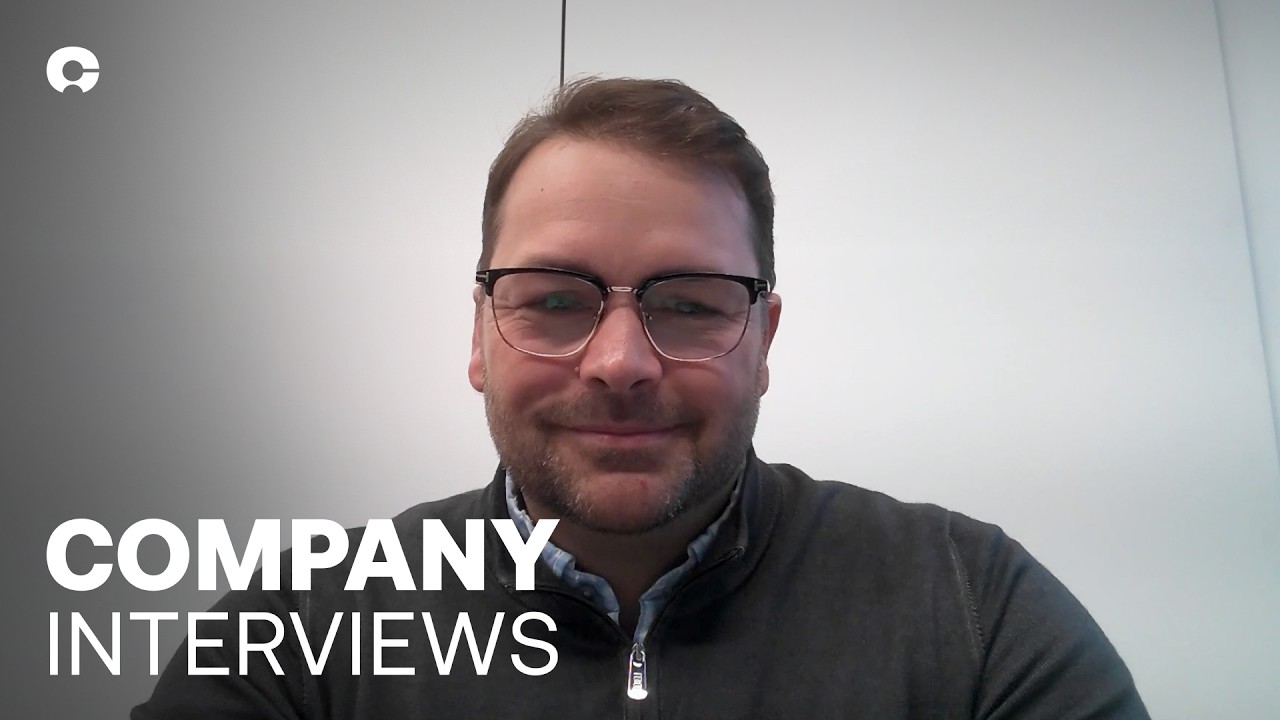
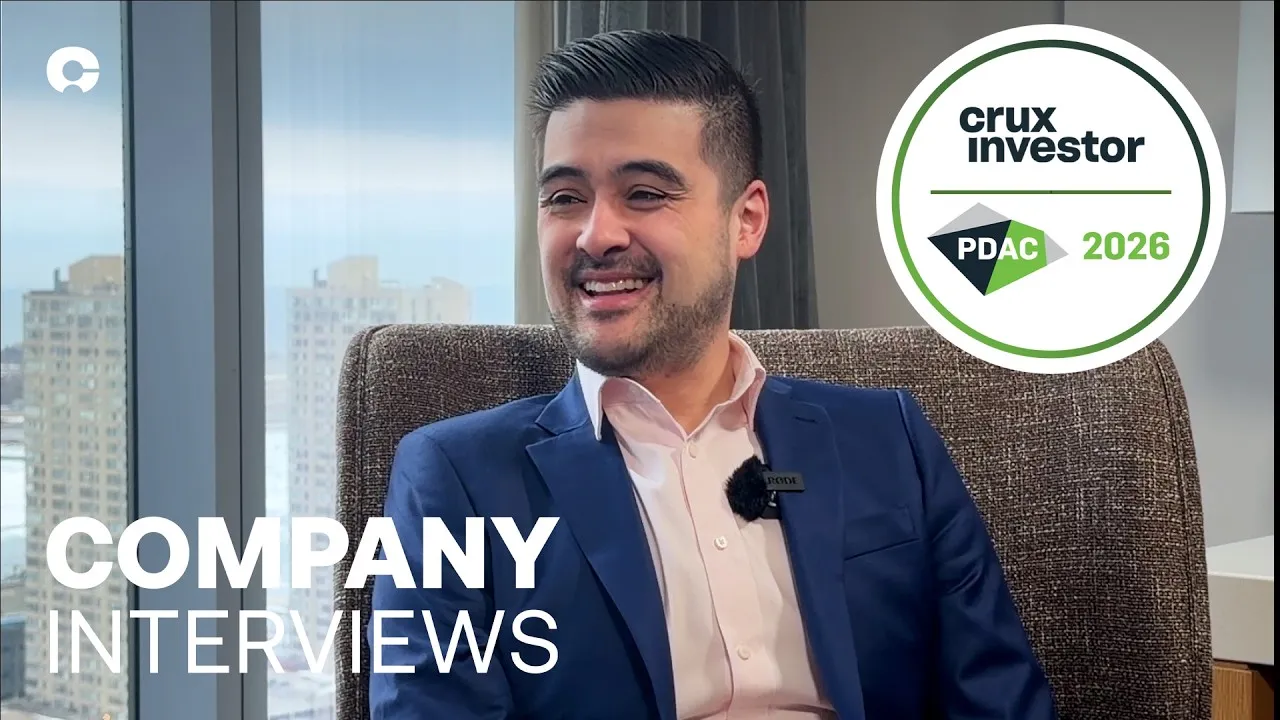
Interview with William Sheriff, Executive Chairman of encore Energy Corp.
The New Mexico Opportunity - and Its Challenges
The Grants Mineral Belt in New Mexico is the seventh-largest uranium district in the world by resource endowment, and Verdera controls more than half of it. That is a compelling statistic on its face, but Sheriff was measured in how he presented it, acknowledging that the assets come with specific challenges.
Permitting in New Mexico is complex. The state has a documented history of environmental harm from open-pit uranium mining during the Cold War era, and Indigenous community concerns remain a significant factor in any new development. Sheriff acknowledged this legacy directly,
"The industry got to step up and take some responsibility for that. Uranium mining now in terms of in-situ is not your predecessor uranium mining, I mean it's as different as day and night, being so environmentally friendly and short term, short timeline, short cost, to reclaim them."
New Mexico's political and regulatory environment appears to be shifting in a more constructive direction. The state has increasingly engaged with nuclear energy as part of its energy policy conversation, and federal pressure to develop domestic uranium supply has created a more receptive climate for responsible uranium development. Sheriff suggested this tailwind, while still developing, could reduce some of the headwinds that have historically faced the region.
The Consolidation Thesis: Tender Offers on the Horizon?
One of the more forward-looking elements of the interview concerned Sheriff's views on the structure of the US ISR uranium sector. His argument is that scale matters - not just for operational efficiency, but for capital market access and institutional investor eligibility. A producer generating one million pounds of uranium per year, he contended, simply cannot attract the kind of large institutional capital that drives premium valuations.
"You've got to get some size. Your credit ratings go up, so your cost of capital goes down. Your ability to deal on more favourable terms with your customers, be that the nuclear utilities, that's going to increase as a larger scale company. And perhaps the most important to shareholders in terms of immediate benefit is to get the really big companies, the really big funds like Citadel investing in your company."
Sheriff went further, suggesting that the conventional mechanism for consolidation - negotiated, board-level mergers - is too slow and too prone to management resistance. He indicated that unsolicited tender offers, directed at shareholders rather than boards, are likely to become a more active tool in the sector. This is a significant signal from someone with the operational track record and data access to act on such a view. He confirmed that M&A advisory work of this kind remains part of his ongoing brief at enCore.
The Investment Thesis for enCore Energy
- Producing asset base: enCore operates ISR uranium production in Texas and Wyoming, providing revenue-generating exposure to uranium prices without the binary risk of a pre-production company. Investors should monitor quarterly production figures as a baseline indicator of operational health through the leadership transition.
- US-listed, US-reporting issuer: The NASDAQ listing and US reporting status broaden institutional investor eligibility and improve liquidity relative to TSX-only peers — a structural advantage as the sector attracts larger capital allocations.
- Free Verdera exposure: Existing enCore shareholders will receive Verdera shares through the spinoff at no additional cost, providing optionality on 80 million pounds of New Mexico uranium resources. Investors should monitor the registration statement filing date as the key near-term catalyst.
- Consolidation upside: Sheriff's stated intent to pursue M&A - including potentially unsolicited tender offers targeting other US ISR operators - could add material value through scale if transactions are executed on terms favourable to enCore shareholders.
- Data moat: enCore's proprietary geological database covering New Mexico uranium assets is difficult to replicate and may underpin both organic resource growth at Verdera and M&A targeting at enCore. This informational advantage is a durable competitive asset.
- Experienced board: A six-member board with uranium operations expertise and a long-tenured audit chair provides governance continuity through the leadership transition.
Macro Thematic Analysis: US Uranium and Domestic Supply Imperative
Domestic uranium supply in the United States is a fraction of what utilities require annually. The country imports the vast majority of its uranium, with significant volumes historically sourced from Russia, Kazakhstan, and Uzbekistan - geopolitical arrangements that have become increasingly untenable in the current environment.
Federal policy has responded. The US government has moved to restrict Russian uranium imports, allocated funding to support domestic enrichment and conversion capacity, and framed uranium supply security as a national security priority. Nuclear energy has gained bipartisan political support as a firm, low-carbon power source capable of providing baseload electricity in a grid that is simultaneously electrifying and retiring fossil fuel capacity. The result is a policy environment that is explicitly supportive of domestic uranium development for the first time in decades.
Against this backdrop, a handful of operating US ISR producers occupy a strategically valuable position. They hold permitted, operating mines in a jurisdiction that is politically stable and actively incentivising domestic production. The permitting process for new ISR operations, while not without complexity, is well-established and carries a relatively short timeline compared to conventional mining methods.
The challenge, as Sheriff identified, is that individual US producers remain small by the standards of global uranium supply. For the domestic supply thesis to materialise into pricing power and institutional capital flows, consolidation is not optional - it is necessary.
New Mexico's Grants Mineral Belt adds a further dimension to this macro picture. The region contains resources that were partially developed during the Cold War uranium boom and then largely abandoned as prices collapsed. Modern ISR and stope leaching techniques, applied to these deposits with current-generation geological modelling, may prove capable of economically recovering resources that were uneconomic under previous price and technology regimes. The combination of policy tailwinds, underinvestment, and resource optionality creates a multi-year structural opportunity for well-positioned US uranium companies.
TL;DR
enCore Energy is a producing US uranium company transitioning through a leadership change that is strategic rather than disruptive. Founder William Sheriff is stepping into an M&A and corporate development role while handing day-to-day operations to an experienced board. The key immediate development for shareholders is the Verdera Energy spinoff: a no-cost distribution of shares in a New Mexico uranium company holding 80 million pounds of resources across more than 400 square miles of private mineral rights. Verdera has $20 million in working capital and a clear near-term plan to update and expand its resource estimates. The broader thesis is consolidation — Sheriff has argued publicly that US ISR producers must achieve meaningful scale to attract institutional capital, and he has signalled that unsolicited tender offers may be the vehicle. For investors, this is a producing company offering three simultaneous catalysts: operational continuity, a free spinoff, and a founder-driven M&A programme.
Frequently Asked Questions (FAQs) AI-Generated
Sheriff is stepping down as Executive Chairman and moving into a Senior Adviser position focused on M&A advisory, corporate finance, and corporate development. He retains the title of Chairman Emeritus and remains enCore's largest individual shareholder. He will simultaneously serve as Executive Chairman of Verda Energy. The company's six-member board will conduct a search for a successor Executive Chairman, though no appointment is expected in the near term. Operationally, nothing changes — production in Texas and Wyoming continues under the existing management team.
Verda Energy is a spinout entity holding approximately 80 million pounds of uranium resources across four deposits in New Mexico's Grants Mineral Belt, covering more than 400 square miles of private mineral rights. Once Verda files its US registration statement, all enCore shareholders on the record date will automatically receive Verda shares. No purchase or action is required. Existing enCore investors effectively gain exposure to the New Mexico resource package at no additional cost as part of holding their current position.
Sheriff's argument is that producers below a certain size — roughly, those generating under one million pounds per year — are structurally unable to attract the institutional capital that drives premium equity valuations. Larger companies carry better credit ratings, which lowers their cost of capital. They negotiate more favourable terms with uranium utilities. And they qualify for investment by major funds that operate with minimum market capitalisation requirements. Without consolidation, individual US ISR producers remain too small to benefit from these dynamics regardless of the quality of their underlying assets.
Stope leaching is a uranium recovery method applicable to certain deposit types that carries a shorter and less complex permitting pathway than conventional ISR. For Verdera's New Mexico assets — which face a genuine permitting challenge given the state's history with open-pit uranium mining — identifying projects amenable to stope leaching could meaningfully compress the timeline to potential production. Sheriff identified this as one of the first areas of technical evaluation for Verdera's portfolio following the spinout.
Three risks are worth monitoring. First, the absence of a named successor to Sheriff as Executive Chairman creates short-term governance uncertainty; the pace and quality of that search matters. Second, permitting in New Mexico is genuinely complex — the state's environmental history with uranium mining and ongoing Indigenous community concerns are not trivial obstacles, and timelines for any development at Verdera's assets should be treated as uncertain. Third, the consolidation thesis depends on execution: unsolicited tender offers are a bold mechanism that requires willing sellers, supportive shareholder bases, and financing capacity. None of these outcomes are guaranteed, and investors should weigh them against the strategic opportunity Sheriff has described.
Analyst's Notes





Subscribe to Our Channel








Stay Informed