




Gold Pulls Back on Rate Bets as 289 Tonnes of Central-Bank Buying Hold


.png)
Gold prices fall on higher rate-hike odds, but 289 tonnes of central-bank buying and physical demand support the contrarian case.
- Spot gold fell 0.4% to $4,371.92/oz, retreating from $4,434.84, its highest level since June 5.
- September Fed hike odds rose to 52% from 44%, while higher oil prices pushed the 10-year Treasury yield higher and increased gold's opportunity cost.
- Central banks bought a net 289 tonnes of gold in Q2, up 62% year-over-year, even as gold posted its steepest quarterly decline in a decade.
- The World Gold Council and Dynacor signed an MOU to formalize ASGM and facilitate new processing capacity in Africa and Latin America.
- US CPI and PPI will determine whether rate-hike expectations remain elevated or retreat, shaping the next move in gold.
Gold Falls 0.4% on Rate Bets as Central Banks Buy Through Weakness
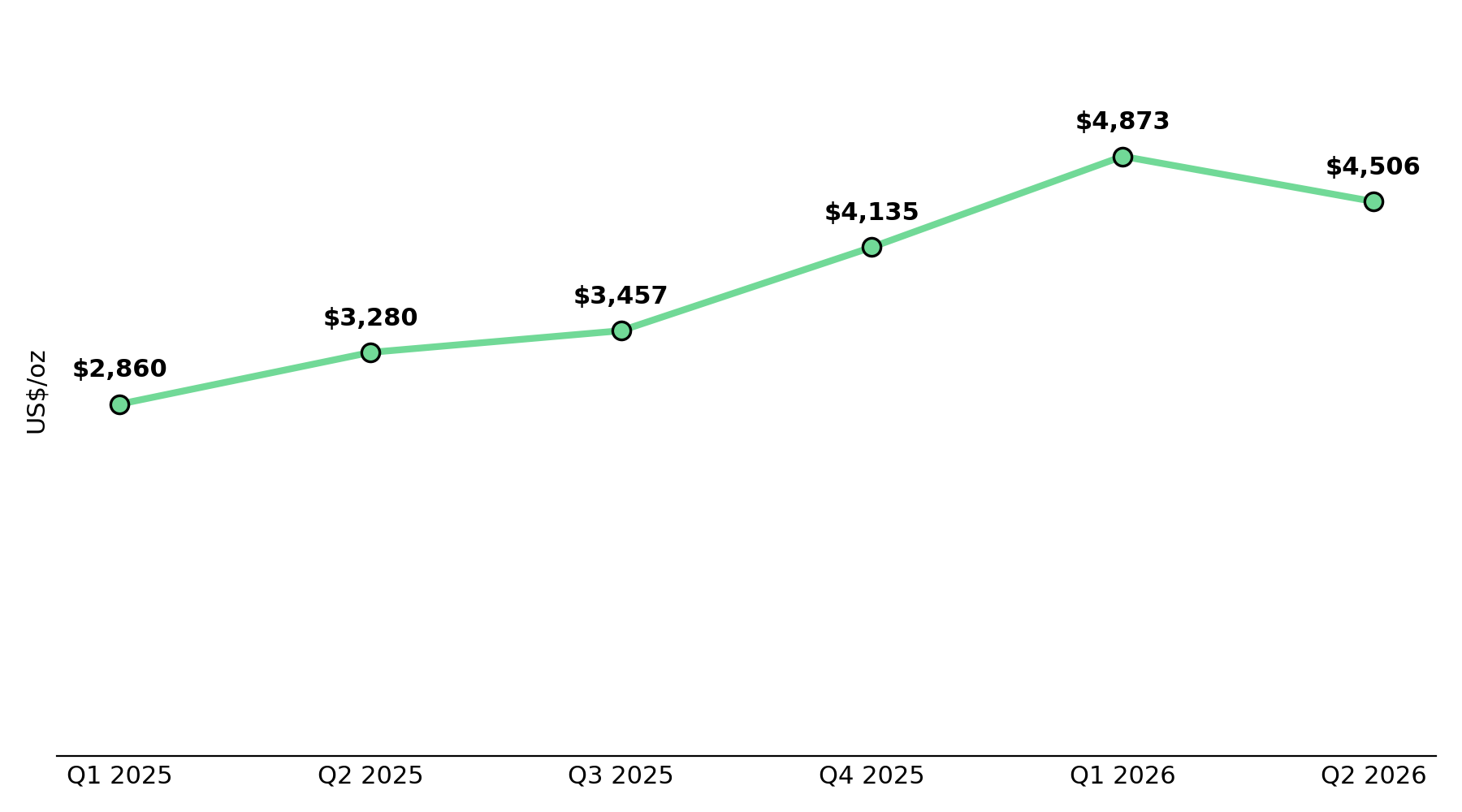
Spot gold fell 0.4% to $4,371.92 an ounce by 0855 GMT, retreating from $4,434.84, its highest level since June 5. Yet central banks bought a net 289 tonnes in Q2, up 62% year-over-year, while gold posted its steepest quarterly decline in a decade.
The World Gold Council and Dynacor Group also signed an MOU to formalize ASGM and facilitate new processing capacity in Africa and Latin America, adding physical-market evidence to a selloff driven by near-term rate expectations.
Oil Prices Lift Yields, Creating Rate-Driven Pressure Rather Than Demand Weakness
Uncertainty over the Strait of Hormuz pushed oil toward one-week highs, raising inflation concerns and lifting the 10-year Treasury yield to its highest level in more than a week. With the dollar broadly steady at 99.84, higher yields provide the clearest near-term explanation for gold's weakness by increasing the opportunity cost of holding a non-yielding asset.
Cleveland Fed President Beth Hammack's support for gradual rate increases adds to that pressure. The contrarian signal is that the selloff has a clear rate mechanism, while the article's physical-market data shows no comparable break in central-bank buying or supply-chain investment.
Rate Pressure Hits Gold Prices While Multi-Year Supply Investment Advances
Gold-processing infrastructure operates on a multi-year timeline, while gold prices can reprice within hours of an inflation release. Dynacor's MOU with the World Gold Council therefore provides a contrarian physical-market signal, supporting ASGM formalization and new processing capacity in a segment estimated to account for 20% of global gold production.
Base case: Softer US CPI reduces September hike odds and Treasury yields, giving gold room to retest $4,434.84.
Bear case: Hotter CPI keeps hike odds elevated and could push gold lower, creating a deeper rate-driven pullback without changing the multi-year supply-chain thesis.
PPI and retail sales will show whether that rate pressure is fading or extending.
Rate-Driven Selling Pressures Developers While Processing Margins Rely on Throughput
Junior and mid-tier gold developers remain exposed to lower gold prices because weaker price assumptions can reduce project valuations and financing headroom. Processors such as Dynacor have a different revenue mechanism, with margins tied to ore throughput and processing spreads rather than direct gold-price exposure. That distinction becomes more important when rate-driven selling pressures the commodity.
Central banks bought 289 tonnes in Q2 even as gold posted its steepest quarterly decline in a decade, while bar and coin demand reached 307 tonnes. The combination shows that financial selling can weaken prices without eliminating physical demand, giving evidence-based buyers a reason to assess the pullback rather than treat it as an automatic exit signal.
Watch US Inflation & the $61.06 Breakout Level to Spot the Next Fed Signal
The 52% September Fed hike probability is keeping rate expectations elevated and limiting gold below $4,434.84. Softer CPI could reduce hike odds and Treasury yields, giving gold room to retest the recent high, while hotter inflation could extend the rate-driven pullback.
The contrarian opportunity lies in separating that short-term rate pressure from the physical-market evidence: central banks bought 289 tonnes in Q2 even as gold posted its steepest quarterly decline in a decade. CPI and PPI will show whether the current weakness is being driven by rates alone or joined by weaker demand.
Analyst's Notes





Subscribe to Our Channel

Stay Informed






















