




Greenheart Gold Reports Results From Maiden Igab Drill Programme and Completes Majorodam RC Drilling



Greenheart Gold's maiden Igab drill programme returns 7.0m at 5.82 g/t gold at Koela, with additional trenching results and a completed Majorodam RC programme.
- Hole IGBD26-007 at the Koela target intersected 7.0 metres at 5.82 grams per tonne (g/t) gold, from Greenheart Gold's first drill campaign at its Igab project in Suriname.
- Further Koela intercepts include 8.0m at 2.16 g/t gold in IGBD26-003 and 4.0m at 4.68 g/t gold in IGBD26-011.
- Trenching at the Cannibal Creek target returned 22.0m at 2.13 g/t gold, including a higher-grade section of 15.0m at 3.01 g/t gold; the company plans to drill test the target within the coming weeks.
- Structural studies indicate gold mineralisation at Koela is associated with specific high-strain zones formed by past rock deformation, which is informing the location of follow-up drill holes.
- At the Majorodam project, Greenheart Gold completed a 160-hole, 11,748 metre reverse circulation (RC) drill programme; 35% of assay results remain outstanding due to laboratory delays in Suriname.
Greenheart Gold Inc. (TSXV: GHRT; OTCQX: GHRTF) is a Canada-based gold exploration company focused on the Guiana Shield, a geological region spanning Guyana and Suriname that hosts numerous gold deposits and remains relatively underexplored. The company's leadership includes former executives and technical personnel from Reunion Gold, the team associated with the discovery and delineation of the Oko West gold deposit in Guyana. Greenheart Gold holds a portfolio of early-stage projects in Guyana and Suriname, including Igab and Majorodam, targeting orogenic gold deposits, a style of mineralisation formed when gold-bearing fluids move through fractured rock over long periods of geological time.
Maiden Igab Drill Programme Returning 7.0m at 5.82 g/t Au at Koela Target With Multiple High-Grade Intervals Across Three Target Areas
Greenheart Gold's first drill campaign at Igab tested three target areas using diamond drilling, a method that recovers a solid cylinder of rock for direct visual and laboratory analysis. Holes IGBD26-001 through 012 were drilled at Koela, holes IGBD26-013 and 014 at Lemon Tree, and holes IGBD26-015 through 017 beneath historical small-scale mining activity at Desiberg.
At Koela, in addition to the 7.0m at 5.82 g/t gold intercept in IGBD26-007, the programme returned 8.0m at 2.16 g/t gold in IGBD26-003 and 4.0m at 4.68 g/t gold in IGBD26-011. Shorter intervals included 2.4m at 6.42 g/t gold in IGBD26-005 and 2.0m at 2.58 g/t gold in IGBD26-012.
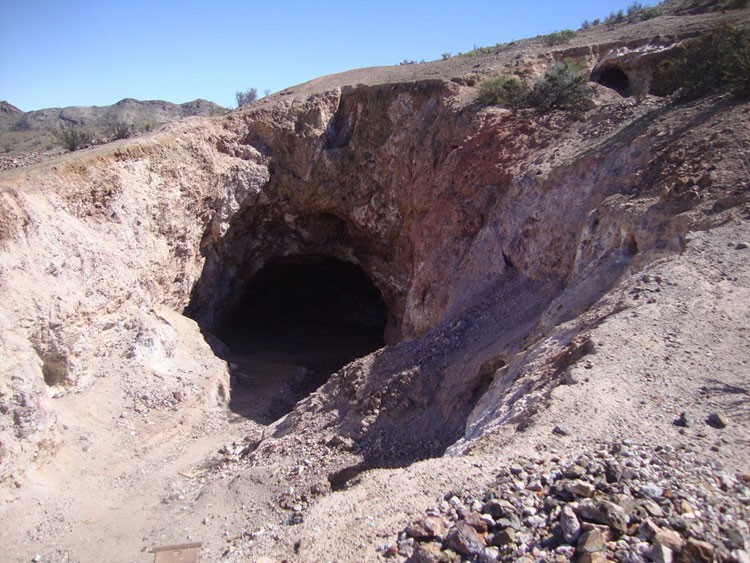
At Desiberg, drilling beneath old artisanal workings intersected smoky quartz veining associated with gold, including 6.9m at 0.37 g/t gold and 2.3m at 2.49 g/t gold in IGBD26-016, and 8.6m at 0.52 g/t gold in IGBD26-017. Trenching at Cannibal Creek returned 22.0m at 2.13 g/t gold, including a higher-grade zone of 15.0m at 3.01 g/t gold, in trench IGBT26-094, and 3.0m at 11.59 g/t gold at Koela East. The company is reviewing these results together with core logging data to plan its next phase of exploration.
Structural Geological Interpretation Defining High-Strain Zone Controls on Gold Mineralization and Follow-Up Drill Targeting
Greenheart Gold's geologists have identified that gold at Koela is associated with high-strain zones, sections of rock that have been folded and sheared by past geological movement. These zones may represent higher-permeability pathways for the fluids that deposited the gold. At Koela, the zones run in a northwest to southeast direction and are hosted within folded volcanic and sedimentary rock.
The Koela corridor is interpreted as two separate but roughly parallel structural trends, referred to as Koela East and Koela West. Gold at both is commonly associated with fine-grained pyrite, with local occurrences of arsenopyrite, sulphide minerals often linked to gold deposition in this style of deposit. A comparable structural pattern has been observed at Cannibal Creek, where gold is associated with quartz veins developed within folded and sheared volcanic rock.
This interpretation is informing where Greenheart Gold drills next. At Koela East, follow-up holes will test the along-strike continuity of the trend around the IGBD26-003 and IGBD26-011 intercepts, along with areas between existing holes that remain sparsely tested. At Koela West, drilling will step out to the northwest and southeast of hole IGBD26-007, while a separate, lower-grade zone associated with hole IGBD26-006 will be tested further along strike. At Cannibal Creek, the company plans to begin drill testing of the trenched target within the coming weeks.
Majorodam RC Drill Programme Completed With 35% of Assays Still Pending
At its Majorodam project, also in Suriname, Greenheart Gold has completed a 160-hole reverse circulation (RC) drilling programme totalling 11,748 metres. RC drilling breaks rock into small chips rather than recovering a solid core, and is generally faster and lower cost than diamond drilling for testing large areas. The programme was designed to expand the known mineralised zone around previous gold intercepts and to test new ground to the north of the existing target.
Approximately 65% of assay results from the programme have been received and are reported alongside recent trench sampling results. The remaining 35% are delayed due to assay laboratory constraints in Paramaribo, Suriname. Full collar coordinates for all holes are available on the company's website.
Greenheart Gold plans to complete a full review of the Majorodam project once all outstanding assays are received, at which point it will determine the scope of further exploration work.
Milestones and Next Steps
All technical results in this release were reviewed and approved by Justin van der Toorn, President and CEO of Greenheart Gold and a Qualified Person under Canadian disclosure standards for mineral projects. Near-term steps for the company include drill testing at Cannibal Creek, expected to begin within weeks, continued core relogging and structural mapping at Koela to refine drill targets, and receipt of the remaining Majorodam assay results, following which the company will conduct a full project review and determine its next phase of exploration.
Analyst's Notes





Subscribe to Our Channel



Stay Informed


