How Atomic Eagle Is De-Risking Across Multiple Dimensions Before Spending Drill Dollars


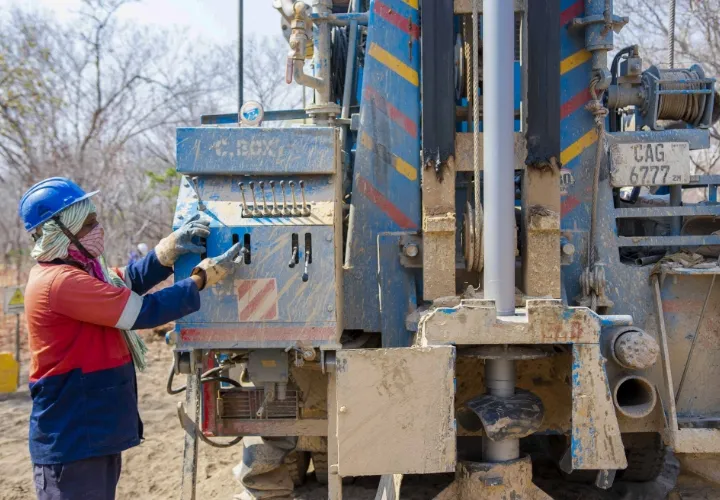
Atomic Eagle refines uranium drill targets using multi-layered survey data, reducing exploration risk and improving capital efficiency ahead of drilling.
- Atomic Eagle is refining drill targets at Muntanga using a multi-dataset approach that combines historical airborne surveys, soil geochemistry, radon data, and new ground-based radiometrics before committing drill capital.
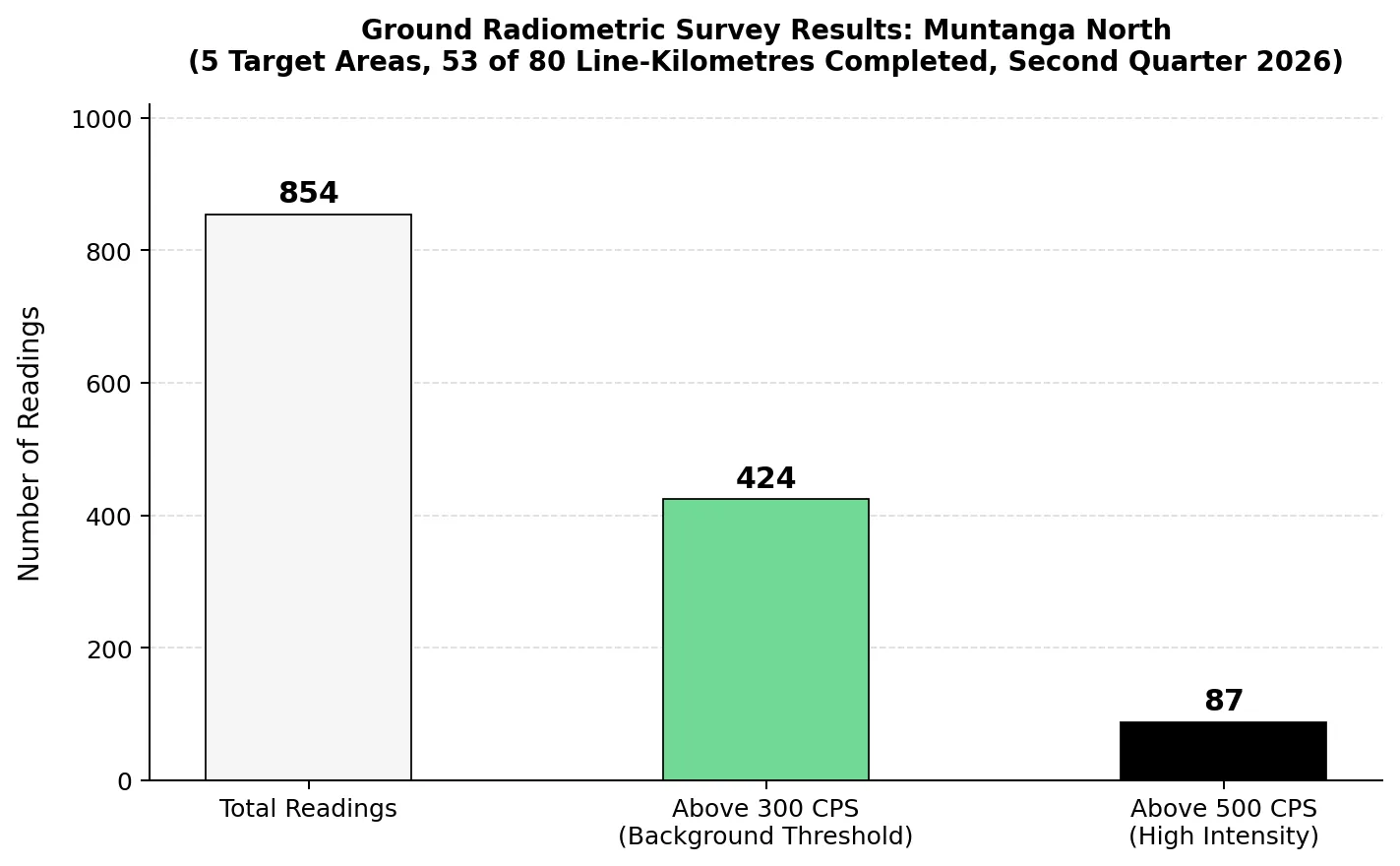
- Of 854 ground radiometric readings collected across 5 target areas, 424 exceeded the 300 counts per second (CPS) background threshold, and 87 exceeded 500 CPS, defining anomalous systems up to approximately 4 kilometres in strike length.
- All 5 drill targets are hosted within the Escarpment Grit Formation, the same formation hosting the majority of the project's deposits, contributing to the existing Joint Ore Reserves Committee (JORC) resource of 58.8 million pounds of uranium oxide at 309 parts per million (ppm), supported by a prior uranium intersection and multiple independent historical datasets.
- The upcoming 50,000-metre drill programme is the largest at Muntanga since 2008 and is fully funded from existing cash with no equity issuance required.
- Atomic Eagle upgraded to the OTCQX Best Market on June 4, 2026, under ticker AEUXF, expanding direct access to US institutional uranium investors as federal nuclear policy targets capacity expansion to approximately 400 gigawatts by 2050.
Pre-Drill De-Risking as a Capital Allocation Framework
For junior uranium companies managing finite exploration budgets, the decision of where to place a drill hole carries direct financial consequences. Drilling represents one of the highest-cost stages of exploration, and the quality of targeting determines whether each metre drilled advances resource definition or consumes capital without returning actionable data.
Atomic Eagle (ASX: AEU | OTCQX: AEUXF) has structured its exploration programme at the Muntanga Uranium Project in Zambia around a multi-dataset convergence methodology: historical airborne radiometrics, soil geochemistry, radon surveys completed by Denison Mines between 2013 and 2015, new close-spaced ground radiometric surveys, and structural interpretation. When independent datasets, collected using different techniques and at different times, converge on the same location, confidence in the underlying mineralised system is materially higher than when a single dataset is used in isolation.
Chief Executive Officer of Atomic Eagle, Phil Hoskins, described the on-ground work preceding the drill programme:
"Before going in there with the drill rig, we've got geophysical crews on the ground with what's called a handheld scintillometer. They're getting ground geophysics data and ground radiometrics data so that we can really refine where to stick those drill holes and hone in on the mineralised areas as quickly as we can."
The company closed the prior financial year with $19 million in cash and is targeting a year-end balance of above $8 million after completing a 50,000-metre reverse-circulation (RC) and diamond drill programme, with no additional equity issuance required.
What the Ground Radiometric Survey Results Revealed
The ground radiometric campaign at Muntanga is being conducted across 5 target areas with 100-metre line spacing and 50-metre station spacing, and RS-125 scintillometer readings are collected at each station. The programme covers 80 planned line-kilometres, of which 53 line-kilometres had been completed at the time of reporting.
Of 854 readings collected, 424 registered above the background threshold of 300 counts per second (CPS), and 87 exceeded 500 CPS. Anomalous systems extend up to approximately 4 kilometres in strike length across the surveyed areas. The distribution of above-background readings across multiple contiguous stations, rather than isolated point anomalies, indicates that the survey is resolving the spatial extent of mineralised systems rather than geophysical noise.
The practical output is a set of discrete high-intensity zones within the broader anomalous corridors previously defined by the 2006 NRG airborne survey. These refined zones form the basis for drill collar placement in the upcoming programme, which Hoskins noted is the largest at the project since 2008.
Geological & Historical Evidence Supporting Target Quality
The radiometric survey data are reinforced by geological and historical evidence that independently support advancing the drill targets. Targets 1 through 5 are hosted within the Escarpment Grit Formation, the same formation that hosts the majority of the project's deposits, contributing to the existing Joint Ore Reserves Committee (JORC) resource of 58.8 million pounds of uranium oxide at 309 ppm.
Historical drilling at Nabbanda, designated Target 5, returned an intersection of 1.85 metres grading 294 ppm uranium oxide, confirming the system contains uranium mineralisation at grades relevant to the project's resource base. Ground radiometric surveys covering Targets 6 through 8 are planned during the Second and Third Quarters of 2026, applying the same methodology to extend the de-risking pipeline beyond the current programme.
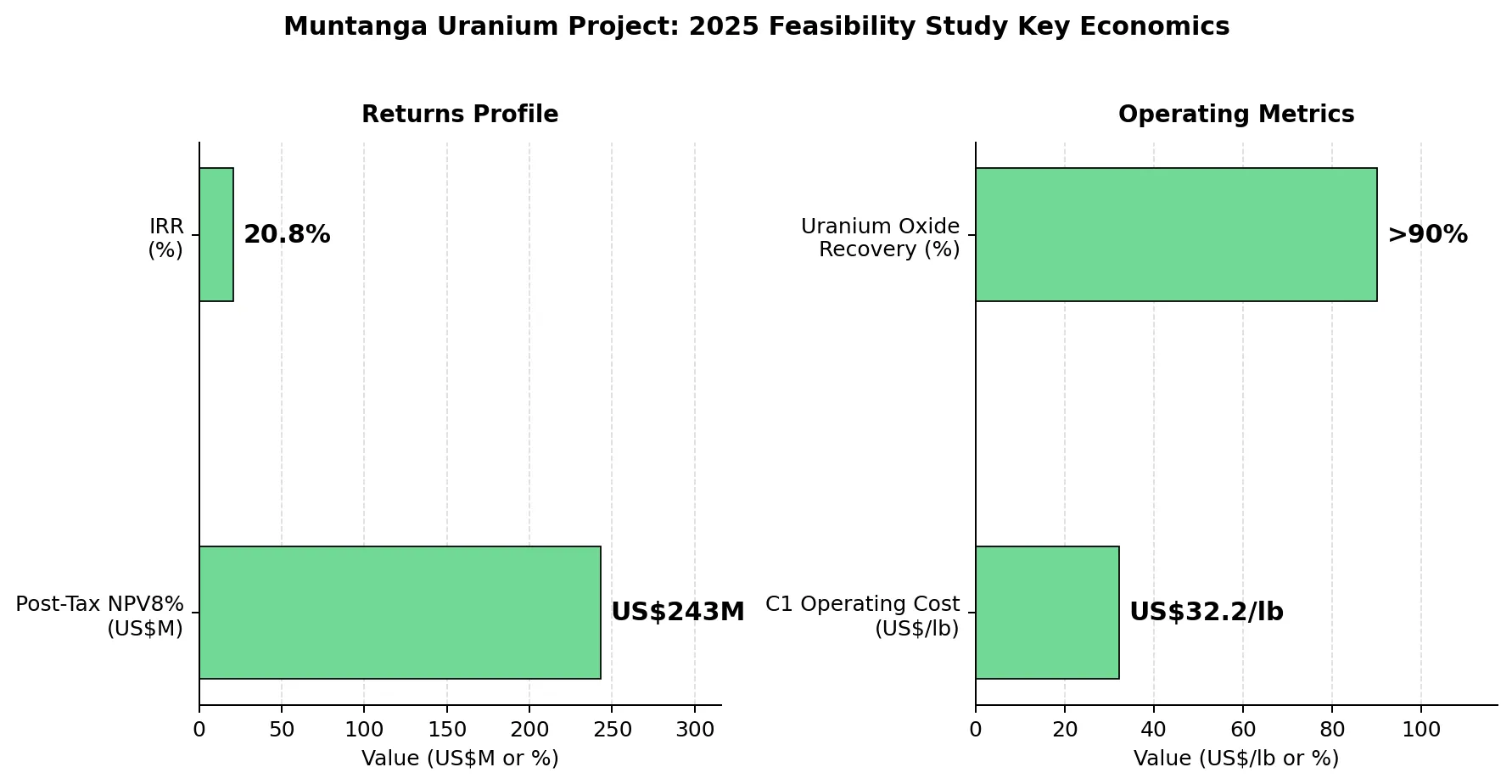
The 2025 Feasibility Study for Muntanga supports a post-tax net present value at an 8% discount rate (NPV8%) of US$243 million and an internal rate of return (IRR) of 20.8%, with a C1 operating cost of US$32.20 per pound and uranium oxide recovery exceeding 90%. Zambia applies a 5% uranium royalty and a 30% corporate tax rate with no free-carried government interest, directing a larger share of those returns to the developer than many African mining jurisdictions. Exploration success at Targets 1 through 5 would be additive to a project that already has quantified, feasibility-level economics in a fiscally favourable jurisdiction.
Capital Markets De-Risking: The OTCQX Upgrade & US Demand Context
Technical de-risking addresses geological uncertainty. Capital markets de-risking addresses a different but equally material risk for junior developers: the risk that the right financing and offtake partners cannot be secured when needed. On June 4, 2026, Atomic Eagle announced its upgrade from the OTCQB Venture Market to the OTCQX Best Market, commencing trading under the ticker AEUXF. The OTCQX qualification requires companies to meet higher financial standards, follow best practice corporate governance, and demonstrate compliance with applicable securities laws, confirming that Atomic Eagle has cleared an eligibility bar that makes it directly visible to US institutional capital and specialist uranium investors.
The timing is strategically relevant. US federal energy policy has shifted materially toward nuclear power, with government initiatives including a targeted expansion of domestic nuclear capacity to approximately 400 gigawatts by 2050, a rebuild of domestic uranium supply chains and enrichment capability, and a US$94 million Department of Energy programme supporting small modular reactor (SMR) deployment announced in May 2026. Reaching this investor base before financing and offtake discussions commence reduces the execution risk on the project's development pathway.
Hoskins outlined the rationale for the capital markets upgrade:
“Our upgrade to OTCQX represents a significant step for Atomic Eagle, providing direct access to US investors at a time when nuclear energy is undergoing a structural resurgence. Recent US Government actions to expand nuclear capacity, rebuild domestic fuel supply chains, and accelerate deployment of small modular reactors reinforce our view that uranium markets are entering a sustained period of growth. With the advanced Muntanga Uranium Project in a stable jurisdiction like Zambia, Atomic Eagle is well positioned to benefit from these trends."
The Investment Thesis for Atomic Eagle
- Atomic Eagle has refined 5 drill targets at Muntanga using a multi-dataset pre-drill framework integrating historical airborne surveys, soil geochemistry, radon data, and new ground radiometrics before deploying drill capital.
- The 2025 Feasibility Study supports a post-tax net present value at an 8% discount rate of US$243 million and an internal rate of return of 20.8%, underpinned by a C1 cost of US$32.20 per pound and uranium oxide recovery exceeding 90%.
- Zambia applies a 5% uranium royalty and a 30% corporate tax rate with no free-carried government interest, directing a larger share of project economics to the developer than many African mining jurisdictions.
- The company closed the prior financial year with $19 million in cash and is targeting a year-end balance of above $8 million after completing a 50,000-metre reverse-circulation and diamond drill programme, with no additional equity issuance required.
- The OTCQX upgrade gives Atomic Eagle direct access to US institutional uranium capital as federal policy drives nuclear capacity expansion to approximately 400 gigawatts by 2050, with support from a US$94 million small modular reactor programme announced in May 2026.
Across both its technical and capital markets dimensions, Atomic Eagle's de-risking approach reflects a deliberate effort to reduce the 2 most common failure modes for junior uranium developers: drilling the wrong targets and being unable to access the right capital when project advancement requires it. The result is a programme where the upcoming drill results will be generated from refined, validated targets, within a project that has defined feasibility-level economics, a favourable jurisdictional cost structure, a fully funded near-term programme, and direct access to the world's largest pool of investment capital.
TL;DR
Atomic Eagle has completed 53 line-kilometres of close-spaced ground radiometric surveying at Muntanga, yielding 424 above-background readings from 854 stations and defining anomalous systems up to approximately 4 kilometres in strike length across 5 target areas. These data, combined with historical airborne surveys, soil geochemistry, and radon surveys, have refined drill targets within the Escarpment Grit Formation, the same geological unit hosting the project's existing 58.8 million-pound uranium oxide JORC resource. The largest drill programme at the project since 2008, totalling 50,000 metres of RC and diamond drilling, is now underway. Concurrently, the company's upgrade to the OTCQX Best Market under the ticker AEUXF broadens access to US institutional capital as federal nuclear policy accelerates growth in structural uranium demand.
FAQs (AI-Generated)
Analyst's Notes





Subscribe to Our Channel








Stay Informed