




Hycroft’s Multi-Scenario Development Strategy Takes Shape


Hycroft advances a hybrid mining strategy with high-grade silver zones, multiple processing paths, and strong cash backing staged development decisions.
- Hycroft Mining closed the first quarter of 2026 with $189 million in cash, no debt, and new Vortex intercepts of 33.70 grams per tonne gold and 2,890 grams per tonne silver over 0.9 meters.
- Three development scenarios under evaluation: sulfide milling (1.3 million kilotonnes at 0.358 grams per tonne gold, 12.53 grams per tonne silver), heap leach restart (184,495 kilotonnes), and underground extraction (18,137 kilotonnes at 0.512 grams per tonne gold, 154.71 grams per tonne silver).
- Vortex and Brimstone zones show silver-to-gold ratios of 600:1 and 3,000:1, supporting independent underground mining optionality.
- Structural model update targets fluid pathways controlling mineralisation geometry, with two additional core rigs arriving in the coming months.
- Cash position enables parallel technical studies without financing pressure, deferring primary development path selection until roaster versus pressure oxidation (POX) trade-off studies are finalised.
Hycroft Mining Holding Corporation (Nasdaq: HYMC) ended the first quarter of 2026 with approximately $189 million in unrestricted cash, no debt, and drill intercepts at Vortex returning 33.70 grams per tonne gold and 2,890 grams per tonne silver over 0.9 meters within a broader 53.4-meter interval. The recent company release confirmed a new structural intersection at the Break and Albert Faults, expanding Vortex both at depth and along strike, while the company evaluates underground mining access to two silver-dominant zones that carry silver-to-gold ratios reaching 3,000:1. The development path now separates into discrete operational scenarios: a sulfide milling operation targeting 1.3 million kilotonnes at 0.358 grams per tonne gold and 12.53 grams per tonne silver, a potential heap leach restart processing 184,495 kilotonnes at lower grade, and conceptual underground extraction of 18,137 kilotonnes at 0.512 grams per tonne gold and 154.71 grams per tonne silver from high-grade silver bearing domains.
Two High-Grade Systems Define Underground Optionality
Prior drilling at Vortex and Brimstone established the zones as high-grade silver targets with distinct geometries and metallurgical characteristics. Brimstone measures approximately 380 meters down dip and 250 meters north to south, while Vortex spans roughly one kilometre east to west and 500 meters down dip. Earlier results from Brimstone included intercepts of 18.2 meters of 1,987.35 grams per tonne silver, with higher-grade intervals reaching 20,280 grams per tonne silver. At Vortex, results included 21.2 meters at 2,359.68 grams per tonne silver and 0.38 grams per tonne gold, including 0.2 meters at 80,017.00 grams per tonne silver.
The silver-to-gold ratios distinguish the zones metallurgically. Vortex carries a 600:1 silver-to-gold ratio, while Brimstone reaches 3,000:1. The combined Measured plus Indicated resource for the high-grade silver-bearing domains totals 18,137 kilotonnes at 0.512 grams per tonne gold and 154.71 grams per tonne silver, representing a subset of the broader deposit that the company now models for conceptual underground access.
Structural Targeting Guides the 2025-2026 Drill Program
Recent drilling tested the structural intersection of the Break and Albert Faults, intercepting 53.4 meters at 304.14 grams per tonne silver and 1.33 grams per tonne gold (4.86 grams per tonne gold equivalent), including 7.0 meters at 1,241.97 grams per tonne silver and 6.59 grams per tonne gold (21.01 grams per tonne gold equivalent), and within that, 0.9 meters at 2,890.00 grams per tonne silver and 33.70 grams per tonne gold (67.26 grams per tonne gold equivalent).
The results validate two years of structural reinterpretation work. Vice President, Exploration of Hycroft Mining, Alex Davidson commented:
"After two years of methodical logging of core, which resulted in an update to the structural model controlling the mineralisation at both Vortex and Brimstone, we have defined fluid pathways that are being targeted in our drilling program."
The drilling encountered a previously unknown structure before reaching its full target depth, prompting follow-up work. The company is expanding the exploration drill program at both Vortex and Brimstone with two additional core rigs scheduled to arrive in the coming months. The structural model update positions fluid pathways as the primary control on mineralisation geometry, shifting drill targeting to structural intersections where grade concentration is expected.
Three Processing Routes Separate by Grade and Mineralogy
The resource segregates into three categories by processing method and cutoff grade. The heap leach resource contains 184,495 kilotonnes (Measured plus Indicated) at 0.155 grams per tonne gold and 3.34 grams per tonne silver. The flotation mill plus concentrate treatment by pressure oxidation and cyanide leach resource contains 1,345,783 kilotonnes (Measured plus Indicated) at 0.358 grams per tonne gold and 12.53 grams per tonne silver.
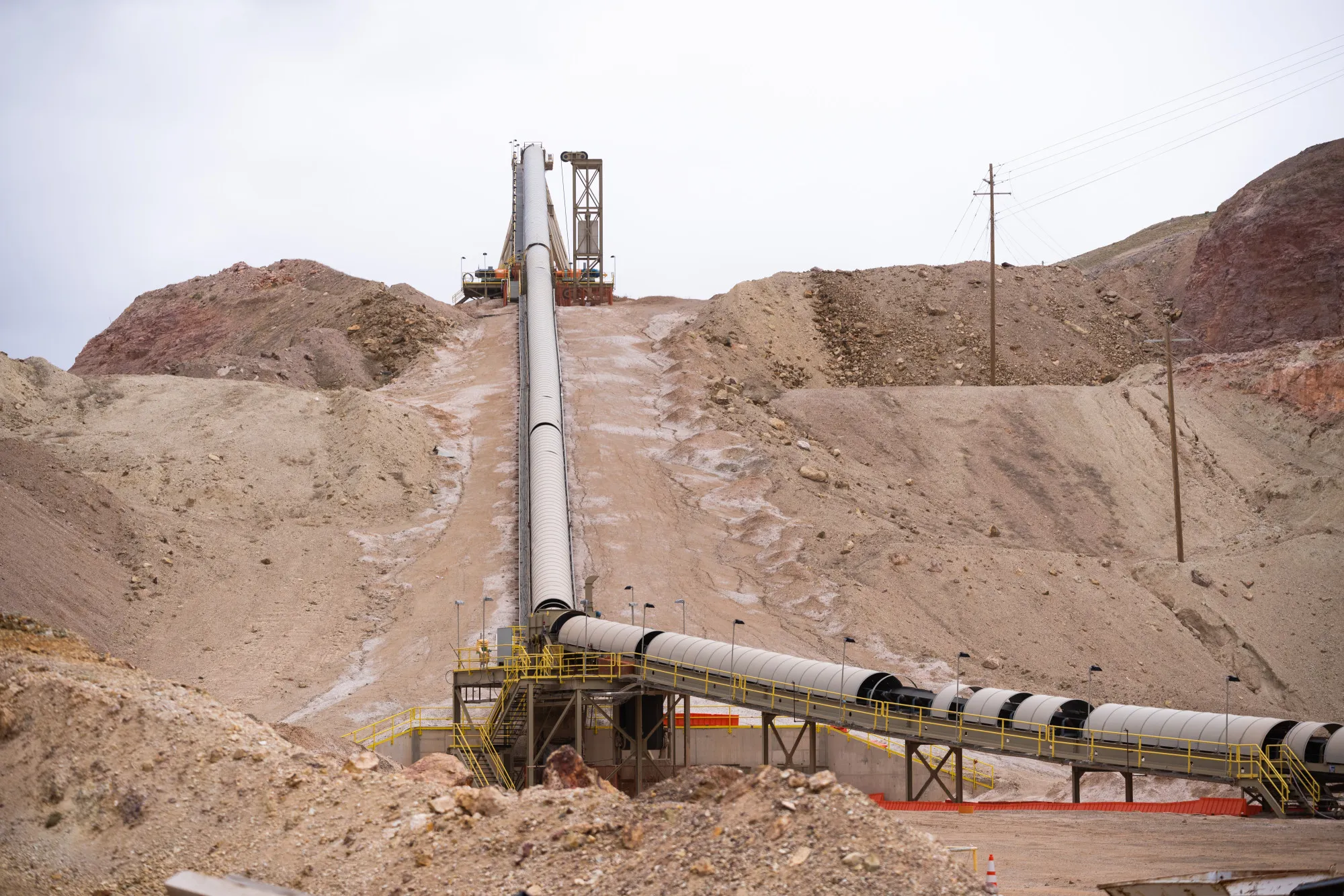
The site is currently permitted for heap leach and milling operations, with existing infrastructure including a Merrill-Crowe facility, a new leach pad, and a crusher and conveyor belt circuit. The company is completing technical studies for the sulfide milling operation and finalising roaster versus pressure oxidation (POX) trade-off studies.
The mineral resources are contained within a computer-generated optimised pit totalling 4.92 billion tonnes. The strategy includes evaluating underground access to the deeper Vortex and Brimstone zones, which would operate independently of the bulk open-pit scenario.
Balance Sheet Supports Multi-Scenario Engineering Work
The company closed the first quarter of 2026 with approximately $189 million in unrestricted cash and remains debt-free. During the first quarter of 2026, the company recorded pre-tax expenses of approximately $33.8 million related to compensation actions approved by the Board of Directors on January 27, 2026, including restricted stock unit make-whole awards with certain related cash payments and a one-time extraordinary bonus awarded to the company's named executive officers and certain other employees. The cash utilised for these actions was approximately $19.4 million.
The company's ongoing 2026 catalysts include completing engineering work for the next phase of commercial operations, establishing final metallurgical recoveries on pressure oxidation (POX), and assessing a restart of the heap leach operation before the milling operation. The cash position provides capacity to advance multiple technical studies in parallel without near-term financing pressure, allowing the company to defer the selection of a primary development path until the trade-off studies and metallurgical test work are finalised.
Flexible Development Path Reflects Distinct Value Drivers
Hycroft holds one of the world's largest precious metals deposits, with recent exploration defining two new high-grade silver discoveries that add a significant value driver to the broader resource. The company now evaluates optionality across three development scenarios: a bulk sulfide milling operation, a lower-grade heap leach restart, and a high-grade underground silver operation targeting the Vortex and Brimstone zones.
The separation of the high-grade silver-bearing domains into a distinct resource category at a 68.57 grams per tonne cutoff grade signals a potential phased approach where underground extraction could proceed independently of the larger open-pit scenario. This creates a discrete economic case that does not depend on the capital intensity or permitting timeline of the larger milling operation.
The heap leach restart assessment introduces a third scenario that could generate near-term cash flow from oxide material while the sulfide processing route and underground mine design are finalised. The hybrid model allows the company to advance multiple technical studies in parallel, deferring the commitment to a single development path until the trade-off studies and metallurgical test work converge on the optimal sequence and scale of operations.
FAQs (AI-Generated)
Hycroft is evaluating three parallel development paths: a large-scale sulfide milling operation, a heap leach restart for oxide material, and a potential underground mine targeting high-grade silver zones. This approach allows flexibility in sequencing and capital allocation.
These zones host high-grade silver mineralisation with very high silver-to-gold ratios, reaching up to 3,000:1. Their grade and geometry support a potential standalone underground mining scenario separate from the bulk deposit.
The hybrid approach enables staged development, potentially lowering upfront capital requirements and allowing earlier cash flow from selective operations while larger projects are advanced.
Metallurgical testing, particularly the trade-off between roaster and pressure oxidation (POX), is critical in determining the optimal processing route for sulfide material and will influence the final development pathway.
With $189 million in cash and no debt, Hycroft can fund multiple technical studies simultaneously, reducing financing risk and allowing the company to delay committing to a single development plan until key data is confirmed.
Analyst's Notes





Subscribe to Our Channel






.jpg)
Stay Informed






















