




i-80 Gold's Archimedes Underground Targets First Gold in Third Quarter of 2026


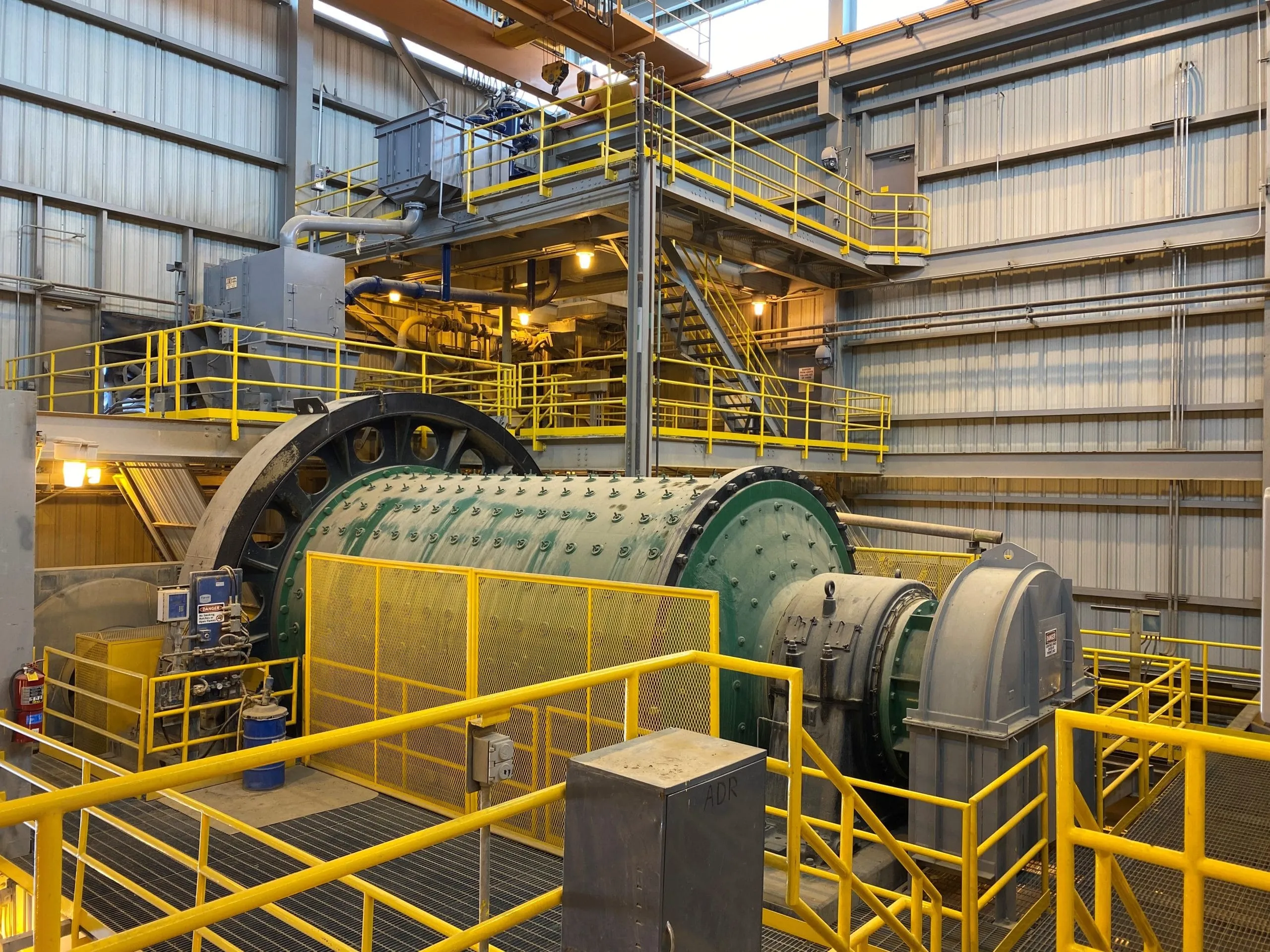
i-80 Gold’s Archimedes Underground is moving toward first gold in 2026, with Lone Tree integration and feasibility work shaping its role in Phase 1 growth.
- Archimedes Underground is under construction at Ruby Hill as part of i-80 Gold’s Phase 1 development plan alongside Granite Creek Underground and the Lone Tree autoclave.
- Upper Archimedes drilling has reached 7,500 metres over 35 holes, with results supporting stope design and a feasibility study targeted for the first quarter of 2027.
- At a US$ 2,175-per-ounce gold price assumption, Archimedes carries an after-tax net present value at a 5% discount rate (NPV5%) of US$127 million and an internal rate of return (IRR) of 23%, targeting approximately 100,000 ounces of annual gold production over 10 years.
- Archimedes' material will be toll-milled until Lone Tree restarts, with owner-operated processing expected to increase yields from a 55% to 60% payability factor under toll milling, up to approximately 92% recovery at Lone Tree.
- Lower Archimedes permitting and oxide metallurgical testwork remain the main variables shaping how fully the asset can deliver its Phase 1 role.
Archimedes Underground Is Moving Into A More Central Role Inside i-80 Gold's First Build Phase
Archimedes Underground sits on the Ruby Hill property at the southeastern end of the Battle Mountain-Eureka Trend in northeastern Nevada and is i-80 Gold's second planned underground mine. The asset is under construction and forms part of Phase 1 of the company's three-phase development plan, alongside Granite Creek Underground and the Lone Tree autoclave processing facility. Its presence in Phase 1 is material: the company's early operating logic depends on multiple underground sources running concurrently, and Archimedes is positioned to become one of those primary contributors.
What separates the Archimedes reading from a routine second-mine build is its function within that early architecture. With upper-level access underway, infill drilling advancing toward feasibility, and a defined path to the Lone Tree autoclave, the asset is taking on a more legible role as a core production component rather than a supplementary one. The mineralised body is divided into Upper Archimedes above the 5,100-foot elevation and Lower Archimedes below it, with each section progressing on distinct permitting and construction timelines that collectively underpin the company's sequenced production build.
Why Archimedes Looks More Important Than A Standard Second-Underground Mine
Three asset attributes set Archimedes apart from routine follow-on underground development. The mineralised body has the potential to achieve the highest underground mining rate among i-80 Gold's underground operations. The bulk mining method applicable to the deposit drives lower unit costs and strengthens project economics at the scale the company is targeting. And the current drill programme has intersected substantial oxide mineralisation that was not included in the 2025 Preliminary Economic Assessment (PEA), with metallurgical testwork now underway to assess integrating that material into the mine plan, and an operating heap leach pad already on site.
Chief Operating Officer of i-80 Gold, Paul Chawrun, frames execution readiness this way:
"I never really felt that it was all that complicated, the story. It's a relatively sizable story, but we've got the people in place who have done this many times over."
The oxide optionality is the most open-ended element. If metallurgical testwork supports integration, the production profile could expand beyond what the 2025 PEA captures, and the existing heap leach infrastructure reduces the capital threshold for doing so.
What The Latest Drilling Is Actually Advancing
Upper Archimedes infill drilling has reached 7,500 metres over 35 holes and is expected to finish with a 36th hole in the second quarter of 2026. Headline intercepts include 24.6 grammes per ton gold over 23.6 metres, 10.2 grammes per ton gold over 36.4 metres, 8.0 grammes per ton gold over 46.4 metres, 6.1 grammes per ton gold over 42.1 metres, and 3.9 grammes per ton gold over 44.3 metres, with true widths estimated at approximately 40% to 65% of core width. The results confirm previously interpreted mineralisation in the upper zone, demonstrate continuity, and indicate potential extending beyond the boundaries of the 2025 PEA resource estimate.
Chawrun is precise on the drilling purpose:
"It's a combination of infill to get to measured and indicated status. So then you can put together a feasibility study and define reserves."
The broader programme covers 60,000 metres, with most footage focused on infill drilling to support reserve definition and an upgrade of the resource category. Results from the Upper Archimedes work will feed stope design for planned mining activities. A new mineral resource estimate and a first-quarter 2027 feasibility study are the primary deliverables from the full programme, and the Lower Archimedes component, targeting approximately 55,000 metres over 140 holes, is scheduled to begin in the second quarter of 2026.
How Archimedes Fits Into The Lone Tree Restart Sequence
Archimedes is one of three underground mines intended to feed the Lone Tree autoclave processing facility. Until the refurbishment is complete, material from Archimedes will be processed through a third-party toll milling agreement, a transitional arrangement that sustains cash flow from first gold without committing to permanent infrastructure costs at that stage. The Lone Tree refurbishment is targeted for a late-2027 first gold pour.
Chawrun puts the Lone Tree bridge clearly:
"We'll have the Lone Tree plant producing gold by the end of 2027 with a bit of a ramp-up in 2028 and in the range of about 150,000, depending on the grade, to maybe 160,000 ounces per year at good margins."
The processing transition represents a significant economic step change. Payability on refractory material is expected to rise from 55% to 60% under toll milling to approximately 92% recovery under owner-operated processing at Lone Tree. Material from Archimedes is expected to begin feeding the plant by late 2027, subject to completion of the refurbishment, making the Lone Tree timeline a direct dependency for realising the full margin profile the Archimedes asset is designed to generate.
Where Archimedes Sits Relative To Granite Creek & Cove
At approximately 100,000 ounces of average annual gold production following ramp-up and an estimated mine life of approximately 10 years, Archimedes is one of the two highest-output underground assets in i-80 Gold's Phase 1 portfolio. The resource base entering the feasibility stage comprises an indicated resource of 436,000 ounces at 7.6 grammes per ton gold and an inferred resource of 988,000 ounces at 7.3 grammes per ton gold as of December 2025, grades that support the bulk mining method and its associated unit cost advantage. Cove Underground targets a comparable output of approximately 100,000 ounces per year over an estimated 8-year mine life, while Granite Creek Underground targets approximately 59,600 ounces annually over an estimated 8-year mine life.
Mine construction capital for Archimedes is US$49 million, compared with US$88.8 million in development and sustaining capital for Granite Creek Underground and US$157 million in mine construction capital for Cove Underground. At a US$2,175 per ounce gold price, after-tax NPV5% stands at US$127 million for Archimedes (23% IRR), US$155 million for Granite Creek Underground, and US$271 million for Cove Underground (30% IRR). At US$3,000 per ounce, Archimedes' after-tax NPV rises to US$644 million and its IRR to 81%; leverage that follows directly from the asset's high grade and low construction capital.
The valuation gap reflects Cove's larger resource base and higher capital outlay. Archimedes' position in the portfolio is strongest when measured by capital deployed per ounce produced over the mine life, rather than total NPV, where Cove holds a clear advantage. Granite Creek, with a lower production target and comparable mine life, operates as a near-term cash generator rather than a scaled production engine, positioning Archimedes as the intermediary asset that combines meaningful output with capital discipline.
What Still Has To Be Proved Before Archimedes Fully Earns That Role
Archimedes' strategic role inside Phase 1 is credible but remains conditional on a set of technical, permitting, and processing dependencies. Permitting for Upper Archimedes is complete, allowing construction and development to proceed; permitting for Lower Archimedes remains underway, with estimated completion by mid-2027. The sequential structure preserves the first gold on schedule regardless of the lower-level permitting outcome, prioritising capital deployment toward the permitted asset while deeper approvals advance in parallel. The company is reviewing ways to expedite that timeline. Predictive groundwater models have advanced, and an additional dewatering well was installed in the first quarter of 2026, but Lower Archimedes remains a permitted-access constraint through at least mid-2027.
Oxide integration is a further open variable. Oxide mineralisation intersected in the current drill programme was not included in the 2025 PEA, and integration into the mine plan remains subject to ongoing metallurgical testwork. The heap leach pad on site provides infrastructure optionality, but the economic contribution of the oxide material cannot be quantified until testwork is complete.
Long-term processing of Archimedes material depends on completion of the Lone Tree refurbishment. Resource category upgrade and reserve definition, in turn, depend on completion of the 60,000-metre drill programme and the first quarter of 2027 feasibility study. Each of these dependencies is sequential: delay in any one extends the time before Archimedes can be assessed as a fully defined, fully permitted, and optimally processed asset.
What To Watch Over The Next 12 To 18 Months
The second quarter of 2026 carries two concurrent milestones: completion of the final Upper Archimedes infill hole and commencement of Lower Archimedes infill drilling targeting approximately 55,000 metres over 140 holes. First gold from the Upper Archimedes is targeted for the third quarter of 2026, marking Archimedes' transition from construction to a producing asset within the i-80 portfolio.
The first quarter of 2027 brings the completion of the feasibility study and an updated mineral resource estimate, which together will determine the conversion rate of the inferred resource base and the confidence level of the production schedule. Mid-2027 is the estimated completion date for Lower Archimedes permitting, which governs access to the deeper mineralisation that underpins the longer mine life and potential mine rate. Late-2027 is the target for Lone Tree's first gold pour, the point at which toll milling gives way to owner-operated processing and the margin profile of the Archimedes production stream improves materially.
For those assessing Phase 1 execution risk, the first-quarter 2027 feasibility study and the late-2027 Lone Tree start are the events that most directly determine whether Archimedes functions as a core producing component or remains a development asset with unresolved structural dependencies. The company is funded through Phase 1 and Phase 2, with over US$1 billion in secured and available capital, removing near-term dependence on the equity market at a stage when most comparable development-phase portfolios carry meaningful refinancing risk.
The Investment Thesis for i-80 Gold
- Archimedes enters the feasibility stage with an indicated resource of 436,000 ounces at 7.6 grammes per ton gold and an inferred resource of 988,000 ounces at 7.3 grammes per ton gold as of December 2025, grades that support the bulk mining method and underpin the asset's unit cost advantage relative to higher-capital underground peers in the portfolio.
- At mine construction capital of US$49 million, Archimedes offers the lowest entry cost of i-80 Gold's three Phase 1 underground developments, targeting approximately 100,000 ounces of average annual gold production over an estimated 10-year mine life, a combination that positions the asset as one of the more capital-efficient ounce sources in the early build.
- The after-tax net present value at a 5% discount rate moves from US$127 million at a US$2,175 per ounce gold price assumption to US$644 million at US$3,000 per ounce, with the internal rate of return rising from 23% to 81%, illustrating the degree of gold price leverage embedded in an asset of this grade and capital structure.
- Processing yields on refractory material are expected to improve from a 55% to 60% payability factor under third-party toll milling up to an average gold recovery of approximately 92% once the Lone Tree autoclave restart is complete, a step-change in per-ounce realised value that makes Lone Tree timing as important to Archimedes' economics as the mine plan itself.
- The company is funded through Phase 1 and Phase 2 with over US$1 billion in secured and available capital, removing near-term equity market dependence at a stage when most comparable development-phase portfolios carry meaningful refinancing risk.
- The sequential permitting approach, which allows Upper Archimedes mining to proceed under a complete permit while Lower Archimedes approvals advance in parallel, demonstrates capital prioritisation discipline and preserves first gold on schedule regardless of the lower-level permitting outcome.
The first-quarter 2027 feasibility study and the late-2027 Lone Tree start are the two events that determine whether the operational definition implicit in the current resource and preliminary economics is achievable within the company's targeted timeline.
TL;DR
Archimedes Underground, i-80 Gold's second planned underground mine on the Ruby Hill property in northeastern Nevada, is advancing through construction and infill drilling toward first gold in the third quarter of 2026 and a feasibility study in the first quarter of 2027. At a US$2,175 per ounce gold price assumption, the asset carries an after-tax NPV5% of US$127 million against mine construction capital of US$49 million, with gold price sensitivity lifting that figure to US$644 million at US$3,000 per ounce. The production logic depends on a late-2027 Lone Tree autoclave restart, which would shift processing from a 55% to 60% payability factor up to an average gold recovery of approximately 92%, and on Lower Archimedes permitting completion by mid-2027 to access the mineralisation that supports a 10-year mine life. The first-quarter 2027 feasibility study and the Lone Tree start are the two events that most directly determine whether Archimedes earns its proposed role as a core Phase 1 contributor.
FAQs (AI-Generated)
Archimedes Underground is i-80 Gold's second planned underground mine, located on the Ruby Hill property at the southeastern end of the Battle Mountain-Eureka Trend in northeastern Nevada. The project is divided into Upper Archimedes, above the 5,100-foot elevation level, and Lower Archimedes, below it. Upper Archimedes is permitted, and in active construction; Lower Archimedes permitting is targeted for completion by mid-2027.
Following ramp-up, Archimedes targets average annual gold production of approximately 100,000 ounces over an estimated 10-year mine life.
Mine construction capital for Archimedes is US$49 million. Granite Creek Underground carries development and sustaining capital of US$88.8 million, and Cove Underground carries mine construction capital of US$157 million. Archimedes is the lowest-capital underground development in i-80's Phase 1 portfolio.
Until the Lone Tree plant's late-2027 restart, Archimedes material will be processed under a third-party toll-milling agreement, with payability of approximately 55% to 60% for refractory material. Processing at Lone Tree is expected to raise recovery to approximately 92%, representing a significant improvement in per-ounce realised value from the same ore stream.
Completion of Upper Archimedes infill drilling and commencement of Lower Archimedes infill drilling are both targeted for the second quarter of 2026. First gold from Upper Archimedes is targeted for the third quarter of 2026. The feasibility study and updated mineral resource estimate are targeted for the first quarter of 2027, Lower Archimedes permitting is estimated to be completed by mid-2027, and Lone Tree's first gold pour is targeted for late-2027.
Analyst's Notes





Subscribe to Our Channel








Stay Informed






















