In Situ Recovery Redraws the Map for Critical Rare Earth Supply


Cobra Resources is advancing the first rare earth ISR project outside Asia, targeting dysprosium and terbium in South Australia with bottom quartile production costs.
- China produced approximately 240,000 tonnes of rare earth oxides out of a global total of 350,000 tonnes in 2023, representing approximately 69% of global supply, while also controlling the majority of global separation and processing capacity, leaving western manufacturers of electric vehicle motors and wind turbines with limited alternative sources for dysprosium and terbium.
- In situ recovery (ISR) extracts metals by injecting acidic solutions underground and pumping the resulting mineral-rich liquid to surface for processing, eliminating open-pit or underground mining and targeting operating costs low enough to place western producers in genuine cost competition with Chinese operators, a method Kazatomprom used to grow its share of global critical mineral output from approximately 13% in 2005 to approximately 43% by 2023 through systematic ISR deployment.
- Cobra Resources has commenced resource definition drilling at both its Boland and Head prospects using two sonic core drill rigs, with up to 36 drillholes planned at Boland and up to 54 at Head, with laboratory results expected in early April 2026 targeting a maiden mineral resource estimate (MRE) of scale across both prospects.
- ANSTO's bench-scale testing of a 42 kilogram ISR column sample produced a mixed rare earth carbonate (MREC) comprising 58.83% total rare earth oxides (TREO) by mass, with dysprosium at 3.8% and terbium at 0.7% of product composition, total impurities below 0.9%, and cerium separation increasing the modelled product basket value from $37.08 per kilogram of TREO to $55.88 per kilogram, a 51% increase at 70% assumed payability, with offtake negotiations now advancing.
- South Australia's confined palaeochannel aquifer geology prevents injected leaching solution from migrating into surrounding groundwater, directly addressing the environmental objection that has prevented rare earth ISR from being permitted in any western jurisdiction to date, while rehabilitation costs for ISR mines in comparable South Australian geology have been estimated at approximately 28 times lower per pound of metal recovered than conventional open-pit operations.
Most investors are familiar with lithium and cobalt as electric vehicle battery materials. Fewer are aware that every electric vehicle motor and every wind turbine generator also depends on a separate set of metals called rare earth elements (REEs), specifically dysprosium and terbium, to function. These two metals are essential components of the high-performance permanent magnets that convert electrical energy into motion in electric vehicle motors and motion into electricity in wind turbines. Without them, the magnets lose their strength at high temperatures, which makes them unusable in the applications that matter most for the clean energy transition.
The problem for western governments and manufacturers is straightforward: China produced approximately 240,000 tonnes of rare earth oxides (REO) out of a global total of 350,000 tonnes in 2023, representing approximately 69% of global supply. China also controls the majority of the world's rare earth processing and separation capacity, meaning that even material mined outside China typically has to be sent to China for processing before it can be used in manufacturing. That level of supply chain concentration has become a strategic concern for governments in the United States, the European Union, and Australia, all of which have identified rare earths as critical minerals requiring domestic or allied supply alternatives.
Demand projections reinforce the urgency. Global projections indicate that demand for rare earth elements used in permanent magnets could increase by a factor of 3 to 7 times by 2040, driven primarily by permanent magnet motors in electric vehicles and offshore wind turbines. It is against that backdrop that Cobra Resources (LSE: COBR) is advancing its Boland rare earth project in South Australia, targeting dysprosium and terbium using a method that has never before been deployed for rare earth production outside of Asia.
The Problem With Conventional Rare Earth Mining
Before understanding what Cobra is doing differently, it helps to understand why rare earth mining outside China has historically been so difficult to make work financially. Mining rare earths the conventional way, which involves digging up ore, crushing it, and processing it through a series of chemical separation steps, is expensive. Only two non-Chinese rare earth operations produced more than 10,000 tonnes of REO in 2023: MP Materials at its Mountain Pass mine in California at approximately 43,000 tonnes, and Lynas Rare Earths at its Mount Weld project in Western Australia at approximately 13,000 tonnes. Every other non-Chinese producer operates at smaller scale and higher unit cost.
The majority of non-Chinese rare earth mining operations generate negative mining margins at current market prices, meaning they spend more to produce a kilogram of rare earth product than they receive when they sell it. The reason Chinese producers can undercut western operations comes down to three structural advantages: integrated processing infrastructure built up over decades, subsidised energy costs, and lower labour costs. Western producers trying to compete on a level playing field face a cost structure that makes most projects uneconomic at current prices.
The mining sector offers a direct precedent for how this kind of structural imbalance can be disrupted through extraction method rather than deposit grade. Kazatomprom grew its share of global critical mineral output from approximately 13% in 2005 to approximately 43% by 2023, a shift achieved almost entirely through the systematic deployment of in situ recovery (ISR), a mining method that extracts metals without digging by injecting acidic solutions underground, dissolving target metals, and pumping the resulting mineral-rich liquid to surface for processing. That growth drove Kazatomprom's operating costs well below those of conventional miners and established ISR as a method capable of repositioning a country as a dominant global supplier within two decades.
How In Situ Recovery Changes the Economics
ISR eliminates the need for open-pit or underground mining, reduces surface disturbance to near zero, removes the need for waste rock management, and substantially lowers energy consumption per tonne of metal recovered relative to conventional mining. The financial result, under the right geological conditions, is an operation with capital costs and operating costs that can place a western producer in genuine cost competition with Chinese operators who have decades of infrastructure advantage. Cobra is targeting a bottom quartile cost position for its Boland project using exactly this logic.
Chinese producers have used a similar leaching concept on ionic clay rare earth deposits since the 1970s, but the method as practised in southern China carries an environmental liability that makes it incompatible with western regulatory standards. The Chinese approach relies on unconfined, gravity-driven permeation through hillside clay deposits without any natural containment, creating documented risks of acid solution migrating into surrounding groundwater. That environmental record, characterised by significant land and water degradation in Chinese rare earth producing regions, is one reason no western jurisdiction has previously permitted rare earth ISR.
The distinction Cobra has identified at Boland is geological. The mineralisation at Boland is hosted within a permeable sand aquifer naturally bounded above by clay aquitards and below by impermeable saprolite basement, a confined system that prevents injected lixiviant from migrating freely through the landscape. That confinement architecture addresses the primary environmental objection to rare earth ISR and positions the Boland process as compatible with South Australia's regulatory standards under the Mining Act 1971 and the Environment Protection Act 1993. The rehabilitation cost implications are material: an ISR mine operating within a comparable confined aquifer system in South Australia has been estimated at approximately 28 times lower per pound of metal recovered in rehabilitation cost than a conventional open-pit operation in the same jurisdiction.
Permitting, Scale, & the Distance to Production
The results from Cobra's laboratory and bench-scale programme are encouraging, but a bankable mining project requires more than positive metallurgy. The transition from bench-scale column leaching to a compliant mineral resource estimate (MRE) under the JORC Code 2012 requires validated in-field hydrology, sufficient drill coverage to support resource classification, and independent technical review. For investors assessing project maturity, the distance between a positive column leach result and a bankable feasibility study is considerable.
Resource geometry is the most operationally significant variable at this stage. ISR wellfield economics improve with lateral continuity of mineralisation: wide, shallow, uniform ore bodies require fewer wells per unit of contained metal and allow simpler injection-extraction spacing than irregular or discontinuous occurrences. Across a comparison of seven ISR rare earth projects in Australia, dysprosium and terbium recovery rates at comparable acid consumption levels range from below 20% to above 87%, with acid consumption ranging from below 1 kilogram per tonne to above 40 kilograms per tonne. That spread confirms that geological setting is the primary determinant of economics, not the method itself.
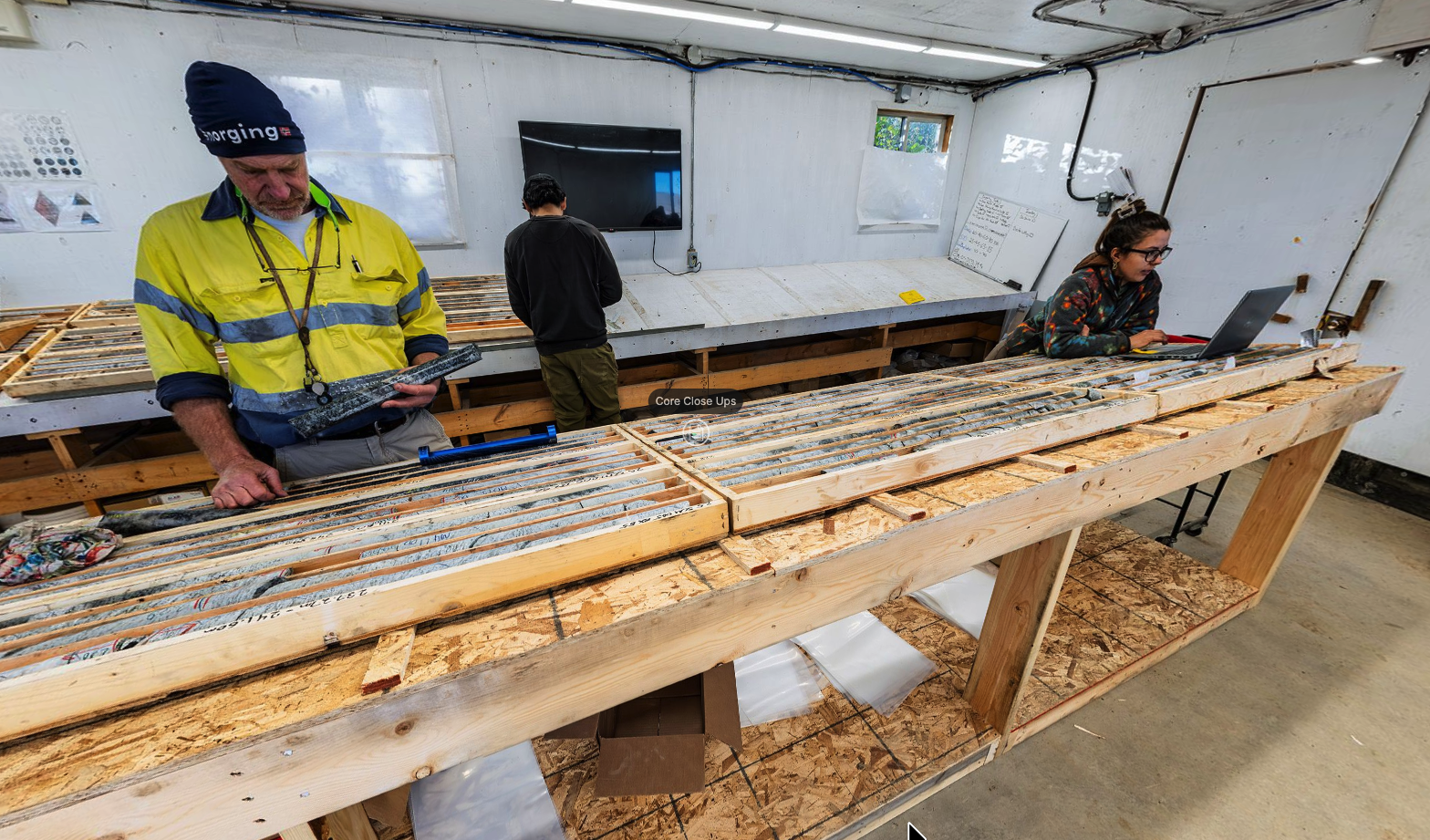
As of 12 March 2026, Cobra has commenced resource definition drilling at both the Boland and Head prospects using two sonic core drill rigs, with a programme of up to 36 drillholes planned at Boland and up to 54 drillholes at Head. Laboratory results from this programme are expected in early April 2026, with the drilling targeting a maiden MRE of scale across both prospects.
Managing Director of Cobra Resources, Rupert Verco, outlined the importance of this drilling milestone in sequencing the company's path to economic evaluation:
"We have two rigs out there going full ball on demonstrating the resource. That's going to close out the work that we're going to need to do to do economic evaluation at the Boland and Head rare earth projects, and that's really going to then enable us to focus on the economic analysis for the rare earths."
Cobra Resources: A Case Study in Western Rare Earth ISR
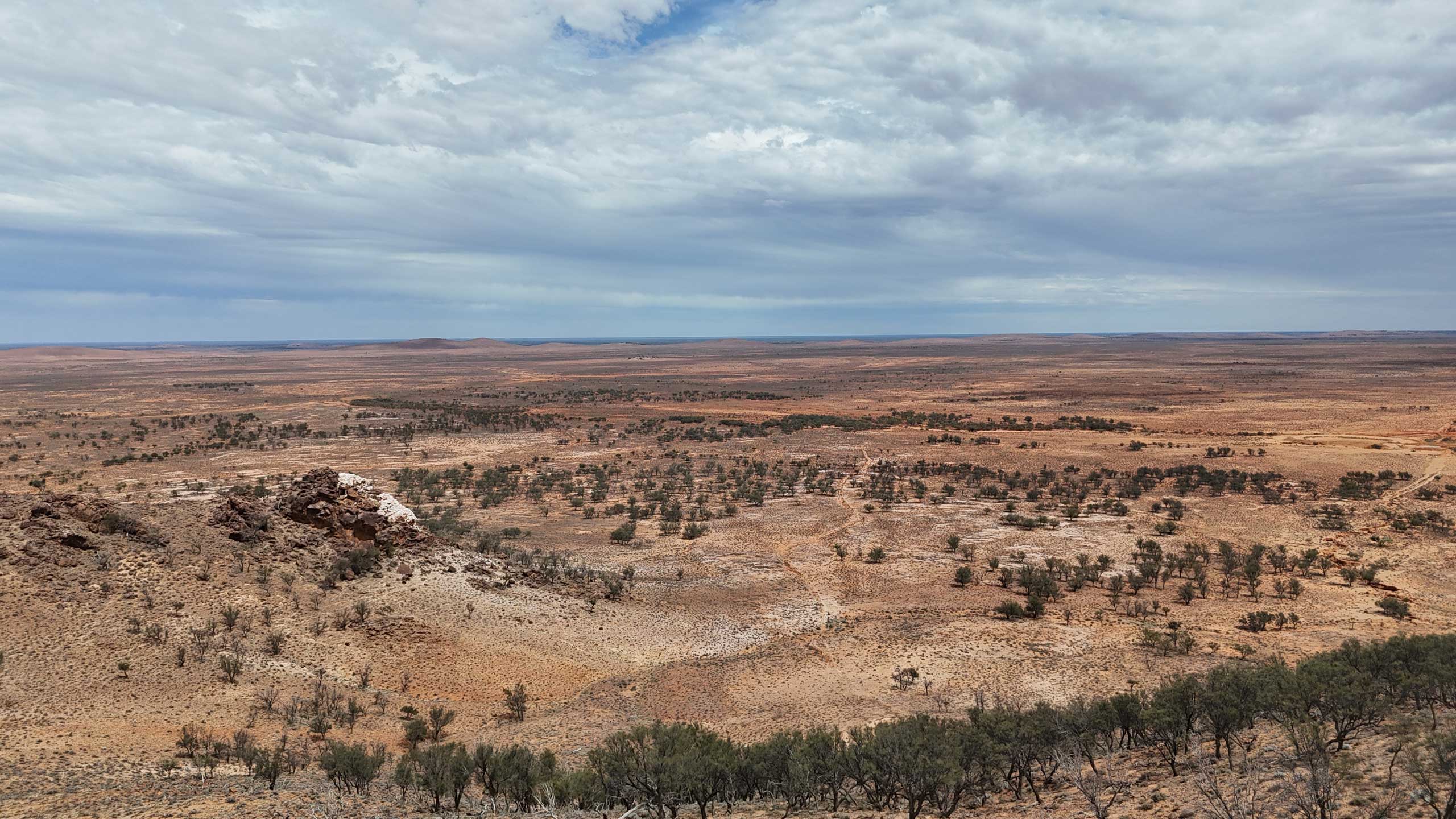
Few projects illustrate the potential and the remaining distance of western rare earth ISR as clearly as Cobra Resources' (LSE: COBR) Boland project in South Australia. The company is advancing what it describes as the first rare earth ISR project outside of Asia across a landholding that now extends to approximately 3,200 square kilometres of prospective palaeochannel geology, covering four large, laterally extensive rare earth targets: Boland at 16 square kilometres, Head at 85 square kilometres, Gillespie at 155 square kilometres, and Stokes at 47 square kilometres. Field hydrology work including tracer testing has confirmed lateral connectivity and uniform drawdown characteristics consistent with laboratory permeability data, supporting the project's wellfield design assumptions.
The metallurgical case for Boland rests on results produced by ANSTO from a 42 kilogram bench-scale ISR column study: permeability rates exceeding 8 metres per day, heavy rare earth oxide (HREO) recoveries of 66% within 17 days, down from a previous recovery timeframe of 150 days, and acid consumption of 3.88 kilograms per tonne. The resulting mixed rare earth carbonate (MREC) product comprised 58.83% total rare earth oxides (TREO) by mass, with neodymium at 27.5%, praseodymium at 6.7%, dysprosium at 3.8%, and terbium at 0.7% of the product composition, and total elemental impurities below 0.9%. Cobra states those figures compare favourably with peer ISR rare earth projects at equivalent or higher acid consumption levels, and offtake negotiations are advancing on the basis of the MREC product quality.
One of the more commercially significant results from Cobra's programme is its cerium separation work. Cerium accounts for approximately 35.8% of the untreated pregnant leach solution by rare earth composition but contributes approximately $0.01 per kilogram of total rare earth oxide to the product basket value at its natural concentration, making it a dilutant in the product mix. Bench-scale cerium removal testing, conducted at ambient temperature and pressure, reduced cerium's share of the treated product to approximately 0.3% of total rare earth composition, increasing the modelled product basket value from $37.08 per kilogram of TREO to $55.88 per kilogram of TREO, a 51% increase at 70% assumed payability.
Managing Director Ruperto Verco spoke to the commercial significance of these results, noting the combination of product quality and extraction cost:
"We've produced one of the highest proportion heavy rare earth mixed rare earth carbonates globally. We've removed all the cerium very cost effectively. We have four and a half percent dysprosium and terbium and 43% heavies in that MREC and we're producing it from one of the lowest cost forms of mining."
Why South Australia Matters for the ISR Rare Earth Model
Jurisdictional context matters significantly for ISR rare earth projects because the method's viability depends on both geology and regulatory environment. South Australia offers a combination that few other jurisdictions can replicate: a well-established ISR regulatory framework built through decades of permitted ISR operations, confined palaeochannel aquifer geology that provides the natural containment absent from Chinese ionic clay operations, and a stable, transparent permitting process under the Mining Act 1971 and the Environment Protection Act 1993. That combination makes South Australia the most viable jurisdiction currently identified for western rare earth ISR development.
South Australia's ISR sector has already demonstrated what the method can achieve in a confined aquifer setting. The rehabilitation cost differential between a confined aquifer ISR operation in South Australia and a conventional open-pit operation in the same jurisdiction, estimated at approximately 28 times lower per pound of metal recovered in favour of the ISR operation, provides a concrete financial precedent for the end-of-life liability advantage that confined aquifer ISR carries over conventional mining. That differential is material to institutional investors and project financiers who weight rehabilitation liability heavily in mine valuation and project financing models.
The Nakara Arc geology within which Cobra's South Australian tenements sit also offers a second value dimension beyond the ISR rare earth play. The same landholding hosts the Manna Hill copper project, where an 18-hole, 3,200 metre reverse circulation drilling programme completed in February 2026 intersected broad zones of visible oxide and primary copper mineralisation in 10 of the 18 holes, with molybdenite intersected in association with porphyry-like intrusives supporting the thesis for a large-scale porphyry system. Assay results from this programme are expected imminently and will inform a follow-up drilling campaign.
The Broader Lesson
What the Boland model illustrates, beyond the specifics of one company's strategy, is that the relationship between extraction method and supply chain geography is more flexible than the conventional rare earth industry template assumes. China's production of 240,000 tonnes REO out of a global total of 350,000 tonnes in 2023, combined with its near-total control of separation and processing capacity, is a structural condition that has persisted for decades because no western alternative has been able to match Chinese cost levels. ISR, if validated at commercial scale in a confined aquifer setting, offers the first credible cost-competitive pathway for western rare earth production that does not depend on finding an exceptionally high-grade deposit to overcome the processing cost disadvantage.
The model requires specific geological conditions: a confined permeable aquifer hosting laterally continuous rare earth mineralisation at recoverable grades, in a jurisdiction with a regulatory framework capable of permitting the method. Where those conditions are met, the ISR approach offers a path to production with capital requirements and operating costs that make western rare earth supply genuinely competitive rather than strategically subsidised. It also requires the discipline to complete the technical steps in sequence, from resource drilling through resource estimation, scoping study, and pre-feasibility study, before committing capital to construction.
With global projections pointing to a 3 to 7 times increase in rare earth permanent magnet demand by 2040, and with China controlling approximately 69% of current supply, the window for building western ISR rare earth capacity is defined by how quickly projects can move from bench-scale metallurgy to bankable technical studies. The Kazatomprom precedent, from approximately 13% to 43% of global critical mineral supply in under two decades through systematic ISR deployment, remains the most instructive comparison for what the method can achieve when applied to the right geology at scale. Whether the rare earth sector can replicate that trajectory will depend on the maiden resource estimate results expected from Cobra's April 2026 drilling programme, the outcomes of advancing offtake negotiations, and whether rare earth prices and western government procurement policy create the commercial conditions that project financing requires.
Analyst's Notes





Subscribe to Our Channel





Stay Informed