




Integra Free Cash Flow Reached US$9.3 Million From US$2.1 Million


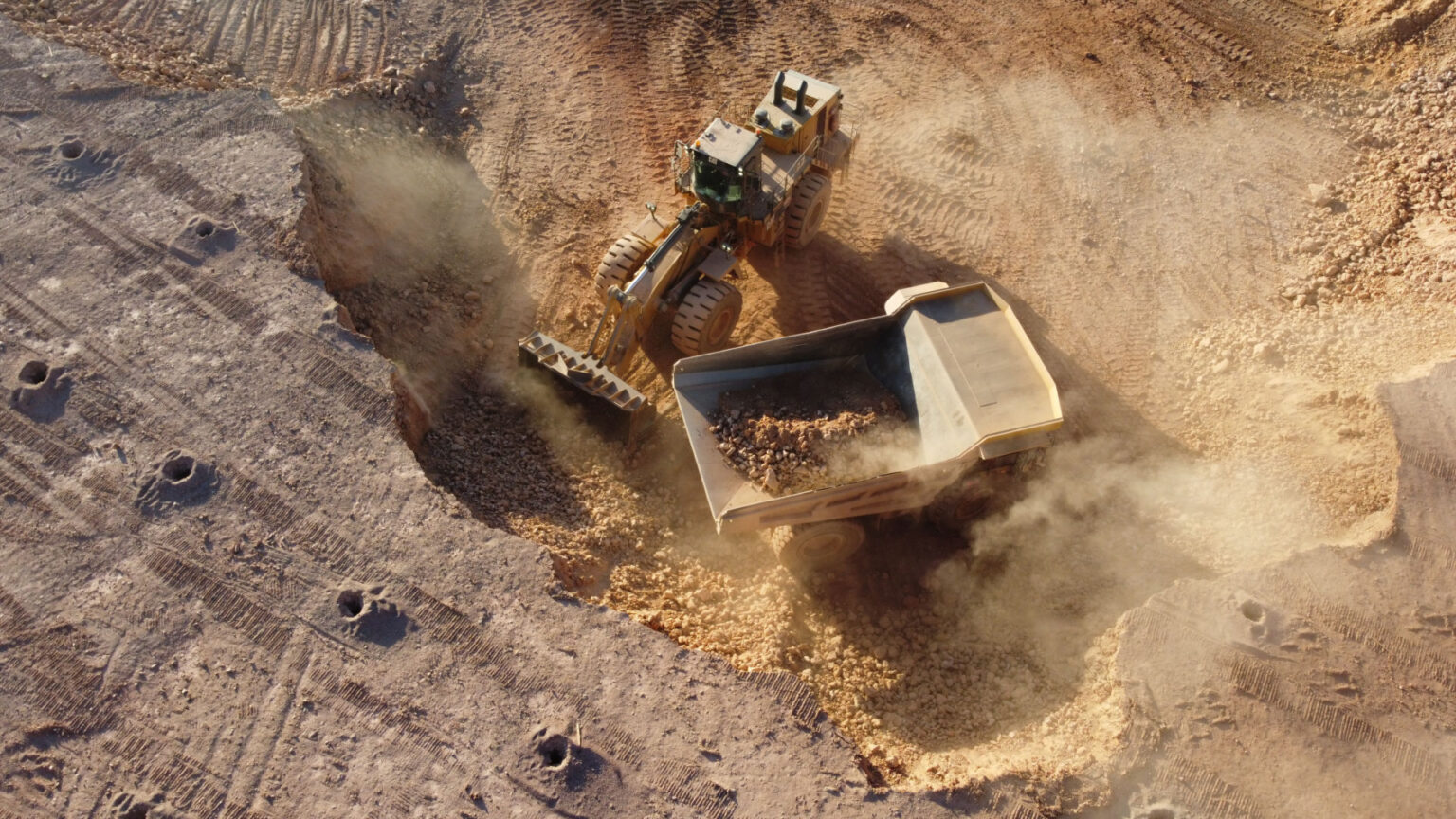
Florida Canyon produced fewer ounces of gold than a year earlier, yet revenue rose. The realized price went from US$3,332 to US$4,426 per ounce.
- Florida Canyon produced 16,379 ounces of gold in the second quarter of 2026, a 30% increase over the first quarter and below the 18,087 ounces produced a year earlier.
- Revenue reached US$70.8 million on 15,794 ounces sold, against US$61.1 million on 18,194 ounces in the second quarter of 2025.
- Mine-site all-in sustaining costs (AISC) averaged US$3,371 per ounce sold, against US$2,641 per ounce sold a year earlier.
- Mine operating earnings fell to US$23.4 million from US$25.2 million, and operating margin fell to 33% from 41%.
- Operating cash flow before changes in working capital was US$17.5 million, compared with US$20.0 million a year earlier.
Second Quarter Output Against 2 Baselines
Which direction Florida Canyon moved in the second quarter of 2026 depends on the chosen comparison period. Integra Resources (TSXV: ITR | NYSE American: ITRG) produced 16,379 ounces of gold at the Nevada mine, a 30% increase over the first quarter. Against the same quarter of 2025, when the mine produced 18,087 ounces, output declined. Sales moved in the same direction, down to 15,794 ounces from 18,194 ounces a year earlier.
The first half tells the same story. Integra produced 29,014 ounces and sold 28,312 ounces across the six months to June 30, 2026, against 37,410 ounces produced and 37,734 ounces sold in the equivalent period of 2025. Full-year production guidance is unchanged at 70,000 to 75,000 ounces, with the company targeting a stronger production profile through the remainder of the year.
Measured against the first quarter, when 12,635 ounces were produced at a strip ratio of 1.30, the mine improved on tonnes mined, strip ratio, and processed grade. Measured against the second quarter of 2025, when the strip ratio was already 0.96, both production and sales fell.
Material Movement, Grade & Recovery
The mine's physical performance improved across most of the measures that management controls directly. Total material mined reached 7,996 thousand tonnes, up from 6,040 thousand tonnes a year earlier, with total material movement averaging 87,867 tonnes per day (tpd), a record for the operation, up from 66,382 tpd. Ore mined rose to 4,417 thousand tonnes from 3,074 thousand tonnes; the strip ratio improved to 0.81 from 0.96; and processed grade reached 0.23 grams per tonne (g/t) from 0.21 g/t. New mining equipment integrated into the fleet over the previous 2 quarters, and shorter haul distances delivered the mining rate.
Recovery moved the other way. The gold recovery rate fell to 57.8% from 60.5% a year earlier and from 59.9% in the first quarter. Placement shifted over the same period, with 2,332 thousand tonnes reaching the pads as run-of-mine ore against 1,275 thousand tonnes a year earlier, while crushed tonnes placed edged down to 1,824 thousand tonnes from 1,882 thousand tonnes.
Approximately 4.2 million tonnes of ore reached the heap leach pads during the quarter, a 45% increase over the first quarter. Ore stacked on a heap leach pad converts to metal over subsequent periods, so placement builds an inventory of recoverable ounces that reports later in the year.
Revenue, Realized Price & Ounces Sold
Revenue rose while ounces sold fell. Integra generated US$70.8 million in the second quarter of 2026 against US$61.1 million in the same quarter of 2025, on 15,794 ounces sold against 18,194 ounces. The average realized price was US$4,426 per ounce for gold, against US$3,332 per ounce a year earlier.
The first half repeats the pattern at a wider spread. The realized price averaged US$4,615 per ounce for gold, compared with US$3,102 per ounce, and revenue reached US$132.5 million, compared with US$118.1 million, on 28,312 ounces sold, compared with 37,734 ounces. Gold revenue alone reached US$69.9 million in the quarter, up from US$60.6 million. The mine delivered less metal to the market and collected more money for it.
Unit Costs & Mine Operating Earnings
Between the revenue line and the earnings line, the direction inverts. Cash costs averaged US$2,495 per ounce sold, compared with US$1,849 per ounce sold a year earlier. Mine-site all-in sustaining costs (AISC) averaged US$3,371 per ounce sold against US$2,641 per ounce sold. Cost of sales reached US$47.4 million, up from US$35.9 million.
Mine operating earnings fell to US$23.4 million from US$25.2 million, and operating margin fell to 33% from 41%. Net earnings of US$12.0 million, or US$0.06 per share, compare with US$10.6 million, or US$0.06 per share, and adjusted earnings of US$13.1 million, or US$0.06 per share, compare with US$11.8 million, or US$0.07 per share. Higher revenue on lower volumes did not reach the mine-level earnings line.
President, Chief Executive Officer, and Director of Integra Resources, George Salamis, places the fuel and explosives increases alongside every other producer's:
"It's affecting us right now like every other gold producer out there. So fuel prices are high, explosive prices are high, and that's being reflected in our all-in sustaining costs right now."
The per-ounce figures were driven by 4 factors: increased tonnes mined, stacked, and processed to support production; lower gold ounces sold during the first quarter; higher royalties and excise taxes; and higher diesel fuel and explosives costs. Sustaining capital invested in the quarter was US$13.5 million against US$14.2 million a year earlier, and non-sustaining growth capital was unchanged at US$0.8 million. Cash costs and all-in sustaining costs are measures not defined under generally accepted accounting principles (GAAP) and have no standardized definition; other companies calculate them differently.
Royalties, Excise Taxes & the Gold Price in the Cost Base
One component of the cost increase moves with the gold price itself. Royalties and excise taxes are material components of both cash costs and mine-site AISC, and are directly affected by gold price fluctuations. Royalties and excise taxes reached US$4.5 million in the quarter, up from US$4.2 million a year earlier, and the mine plan's reserve parameters include royalty costs of US$132.00 per ounce of recoverable gold.
Integra put a number on the relationship when it revised guidance on June 25, 2026. The revised ranges assume an average gold price of US$4,200 per ounce, and a US$100-per-ounce change in the gold price produces an estimated US$7 change in both cash costs and mine-site AISC.
That revision moved the 2026 total cash cost guidance to US$2,300 to US$2,500 per ounce sold, up from US$1,900 to US$2,100, and the mine-site AISC guidance to US$3,300 to US$3,500 per ounce sold, up from US$2,750 to US$2,950. Non-sustaining growth capital guidance was increased to US$16.5 to US$18.5 million from US$7.5 to US$9.5 million after heap leach pad construction was brought forward from later years. Both revisions were published before the quarter was reported.
Cash Generation & the Source of the Treasury Increase
Cash generation improved on both headline measures. Operating cash flow reached US$22.8 million, up US$6.5 million from US$16.3 million a year earlier. Free cash flow reached US$9.3 million, or US$0.05 per share, against US$2.1 million, or US$0.01 per share.
A US$9.0 million increase in cash generated from working capital, largely driven by a build-up of payables, produced the movement, partially offset by US$4.7 million in increased income taxes paid during the quarter. Before the change in working capital, operating cash flow was US$17.5 million, down from US$20.0 million a year earlier.
The balance sheet strengthened over the same period. Cash and cash equivalents reached US$111.1 million at June 30, 2026, up from US$63.1 million at December 31, 2025, and working capital reached US$146.5 million, up from US$92.9 million. The working capital improvement was largely attributable to the US$48.0 million increase in cash, benefiting from the US$57.5 million bought-deal public offering completed in the first quarter of 2026. Payments for mineral properties, plant and equipment, and leases were US$18.9 million in the quarter, up from US$15.2 million a year earlier.
Mine Plan Assumptions Still to Be Demonstrated
The mine plan Integra published in 2026 assumes conditions that the second quarter did not deliver. Effective May 31, 2026, it sets out an 8-year mine life, a 74% increase in proven and probable reserves to 1.19 million ounces, a 17% increase in average annual gold production to 82,000 ounces, approximately US$0.8 billion in after-tax free cash flow over the life of the mine, and a US$601 million after-tax net present value at a 5% discount rate (NPV5%).
Its cost and price assumptions both stand away from the current position. Life-of-mine cash costs average US$1,940 per ounce, and 2026 mine-site AISC guidance of US$3,300 to US$3,500 per ounce sold exceeds the life-of-mine average of US$2,331 per ounce. The economics are based on a weighted-average gold price of US$3,873 per ounce for gold across 2026 to 2035, below the price realized in the quarter. The base case prices are approximately 10% below the June 2026 consensus pricing from 2026 to 2029, and hold at US$3,600 per ounce from 2030 onward. A 10% increase in the gold price raises net present value and free cash flow by approximately 25%.
Salamis draws the floor under Florida Canyon's cost structure from its grade:
"This is never going to be a sub-$2,000 an ounce AISC producer; it's just not one of those, it doesn't have the grade profile to support that. But if we assume that the gold prices remain high for an extended period of time, there'll be lots of margin again to build up our treasury and our cash flow to pay for the other things going forward."
The condition attached to that margin is the price holding. On the plan's own sensitivity analysis, a 20% lower gold price reduces the after-tax NPV5% to US$284 million and the life-of-mine free cash flow to US$375 million, compared with US$770 million in the base case.
Production & Cost Targets Through 2029
Integra has attached specific years to the changes the plan requires. Gold production is targeted to increase to 80,000 to 85,000 ounces from 2027, against full-year 2026 guidance of 70,000 to 75,000 ounces, with annual production of approximately 82,000 ounces thereafter, active mining through 2033, and 2 years of residual leaching after that.
On the timing, Salamis names 3 years:
"2027, 2028 and 2029 is when we demonstrate that aspect of yes, we can drop costs, yes, we can raise production, yes, we can run this operation far more efficiently than anybody else has."
Integra completed 8,501 metres (m) in the second quarter of 2026 and 17,055 m across the first half, within a 42,500-metre growth-focused program at Florida Canyon, the largest in the company's history, at a cost of US$2.3 million in the quarter and US$3.8 million across the six months. The program covers resource development on the mine property, underexplored extensions of Florida Canyon gold mineralization, Standard Mine area targets, and green-field targets.
Those 3 years supply the test. In the second quarter, record material movement, a lower strip ratio, and a higher processed grade still resulted in a lower operating margin than in the same quarter a year earlier. The realized gold price, not the mine, produced the higher revenue line.
The Investment Thesis for Integra Resources
- Revenue improvement came from price, not volume, with second-quarter revenue of US$70.8 million on 15,794 ounces sold, compared with US$61.1 million on 18,194 ounces a year earlier.
- Mine-level profitability declined year-over-year, with mine operating earnings of US$23.4 million against US$25.2 million and an operating margin of 33% against 41%.
- Part of the cost base moves with the gold price because royalties and excise taxes are material components of cash costs and all-in sustaining costs and are directly affected by gold price fluctuations.
- The US$48.0 million increase in cash as of June 30, 2026, benefited from the US$57.5 million bought-deal offering completed in the first quarter of 2026.
- The mine plan assumes a cost level far below current guidance, with a life-of-mine all-in sustaining cost average of US$2,331 per ounce, compared with 2026 guidance of US$3,300 to US$3,500 per ounce sold.
- Management has identified 2027 to 2029 as the demonstration window, targeting 80,000 to 85,000 ounces of annual gold production starting in 2027, up from the 2026 guidance of 70,000 to 75,000 ounces.
Florida Canyon's second-quarter results set a record for material movement but delivered a decline in ounces, and the investment question now turns on the gap between those two figures. The plan's economics depend on a weighted-average gold price of US$3,873 per ounce and an all-in sustaining cost of US$2,331 per ounce. The quarter delivered US$4,426 per ounce for gold and a mine-site AISC of US$3,371 per ounce sold. The realized price covered the cost. Management has named 2027 to 2029 as the years in which the mine has to close that gap without the price doing the work.
TL;DR
Florida Canyon is a heap leach gold mine whose second-quarter revenue and cash gains came from the realized gold price rather than from improved mine output. Production of 16,379 ounces rose 30% over the first quarter but fell short of the 18,087 ounces from a year earlier, and mine operating earnings and operating margin both declined even as revenue reached US$70.8 million. Cash costs and mine-site AISC both rose year-over-year, and royalties and excise taxes rose with the same gold price that lifted revenue. The mine plan targets a life-of-mine AISC of US$2,331 per ounce, against 2026 guidance of US$3,300 to US$3,500 per ounce sold, and management has identified 2027 to 2029 as the period during which that reduction must appear.
FAQs (AI-Generated)
Analyst's Notes





Subscribe to Our Channel





Stay Informed






















