




Inventus Mining Cash-Flowing Development in Ontario: Resource Estimate and Permits Targeted in Late 2026


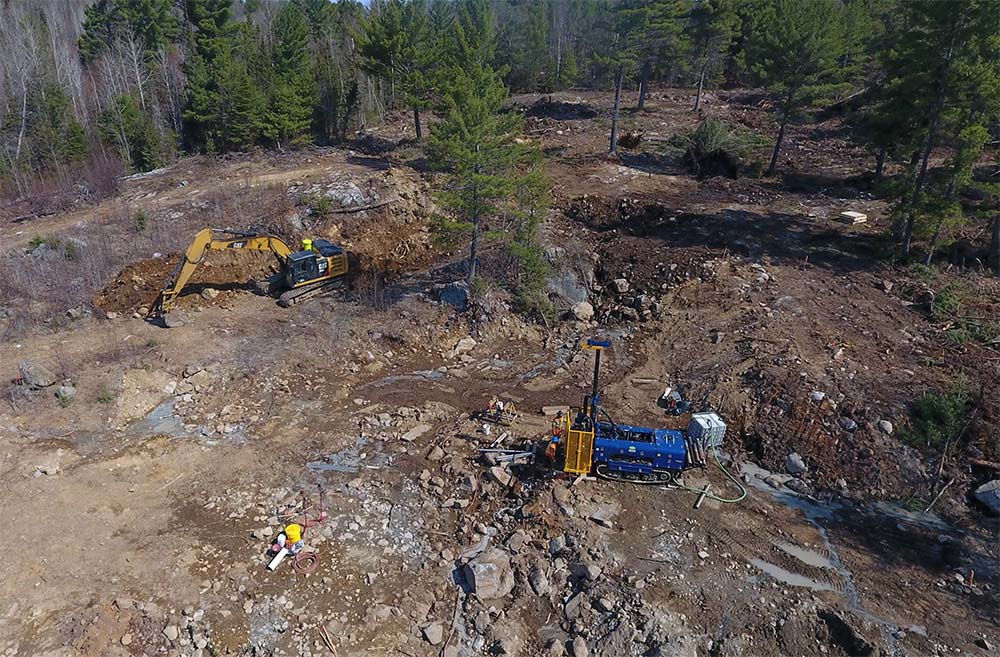
Inventus Mining uses bulk sample cash flow to self-fund Ontario gold drilling. Resource estimate due Q3 2026. Sprott and McEwan-backed. Production permit targeted late 2026.
- Inventus Mining is a junior gold explorer and developer advancing the Pardo Gold project in Ontario, Canada, where a shallow, flat-lying conglomerate reef grading 2.5 to 3.5 grams per tonne gold sits at or near surface, allowing low-cost, rapid drilling of two to three holes per day with a single rig.
- The company has completed 30,000 of a permitted 50,000-tonne bulk sample, pre-selling extracted gold to McEwen Mining's nearby mill under an arrangement that generates operating cash flow without traditional equity raises, with the first bulk sample returning approximately two dollars for every dollar invested.
- CEO Wesley Whymark is targeting a maiden mineral resource estimate in Q3 2026, to be followed by a production permit application for 200,000 tonnes of off-site processed material, with Ontario's streamlined permitting framework offering a potential Ministry approval within 45 days of a complete submission.
- Company's shareholder base includes Eric Sprott at 16%, McEwen's founder personally at 17%, and McEwen Inc. at approximately 10%, together representing roughly 43% of Inventus shares and providing both strategic validation and an existing commercial processing relationship.
- Previous ore sorting scoping study demonstrated that XRF particle sorting could concentrate 93% creating a potential 160% increase in mill feed grade and meaningfully reducing trucking and processing costs if bulk-scale tests confirm commercial viability.
In a junior mining market where most companies depend on equity raises to fund exploration, Inventus has pursued an approach that sets it apart: using pre-sold bulk sample gold revenue to fund ongoing drilling and technical studies. Wesley Whymark, recently appointed CEO and Director of Inventus Mining, outlined the company's strategy for building value at its Pardo Gold project in Ontario, Canada.
The strategy has attracted notable institutional and strategic backers but comes with its own constraints, as the company navigates processing pace at McEwen Mining's mill and the remaining balance of its permitted bulk sample tonnage.
The Paleoplacer Asset: Shallow, Flat-Lying, and Geologically Significant
The Pardo Paleoplacer project derives its name and investment rationale from the paleoplacer deposit type, ancient riverbeds or sedimentary basins where gold has accumulated within conglomerate reef formations. Globally, paleoplacer deposits are associated with large gold endowments. The Witwatersrand Basin in South Africa, the largest gold deposit in the world, is itself a paleoplacer system, and it is this geological analogue that drew early investors to the Pardo Paleoplacer project.
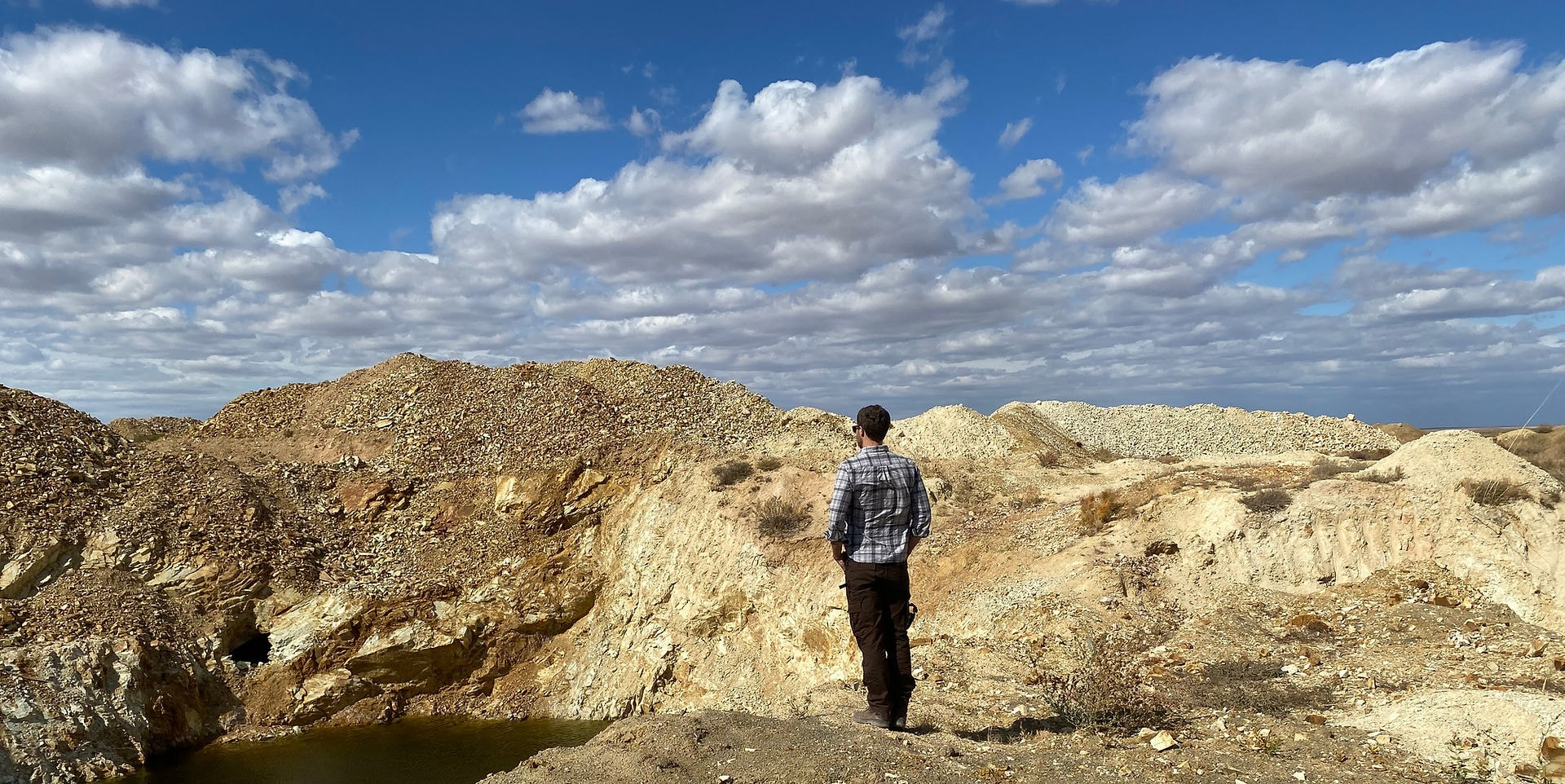
At Pardo Paleoplacer, the primary target is a conglomerate layer averaging approximately 2 metres in thickness, grading between 2.5 and 3.5 grams per tonne gold. The geometry allows two to three drill holes per day using a single rig, significantly reducing per-metre exploration costs compared to deeper, vertically oriented deposits. The deposit also hosts two additional conglomerate units, one above and one below the primary target, at lower grades that could become economically relevant pending further ore sorting and heap leach testwork.
Bulk Sampling: Funding Exploration Without Dilution
A central element of Inventus Mining's current strategy is the use of bulk sampling to generate revenue. The company has obtained a permit for 50,000 tonnes of bulk sample extraction, of which 30,000 tonnes have now been completed. The extracted material is crushed on-site and trucked to McEwen Mining's nearby mill, where it is processed under a pre-sale arrangement that provides Inventus with cash flow ahead of any formal production permit.
The metallurgical characteristics of the paleoplacer material are well-suited to this approach. Because the gold exists as free particles within a sedimentary host, it responds well to gravity-based and carbon-in-leach processing. Approximately 70% of gold recovery in gravity flotation testing was captured in the gravity concentrate alone, with overall mill recoveries at McEwen's facility running in the mid-90% range. Whymark described the metallurgy as largely de-risked at this stage.
According to Whymark,
"We're kind of a unicorn in the space in the sense that not many groups can go and extract gold without a lot of capital. We can do it with no capital."
The first bulk sample effectively doubled the company's invested capital, with cash flow being reinvested into continued drilling and technical studies. The approach has allowed Inventus to advance its project with limited share dilution, though he acknowledged the pace of processing has been slower than initially anticipated given McEwen's own production requirements at the mill.
Resource Estimate and Permitting Pathway
With 20,000 tonnes of bulk sample capacity remaining under the existing permit, the company is prioritising grid drilling to delineate a mineral resource estimate, which Whymark expects to publish in Q3 2026. The resource estimate will form the foundation for a subsequent application for an off-site processing production permit targeting approximately 200,000 tonnes of material.
Whymark described Ontario's permitting framework as efficient and predictable: once a third-party environmental report is prepared (estimated to take three to four months), the Ministry can return an approval decision within 45 days of receiving a complete application. He indicated the permit submission would likely occur in late 2026, with production commencement potentially following in early 2027, subject to seasonal considerations given Ontario's winter operating conditions.
At a processing rate of approximately 10,000 tonnes per month, the 200,000-tonne permitted volume would represent roughly 20 months of operation at current throughput rates.
Interview with Wesley Whymark, Director & CEO of Inventus Mining
Ore Sorting: A Potential Step-Change in Economics
A potentially significant technical development for Inventus is the application of ore sorting specifically XRF particle sorting to improve the economics of mining lower-grade material and reduce haulage and milling costs. In a 2018 scoping study, the company found that XRF-based sorting could concentrate 93% of the gold into just 40% of total material, effectively eliminating 60% of mined tonnes before trucking and processing. This translates to a 160% increase in mill feed grade with corresponding reductions in transport and milling costs.
Whymark explains:
"With ore sorting, if you can take the material and reduce it to only 40% of the volume, you're hauling something at a much higher grade and much less tonnage, cheaper trucking costs, less milling costs."
Whymark noted that XRF particle sorter technology has advanced materially since the 2018 study, with modern units now capable of processing between 40 and 120 tonnes per hour, compared to the slower machines available at the time of initial testing. Capital cost for an ore sorting unit is estimated at approximately $1 million to $1.5 million, a manageable outlay relative to the potential operating savings. Bulk-scale testing is planned to confirm commercial viability before any commitment is made.
Strategic Shareholders and Capital Validation
While bulk sampling has reduced dependence on equity raises, the McEwen's mill processing means additional capital may be required to accelerate development. Whymark indicated a modest raise may be considered to expedite ore sorting studies and drilling activity, though specifics were not disclosed. The core message was that Inventus aims to remain significantly less dilutive than typical junior explorers operating on a purely drill-and-raise model.
The company's shareholder base includes Eric Sprott, the well-known Canadian resource investor, holding approximately 16%. McEwen's founder holds 17% personally, and McEwen Inc. holds approximately 10%. Together, these stakeholders account for roughly 43% of Inventus shares, representing both strategic alignment and external validation of the asset's potential.
Whymark noted that McEwen's founder and Sprott both recognised the geological significance of the paleoplacer setting and the deposit's proximity to surface at an early stage.
The Investment Thesis for Inventus Mining
- Inventus Mining occupies a rare position among junior gold companies: it generates operating cash flow from its asset before holding a formal mineral resource, using pre-sold bulk sample revenue to fund drilling and technical studies rather than diluting shareholders through repeated equity raises.
- The Pardo Paleoplacer project benefits from shallow, free-milling geology that delivers mid-90% gold recoveries at McEwen's mill and allows rapid, low-cost surface drilling, materially reducing the capital intensity typical of early-stage gold development.
- A maiden mineral resource estimate targeted for Q3 2026 represents the most immediate valuation catalyst, with a subsequent production permit application providing a credible pathway to formalised, scalable extraction within 12 to 18 months.
- The project's ore sorting potential adds a further layer of upside: scoping-level results showing 93% gold recovery from just 40% of mined material suggest that haulage and milling costs could be reduced significantly if bulk-scale tests confirm what early work indicates.
- Strategic shareholders Eric Sprott and McEwen-affiliated holders together control approximately 43% of the company, providing both third-party endorsement of the asset and an aligned commercial processing partner in McEwen's mill.
- The primary risks centre on the pace of McEwen's mill availability, the as-yet-undefined scale of the resource, and the need for modest additional capital to accelerate development are all manageable constraints relative to the self-funding model's structural advantages. This allows Inventus Mining to offer a risk-return profile that is difficult to replicate elsewhere in the sector.
Macro Thematic Analysis: The Case for Self-Funding Junior Gold Producers
The broader investment landscape for junior gold mining companies has shifted materially over the past three years. Rising gold prices driven by central bank accumulation, geopolitical uncertainty, and structural demand from emerging market reserve managers have created a more favourable operating environment for early-stage producers and developers. However, equity market appetite for pure exploration-stage stories has remained highly selective. Investors have shown a clear preference for companies that can demonstrate tangible economic progress without excessive dilution, narrowing the field of genuinely investable juniors considerably.
Against this backdrop, companies capable of generating even modest operating cash flow from their assets occupy a distinct competitive advantage. The traditional junior model with repeated equity raises to fund drilling, followed by a resource estimate, a feasibility study, and then project financing remains the norm, but it is increasingly viewed as value-destructive in a market where dilution compounds over multi-year timelines.
"We were showing we essentially doubled our money on the first bulk sample, put in a dollar, get two dollars back. If we can keep doing that, it'll be great." - Wesley Whymark, CEO & Director of Inventus Mining
Companies like Investus Mining who can short-circuit this cycle by extracting and monetising material at the bulk sample stage preserve shareholder value in ways that purely exploration-focused peers cannot replicate. For investors seeking gold exposure through early-stage production rather than speculative exploration optionality, the self-funding paleoplacer model offers a structurally different risk-return profile, one that is increasingly relevant as equity market conditions demand demonstrable value creation over promises of future discovery.
TL;DR
Inventus Mining presents a structurally differentiated profile among junior gold companies. Its paleoplacer deposit in Ontario offers shallow, low-cost extraction with proven metallurgy, and the company's bulk sampling model has allowed it to fund ongoing drilling and technical work without significant equity dilution. The upcoming mineral resource estimate represents the most immediate valuation catalyst, while the ore sorting program and production permit application will determine the pace and scale of future development. The combination of strategic shareholders, self-generated cash flow, and a supportive permitting environment in Ontario places Inventus in a comparatively de-risked position relative to many junior peers, though investors should monitor mill access pace and bulk-scale ore sorting outcomes before drawing firm conclusions on the deposit's long-term economic potential.
Frequently Asked Questions (FAQs) AI-Generated
Most junior gold companies rely on equity raises to fund exploration, which dilutes existing shareholders over time. Inventus Mining pre-sells bulk sample gold to McEwen Mining's mill before a formal production permit is in place, using the resulting cash flow to fund its own drilling and technical studies. The first bulk sample returned approximately two dollars for every dollar invested, providing a funding mechanism that most early-stage companies do not have access to.
A paleoplacer deposit is formed when gold accumulates within ancient sedimentary layers — typically conglomerate reefs deposited by prehistoric rivers or basins. The economic significance for investors is that these deposits are often flat-lying and close to surface, which makes them cheaper and faster to drill and mine compared to steeply dipping or deep vein systems. The Witwatersrand Basin in South Africa, the largest gold deposit ever discovered, is a paleoplacer system, which provides the geological precedent for potentially large endowments in this deposit type.
CEO Wesley Whymark has targeted Q3 2026 for the publication of a maiden mineral resource estimate at the Pardo Paleoplacer project. This is significant because it will be the first time an independent estimate formally quantifies how much gold the deposit contains. Resource estimates typically serve as valuation anchors for junior mining companies and often act as re-rating catalysts when the market reassesses a project's scale and economic potential.
Ore sorting is a process that separates higher-grade material from waste rock before it reaches the mill, reducing the total volume that needs to be trucked and processed. At Pardo, a 2018 XRF particle sorting scoping study showed that 93% of the gold could be recovered from just 40% of the mined material — a 160% increase in mill feed grade. If bulk-scale testing confirms these results, the outcome would be lower trucking costs, reduced milling costs, and improved margins, particularly on lower-grade conglomerate units that are not currently economic at standard processing costs.
The three most material risks are: first, McEwen's mill processing pace has been slower than anticipated, which limits the speed at which bulk sample cash flow can be generated and reinvested; second, the deposit does not yet have a formal mineral resource estimate, meaning its total scale is still to be independently defined; and third, while the company aims to minimise dilution, some additional equity capital may be required to accelerate ore sorting studies and drilling ahead of the production permit application.
Analyst's Notes





Subscribe to Our Channel








Stay Informed






















