2026 Outlook: IsoEnergy Advances Uranium Production Timeline & Commences Portfolio Winter Drilling



IsoEnergy advances Utah production restart via bulk sampling while drilling 5,000m at ultra-high-grade Hurricane deposit, positioning across production timeline.
- IsoEnergy is executing bulk sampling at Tony M in Utah, mining 2,000 tons and sending it to the mill to validate costs, beneficiation techniques, and geological models ahead of full-scale production restart decision.
- The company maintains strategic toll milling agreement with White Mesa Mill, the only operational conventional uranium mill in the United States, providing production flexibility without capital intensity.
- Winter drilling campaign commencing at Hurricane deposit with two rigs and 5,000+ meters planned, targeting expansion discoveries up to 3km from known ultra-high-grade mineralization.
- IsoEnergy's portfolio strategy balances near-term US production, Canadian exploration upside, and development assets in Australia with a pending Toro Energy acquisition closing in April 2026.
- Management identifies significant M&A opportunities as larger uranium companies trade at premiums to NAV while smaller companies trade at substantial discounts, creating consolidation conditions.
IsoEnergy Ltd. (TSX:ISO) is positioning itself within an increasingly polarized uranium market by advancing production timelines while maintaining significant exploration exposure on its North American portfolio. The company's diversified asset base spans the United States, Canada, and Australia, with management prioritizing near-term production capabilities as institutional capital flows concentrate in companies demonstrating clear paths to uranium delivery.\
Bulk Sampling Program Validates Production Economics
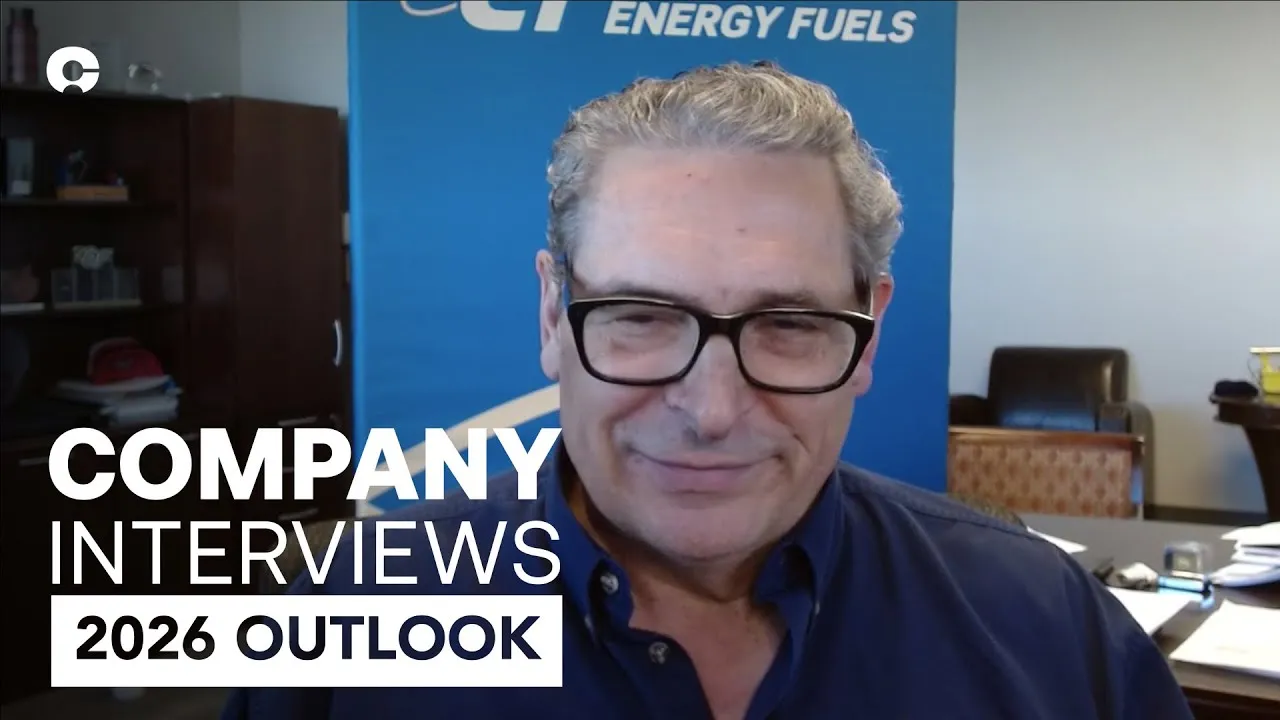
Philip Williams, CEO of IsoEnergy, outlined the company's strategic positioning during a recent interview, emphasizing the competitive advantage of near-term production in the current market environment.
"In our market cap range, there's not so many producers, so we want to be one of those producers and be able to deliver material into a rapidly rising uranium price environment which we think is coming in the United States," Williams stated.
The company's immediate operational focus centers on the Tony M project in Utah, where bulk sampling operations have commenced. This represents IsoEnergy's most advanced production opportunity and serves as the company's primary differentiation point within its peer group.
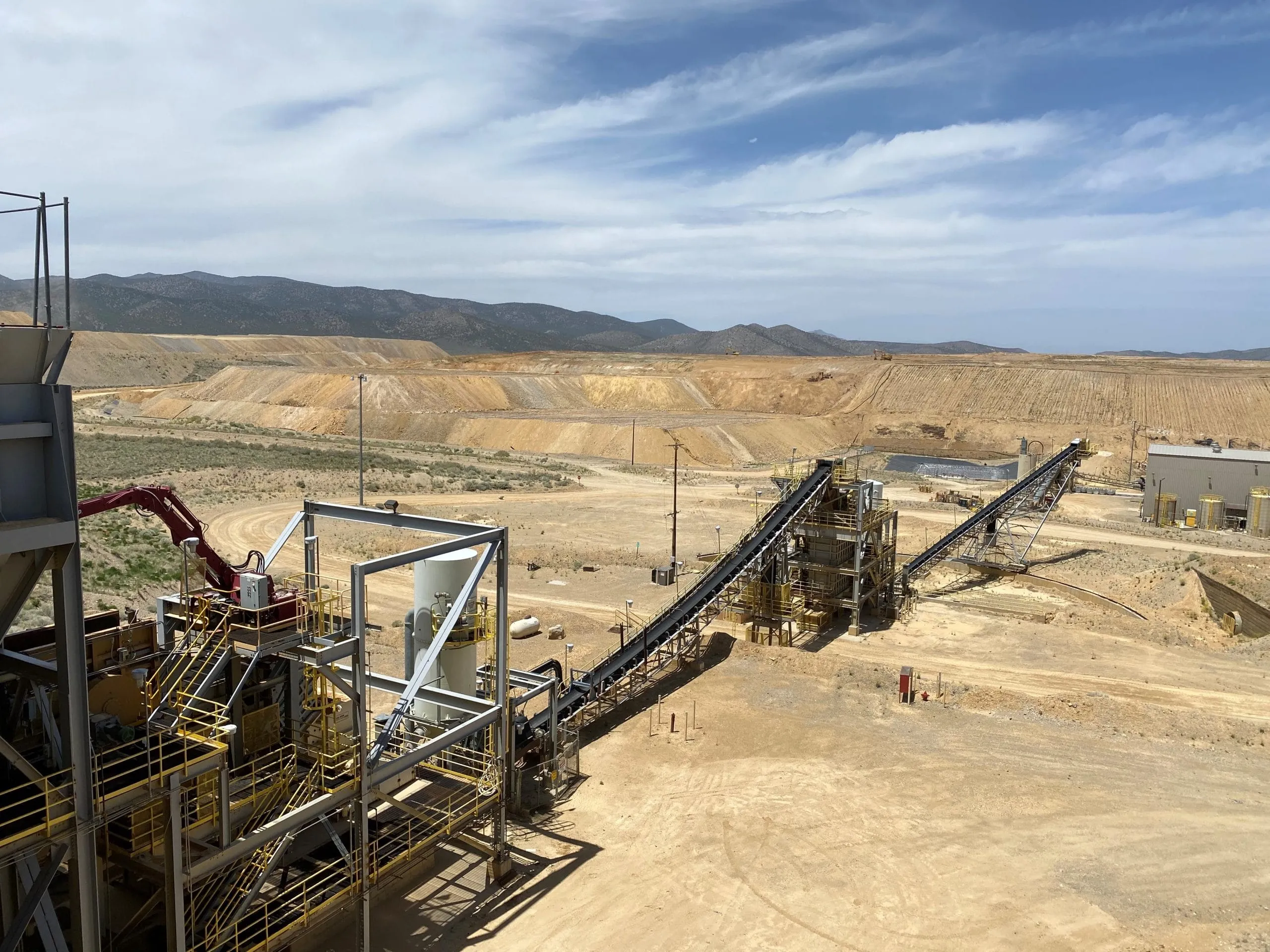
IsoEnergy has resumed mining activities at Tony M through a bulk sampling program designed to provide updated technical and economic data for the full-scale production decision. The program involves extracting approximately 2,000 tons of material for processing at the White Mesa Mill, located in proximity to the project.
The bulk sampling exercise addresses three critical decision criteria: current operating costs for mining, trucking, and processing; capital requirements for production restart; and validation of beneficiation techniques tested on smaller scales. The capital intensity for restarting Tony M remains comparatively low due to existing infrastructure. The mine operated previously during 2007-2008 reducing the capital barrier typically associated with new mine development, though updated cost estimates are being compiled as part of the current program.
IsoEnergy has tested methods on small-scale samples that could substantially reduce waste material sent to the mill, directly impacting operating costs. The bulk sampling program will determine whether these techniques can be incorporated into full-scale mining operations.
Strategic Processing Agreement with Energy Fuels
IsoEnergy maintains a toll milling arrangement with Energy Fuels' White Mesa Mill, the only operational conventional uranium mill in the United States. This agreement provides the company with processing capacity without the capital expenditure and operational complexity of mill ownership.
Williams characterized the arrangement as providing significant strategic advantages: "It allows us a lot of flexibility. We can move ahead very quickly because the mill's operating and running, and we don't have to bear the costs of starting it up and maintaining it."
The White Mesa Mill historically processed ore from Tony M and other regional uranium mines, providing established metallurgical understanding of the ore characteristics. Energy Fuels operates the facility with experienced personnel capable of optimizing processing for different ore types. The toll milling structure allows IsoEnergy to pay for processing services based on actual throughput rather than bearing fixed mill ownership costs.
While IsoEnergy currently has no plans to develop proprietary milling capacity, the company maintains optionality regarding future processing arrangements as the regional uranium production landscape evolves. This variable cost structure aligns expenses with production and reduces financial exposure during ramp-up phases or market volatility.
Hurricane Deposit Drilling Campaign
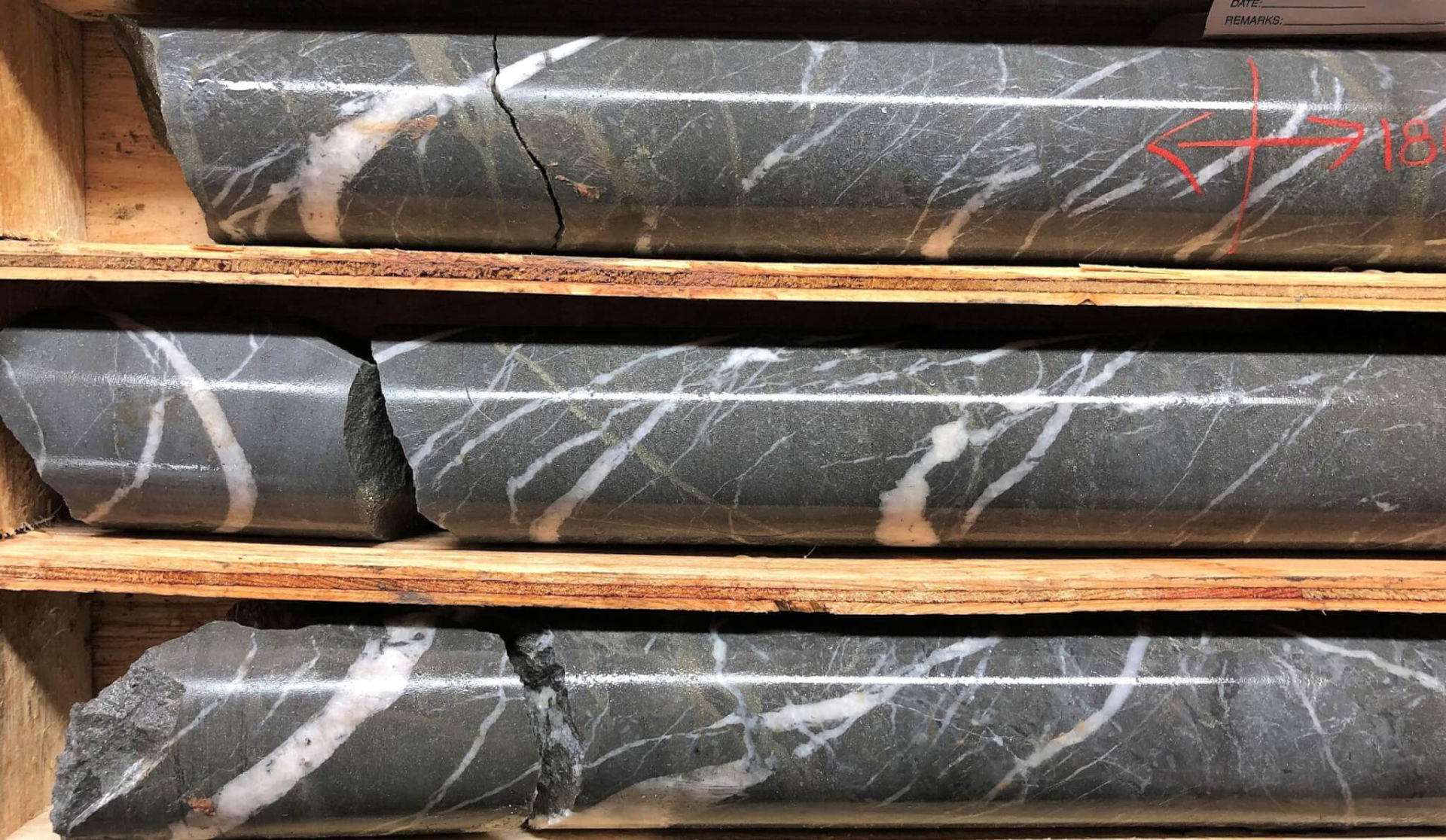
IsoEnergy has mobilized two drill rigs to the Hurricane deposit in Saskatchewan's Athabasca Basin for a winter campaign exceeding 5,000 meters. The program will test targets within and adjacent to the known ultra-high-grade deposit, extending up to 3 kilometers from established mineralization.
Hurricane ranks among the highest-grade uranium deposits globally, with grades significantly exceeding typical Athabasca Basin discoveries. The deposit's small physical footprint relative to its contained uranium reflects this exceptional grade concentration. Discovery of additional high-grade lenses would substantially expand the resource base while potentially simplifying future mine planning through proximate ore zones.
The exploration targets derive from work completed over previous field seasons, incorporating geological, geophysical, and geochemical data. The winter drilling season provides ground conditions suitable for heavy equipment access in the remote northern Saskatchewan environment.
Management views continued exploration investment at Hurricane as value-accretive given the deposit's quality and strategic importance to potential future development partners seeking high-grade Athabasca Basin production.
Interview with Philip Williams, Director & CEO of IsoEnergy
Portfolio Construction, Production Timeline & Exploration Upside
IsoEnergy's portfolio spans multiple development stages, from near-term production through exploration-stage projects. This diversification reflects deliberate acquisition strategy executed during periods when market valuations favored different asset classes.
Williams described the portfolio evolution:
"That period of time where exploration was really the focus, you couldn't get a lot of attention for advancing assets because of the pricing environment. That was the time that we used to acquire projects."
The company's US assets include Tony M approaching production decision, multiple Utah exploration properties, and the Coles Hill project in Virginia - a large-scale development opportunity that management believes may benefit from federal policy support for domestic uranium production.
Canadian assets center on the Hurricane deposit and surrounding exploration properties, plus a 50% joint venture with Purepoint Energy exploring additional Athabasca Basin targets. The Purepoint arrangement exemplifies IsoEnergy's partnership approach, combining complementary land packages under experienced operational management.
The pending acquisition of Toro Energy, expected to close in April 2026, adds Australian exposure through projects in Western Australia. Williams characterized Toro as an overlooked project that the combined entity can advance more effectively:
"We have an acquisition that we announced last year, Toro Energy. A tremendous project in Western Australia, which we think is an overlooked project for a whole host of different reasons. The two companies can really drive that project forward.
Market Consolidation
IsoEnergy operates in a uranium market characterized by significant valuation dispersion. Large-cap producers trade at premiums to net asset value while smaller companies trade at substantial discounts, creating conditions conducive to consolidation.
"The bigger companies trading at massive premiums to NAV and huge price per pound metrics, and there's the other end of the spectrum. So there's a lot of deals that can be done," Williams observed.
The Purepoint joint venture demonstrates one structural approach, combining assets into operated partnerships rather than outright acquisition. This model allows IsoEnergy to access quality exploration ground and operational expertise while conserving capital and maintaining portfolio focus. NextGen Energy also owns approximately 30% of IsoEnergy, providing a significant shareholder that would need to support any change-of-control transaction.
The company holds approximately $60 million in equity positions in smaller uranium companies, acquired through vending non-core assets. These positions provide exposure to junior sector performance and potential liquidity as market conditions improve.
Catalysts Amid Clear and Strong Fundamentals
Despite bullish supply-demand fundamentals and increasing policy support for nuclear energy, uranium equity performance ultimately depends on physical uranium price movement. Williams acknowledged this reality: "The space can get ahead of the price for some period of time, but the price has to also move."
Recent uranium price action shows spot prices recovering from recent lows while term contract prices continue steady advancement. Something will need to catalyze accelerated utility contracting to drive meaningful spot price appreciation. Potential catalysts include the recently announced Section 232 investigation into uranium imports, which could create future supply uncertainty prompting utilities to secure term contracts.
Major financial institutions including Goldman Sachs and Bank of America have published bullish uranium sector research, potentially broadening institutional investor awareness. However, consistent historical patterns show uranium equity performance ultimately follows rather than leads physical uranium prices. When utility contracting does accelerate—whether driven by policy changes, supply disruptions, or other factors—price movements can occur rapidly given the concentrated nature of uranium markets and the involvement of financial players alongside traditional utilities.
The Investment Thesis for IsoEnergy
- Near-Term US Production Capability: IsoEnergy's Tony M project in Utah advances toward production restart through bulk sampling program validating operating costs, capital requirements, and beneficiation techniques, while strategic toll milling agreement with White Mesa Mill eliminates processing infrastructure capital and accelerates production timeline.
- Ultra-High-Grade Hurricane Deposit: Winter 2026 drilling campaign deploys two rigs across 5,000+ meters testing expansion potential up to 3km from known mineralization at one of the world's highest-grade uranium deposits, following "pearls on a string" geological model prevalent in Athabasca Basin discoveries.
- Diversified Portfolio Spans Production Timeline and Top-Tier Jurisdictions: Asset base encompasses production-ready Tony M, advanced exploration at Hurricane, development projects including pending Toro Energy acquisition in Western Australia, and 50% Purepoint joint venture, providing geographic diversification across US, Canada, and Australia.
- Institutional Capital Access Accelerates: Mid-tier market capitalization positioned between premium-valued large-cap producers and discounted small-cap explorers attracts increasing institutional engagement, supported by addition of commercial and marketing expertise signaling preparation for uranium sales as production approaches.
- Demonstrated M&A Execution Capability: Accretive transaction history including Purepoint JV structure and Toro acquisition demonstrates management's ability to leverage relationships and technical expertise, with approximately $60 million in equity positions in smaller uranium companies providing additional junior sector exposure.
- Multiple Catalysts Converge as Uranium Market Fundamentals Strengthen: Tony M production decision, Hurricane drilling results, Toro acquisition closure in April 2026, and potential Section 232 investigation outcomes create near-term catalyst pathway as institutional capital increasingly concentrates in companies demonstrating operational capability and uranium delivery timelines.
Uranium Market Bifurcation
The uranium sector exhibits pronounced valuation bifurcation that creates both opportunities and risks for companies positioned across the market capitalization spectrum. Large-cap uranium producers and near-term producers trade at substantial premiums to net asset value, reflecting institutional capital concentration in companies with established production or clear paths to uranium delivery. Meanwhile, smaller exploration and development companies trade at significant discounts to asset value despite holding potentially high-quality resources, constrained by limited access to growth capital and reduced institutional investor attention.
Institutional investors increasingly demand demonstrated operational capability and near-term cash flow visibility rather than speculative exploration success. The resulting capital concentration at the large-cap end creates self-reinforcing dynamics, as premium valuations enable larger companies to pursue acquisitions using advantaged equity currency while smaller companies struggle to fund advancement of quality assets.
The bifurcation creates strategic imperatives for mid-tier uranium companies. Companies must either scale rapidly through production advancement or consolidation to access premium valuations, or risk persistent discounts as capital flows bypass their market capitalization range. IsoEnergy's approach combines near-term production advancement at Tony M to demonstrate operational capability, while maintaining exploration exposure at world-class assets like Hurricane that could attract strategic interest from larger consolidators.
Development-stage assets purchased during periods when market attention focused exclusively on exploration now approach inflection points as production becomes valued. However, the sustainability of valuation premiums ultimately depends on physical uranium price appreciation. Despite strengthening fundamentals and supportive policy developments, uranium equities historically track physical uranium prices rather than leading them. The catalyst for accelerated utility contracting remains uncertain in timing, though potential triggers including trade policy changes, supply disruptions, or reactor restart acceleration could materialize with limited advance warning given the concentrated nature of uranium markets.
TL;DR
IsoEnergy advances near-term uranium production at Tony M in Utah through bulk sampling program validating production economics while maintaining strategic toll milling agreement with White Mesa Mill, the only operational conventional uranium mill in the United States. Concurrently, winter drilling campaign deploys two rigs across 5,000+ meters at ultra-high-grade Hurricane deposit in Saskatchewan's Athabasca Basin, testing expansion potential following geological model suggesting multiple high-grade lenses along structural trend. Portfolio diversification spans production-ready, advanced exploration, and development-stage assets across US, Canada, and Australia, with pending Toro Energy acquisition expected to close April 2026. Management positions company within bifurcated uranium market where large-cap producers trade at premiums to NAV while smaller companies trade at substantial discounts, creating consolidation opportunities as institutional capital concentrates in companies demonstrating clear paths to uranium delivery. Strategic shareholder structure with NextGen Energy 30% ownership provides stability while company maintains approximately $60 million in equity positions in smaller uranium companies. Near-term catalysts include Tony M production restart decision, Hurricane drilling results, Toro acquisition closure, and potential uranium import policy changes as physical uranium prices recover and institutional investor engagement accelerates.
Frequently Asked Questions (FAQs) AI-Generated
Tony M benefits from existing surface and underground infrastructure remaining from 2007-2008 production period, substantially reducing restart capital requirements compared to greenfield development. The strategic toll milling agreement with Energy Fuels' White Mesa Mill eliminates processing infrastructure capital while providing established metallurgical processing pathway, as the mill historically processed ore from Tony M and maintains experienced operational personnel. The current bulk sampling program extracting 2,000 tons validates updated operating costs, capital requirements, and beneficiation techniques that could substantially reduce waste material sent to mill, directly impacting operating economics.
Hurricane ranks among the highest-grade uranium deposits globally, with grades significantly exceeding typical Athabasca Basin discoveries. The deposit's small physical footprint relative to its contained uranium reflects exceptional grade concentration. The Athabasca Basin geological model suggests high-grade uranium deposits form as multiple lenses along structural corridors—"pearls on a string"—supporting exploration potential for additional discoveries proximate to known mineralization. The winter 2026 drilling campaign tests this expansion potential across targets extending up to 3 kilometers from established mineralization, with discovery of additional high-grade lenses potentially transforming the asset's scale and simplifying future mine planning through proximate ore zones.
IsoEnergy's mid-tier market capitalization positions the company between large-cap producers trading at premiums to net asset value and small-cap explorers trading at substantial discounts, creating optionality as both potential acquirer and potential target. The company demonstrated M&A execution capability through the Purepoint joint venture structure and pending Toro Energy acquisition, while maintaining approximately $60 million in equity positions in smaller uranium companies acquired through vending non-core assets. NextGen Energy's 30% ownership provides strategic shareholder stability while requiring friendly approach to any change-of-control transaction. Management views 2026 as significant year for uranium sector consolidation given valuation dispersion and institutional capital concentration in companies demonstrating operational capability.
Physical uranium price movement remains the ultimate driver of uranium equity performance despite strengthening supply-demand fundamentals. Recent spot prices show recovery from lows while term contract prices continue steady advancement, though accelerated utility contracting will catalyze meaningful appreciation. Potential triggers include the Section 232 investigation into uranium imports announced recently, which could create supply uncertainty prompting utilities to secure term contracts. Additionally, policy changes supporting domestic uranium production, supply disruptions, or reactor restart acceleration could materialize rapidly given concentrated uranium market structure. Major financial institutions including Goldman Sachs and Bank of America publishing bullish uranium research potentially broadens institutional investor awareness, though historical patterns show uranium equities follow rather than lead physical prices.
Management targets the production restart decision following completion of the bulk sampling program currently underway, which addresses three critical criteria: validated operating costs for mining, trucking, and processing; confirmed capital requirements for production restart; and proven beneficiation techniques at scale. The timing depends on compilation and analysis of updated technical and economic data from the 2,000-ton bulk sample, market uranium prices reaching levels supporting economic production, and reconciliation of the geological model confirming uranium grades and locations align with expectations. Williams emphasized production decision will occur "within framework of validated operating costs, confirmed capital requirements, and supportive uranium price environment," suggesting multiple factors must align rather than predetermined timeline.
Analyst's Notes





Subscribe to Our Channel













Stay Informed