IsoEnergy's 8,000-Metre Push to Expand the World's Highest-Grade Uranium Resource


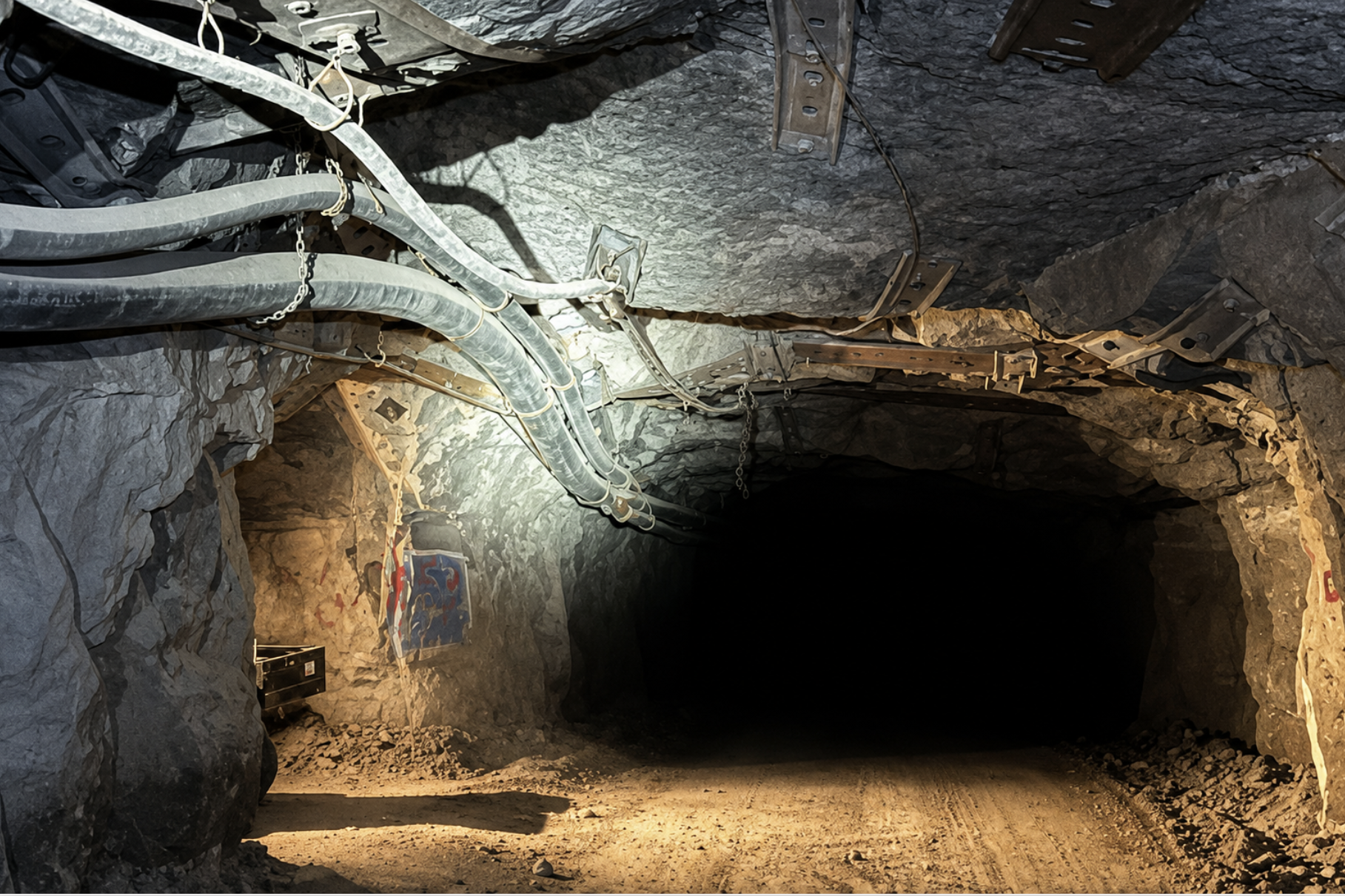
IsoEnergy launches 8,000-metre drilling at Larocque East to test Hurricane expansion after high-grade winter results and district-scale uranium signals.
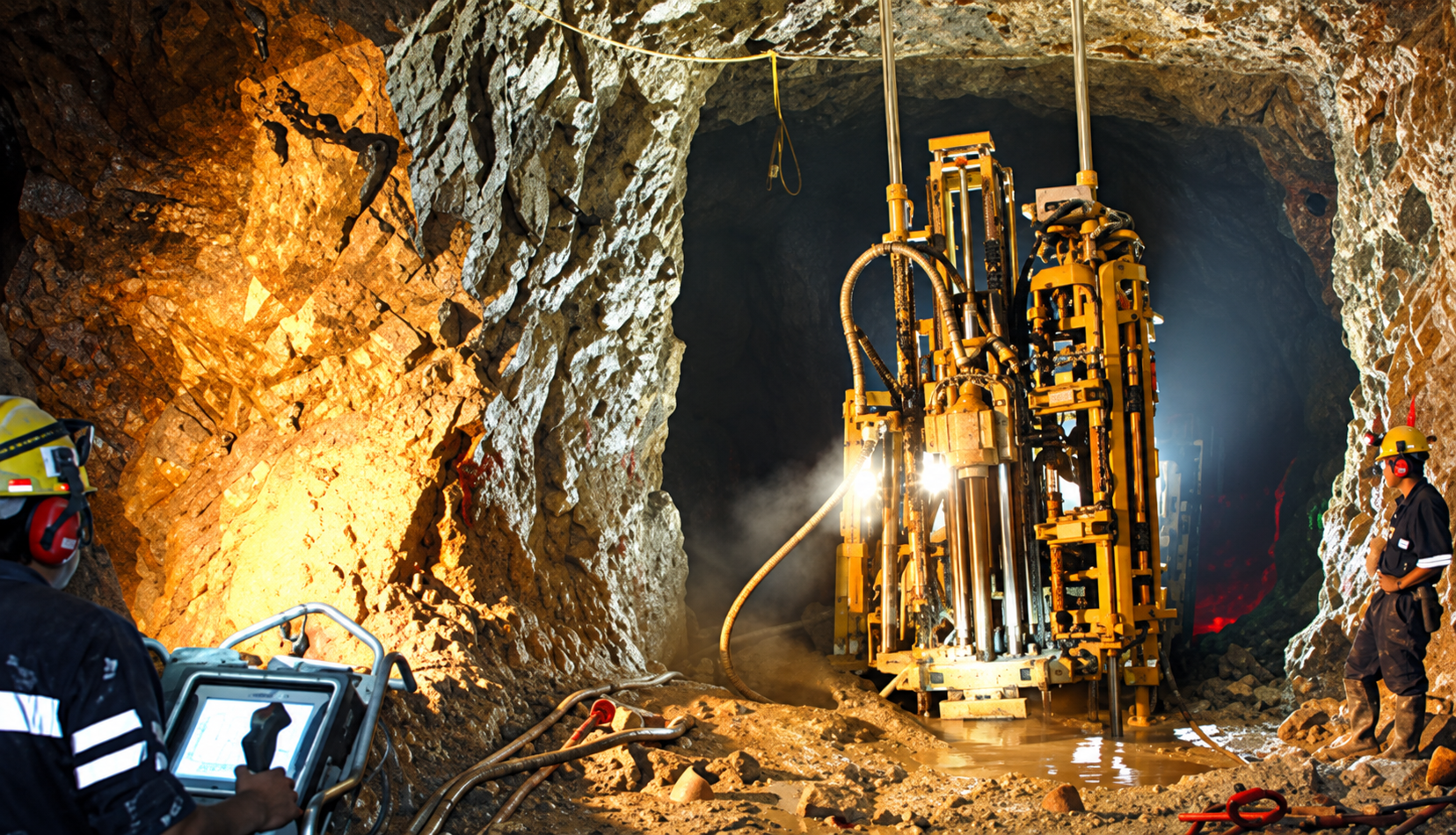
- IsoEnergy has begun an approximately 8,000-metre summer drilling program of up to 20 holes at Larocque East to test whether mineralisation extends beyond the current 48.6 million-pound indicated uranium resource at the Hurricane deposit.
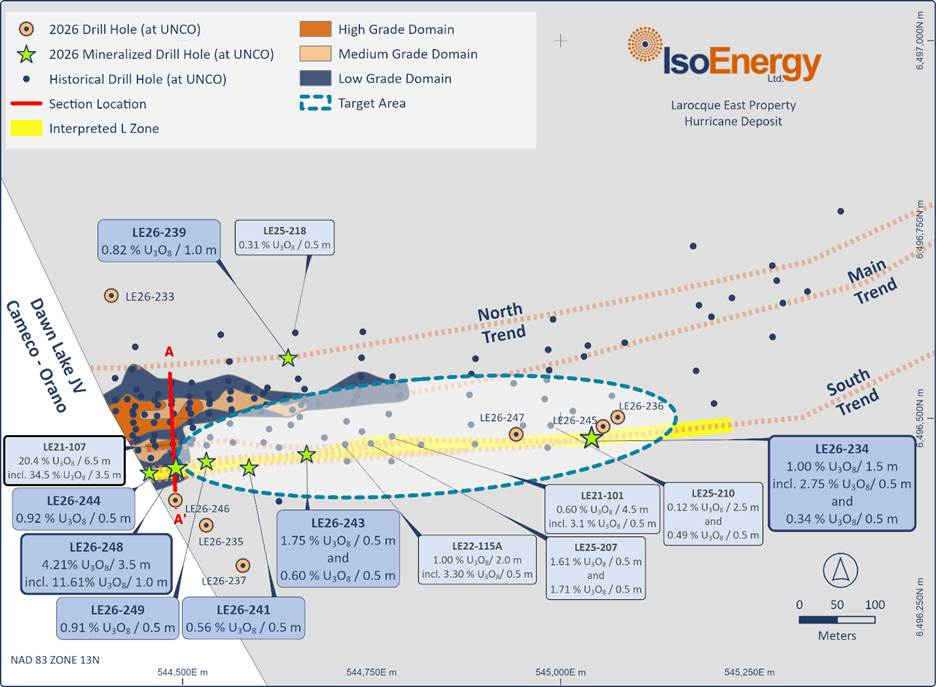
- Winter 2026 drilling in the newly interpreted L Fault Zone returned high-grade uranium results, including 4.21% uranium oxide over 3.5 metres and 11.61% uranium oxide, confirming mineralisation outside the July 2022 resource boundary and identifying a new structural control.
- The summer drilling program is designed to determine whether mineralisation in the L Fault Zone is continuous along strike and sufficiently dense to support resource classification under National Instrument 43-101, as continuity has not yet been demonstrated.
- Drilling by Cameco Corporation and Orano at the Dawn Lake joint venture area has expanded high-grade mineralisation immediately adjacent to the Hurricane deposit, supporting a district-scale mineralised system across the claim boundary, but not confirming extension onto IsoEnergy’s ground.
- Hurricane remains an unusually high-grade, undeveloped uranium deposit with a 48.6 million-pound indicated resource grading 34.5% uranium oxide, and key catalysts include summer assay results, a potential resource update, and a 2026 preliminary economic assessment (PEA) at Tony M.
What Has Happened
IsoEnergy's (NYSE American: ISOU | TSX: ISO) has commenced an approximately 8,000-metre summer drill program across up to 20 holes at Larocque East, targeting the Hurricane South Trend to determine whether mineralisation extends beyond the 48.6 million-pound indicated uranium resource that currently ranks as the highest-grade indicated uranium resource globally. The program follows the winter 2026 drilling, which returned 4.21% uranium oxide over 3.5 metres, including 11.61% uranium oxide over 1 metre, within the newly interpreted L Fault Zone, approximately 525 metres east of the current resource boundary. That result confirmed a new structural control on mineralisation and demonstrated that high-grade uranium exists outside the July 2022 resource envelope, making continuity along the South Trend the key determinant of whether the deposit can support future resource growth.
Why Winter 2026 Changed the Exploration Model
Prior to the winter 2026 program, the southernmost known fault strands along the Hurricane South Trend had lower drill-hole density than the heavily mineralised faults to the north, leaving a portion of the structural corridor insufficiently tested for inclusion in future resource growth. The winter campaign's step-outs along the J-L fault corridor returned high-grade uranium oxide and identified a new structural control, reframing the South Trend from a peripheral target into a potential resource extension zone.
High-grade Athabasca Basin uranium deposits concentrate into irregular, narrow lenses along structural corridors, meaning that the absence of a result in a wide-spaced drill hole does not sterilise the ground between holes - it leaves the question of what lies between them unanswered and the resource boundary potentially open.
Chief Executive Officer of IsoEnergy, Phil Williams, described this exploration dynamic:
"The interesting thing about these deposits is how small they are. You can hide high-grade lenses of mineralisation that could be 5 to 10 million pounds of high-grade material in between drill holes that, in any other place in the world, you'd say, you'd sterilise that area. We can also find mineralisation. We can be in it and then 2 ft away out of it."
What the Summer Program Must Confirm
The winter intercept establishes the presence of uranium oxide mineralisation in the L Fault Zone - it does not establish continuity, which is the condition required for resource conversion. The purpose of the 20-hole summer program is to determine whether the L Fault Zone carries consistent mineralisation along strike, and whether that mineralisation is close enough to the current resource envelope to meet the drill density thresholds required for indicated or inferred classification under National Instrument 43-101. Discovery and resource growth are not the same outcome, and the summer results are treated as the first test of whether the L Fault Zone can progress toward the latter.
The Cameco & Orano Border Pressure
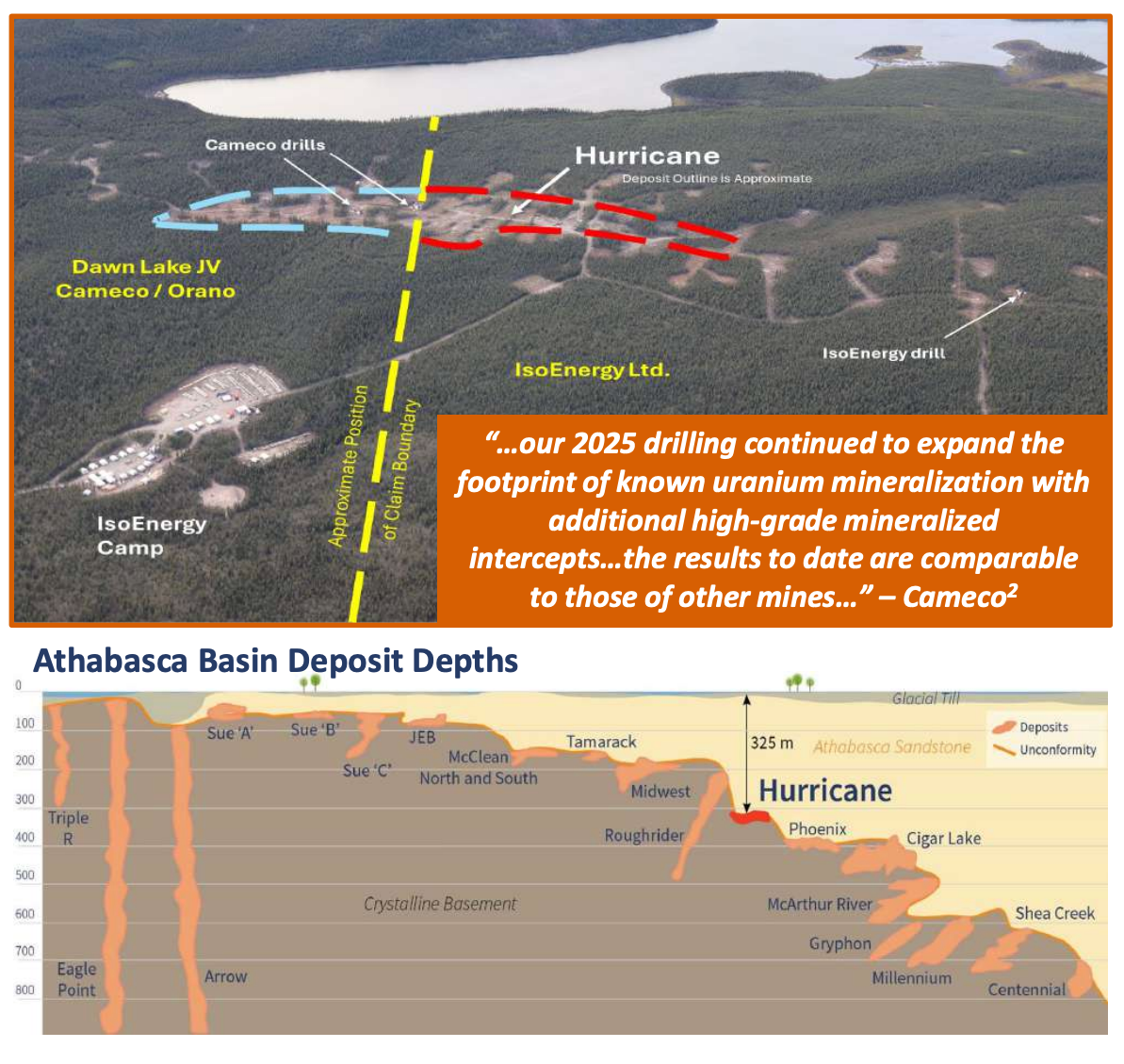
Defining Hurricane's southern boundary has become more consequential because Cameco Corporation and Orano continue to report high-grade mineralisation immediately adjacent to the deposit on the Dawn Lake joint venture ground to the west, increasing the probability that additional drilling could expand the mineralised footprint currently attributed to Hurricane. The Hurricane deposit, as currently defined, crosses the shared claim boundary, and Cameco has been drilling aggressively on its side of that line.
Williams addressed the scale of what Cameco has publicly disclosed:
“This is a mine, is basically what they said. They are encountering the high-grade mineralisation that we've seen on our side of the border, and it's at the tenor, size, and scale that they see in other mines in the basin. When you think about what that means, that's Cigar Lake, that's McArthur River. These are very high-grade, large mines. The two largest mines in the world at 18 million pounds a year."
IsoEnergy noted that 2025 drilling at Dawn Lake continued to expand the known high-grade mineralisation, with results comparable to those from other operating mines in the basin. This supports a district-scale system extending across the claim boundary, but does not confirm Hurricane-style mineralisation on IsoEnergy’s southern ground. Mineralisation on adjacent ground is not necessarily indicative of mineralisation at Larocque East.
Why Hurricane Stands Apart in the Eastern Athabasca Basin
Hurricane's indicated resource of 48.6 million pounds grading 34.5% uranium oxide remains unmatched among undeveloped eastern Athabasca Basin projects; the next-highest indicated grade is the Tamarack deposit, at 4.42% uranium oxide. The deposit's high-grade domain alone contains 43.9 million pounds at 52.1% uranium oxide and is located approximately 40 kilometres from the McClean Lake mill at a depth of approximately 325 metres, compared with approximately 450 metres for Cigar Lake. Against a backdrop in which the World Nuclear Association's 2025 Fuel Report projects that uranium supply will meet only 46% of reference-scenario demand by 2040, any increase in Hurricane's current resource would add pounds from one of the highest-grade and best-located undeveloped uranium assets in the global supply pipeline.
What to Watch Next
The primary catalyst for the remainder of 2026 is the return of assay results from up to 20 summer drill holes targeting the J-L fault corridor, where the key question is whether the winter 2026 intercepts demonstrate sufficient continuity along the South Trend to support National Instrument 43-101 resource modelling and a potential update to the current 48.6 million-pound indicated resource. Beyond Larocque East, investors should also monitor the targeted 2026 preliminary economic assessment (PEA) at Tony M following completion of the approximately 2,100-tonne bulk sampling programme, which could support a production decision, and the advancement of drill targets at East Rim, Ranger, Trident, and Evergreen, which represent IsoEnergy's next pipeline of discovery opportunities beyond Hurricane.
FAQs (AI-Generated)
Analyst's Notes





Subscribe to Our Channel




Stay Informed