The Virginia Paradox: Hyperscale Data Centres, AI, & the Uranium Moratorium



Virginia hosts 35% of global hyperscale data centres but bans uranium mining, locking one of the largest US uranium deposits behind a 1982 moratorium.
- The World Nuclear Association (WNA) projects uranium demand of 391 million pounds by 2040 against the identified supply of 179 million pounds, leaving a 212-million-pound supply gap.
- Virginia hosts 35% of known hyperscale data centres worldwide, but has prohibited conventional uranium mining since 1982.
- Coles Hill contains a historical indicated resource of 132.93 million pounds of uranium oxide, making it one of the largest undeveloped uranium deposits in the US despite the state's mining moratorium.
- Uranium developers are prioritising technically executable projects while preserving legislatively constrained assets as long-term optionality.
- IsoEnergy's 2026 Hurricane drilling extended mineralisation approximately 540 metres beyond the current resource footprint, supporting continued resource growth.
- Any future development at Coles Hill would require both Virginia General Assembly legislation and a new state permitting framework before mining could proceed.
AI Demand, Nuclear Supply & a Gap That Cannot Close Itself
The World Nuclear Association (WNA), in its 2025 Fuel Report, projects global uranium requirements will reach 391 million pounds by 2040 under its reference scenario - more than double the 175 million pounds consumed in 2024 - against a total identified supply of 179 million pounds from all existing mines, development projects, and secondary sources combined. The 212 million-pound gap has no identified source. Under the upper scenario, driven by accelerating reactor construction in China, India, and South Korea, demand reaches 532 million pounds by 2040. The supply deficit is not a projection artefact - it is the arithmetic consequence of a sector where no credible development pipeline exists to bridge the gap at current uranium prices and permitting timelines.
The mechanism driving demand above historical trends is AI infrastructure. Hyperscale data centres operated by Meta, Amazon, and Microsoft require continuous baseload electricity that intermittent renewables cannot deliver at the reliability thresholds these operators require, making nuclear energy the primary corporate procurement target. Small Modular Reactors (SMRs) are being positioned as dedicated on-site power solutions for data centre campuses, shifting uranium offtake demand away from utility long-term contracts toward direct corporate procurement agreements that carry higher pricing premiums and tighter supply-security requirements. The contradiction that emerges from this demand profile is sharpest in Virginia - the state that hosts more hyperscale data centre capacity than any other jurisdiction on earth, and that has banned uranium mining since 1982.
Chief Executive Officer of IsoEnergy Ltd. (NYSE American: ISOU | TSX: ISO), Phil Williams, described how the capital allocator profile is already shifting:
"The resource investors and generalists are coming, but think about utilities, think about tech companies, that's the next wave to start thinking about this space."
The Structural Shift to Corporate Nuclear Procurement
Utilities historically provided uranium developers with long-term offtake contracts that justified project financing, but technology companies are now shifting nuclear procurement to a corporate-anchored energy market. At the BMO institutional mining conference in early 2026, representatives from the US Department of Energy (DOE), the Export-Import Bank of the United States (EXIM), and the Development Finance Corporation (DFC) attended and presented, signalling that federal capital is now being actively directed toward domestic uranium supply chain development.
Williams described what that presence meant in practice:
"They sat up on stage and basically advertised themselves like come talk to us, we have money to deploy in critical minerals, and of course, there are biases towards American projects, so we have a seat at the table with Utah and with our big project in Virginia."
The supply arithmetic that underpins this federal urgency is verifiable from the WNA 2025 Fuel Report: existing mines produce 77 million pounds annually, development and planned mines add a combined 35 million pounds on an identified basis, prospective sources contribute 52 million pounds, and secondary supply adds 15 million pounds - totalling 179 million pounds against 391 million pounds of projected 2040 reference scenario demand.
Williams stated the pricing consequence directly:
"When you look at demand doubling or more by 2040 and no real understanding of where the supply is coming from, I think prices do have to stay higher for longer."
Virginia's 1982 Legislative Roadblock
Virginia's moratorium on conventional uranium mining on private land, codified under Title 45.2, Chapter 21 of the Code of Virginia, prohibits any state agency from accepting uranium mining applications until the Virginia General Assembly enacts a statutory permitting program - meaning the state legislature, not a regulatory body, holds the sole key to unlocking the deposit. The moratorium has been in continuous effect since 1982, surviving multiple uranium price cycles, the post-Fukushima nuclear slowdown, and the current renaissance without legislative amendment.
The investment consequence of that legislative posture is binary: without General Assembly action followed by rulemaking by the Virginia Department of Mines, Minerals and Energy, no exploration, permitting, or development activity at Coles Hill can advance, regardless of uranium prices, federal funding availability, or corporate energy demand. More than 150 pro-nuclear bills were tracked across various US states in the first quarter of 2026 as grid reliability became a state-level priority, underscoring the contrast with Virginia's entrenched legislative roadblock.
Coles Hill: One of the Largest Undeveloped US Deposits in the World's Largest Data Centre Market
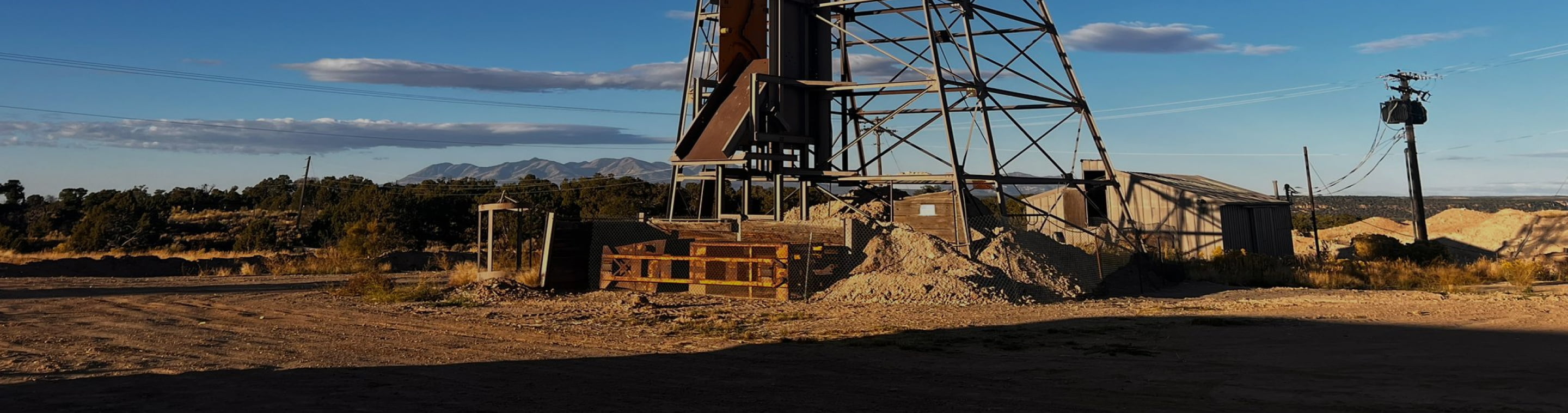
Coles Hill, held by IsoEnergy, carries a historical indicated resource of 132.93 million pounds of equivalent uranium oxide at 0.056% grade and a historical inferred resource of 30.41 million pounds of uranium oxide at 0.042% grade, as reported in the National Instrument 43-101 (NI 43-101) preliminary economic assessment (PEA) dated August 19, 2013.
According to the Virginia Economic Development Partnership, Virginia hosts approximately 35% - nearly 150 - of all known hyperscale data centres worldwide, operates 4 nuclear reactors, and maintains commercial fuel production infrastructure. At 132.93 million pounds of historical indicated uranium oxide, Coles Hill is one of the largest undeveloped uranium deposits in the US, sitting in the state with the highest concentration of data centre power demand on earth - and a 44-year-old ban on extracting the fuel that could partially meet it. IsoEnergy classifies Coles Hill as a call option, which is the appropriate classification for any asset whose entire development pathway is contingent on a legislative act rather than on capital deployment or technical advancement.
Near-Term Development vs. Long-Dated Legislative Options: How Developers Are Allocating Capital
The Virginia moratorium illustrates a capital allocation pattern visible across the uranium sector: developers holding both near-term production assets and long-dated legislatively constrained deposits are concentrating active spending on the former while carrying the latter as optionality. IsoEnergy's 2026 active exploration capital is directed at the Hurricane deposit on the Larocque East project in Canada's Athabasca Basin - the world's highest-grade published indicated uranium resource at 48.6 million pounds uranium oxide at 34.5% uranium oxide indicated, located approximately 40 kilometres northwest of the McClean Lake mill.
Cigar Lake, which currently supplies that mill at approximately 18 million pounds per year, is projected to decline to approximately 7 million pounds per year in 2035 and to approximately 1 million pounds per year in 2036, creating a direct mill-capacity opening for proximate high-grade deposits. The 2026 winter drill program at Hurricane returned 4.21% uranium oxide over 3.5 metres, including 11.61% uranium oxide over 1 metre, confirming mineralisation along the Hurricane South Trend up to approximately 540 metres beyond the current resource footprint. That result demonstrates the investment consequence of directing capital toward assets where development is governed by grade, infrastructure proximity, and technical execution - rather than by a legislative calendar outside the developer's control.
Reconciling State Policy with Energy Reality
The dual-stage regulatory requirement at Coles Hill means that even if political will existed today, the sheer volume of subsequent approvals required would preclude any assurance as to when, or if, production could commence. Building a new uranium mine typically takes between ten and twenty years from discovery to production, a global estimate that further extends the effective timeline when no state-level permitting framework exists.
IsoEnergy CEO Phil Williams identified an emerging US-Australia critical-minerals partnership as a potential catalyst for Australian state-level uranium policy reform, illustrating how federal-to-federal supply chain alignment can exert indirect pressure on sub-national legislative positions.
Industry Outlook
The WNA 2025 Fuel Report projects uranium demand of 391 million pounds by 2040 against the identified supply of 179 million pounds, leaving a 212-million-pound gap. That imbalance highlights the growing importance of undeveloped uranium resources, particularly in jurisdictions where legislative restrictions prevent projects from advancing despite increasing demand for nuclear fuel. Virginia's moratorium on uranium mining illustrates a distinct category of sector risk: deposits constrained not by geology, engineering, or financing, but by political and regulatory barriers that place development timelines beyond a company's control.
Rising electricity demand from data centres and broader energy security concerns are increasing pressure on policymakers to reassess legacy restrictions on nuclear fuel supply. More than 150 pro-nuclear bills were tracked across US states during the first quarter of 2026, reflecting a broader shift in energy policy priorities. Whether that trend results in legislative action in Virginia remains uncertain, but the conditions shaping today's uranium market differ markedly from those that existed when the state's mining moratorium was enacted in 1982.
FAQs (AI-Generated)
Analyst's Notes





Subscribe to Our Channel













Stay Informed