




Chile's Permitting Reforms & the New Risk Calculus for Brownfield Copper Developers



Chile’s 25–26 reforms cut mining permit timelines, boost fiscal stability, and improve brownfield copper project economics amid looming supply deficits.
- Cochilco's 2025 analysis projected a production increase of only approximately 100,000 tonnes over the decade to 2033, even as capital projected to enter the Chilean copper sector over that period runs into the tens of billions of US dollars, reflecting the compound effect of declining grades and rising extraction costs.
- The Ley de Permisología, enacted in September 2025, targets a 30% to 70% reduction in permitting timelines through a streamlined, standardised, and digitised approvals process.
- President Karst's Economic and Social Reconstruction and Development Bill, enacted in April 2026, introduces a 25-year stability pact alongside a corporate tax reduction reaching 23% by 2029.
- The Marimaca Copper oxide deposit received an environmental licence within 12 months, establishing a practical benchmark for junior developer approval timelines.
- Brownfield and greenfield capital intensity are converging in Chile as grade decline drives higher processing volumes and deeper extraction, narrowing the historic cost differential between the two development categories.
Chile is the world's largest copper producer, supplying 23% to 24% of global mine output from an annual production base of approximately 5.3 to 5.43 million tonnes. Mining accounts for 59% of the country's total exports, of which 80% is copper, while copper mining alone accounts for between 10% and 14% of gross domestic product. At that scale, Chile's output trajectory carries consequences well beyond its own borders.
Despite its scale, Chile's copper industry is struggling to grow. Capital projections for the sector through 2034 exceed $100 billion, with the bulk directed at copper, yet the forecast production increase is a fraction of what that investment would ordinarily generate in a less mature basin. Declining grades, deeper extraction, and higher processing volumes required to sustain existing output are absorbing a growing share of every new dollar deployed.
Against that constraint, Chile enacted two legislative reforms between September 2025 and April 2026, targeting permitting timelines and fiscal stability. Whether those reforms change the practical risk profile for Declaración de Impacto Ambiental (DIA)-stage developers, and by how much, is the question this article addresses.
Chile's Role in Global Copper Supply
Chile's position in global copper markets is defined as much by structural limits as by size. The country produces approximately 5.3 to 5.43 million tonnes annually, representing 23 to 24% of global mine supply. Mining accounts for 59% of Chile's total exports, with copper driving 80% of that mining export share, a concentration that ties the country's fiscal health directly to sector performance.
The structural challenge is clearest in the gap between capital deployment and output growth. Fitzroy Minerals’ (TSXV: FTZ | OTCQX: FTZFF) May 2026 presentation cites US$105 billion in projected capital entering Chile through 2034, with approximately 90% directed at copper. Cochilco's 2025 report, covering the period from 2024 to 2033, projected a production increase of only approximately 100,000 tonnes over that span, reaching roughly 5.5 million tonnes, an increment that reflects an industry directing much of its new capital at sustaining existing output rather than adding net new supply.
Chile's Regulatory Reform Architecture
Two legislative measures constitute Chile's changed permitting environment. The Ley de Permisología, enacted in September 2025 under the previous government, targets a 30% to 70% reduction in permitting timelines through streamlining, standardisation, and digitisation of the approvals process. The reform operates as a general business facilitation measure rather than a sector-specific intervention in the mining code, with stated policy direction toward fewer required permits, greater investment facilitation, and the state as a facilitator rather than a gatekeeper of private development.
President Karst's Economic and Social Reconstruction and Development Bill, enacted in April 2026, extends the package to fiscal conditions. The bill introduces a 25-year stability pact and reduces the corporate tax rate by 1 percentage point per year, reaching 23% by 2029.
A practical benchmark for DIA approval timelines comes from Marimaca Copper, an oxide copper deposit that obtained an environmental licence within a 12-month window, the timeline Fitzroy now targets for its own approval.
Capital Intensity & Grade Decline
The production constraint in Chile traces to the economics of aging deposits. Ore grades at the country's major operations have been declining for years, forcing extraction at greater depth and requiring higher processing volumes to sustain equivalent copper output. The capital required to maintain those conditions has risen accordingly.
Data from a BHP site visit presentation in late 2024 indicated that brownfield and greenfield capital intensity are converging in Chile. Brownfield projects have historically carried a lower capital profile than greenfield development, as existing infrastructure reduces upfront costs. That differential is narrowing as brownfield operations at depth require processing infrastructure, extraction capacity, and material throughput comparable to new-build projects, eroding the cost distinction that once made brownfield development the lower-capital path to new copper supply.
Buen Retiro: Permitting Timeline & Processing Infrastructure
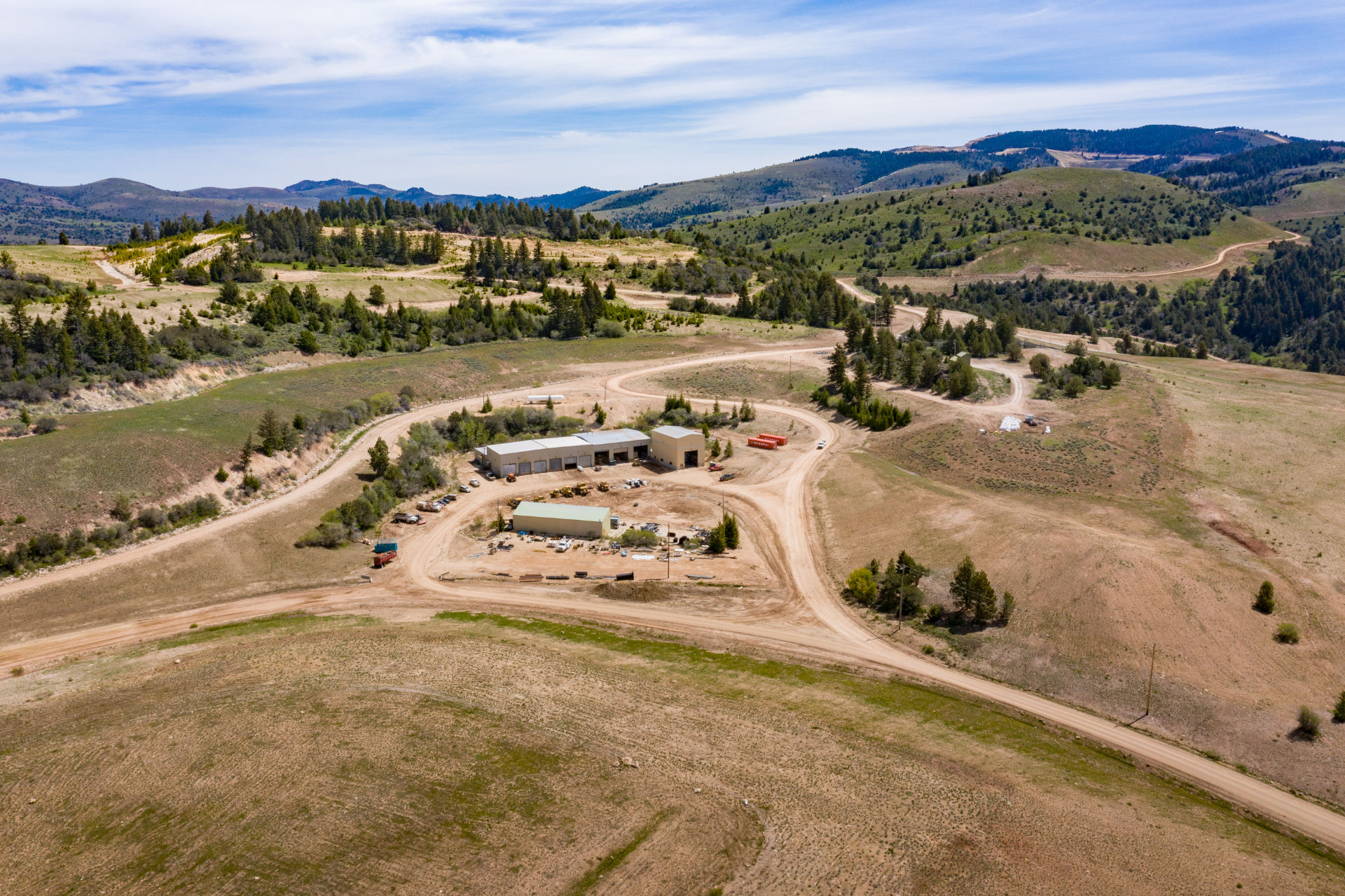
The Buen Retiro iron-oxide copper-gold (IOCG) system, located near Copiapó in northern Chile, illustrates how the reformed permitting environment translates into a project-level production timeline. The site is a brownfield asset with a historical open pit, at low elevation, near the Pan-American Highway, approximately 35 kilometres from the coast. Recent definition drilling has returned intervals of 78 metres at 1.70% copper and 75 metres at 0.82% copper, with higher-grade subintervals of 40 metres at 3.02% copper and 8 metres at 3.77% copper.
Fitzroy Minerals has structured its development programme in line with the reformed permitting timeline. The company has targeted DIA submission for the third quarter of 2026, with a Maiden Mineral Resource Estimate planned for late 2026 and a Pre-Feasibility Study for early 2027. Assuming a 12-month approval from the point of submission, a six-month build period would follow, targeting production in late 2027 or early 2028.
President and Chief Executive Officer of Fitzroy Minerals, Merlin Marr-Johnson, pointed directly to the Marimaca precedent as the basis for that expectation:
"We'll be putting in the Declaration of Environmental Impact in Q2 or Q3, with an effort to get the environmental permit hopefully within 12 months, in the same way that Marimaca Copper got their licence within 12 months for the Marimaca oxide deposit."
The capital efficiency of that pathway depends on access to existing processing infrastructure. Fitzroy Minerals has signed a letter of intent for a heap-leach joint venture utilising Pucobre's nearby Planta Biocobre solvent extraction-electrowinning facility, which is under-utilised. Eliminating the need to construct dedicated processing capacity compresses both the capital requirement and the anticipated build period.
Marr-Johnson was direct about what the joint venture structure is intended to deliver:
"We're looking at doing a heap-leach joint venture with Pucobre, who are a proven partner, and as I've mentioned, there are various infrastructure advantages. This would give us non-operated cash flow and a very, very low capital intensity. This is a low-cost operation to bring into production. We think we can do it super quickly."
Political Continuity & Reform Durability
The durability of Chile's 2025 to 2026 reform package depends on whether the political conditions that produced it remain in place. Chile's political environment has been shifting toward the centre-right, with both the Congress and the Chamber of Deputies currently controlled by centre-right factions.
President Karst's Economic and Social Reconstruction and Development Bill, enacted in April 2026, confirms executive alignment with that direction.
Structural Demand & the Supply Constraint
Multiple analyst groups and forecasters project a structural copper supply deficit driven by electrification, electric vehicle adoption, and data centre expansion.
Marr-Johnson described the supply case as one shared across the analytical community:
"Vast amounts of money are going just to maintain production, so metal prices have to rise as demand is strong. It's not just me. There are many other houses and groups who are forecasting a copper crunch, which is going to come as demand for electrification, data centres, and EVs drives demand."
For Fitzroy Minerals, that consensus shapes the supply conditions under which Buen Retiro is advancing toward a production decision.
FAQs (AI-Generated)
Analyst's Notes





Subscribe to Our Channel








.png)

Stay Informed


