

Lower Costs Would Cushion Gold Miners in a Drop Below US$4,000


Central bank buying and ETF inflows support gold despite weaker retail demand, while cheaper oil could improve mining margins.
- Spot gold rose 1.9% to US$4,134.82/oz on November 5, 2026, extending a 3.4% gain as the dollar and Treasury yields fell following Democratic midterm wins.
- Brent fell nearly 9% on November 4, reducing inflation concerns and supporting gold as traders bought back metal to close bearish positions.
- Data released November 3 showed Q3 central bank purchases of 321 metric tons and record gold ETF holdings of 4,256 metric tons, despite a 19% decline in bar-and-coin demand.
- CME FedWatch showed a 79% chance of a December Fed hike on November 5, leaving gold vulnerable if rate expectations and Treasury yields rise.
- A retreat below US$4,000/oz would weaken the recovery case ahead of the December 9 Fed decision, highlighting lower-cost producers’ greater capacity to absorb price declines.
Midterm Dollar Decline Lifts Gold Above US$4,000
Spot gold rose 1.9% to US$4,134.82/oz, extending the previous session’s 3.4% gain as the dollar and Treasury yields fell following Democratic midterm wins.
The rebound put gold about US$265/oz above October’s one-year low of US$3,869.85, improving selling prices for unhedged producers. Gold remained 26% below January’s US$5,595/oz peak and below the third quarter LBMA average of US$4,262/oz, leaving further revenue upside if the recovery continues.
Oil’s 9% Drop Reduces Inflation Concerns, Supporting Bullion
Brent fell nearly 9% to below US$100/barrel as markets anticipated less risk of escalation in the Iran war following Democratic midterm gains. Cheaper oil reduced inflation concerns, while the 10-year Treasury yield fell to 4.87% and a weaker dollar made gold cheaper in other currencies. Ole Hansen, Head of Commodity Strategy at Saxo Bank, said these moves prompted traders to buy back precious metals sold short, adding buying pressure.
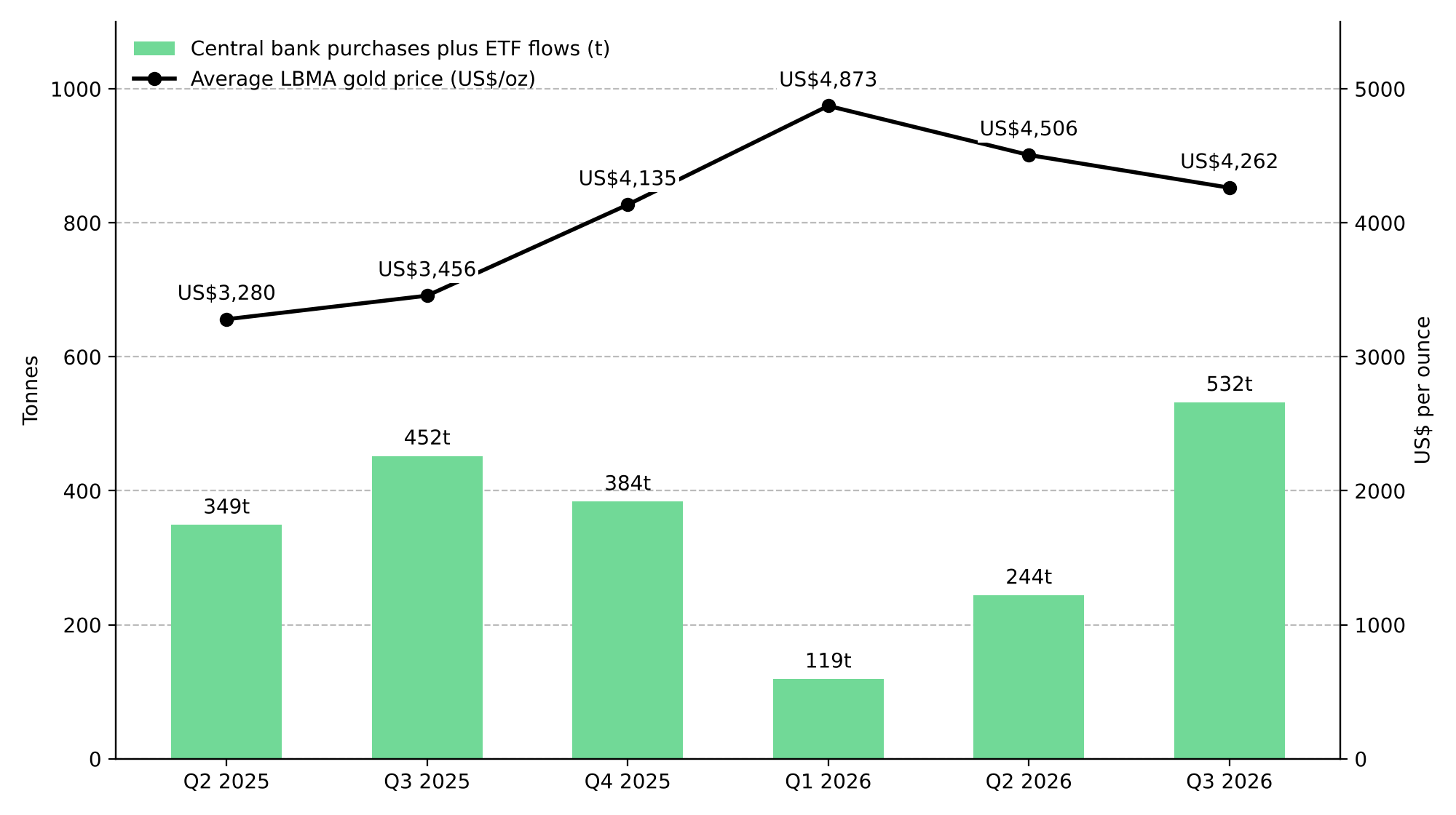
Central banks bought a net 321 metric tons in Q3 2026, up 42% year over year, while gold ETFs added 211 metric tons to reach record holdings of 4,256 metric tons. These purchases supported demand despite a 19% decline in bar-and-coin buying. Renewed Gulf escalation could lift oil prices and inflation concerns, potentially increasing Fed hike bets and pressuring gold.
Lower Rate Expectations Could Extend the Gold Recovery
CME FedWatch priced a 79% chance of a December hike, leaving gold vulnerable to higher yields. Louise Street, Senior Markets Analyst at the WGC, said rate pressures balanced potential support from geopolitical and financial risks.
Using Metals Focus data in the WGC’s August 24, 2026 mining-cost report, current gold prices imply US$2,350/oz above Q1 average AISC of US$1,785/oz, 24% below the first quarter record, assuming unchanged costs. Supportive flows and yields could lift gold toward US$4,200/oz above US$4,000. Citi’s November 4 note targets US$4,500/oz within three months if Hormuz reopens and the Yemen-Saudi conflict subsides by year-end.
November 6 payrolls could reset rate bets before the December 9 Fed decision. Below US$4,000 gold, producers with unchanged AISC of US$2,500/oz would retain less than US$1,500/oz above sustaining costs, highlighting lower-cost producers’ greater protection against price declines.
Lower Production Costs Cushion Miners Against Price Declines
Unhedged producers with AISC near US$2,500/oz have less room to absorb gold declines because labor and sustaining costs adjust more slowly than revenue. Price-linked royalties and cheaper diesel can partly offset the pressure, depending on royalty terms and fuel contracts.
At October’s US$3,869.85/oz low, unchanged AISC of US$2,500/oz would leave about US$1,370/oz above sustaining costs, 42% below the Q1 90th-percentile margin. Higher-grade ore could support cash generation where mine plans allow, while delaying essential sustaining work risks future production.
With a December hike widely anticipated, gold’s reaction will depend on the decision and guidance relative to market pricing. Central bank buying cannot prevent another decline, and Q1 costs may differ from current spending. Lower costs and stronger cash reserves give producers more capacity to fund operations through a retest of October’s low.
Institutional Gold Demand Shifts the Price Floor Away From Retail Buyers
Central bank purchases and ETF inflows supported demand as retail buying weakened, while lower oil prices and a weaker dollar helped gold recover. Continued buying could support prices, although higher yields or ETF outflows could reverse those gains.
Recycling fell to its lowest level since the fourth quarter of 2023, limiting supply from existing gold as mine output increased. Lower-cost producers have more room to fund operations through another price decline while retaining exposure to a recovery. That supports a selective contrarian case where valuations leave room for returns under conservative gold-price assumptions.
Analyst's Notes





Subscribe to Our Channel








Stay Informed