Madsen Open Below 1.3 Kilometers: 8 Depth Signals for West Red Lake Gold


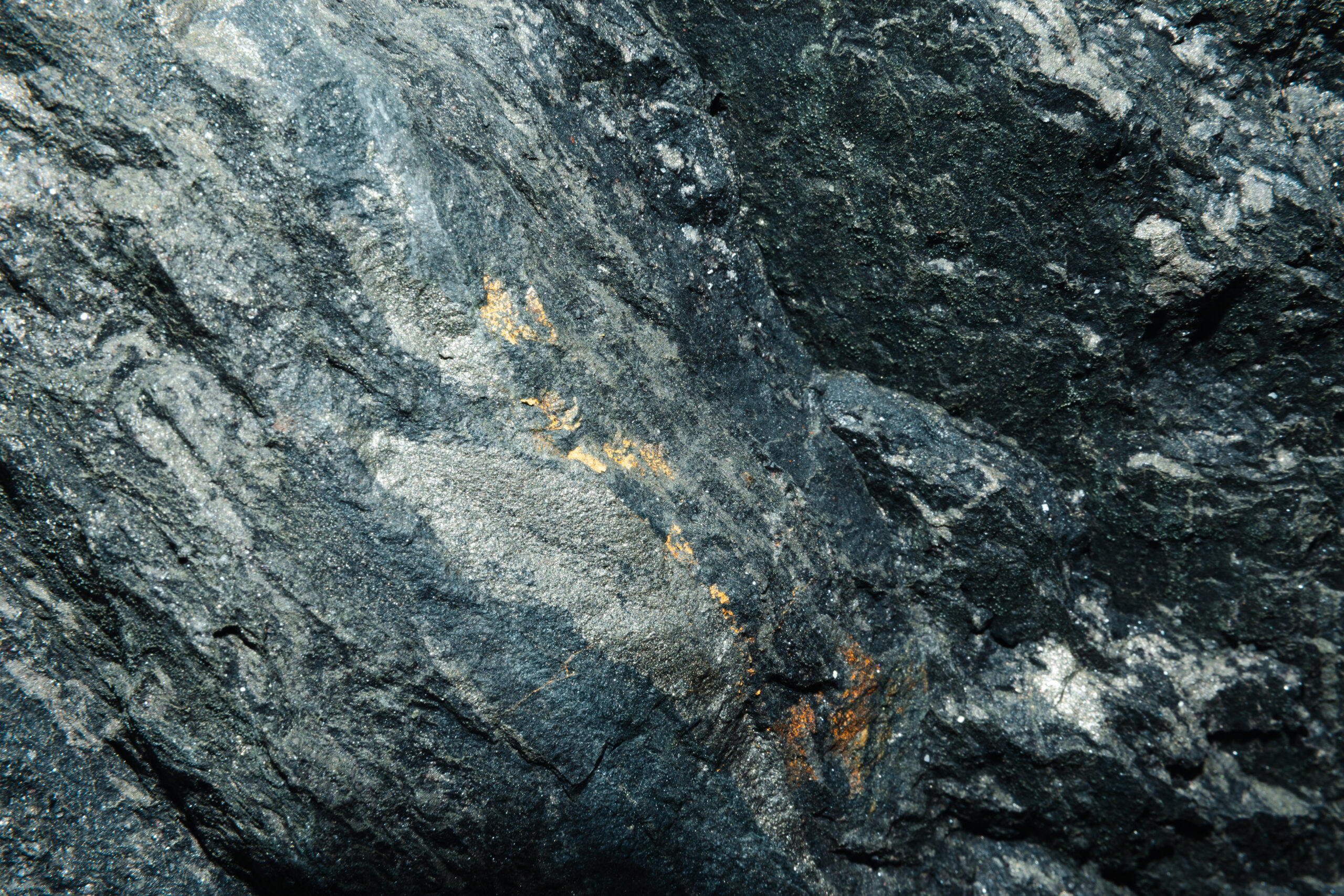
Madsen's 2026 drilling reached unmined ground at 650 to 700 meters, and the deposit is open below a defined depth of about 1.2 to 1.3 kilometers.
Project Overview
West Red Lake Gold Mines (TSXV: WRLG | OTCQX: WRLGF) declared commercial production at its 100%-owned Madsen Mine in Ontario's Red Lake Mining District on January 1, 2026. Guidance for 2026 is 35,000 to 45,000 ounces (oz) of gold, with about 60% weighted to the second half. The land package covers 47 square kilometers, and the company has completed more than 200,000 meters (m) of underground drilling over the 2 years to July 2026.
Near-term growth at Madsen comes from non-remnant mining areas, meaning ground that earlier operators never mined, in the 4447 and 904 complexes. The 904 Complex and the Fork satellite deposit are scheduled to enter the production profile in 2027. Below those areas, deep exploration is listed as a high priority.
1. Three Rounds of Mining in the Upper Reaches
Madsen's upper reaches were mined 3 times before West Red Lake Gold, while its deeper areas have seen less exploration and mining. Past production at Madsen totals 2.5 million ounces of gold. The deeper ground offers more known gold per vertical meter and more discovery potential, including unmined "jewelry boxes," the mining term for small pockets of very high-grade gold.
President and Chief Executive Officer of West Red Lake Gold Mines, Shane Williams, describes the move from remnant ground into fresh ore:
"The top of the deposit is very much a remnant of old areas. But now we're down into the part of the ore body that's less and less mined."
Higher grades are expected over the rest of 2026 as mining reaches the less-mined part of the ore body, by management's estimate.
2. Definition Drilling Reached Unmined Ground at 650 to 700 Meters
The 904 results released on September 22, 2026, came from the 13 and 14 Levels at depths of about 650 m and 700 m in non-remnant mineralization, and the 955 results in the same release came from the 12 Level at about 600 m. At 904, a block of intact gold mineralization, roughly 200 m on each side, was not historically mined. Full access to the whole zone is expected to allow larger stopes, the underground openings from which ore is extracted. The best 904 intercept was 176.04 grams per tonne (g/t) gold over 5.3 m, including 925.52 g/t over 1 m. Assays are uncapped, and true thickness has not been calculated, but it is expected to be at least 70% of the downhole length.
Williams singles out the newly defined 4447 area as ground no operator has worked:
"There's an area of non-remnant area that's never been mined before. It's been newly defined. It's clean ore. It's a higher grade."
The 904 Complex is in development for the first half of 2027, with drilling there aimed at defining high-grade lenses near existing infrastructure for 2027 mining.
3. Defined Depth Against 3-Kilometer Red Lake Systems
Madsen is defined to about 1.2 to 1.3 kilometers (km), while comparable Red Lake deposits go to 3 km and beyond. The Red Lake/Campbell system is defined to depths of more than 3 km, and Evolution Mining's current mine plan at its Red Lake mine extends to about 3,000 m.
Madsen lies on a similar stratigraphic horizon to Red Lake/Campbell, meaning the same layer in the regional rock sequence, with added potential recognized in Confederation rocks, a younger volcanic sequence in the Red Lake belt. Both systems host multiple parallel deposits, which at Madsen are South Austin, Austin, and North Austin-Derlak. Geophysical data traces the Madsen corridor beyond current workings, below the existing mine footprint. At the 8 Zone, Madsen hosts grades in ultramafic rocks similar to those of Red Lake/Campbell's high-grade ultramafic zones, at similar depths. Ultramafic rocks are igneous rocks rich in magnesium and iron, and at Red Lake/Campbell, they host exceptionally high grades, including Goldcorp's High Grade Zone.
4. High-Grade Intercepts Beneath the Main Deposit
Scattered high-grade intercepts in historical deep holes below the main Madsen deposit show mineralization continuing at depth. Two deep holes returned 34.6 g/t gold over 4.3 m and 14.3 g/t over 2.0 m. The South Austin extension also shows 14.96 g/t over 4.64 m and 11.38 g/t over 1.91 m. Around Derlak, the best value is 78.17 g/t over 0.9 m, and the 8 Zone extension shows 14.55 g/t over 2 m. No drill dates or true widths accompany these intercepts.
Closer to current mining, South Austin has 300 m of plunge, the direction a mineralized zone extends at depth, with multiple high-grade lenses that were scheduled for mining in the first half of 2026.
5. Drill Platforms From the Lower Austin Drift & 13 Level East Drive
West Red Lake Gold is developing an exploration drift, a horizontal tunnel, into the lower Austin at a depth of 750 m to test below the historic mining. No completion date accompanies the drift.
The 13 Level East Drive is the second route to depth. About 500 m of advance is planned in 2026, adding another mining front and providing drill access for expansion east of the current resource; the drive also enables deeper drill platforms. Work on the 13 Level East Drive toward Derlak is expected to advance in the second half of 2026, with additional mining fronts anticipated in 2027.
6. Upper 8 Extends the 8 Zone Model Toward Surface
Upper 8 is 8 Zone-style mineralization in the same ultramafic unit, about 750 m up-plunge of the 8 Zone and within 300 m of surface. Up-plunge means higher along the line the mineralized zone follows through the rock.
Fifteen of the 17 initial Upper 8 holes returned gold, with best results of 44.17 g/t over 1.3 m and 20.63 g/t over 0.5 m. The discovery is at an early stage and open in multiple directions, with potential for stacked lenses between the Upper 8 and the deeper 8 Zone. The 8 Zone itself holds a Probable reserve of 51,000 oz at 13.38 g/t.
7. Lower Campbell as the Reference Case for Depth Drilling
At Lower Campbell, part of Evolution Mining's Red Lake operation, 1 year of drilling added 246,000 oz of high-grade gold. One domain within the Lower Campbell resource grew from 256,000 oz at 4.56 g/t in December 2021 to 502,000 oz at 5.14 g/t in December 2022.
Design changes tied to metal price assumptions and lower cut-off grades also contributed to that resource growth, alongside new drilling data. The figures apply to Lower Campbell alone and carry no estimate for Madsen.
8. Depth Stays Outside the 2026 Drilling Focus
The 2026 underground program is focused on defining near-term mining inventory and growing the current resource in the Austin and South Austin zones. This strategy is expected to remain in place through 2026. The current resource includes 1,653,000 oz Indicated at 7.4 g/t and 366,200 oz Inferred at 6.3 g/t, at a 3.38 g/t cut-off grade and US$1,800 per ounce for gold. North Austin has mineralized domains defined over 0.5 km of strike and is open at depth and along-strike to the northeast. Williams ties the drilling horizon to mine planning 2 years out:
"We're drilling now into 2027, into 2028 material for the mine plan that allows us to plan that in a better sequence for access development, where we're mining, how we're mining, and where we're mining from."
Exploration below the main deposit runs alongside that program, through the lower Austin drift under development and the 13 Level East Drive.
Key Takeaways for Investors
- The September 22, 2026, 904 Complex results came from unmined ground at depths of about 650 meters and 700 meters.
- Madsen is defined to a depth of about 1.2 to 1.3 kilometers, compared with 3 kilometers and beyond at comparable Red Lake deposits.
- An exploration drift into lower Austin at 750 meters and the 13 Level East Drive are the planned platforms for deeper drilling.
- Upper 8 returned gold in 15 of 17 initial holes, about 750 meters up-plunge of the 8 Zone.
- Drilling through 2026 is focused on near-term mining inventory and resource growth in the Austin and South Austin zones.
Bottom Line
Madsen's 2026 drilling has moved into unmined ground at 650 m to 700 m, below the upper reaches that earlier operators mined 3 times. The deposit is defined to about 1.2 to 1.3 km and is open at depth. Comparable Red Lake deposits go to 3 km and beyond, and Evolution Mining's Red Lake mine plan reaches about 3,000 m. Scattered deep intercepts, including 34.6 g/t gold over 4.3 m, and the Upper 8 discovery near surface show gold outside the current mining areas. The 2026 program is aimed at near-term inventory, with the lower Austin drift at 750 m and the 13 Level East Drive as the planned platforms for drilling below it. Drill results from either platform are the next measurable step in testing Madsen at depth.
Analyst's Notes





Subscribe to Our Channel






Stay Informed