




Marimaca's Pampa Medina: 8 Signals the Copper System Is Bigger Than the Deposit


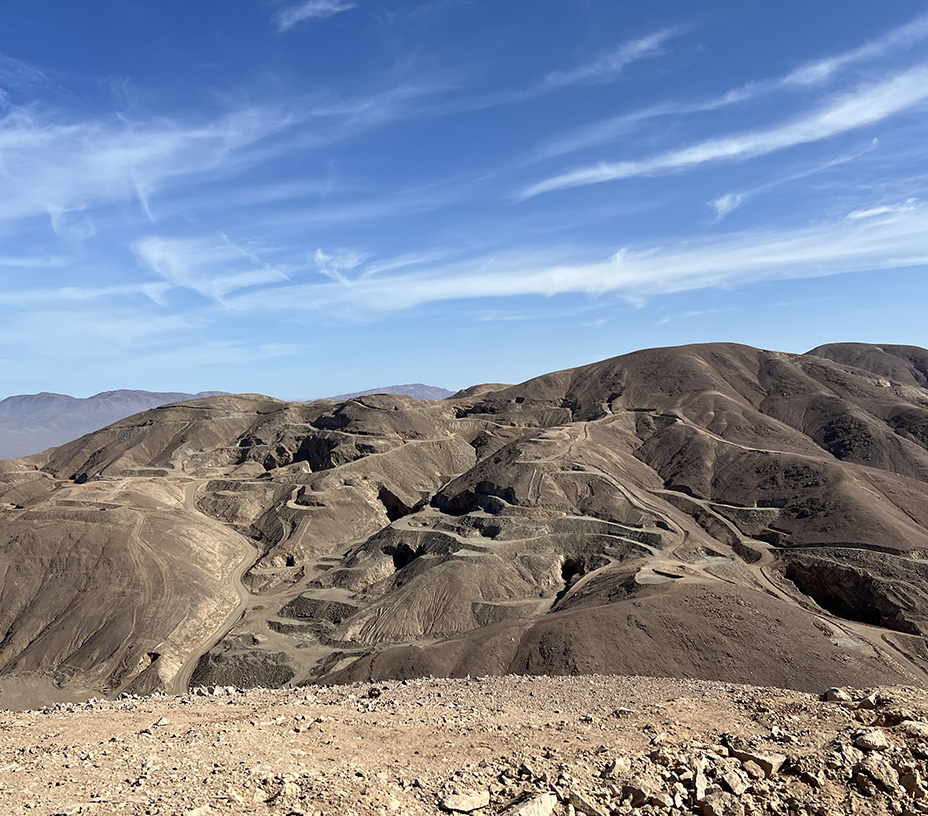
Marimaca's Pampa Medina drilling covers a corner of a 10 km to 12 km prospective basin in Chile. Eight signals the copper system is bigger than the deposit.
Project Overview
Marimaca Copper (TSX: MARI | ASX: MC2) is drilling Pampa Medina, a manto-style copper-silver system in the low coastal range of Chile's Antofagasta Region, approximately 25 kilometres (km) from the processing plant planned for the Marimaca Oxide Deposit (MOD), its development project with a completed definitive feasibility study (DFS) and a production target of 50,000 tonnes per year of copper cathode. Mineralisation at Pampa Medina runs from near-surface oxides of atacamite, chrysocolla, and secondary chalcocite into primary sulphide zones of bornite, chalcopyrite, covellite, and chalcocite at depth, with elevated silver accompanying the copper in both.
The surrounding Sierra de Medina land package came under a single operator for the first time in 2024, when Marimaca consolidated it. The question the current programme is built to answer is whether Pampa Medina is a single deposit or the first drilled corner of a district-scale system.
1. Stacked Mineralisation Across Three Host Units
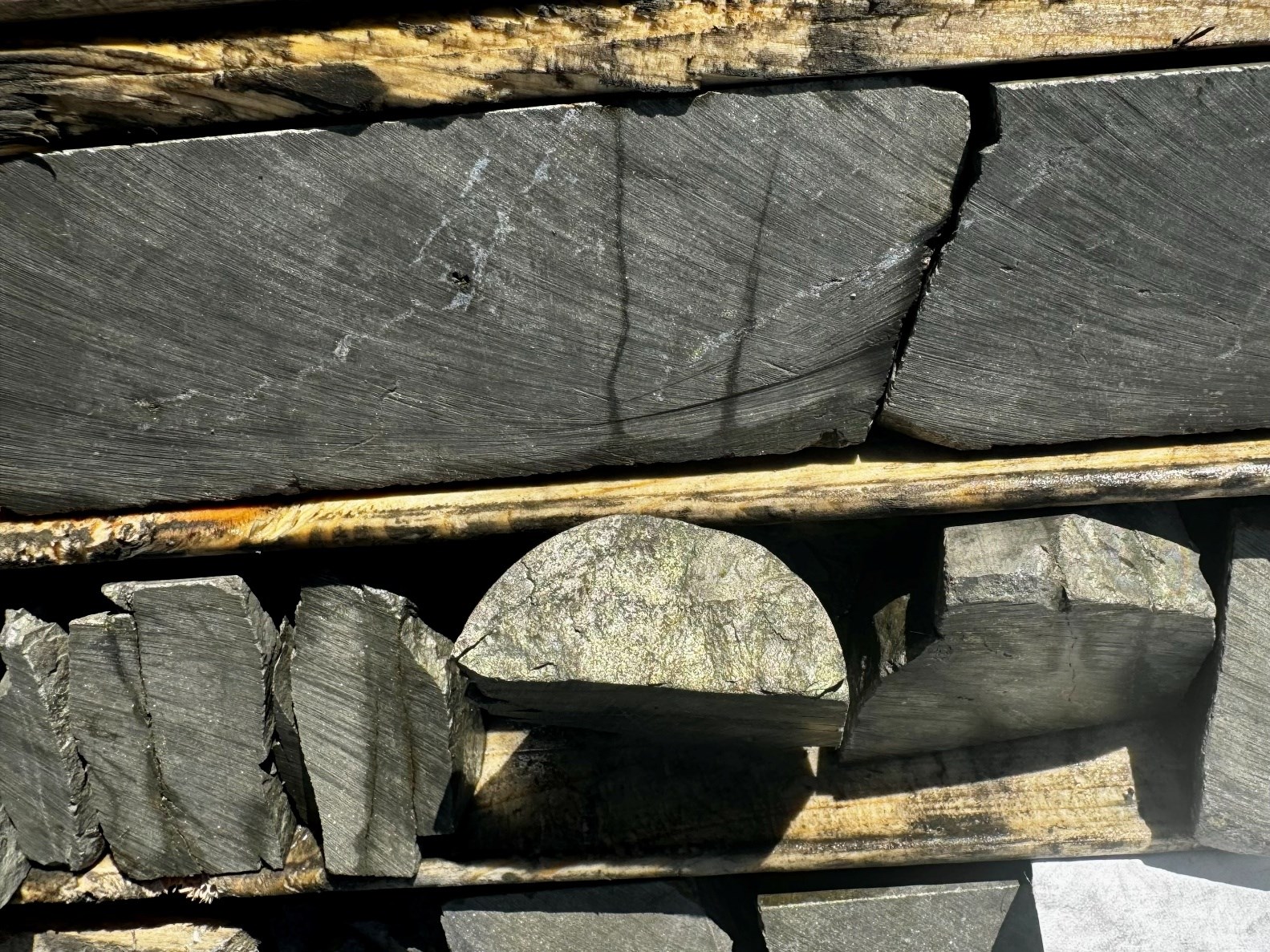
The copper at Pampa Medina does not lie in a single layer. The stratigraphy runs from upper andesitic volcanics through the Rencoret sedimentary unit of sandstones, conglomerates, tuffs, and black shales, into an Upper Palaeozoic metamorphic basement, and drilling has returned mineralised intervals in all three.
In the volcanics, oxide mineralisation returned 10 metres (m) at 0.31% copper and 2.8 grams per tonne (g/t) silver from a depth of 180 m. In the sediments, a 302 m interval at 0.62% copper and 2.7g/t silver from 558 m depth included 20 m at 2.65% copper and 13.9g/t silver, within which 6 m ran 6.11% copper and 24.0g/t silver from a depth of 574 m. A second manto beneath it returned 104 m at 1.01% copper and 4.7g/t silver from a depth of 664m, including 40 m at 2.04% copper and 11.1g/t silver. Reported intervals are downhole lengths, with true widths estimated at approximately 80% of them. Management characterises the sulphide intervals as stacked horizons, each with widths and grades it considers economic for underground sediment-hosted copper mining.
2. Step-Outs South & First Basement Intercepts
The July 2026 assays extended the system in two directions at once. Step-out holes drilled 300 m apart pushed the central high-grade bornite manto to the south, and the deepest drilling yet at the project intersected mineralisation in the basement metasediments for the first time, returning 66 m at 0.70% copper from 802 m depth, with silver assays pending at the time of the July 2026 release, including 6 m at 1.40% copper from 862m depth. Drilling 300m south of the step-out that extended the bornite zone returned basement intervals of 6 m at 0.77% copper and 2.0g/t silver from 940 m depth and 6 m at 1.05% copper and 8.3g/t silver from 1,006 m depth.
The deep intervals carry a caveat: barren post-mineral dykes trending west-northwest truncated the deeper mineralisation, locally disrupting its continuity. The basement intercepts nonetheless indicate potential for depth extensions beyond the previously defined host units.
3. Drilled Footprint Against Basin-Scale Geophysics
The active drilling is concentrated in a central area of interest (AOI) of approximately 2.0 km by 1.5 km. The geophysics reaches much further.
Chief Executive Officer of Marimaca Copper, Hayden Locke, is precise about the proportions:
"This area is about 10 to 12 kilometres north to south, and roughly 5 kilometres east to west. The Pampa Medina deposit, which we're drilling right now, is just in that little area there, and we're gradually extending it, but we see the potential to extend this significantly to the north and to the south."
The footprint he describes is prospectivity defined by geophysical surveying, not defined mineralisation, and the ground between the AOI and the basin margins has yet to be drill-tested.
4. Copper Evidence Across the Basin
The geophysics is not the only evidence beyond the deposit. The company has seen Pampa Medina-style sediment-hosted copper at several distinct points across the basin block, including at the Pia deposit, more than 15 km to the north. The region is historically underexplored, and multiple shallow oxide discoveries made across it were never followed up on, though management believes they would logically form part of a future mine plan.
Locke frames the basin evidence plainly:
"This is a very small subset of a basin which we think has the potential to be really extensive in terms of sediment-hosted copper."
The occurrences are surface and drill evidence of fertility rather than defined resources, and they sit well outside the AOI that has produced the reported intercepts.
5. Scout Drilling Through Gravel Cover
Gravel cover is why the wider basin is untested, and the current scout campaign is the means to get through it. Broad geophysics across the package has identified multiple targets that look like Pampa Medina to be drilled in the fullness of time. The scout holes are designed to penetrate the gravel that blankets the basin and test those lookalike targets directly.
Locke is direct about what a successful step-out would mean:
"We're underway with a scout drilling programme, which is all about getting through the gravel cover and identifying areas where we think this Pampa Medina-style sediment-hosted copper mineralisation is extensive across a much broader land package. If we have one drill hole that delivers, and it's a couple of kilometres step-out from Pampa Medina, that will be completely game-changing."
The condition is the substance: until a distant scout hole delivers, the basin case rests on geophysics and scattered surface evidence rather than drill-confirmed continuity.
6. Single-Operator Consolidation & the Cachorro Setting
A basin-scale programme only became executable when the ground came under one owner. Marimaca's consolidation of the Sierra de Medina package in 2024 placed the district under a single operator for the first time, and the company then reinterpreted the accumulated legacy geological data into a model that now guides drilling. Its August 2026 corporate presentation describes the company as a leading landholder in an emerging tier one discovery belt.
The stratigraphic setting adds the regional argument. Pampa Medina's mineralisation sits at the base of the Rencoret sediments and extends into the underlying metasediments, in the same position as Cachorro, Antofagasta Minerals' discovery, which stands at 300 million tonnes at 1.0% copper. Under the company's hub-and-spoke plan, satellite oxide deposits across the district would feed MOD infrastructure, and management believes the Pampa Medina drilling has already extended the oxide resource in a way that could push mine life well beyond the 13-year reserve life in the DFS. The 2026 programme carries three priority goals: defining the high-grade central AOI, delineating the shallow oxide extensions, and testing regional extensions highlighted by the geophysics.
7. Footprint & Thickness Against Kakula
Management's benchmark for what the basin could hold is the Kakula selective mining zone, the core and highest-grade portion of the Kamoa-Kakula complex in the Democratic Republic of the Congo. In management’s account, drawn from that operator's published materials, Kakula is a continuous flat-lying sheet, roughly 6 km long by 1.5 km wide, hosting 400 million tonnes of ore at about 3% copper at a 1% cutoff, with an average true thickness of around 12 m and no byproducts.
The contrast Marimaca draws is vertical. Pampa Medina's average true thickness is, in some cases, more than 10 times Kamoa's, with multiple stacked horizons of high-grade mineralisation, so in Marimaca’s reading, equivalent tonnage does not require as large a surface footprint. Management puts the area within reach of the tier one category on that basis, with the condition attached that the drilling has to hang together through infill and step-outs. Two physical differences reinforce the comparison: Kamoa-Kakula sits beneath a large aquifer whose water inflows complicate mining, while Pampa Medina is dry with no overlying aquifer units. Kamoa-Kakula is landlocked, while Pampa Medina sits in the low coastal belt about 50 km from a port.
The comparison is management's framing of a third party's published figures, not an equivalence established by a resource estimate.
8. Programme Scale & the Early 2027 Maiden Resource
The tests of the basin thesis carry dates. As of July 2026, six rigs were on site, running step-outs and infill simultaneously, as part of a 30,000-metre extensional and delineation programme designed to define the deposit footprint. Silver assays for the 66 m basement intercept in the deepest hole were pending at the July 2026 release, and results from the scout holes across the wider package have no stated timing.
The dated marker is the resource. The company is targeting an initial maiden resource for the Pampa sulphides, to be published together with the oxides in the early part of 2027. Infill and step-out results size the deposit, the scout holes test the ground beyond it, and the resource estimate is the first formal statement of tonnage.
Key Takeaway for Investors
- Drilling at Pampa Medina has intersected mineralisation in the volcanics, the Rencoret sediments, and the basement metasediments, defining a vertically stacked system rather than a single mineralised horizon.
- The drilled area of interest, approximately 2.0 by 1.5 kilometres, lies within a geophysically prospective footprint of 10 to 12 kilometres north to south and roughly 5 kilometres east to west, most of which remains untested.
- A scout drilling programme is underway to get through the basin's gravel cover, and management frames one successful multi-kilometre step-out hole as the proof point that would change the scale of the story.
- Management benchmarks the deposit against the Kakula selective mining zone and puts its stacked thickness in places at more than 10 times Kamoa's, a comparison conditional on drilling continuity holding together.
- A maiden mineral resource estimate combining the Pampa Medina oxides and sulphides is targeted for early 2027.
Bottom Line
Pampa Medina's reported drilling supports a deposit growing in three host units simultaneously; the strategic claim is that this deposit is the first tested corner of a 10 to 12 km basin. The evidence for the second claim is geophysics, copper occurrences across the block, including Pia, and a stratigraphic setting shared with Cachorro, and its tests are the scout programme now underway and the maiden mineral resource estimate targeted for early 2027. Until a scout hole delivers, the drilled deposit is what the results support, and the basin remains the claim under test.
Analyst's Notes





Subscribe to Our Channel







Stay Informed


