




Why Persistent Middle East Supply Risk May Reshape What Oil Investors Prioritize


Hormuz disruption, depleted reserves & shale decline may favor juniors in under-supplied markets, one executive says. Türkiye's Gabar fairway shows how.
- Continued conflict risk around the Strait of Hormuz, reduced Saudi Arabian shipping volumes, and bypass pipeline projects still years from completion are keeping oil prices elevated, with a range of $70 to $90 per barrel cited over the next 2 to 3 years.
- Depleted strategic petroleum reserves in the US, alongside declining US shale oil production, are adding further support to prices and directing investor attention toward international supply.
- Amid this backdrop, near-term production ramp-ups and mergers and acquisitions (M&A) potential are becoming more relevant criteria for oil equities, particularly among juniors with a workable route to market.
- Countries with structural oil-import deficits have an incentive to accelerate domestic production, creating conditions in which under-supplied jurisdictions can offer a distinct set of opportunities for junior developers.
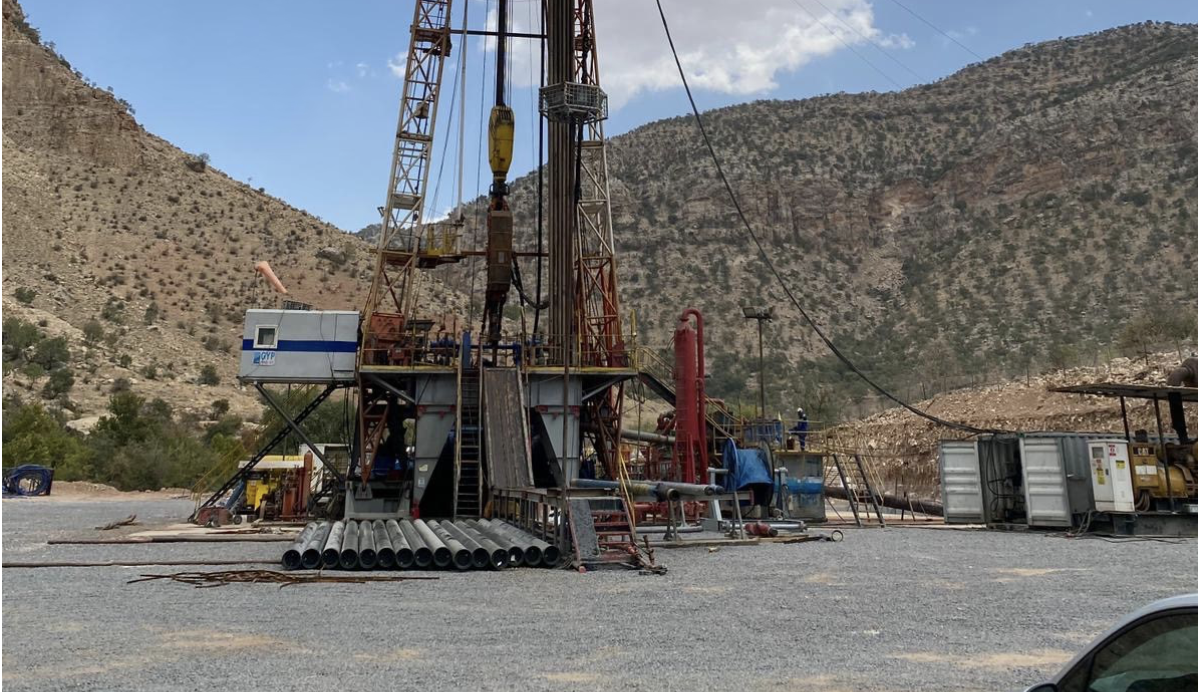
- Türkiye's Gabar oil fairway, where regional production has grown from zero to over 80,000 barrels per day in 5 years, illustrates how this import-substitution pattern can play out in practice.
Oil Markets Face A Multi-Year Repricing Of Risk
Oil markets have spent much of 2026 trading in an elevated, volatile band, with prices moving sharply in response to developments tied to conflict risk in the Middle East. For investors positioned across the oil-equity spectrum, from established producers to pre-production juniors, the more consequential question is not where the next headline price swing lands, but how a multi-year period of supply-side uncertainty may be changing what criteria matter most when selecting oil equities.
Hormuz Disruption, Reserve Drawdowns, & Shale Decline
The conflict affecting Iran has disrupted shipping through the Strait of Hormuz, with Saudi Arabia reportedly moving only around 60% of the export volumes it shipped before the crisis, even as it continues to route what oil it can through the strait. Six pipeline projects are underway to bypass the strait, according to Dune Oil, though these are multi-year undertakings, meaning stable Middle East supply is unlikely to return for at least a couple more years.
President and Chief Executive Officer of Dune Oil (CSE: DUNE | OTCQB: TRLEF) Scott Lower is direct about how long the conflict itself is likely to persist:
"The current conflict is going to continue in the strait with Iran for some time. It's not going to end anytime soon, I don't believe, without a complete capitulation by one side or the other."
Compounding the disruption, Lower points to the strategic petroleum reserve in the US sitting at its lowest level in several decades, requiring sustained purchasing to rebuild, and describes reserves in China and Europe as running low as well. Shale oil production in the US is also described as entering a decline as reservoirs deplete, a factor linked to the US looking toward alternative international sources of supply. Taken together, the working price range cited is $70 to $90 per barrel over the next 2 to 3 years, a range expected to stay volatile depending on the state of negotiations in the region.
What This Supply-Risk Backdrop Rewards
A market in which fully priced or overpriced producers have already captured most of their available upside redirects investor attention toward juniors positioned to bring new production online. That favors companies that can demonstrate a credible, near-term path to output rather than early-stage exploration alone.
Mergers and acquisitions (M&A) optionality is cited as a relevant criterion as well, specifically, companies positioned to acquire existing producing fields and apply US or Canadian technology to increase output, as well as pre-production opportunities with a defined ramp-up plan.
Lower frames the opportunity set in direct terms:
"The junior companies who have potential to bring on production are certainly where investors should be looking for their best bang for the buck."
That view reflects one industry participant's read on where capital may find value, rather than confirmation that a broad-based rotation into junior oil equities has already occurred. It does, however, point to a shift in emphasis: near-term production ramp-ups, M&A potential, and low capital expenditures (CAPEX) routes to market are being weighed more heavily than they might be in a calmer pricing backdrop.
Why Under-Supplied Markets Matter
A structural gap between domestic oil demand and domestic production gives a country a direct incentive to accelerate its own upstream development, both to cut its import bill and to reduce exposure to exactly this kind of supply disruption. International development, not domestic US or Canadian output, represents the bigger growth opportunity for investors, given the physical and regulatory limits on expanding fracking-based production at home; jurisdictions that pair a large, unmet demand base with underdeveloped but proven geology offer a different risk-reward profile than mature, fully explored basins, since new domestic supply there only needs to displace imports rather than global trade flows.
Türkiye As A Case Study
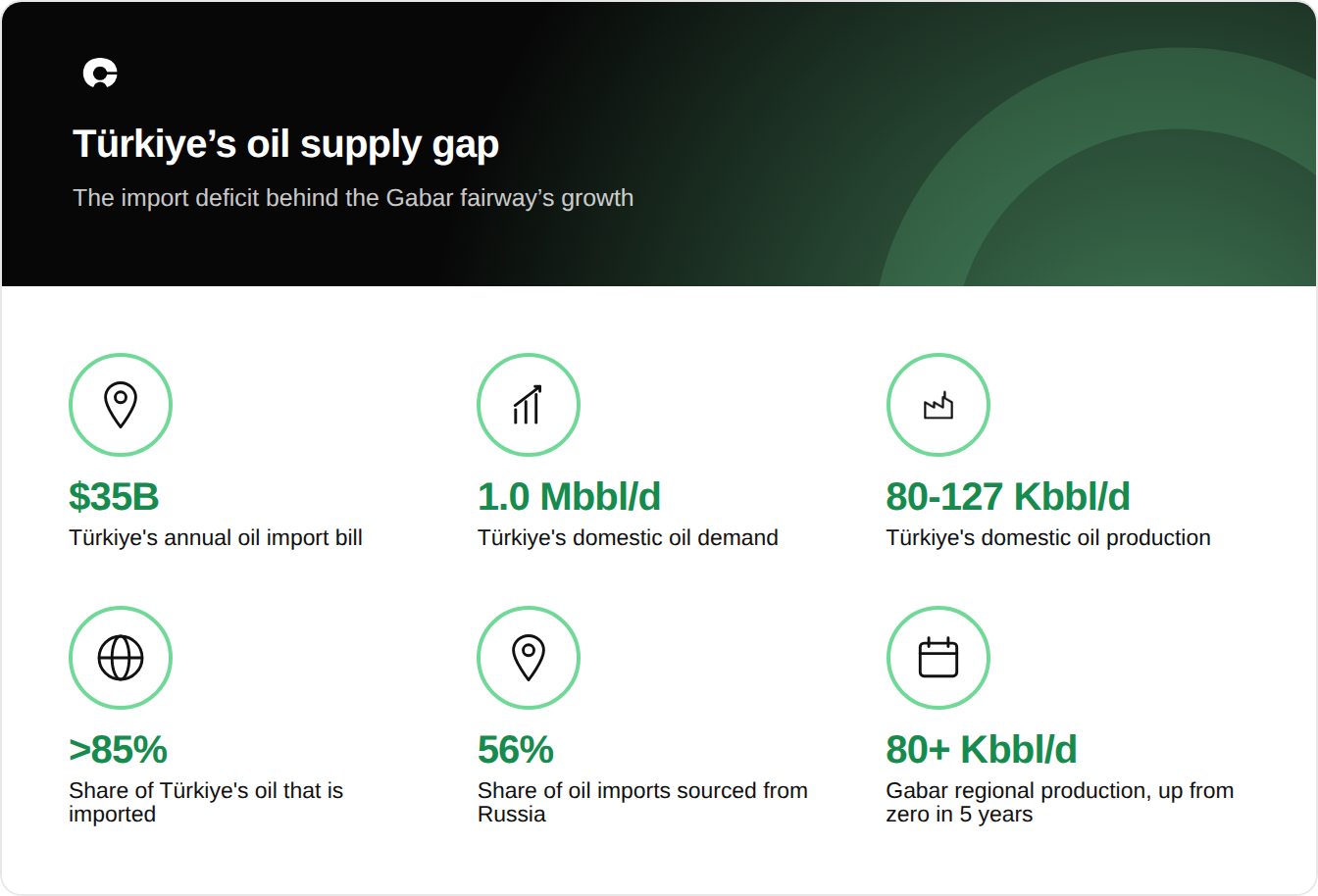
Türkiye illustrates this pattern concretely. Its oil-import bill runs to approximately $35 billion per year, against domestic demand of roughly 1.0 million barrels per day, with domestic production estimated at 80,000 to 127,000 barrels per day. Either figure leaves over 85% of the country's oil imported, roughly 56% from Russia and 16% from Iraq. Against that deficit, the Southeastern Gabar region has become Türkiye's fastest-growing onshore oil trend, with regional field production rising from zero to over 80,000 barrels per day in 5 years and now supplying more than half of the country's onshore output, according to Daily Sabah and Anadolu Agency reports from 2025.
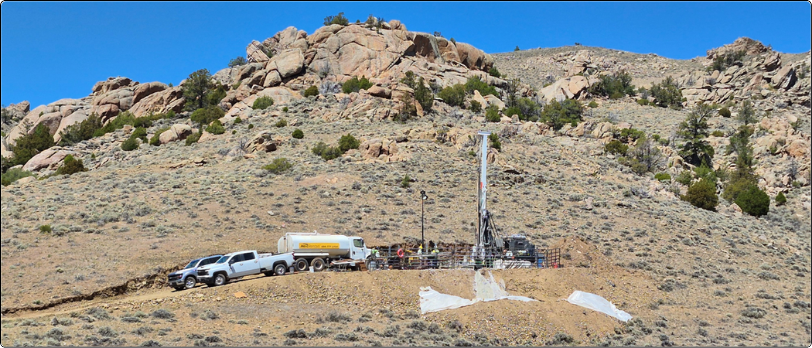
As one example within that fairway, Dune Oil has an agreement to earn a 29% working interest in the M47 exploration block, which sits between several producing fields operated by TPAO; as of the presentation date, the company had funded roughly $800,000 of the approximately $15 million work-program commitment required to earn that interest. The North Field discovery is described as light, conventional oil, with a near-term development plan centered on trucking output roughly 130 kilometers to an existing refinery rather than building new pipeline infrastructure. That combination, an established regional fairway paired with a low-capital-intensity route to market, illustrates, rather than confirms, the kind of positioning this backdrop may reward.
The Remaining Risks
None of this removes the constraints that juniors face even when market conditions are supportive. Capital access remains a persistent limiting factor, particularly for smaller companies competing for financing against larger, already-producing peers. Infrastructure and route-to-market arrangements, whether trucking, pipeline capacity, or refinery access, can also determine how quickly a discovery converts into cash flow, and are not guaranteed to be available or economic in every jurisdiction.
Operating in regions tied to active geopolitical risk carries its own exposure, from permitting and regulatory processes to the broader uncertainty of operating near an active conflict zone, even when a specific project is physically distant from the disruption. Commodity-price volatility itself remains a risk to any thesis built on a sustained period of elevated prices, and today's policy treatment of energy is not guaranteed to persist.
Industry Outlook
Lower's outlook keeps prices elevated over the next 2 to 3 years, contingent on how the Iran conflict resolves and how long it takes shipping routes through the Strait of Hormuz to normalize. The thesis outlined here is worth testing rather than assuming. It would be reinforced by continued capital flowing into juniors with near-term production ramp-up potential in under-supplied jurisdictions, and by import-dependent markets such as Türkiye sustaining or accelerating domestic development. It would be weakened by a faster-than-expected resolution in the Middle East that unwinds the current risk premium, or by juniors in these markets struggling to secure financing despite the stated investor appetite.
FAQs (AI-Generated)
Analyst's Notes





Subscribe to Our Channel


Stay Informed


