Gold Slips to $4,051 as Oil Rally Fuels Fed Hike Fears


With gold well below its January peak and diesel bills climbing, low-cost miners with fuel hedges in place are best placed to protect cash until prices recover.
Oil Rally Pressures Gold, Creating Lower Entry Prices
Spot gold fell 0.2% to $4,050.55/oz as oil rose more than 1% following an attack on a Saudi refinery, reinforcing concerns that energy inflation could keep Fed rates higher. Higher rates reduce gold’s appeal by increasing the interest income forgone from holding it, while higher fuel bills squeeze mining margins.
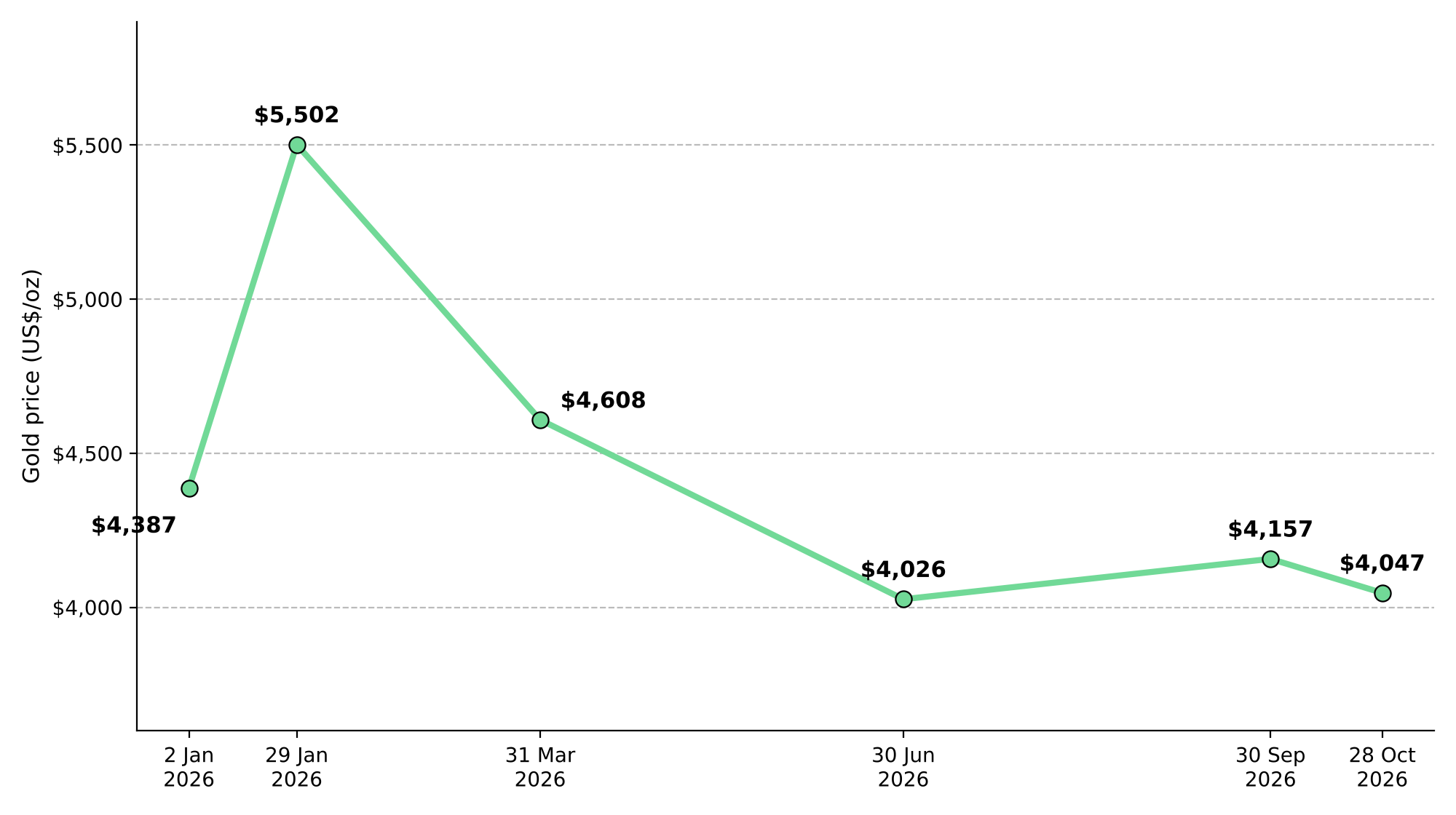
Gold trades 26.4% below January’s $5,501.70/oz LBMA benchmark peak, offering a lower entry price for bullion exposure. The World Gold Council’s Q1 2026 global average all-in sustaining cost of $1,785/oz provides a historical benchmark, but subsequent fuel increases could narrow mining margins. Low-cost producers with adequate funding offer recovery potential with less pressure to sell new shares during a downturn.
Diesel’s 54% Jump Raises Mining Costs
Diesel powers haul trucks and generators, so higher fuel prices raise operating costs at open-pit and remote gold mines. Metals Focus’s analysis published by the World Gold Council found US diesel prices rose 54% over Q1 2026. Fuel inventories, hedges and supply contracts delay the impact on mining costs, giving protected producers more time to preserve cash.
Higher oil prices can also raise inflation, reinforcing the case for higher Fed rates and making interest-bearing assets more competitive with gold. Lower oil prices could support bullion by reducing pressure for rate hikes while improving mining margins through lower fuel bills.
Lower Fed Hike Odds Could Support Producer Margins
The WGC and BCG’s base case targets digital-gold growth from $45-55 billion to $160-170 billion by 2031, assuming fewer adoption barriers and unchanged gold prices. David Tait, Chief Executive Officer at the World Gold Council, said demand cannot scale without supporting infrastructure.
Using WGC Q1 2026 data, Crux Investor calculates that costs near $2,500/oz leave about $1,550/oz above sustaining costs, 34% below Q1 with costs unchanged. A recovery to Reuters’ $4,495/oz annual average forecast would add about $445/oz if costs stayed fixed.
Lower hike odds could support gold, while adequate funding and fuel protection help producers retain recovery potential.
Fuel Inflation Gives Hedged Miners a Cash Flow Advantage
Metals Focus found that fuel inventories, hedges and supply contracts protected larger producers from immediate cost increases, while juniors generally had less protection. Lower fuel exposure helps preserve cash during a gold downturn.
OceanaGold had about 80% of annual diesel use hedged, limiting immediate fuel-price pressure. Check each holding’s latest disclosed hedge coverage and expiry to assess when higher costs could reach cash flow.
With costs unchanged, a 10% gold recovery would increase a $1,550/oz spread above sustaining costs by about 26%; an equivalent decline would reduce it by the same proportion. Physically backed gold ETFs offer bullion recovery exposure without direct mining-cost risk.
Cheap Gold Rewards Miners Built to Wait Out Higher Rates
Oil-driven inflation fears keep Fed hike odds high and gold well below January’s peak, while higher diesel bills cut into mining margins. Producers with low costs and fuel hedges in place keep more cash through the squeeze and stay positioned for any move toward the $4,495/oz forecast.
A lower share price counts as an opportunity only where hedge coverage and funding can carry a business through a longer downturn. Hedge expiry dates mark when higher fuel costs reach cash flow, and a drop in oil prices or in hike odds would ease pressure on gold and on margins at the same time.
Analyst's Notes





Subscribe to Our Channel








Stay Informed