Operational Execution Drives Production Acceleration & Re-Rates enCore Energy's US Uranium Investment Case


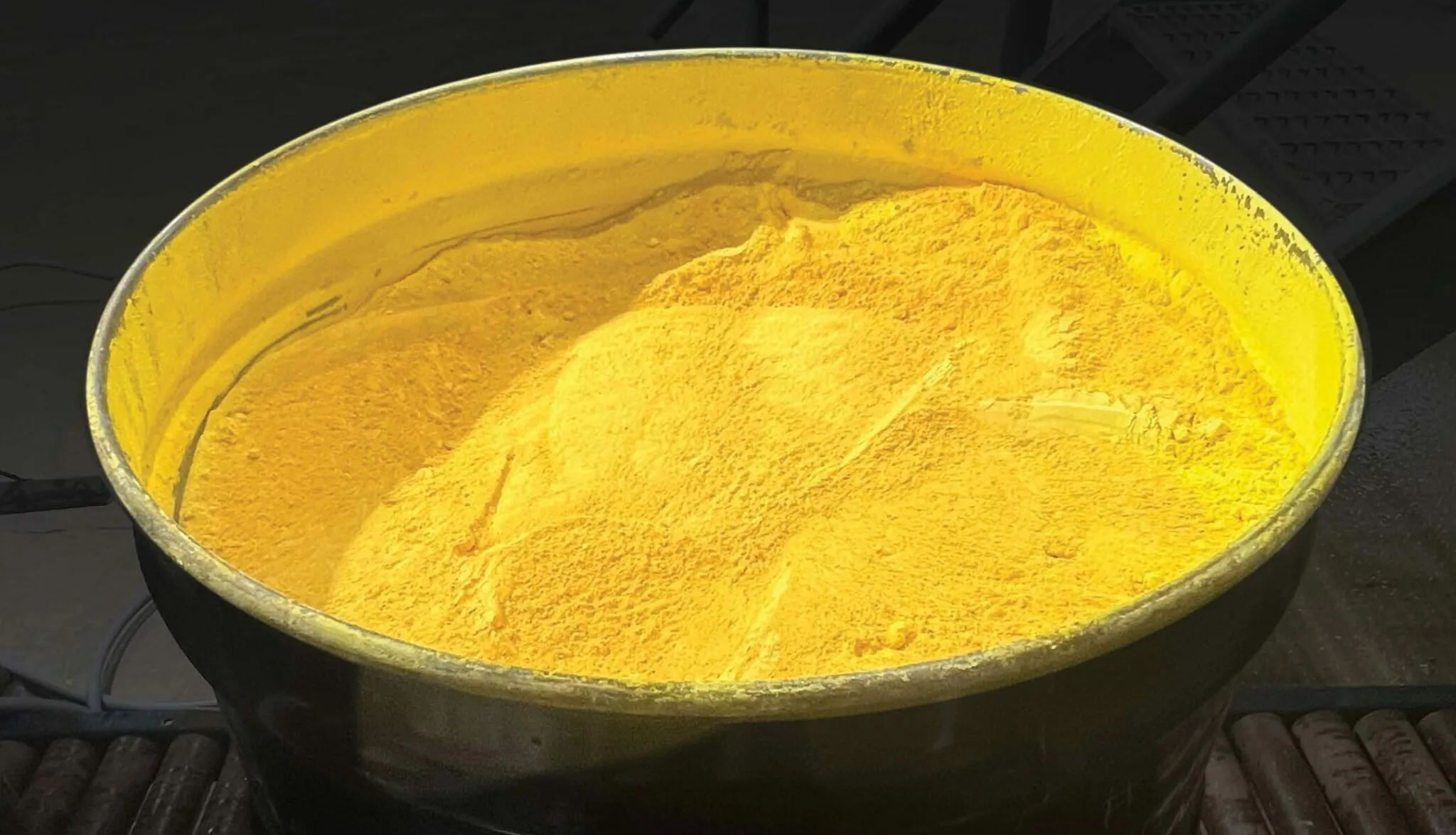
enCore Energy's 80%+ faster wellfield installations demonstrate how execution speed drives uranium equity re-rating amid structural supply deficits.
- Operational urgency has become a differentiator in the US uranium sector, where execution speed now matters as much as resource quality amid structural supply deficits.
- enCore Energy's operational metrics, notably a step-change in wellfield installation times and drilling throughput, demonstrate a measurable shift from development optionality to production delivery.
- Production acceleration directly impacts cash-flow timing and net present value, particularly in in-situ recovery uranium operations that function on recovery curves rather than conventional decline profiles.
- Institutional-grade capital access has enabled enCore to fund this acceleration without balance-sheet stress or near-term dilution, reinforcing execution credibility.
- Permitting visibility and asset rationalisation position the company to sustain production momentum while unlocking latent value across its broader asset base.
Uranium Supply Constraints & Shifting Investor Priorities
The uranium market continues to operate under structural supply constraints that have persisted for several years. Geopolitical tensions affecting Russian material flows, extended lead times for new mine development, and declining secondary supplies have collectively tightened the market. Utilities seeking long-term contract coverage face a limited pool of reliable suppliers capable of delivering near-term pounds.
This supply-demand imbalance has shifted investor behaviour in measurable ways. Capital allocation within the uranium equity space increasingly favours producers demonstrating cost discipline, jurisdictional certainty, and executable production timelines rather than companies offering long-dated exploration optionality. The premium once assigned to resource scale has migrated toward operational credibility.
Execution as an Analytical Framework
Execution risk is now priced into uranium equities with greater precision than in previous cycles. Operational performance, measured through wellfield installation rates, drilling throughput, and recovery efficiency, has become a re-rating lever for companies capable of demonstrating measurable progress.
enCore Energy presents a case study in how operational discipline can materially alter production trajectories. This assessment examines the company's positioning based on available operational and financial data from mid-2025, with particular attention to metrics that institutional investors use to evaluate execution credibility in the in-situ recovery uranium sector.
Operational Restructuring & Measurable Output
The relationship between management changes and operational outcomes often remains ambiguous in resource equities. Markets frequently discount leadership transitions as reactive governance measures rather than catalysts for fundamental improvement. enCore Energy's trajectory through mid-2025 offers an opportunity to examine whether process-driven operational resets translate into quantifiable production gains.
Management Transition & Market Response
enCore underwent management restructuring in early 2025, a move initially met with the skepticism typical of such announcements. The critical question for investors was whether the change represented a genuine operational reset or a headline-driven response to underperformance.
William Sheriff, Executive Chairman of enCore Energy, addressed the intent behind this transition:
"What we've done in the four months since then is implement the plan and overachieve what we'd expected to do. Our production rate on a daily basis has gone depending on what time frame you're measuring it against, from up 200% to up 300%."
Quantifying Operational Improvement
The most significant metric for evaluating in-situ recovery operations is wellfield installation velocity. The time required to bring new production and injection wells online directly determines a company's ability to sustain and expand output.
enCore's operational data through mid-2025 reflects substantial improvement in this metric. Average well installation time decreased from approximately seven days to roughly 1.3 days, representing a reduction of more than 80 percent. According to the company's corporate presentation, daily production averaged 2,678 pounds per day in June 2025, up from 2,103 pounds in May and 1,942 pounds in April.
William Sheriff elaborated on the significance of installation velocity:
"The biggest significant metric that we look at internally is our number of days average to put a new well on... We went from roughly a little over seven days average of getting a production or injector well in to just about 1.3 now. That metric is rather profound, but it really explains that in order to up your production, you've got to get more wells in the ground."
In-Situ Recovery Economics & Production Dynamics
In-situ recovery uranium operations differ fundamentally from conventional mining in ways that carry direct implications for financial modelling and valuation. Understanding these distinctions is essential for investors evaluating companies in this subsector.
Recovery Curves Versus Decline Profiles
Conventional mining operations typically follow depletion-driven decline curves, where production naturally decreases as ore grades diminish and accessible reserves are exhausted. In-situ recovery operations function differently. Production from individual wellfields follows recovery curves that can be influenced by operational intensity, with total recoverable pounds remaining relatively constant while the timing of extraction varies based on execution capability.
This distinction carries significant financial implications. Accelerated recovery compresses cash-flow timing, improving net present value and internal rate of return even when total recoverable pounds remain unchanged. For investors applying discounted cash-flow models, execution speed directly affects valuation outputs.
Operational Requirements for Accelerated Recovery
Faster recovery rates create logistical demands that must be managed to sustain production. As wellfields deplete more rapidly under accelerated extraction, operators face pressure to replenish drilling inventory and bring new wellfields into production at a corresponding pace.
enCore has responded to this dynamic by expanding its drilling capacity. The company reported approximately 24 drill rigs in operation as of late 2025, with plans to expand further. The company has also rationalised contractor relationships to protect margins while maintaining drilling throughput.
William Sheriff addressed the operational implications of accelerated recovery:
"We prefer to look at it in terms of a recovery curve. We're recovering the field's potential in a much quicker time, which is positive in that it accelerates your cash flow, but it does put the demand upon you to react constantly at a higher rate in terms of replenishing that and drilling ahead of it."
Capital Structure & Financing Flexibility
Access to capital on favourable terms has emerged as a competitive differentiator in the uranium sector, where development-stage companies often face dilutive financing options or restrictive covenant structures that limit operational flexibility.
Convertible Note Structure & Terms
enCore completed a $115 million convertible note offering, upsized from an initial $75 million, with terms that compare favourably to typical financing arrangements in the sector. The note carries a 5.5 percent coupon with an August 2030 maturity, is unsecured, and does not include restrictive covenants that would constrain operational or strategic decisions.
William Sheriff characterised the significance of these terms:
"The cost of capital is something we've never seen before in terms of a five and a half percent coupon on a non-secured note... Given the structure of being a convert that's payable in cash or stock, unsecured, it gives us unparalleled flexibility. It doesn't tie our hands as to what we can do."
Investor Composition & Market Implications
The composition of participants in the convertible offering provides additional information for equity investors. Convertible notes are frequently purchased by hedge funds that immediately offset their position by shorting the underlying equity, creating selling pressure and increased volatility.
enCore's offering attracted a different investor base. Long-only institutional investors comprised approximately 40 to 50 percent of participants, according to William Sheriff, resulting in lower-than-typical short interest of approximately 12 percent following the raise, compared to the 20 to 25 percent typically observed in hedge-fund-dominated convertible offerings.
"While traditionally converts are done almost exclusively to hedge funds, roughly 40, 45, 50 percent of ours were done with long holds... Typically hedge funds do a convertible note and then immediately the next day offset that by shorting your stock, and you could expect 20 to 25 percent short if you're 100 percent hedge funds. We saw about 12 percent."
Asset Base & Resource Extension
Sustaining production acceleration requires a resource base capable of supporting continued wellfield development. enCore's approach to resource extension emphasises capital efficiency through reinterpretation of existing data and strategic acquisitions within established geological trends.
Data Reinterpretation at Alta Mesa
The Alta Mesa property in South Texas contains substantial historical drilling data accumulated over decades of development. enCore has undertaken a granular reinterpretation of this dataset, moving from global resource averages to horizon-specific modelling that identifies extensions within existing permits and infrastructure envelopes.
William Sheriff described the results of this analytical work:
"We're seeing new trends emerge within that giant body of data. Our first success story out of that is what we call the Wellfield 3 extension… It's certainly an extension of life to the main area, but it's opening a whole new chapter, or maybe perhaps six or seven new chapters."
Strategic Acquisition & Geological Continuity
enCore completed the acquisition of the Tacubaya project, which lies immediately east and down-dip from existing resources at Alta Mesa, representing geological continuity across administrative boundaries.
William Sheriff explained the strategic rationale:
"We recently announced the acquisition of Tacubaya, which is a project immediately to the east and down dip of our current resources. The geologic accumulation of uranium didn't stop at a property boundary, so it's been a high priority for us and one that we're really glad to have."
Permitting Framework & Timeline Visibility
Permitting uncertainty represents a significant risk factor for US uranium projects. Regulatory timelines in the sector have historically been opaque, with schedule slippage common and accountability mechanisms limited.
Fast-41 Designation & Process Transparency
enCore's Dewey Burdock project in South Dakota received Fast-41 designation on August 28, 2025, a federal process established to improve coordination among regulatory agencies and provide timeline transparency for major infrastructure projects.
WilliamSheriff outlined the implications:
"Recently our South Dakota project got Fast-41… It gives you a much more certain and much more acceptable timeline to get through all of your filing... It puts a burden on the company to meet their timelines because it's completely transparent. It's available on the government websites… It's good pressure; it's incentivised pressure."
Portfolio Rationalisation & Corporate Focus
enCore has created a separate entity, Verda Energy, to hold its New Mexico assets, with plans for a hybrid spin-out structure. The company has indicated it intends to retain approximately 65 to 70 percent ownership while distributing 70 percent of that retained interest to shareholders.
William Sheriff described the planned structure:
"New Mexico, we'd created a new entity and we'll be doing a hybrid spin-off, hopefully before the end of this year. We will be putting out 70 percent of our interest that we retain in that company, Verdera Energy. 70 percent of enCore's retained interest will be spun out or dividended out to our shareholders."
This corporate simplification, if completed as planned, would sharpen operational focus on the company's core Texas and South Dakota production assets.
Cost Structure & Risk Considerations
Evaluating the sustainability of production acceleration requires examination of cost positioning and identification of risks that could affect execution.
In-Situ Recovery Cost Dynamics
In-situ recovery operations typically feature lower capital intensity than conventional mining, with operating costs representing a larger proportion of total expenditure. This cost structure creates operating leverage to uranium prices while limiting upfront capital requirements.
Monitoring Points for Investors
Several risk factors warrant ongoing monitoring. Execution fatigue may emerge as operational intensity scales, potentially affecting efficiency metrics. Contractor availability in the South Texas oilfield services market could introduce cost pressures or capacity constraints. Regulatory pacing, while improved through Fast-41 designation, remains subject to agency resource constraints and policy changes. Capital discipline as production accelerates will determine whether margin expansion accompanies volume growth.
The Investment Thesis for enCore Energy
The structural characteristics of the current uranium market create a specific set of considerations for investors evaluating production-stage companies in the sector.
- Structural supply deficits elevate the value of near-term, executable production relative to development-stage optionality.
- In-situ recovery economics generally favour operators capable of accelerating recovery without proportional cost inflation.
- Execution speed directly influences cash-flow timing, net present value uplift, and the potential for valuation re-rating.
- Jurisdictional certainty and permitting transparency may reduce discount rates applied by institutional investors to US-based projects.
- Capital structures that preserve flexibility support sustained operational momentum without balance-sheet constraints or dilutive financing requirements.
- Resource extension through data reinterpretation and targeted acquisition offers capital-efficient pathways to production longevity.
Execution as a Differentiating Factor in US Uranium
The US uranium sector has entered a phase where production acceleration, rather than theoretical resource scale, contributes to differentiation among equities. Investors evaluating the sector increasingly focus on operational metrics that demonstrate executable production capability.
enCore Energy illustrates how operational discipline, capital access, and permitting clarity can converge to support an execution-focused investment case. The company's wellfield installation improvements, institutional-grade financing, and resource extension initiatives provide measurable data points for investors applying fundamental analysis to the sector.
TL;DR
enCore Energy has emerged as an execution-focused case study in US uranium, where operational discipline now commands valuation premiums over resource scale. The company reduced average wellfield installation times from seven days to approximately 1.3 days, driving daily production from 1,942 pounds in April 2025 to 2,678 pounds by June. A $115 million convertible note at 5.5% with no restrictive covenants provides capital flexibility without near-term dilution. Fast-41 designation for Dewey Burdock improves permitting visibility, while data reinterpretation at Alta Mesa and the Takabayu acquisition extend resource longevity. The investment case centres on accelerated cash-flow timing improving net present value in a structurally supply-constrained market.
FAQs (AI-Generated)
In-situ recovery (ISR) extracts uranium by injecting solutions into ore-bearing formations and pumping uranium-rich fluid to the surface. Unlike conventional mining, which follows depletion-driven decline curves, ISR operations follow recovery curves where extraction timing can be accelerated through operational intensity while total recoverable pounds remain constant.
enCore reduced average well installation time from approximately seven days to 1.3 days—an 80%+ improvement. This drove daily production increases of 200-300%, with output rising from 1,942 pounds in April to 2,678 pounds in June 2025. The company operates approximately 24 drill rigs to sustain this accelerated pace.
The unsecured note carries a 5.5% coupon with August 2030 maturity and includes no restrictive covenants. Notably, 40-50% of participants were long-only institutional investors rather than hedge funds, resulting in lower short interest (~12%) compared to typical convertible offerings (20-25%).
Fast-41 is a federal process improving coordination among regulatory agencies for major infrastructure projects, providing timeline transparency and accountability. enCore's Dewey Burdock project in South Dakota received this designation in August 2025, reducing permitting uncertainty—a significant risk factor for US uranium projects.
Accelerated recovery compresses cash-flow timing, improving net present value and internal rate of return in discounted cash-flow models even when total recoverable pounds remain unchanged. In the current supply-constrained uranium market, investors increasingly reward execution speed over theoretical resource scale.
Analyst's Notes





Subscribe to Our Channel












Stay Informed