




Record $64.58/bbl Diesel Reset Mining Cost Models as Brent Falls Below $90


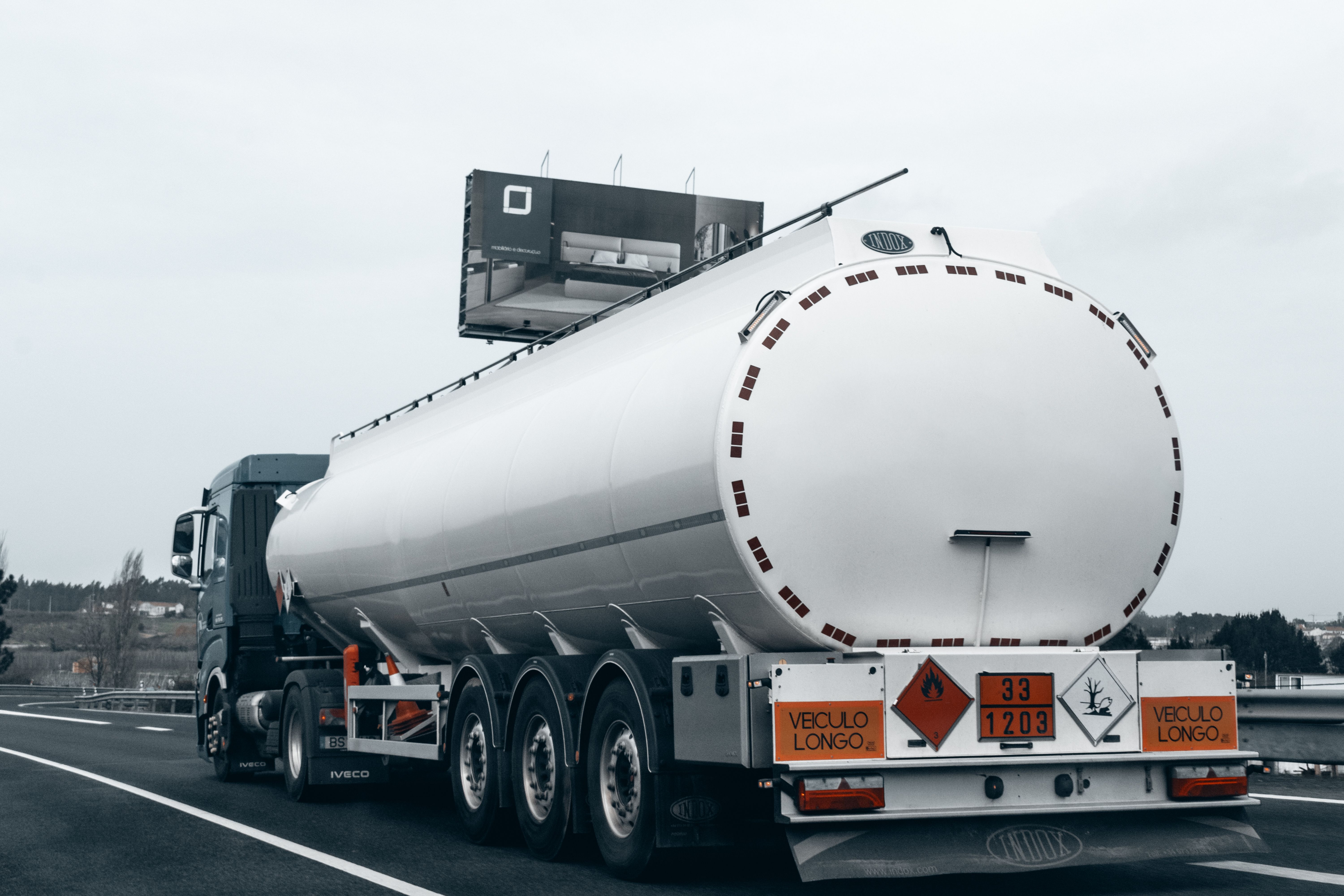
Record diesel crack spreads and refinery constraints, not lower Brent prices, drive mining fuel costs, reshaping cost models and investment decisions.
- The prompt New York Mercantile Exchange (NYMEX) 3-2-1 crack spread reached a record $64.58 per barrel on July 8, 2026, while European diesel refining margins exceeded $60 per barrel as Brent retreated from its April high of $120.88 to settle near $89 on July 30.
- The International Energy Agency (IEA) reported on July 10, 2026, that global refinery runs in June remained 6 million barrels per day (mb/d) below year-earlier levels, leaving refining capacity rather than crude availability as the main driver of diesel prices.
- The IEA targets global refinery runs declining 2.4 mb/d across 2026 before rebounding 3.1 mb/d in 2027, indicating diesel refining margins are more likely to normalize next year than this year.
- Energy costs ranged from 9% of total cash costs in uranium to 19.2% in gold during 2025, according to S&P Global, highlighting greater fuel cost exposure for open-pit operations than underground or grid-connected mines.
- Explorers with light, sweet discoveries hold crude that yields more transport fuel with fewer processing steps, though contingent resources are not reserves and converting them into reserves requires capital that may dilute existing holders.
Refinery Outages Cut Global Runs by 6 mb/d, Shifting Mining Fuel Costs From Brent to Diesel Cracks
Brent crude prices fell while diesel refining margins rose, shifting mining fuel costs from crude prices to refining margins. Brent settled near $89 per barrel on July 30, 2026, down from its 52-week intraday high of $120.88 on April 30. Over the same period, the prompt NYMEX 3-2-1 crack spread reached a record $64.58 per barrel on July 8 and remained above $62 per barrel through the week ended July 17. European diesel refining margins exceeded $60 per barrel, while European gasoline traded at a $41 per barrel premium to crude, the highest level in four years. Fuel buyers indexed to Brent did not benefit from lower crude prices because refining margins kept diesel prices elevated.
The 3-2-1 crack spread measures the theoretical margin from refining three barrels of crude into two barrels of gasoline and one barrel of distillate, widening when refining capacity, rather than crude supply, limits fuel production. The IEA reported that global refinery runs rose 1.5 mb/d in June but remained 6 mb/d below year-earlier levels because Middle East export refineries had yet to restart, Russian throughputs remained constrained by attacks, and Asian refinery utilization declined. Crude availability recovered through the second quarter, but conversion capacity did not, keeping the crack spread elevated.
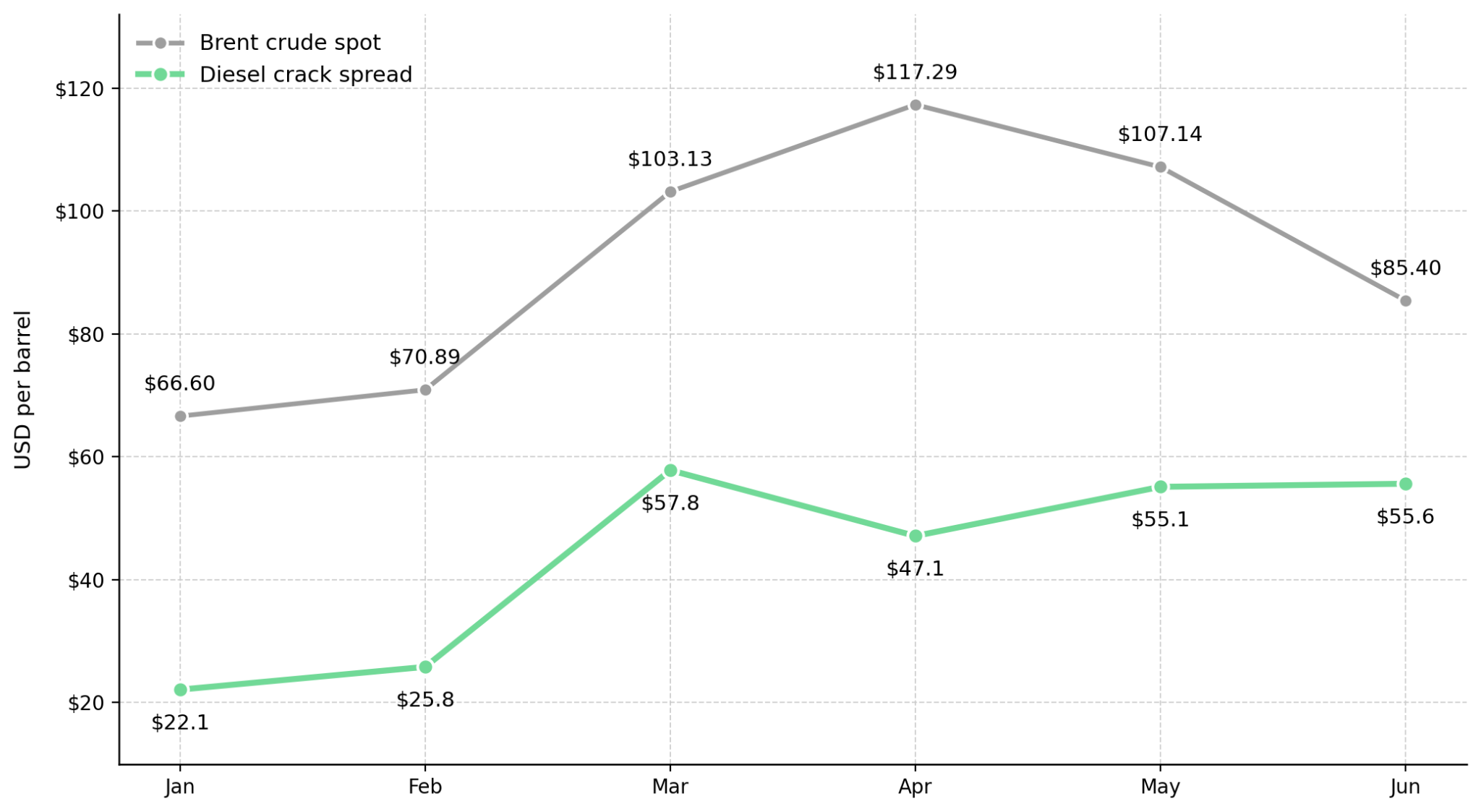
Major commodity research teams reached the same conclusion, with J.P. Morgan stating that record distillate crack spreads in the US and Europe show the market is being driven by refining constraints rather than crude supply. Goldman Sachs went further in its July 23, 2026 note by maintaining its fourth-quarter Brent forecast at $80 per barrel while recommending a long position in the December 2026 to March 2027 European diesel and gasoil timespread as its preferred exposure to geopolitical risk. Maintaining its Brent forecast while recommending a diesel trade indicates Goldman Sachs expects refining margins, rather than crude prices, to capture the impact of geopolitical risk.
Distillate Scarcity Raises Mine-Site Fuel Costs, Driving Higher Mining Costs & Guidance Revisions
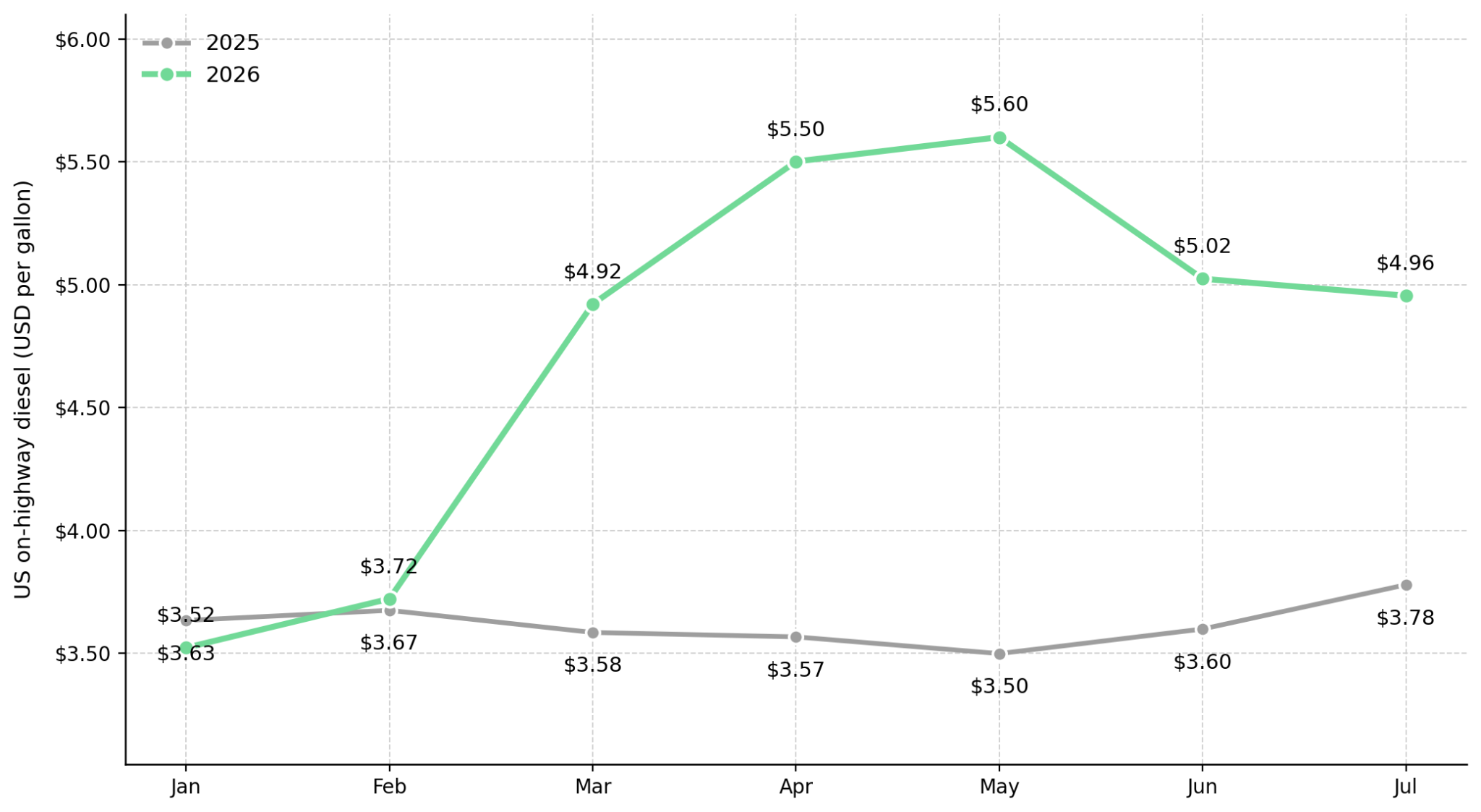
Refining margins affect mining costs directly because mines buy diesel rather than crude. Q2 2026 results across the gold sector identified diesel as a key cost driver, showing mining costs remained under pressure despite lower Brent prices.
Refinery Utilization at 97.2% Limits Supply Response, Keeping Diesel Margins Elevated
US refineries operated at 97.2% of operable capacity in the week ending July 24, 2026, according to EIA data released July 29, while commercial crude inventories fell 7.2 million barrels to 404.5 million, 7% below the five-year average. Distillate inventories remained about 10% below their five-year average in the week ending July 17. With refineries already operating near full capacity, higher diesel margins could not increase fuel production, keeping refining margins elevated. Because fuel supply could not respond, higher demand was reflected in wider refining margins rather than higher refinery output.
Higher Diesel Costs Lift Mining Cost Guidance, With Companies Explicitly Quantifying Fuel Exposure
Alamos Gold reported on July 30, 2026, that Q2 total cash costs rose to $1,304 per ounce and mine-site AISC reached $1,715 per ounce because of higher contractor, labor, diesel, and energy costs, partially offset by a weaker Canadian dollar. Integra Resources raised 2026 site-level AISC guidance at Florida Canyon from $2,750-$2,950 per ounce to $3,300-$3,500 per ounce, citing higher diesel fuel and explosive costs while maintaining production guidance of 70,000-75,000 ounces. Orla Mining quantified the relationship between diesel prices and mining costs, disclosing gross 2026 diesel exposure of roughly $25 million, approximately 4% of total operating costs and around $70 per ounce of AISC, with a $10 per barrel oil price move producing approximately $2.50 per ounce of impact. The company also disclosed that a 6% increase in diesel prices added approximately $3.00 per ounce. The actual diesel price increase produced a larger cost impact than implied by crude price sensitivity alone, showing how refining margins amplified mining costs.
Distillate-Short Refining Systems Raise the Value of Light Sweet Crude Through Higher Diesel Yields
Refining constraints have increased the value of barrel quality because light, sweet crude yields a higher proportion of middle distillates and gasoline through simple distillation, while heavy sour crude requires conversion units that constrained refineries cannot readily provide. When refining capacity, rather than crude supply, is constrained, crude grades that produce more transport fuel with fewer processing steps command a higher premium. European gasoline trading at a $41 per barrel premium to crude and diesel refining margins above $60 per barrel indicate that premium has reached a multi-year high.
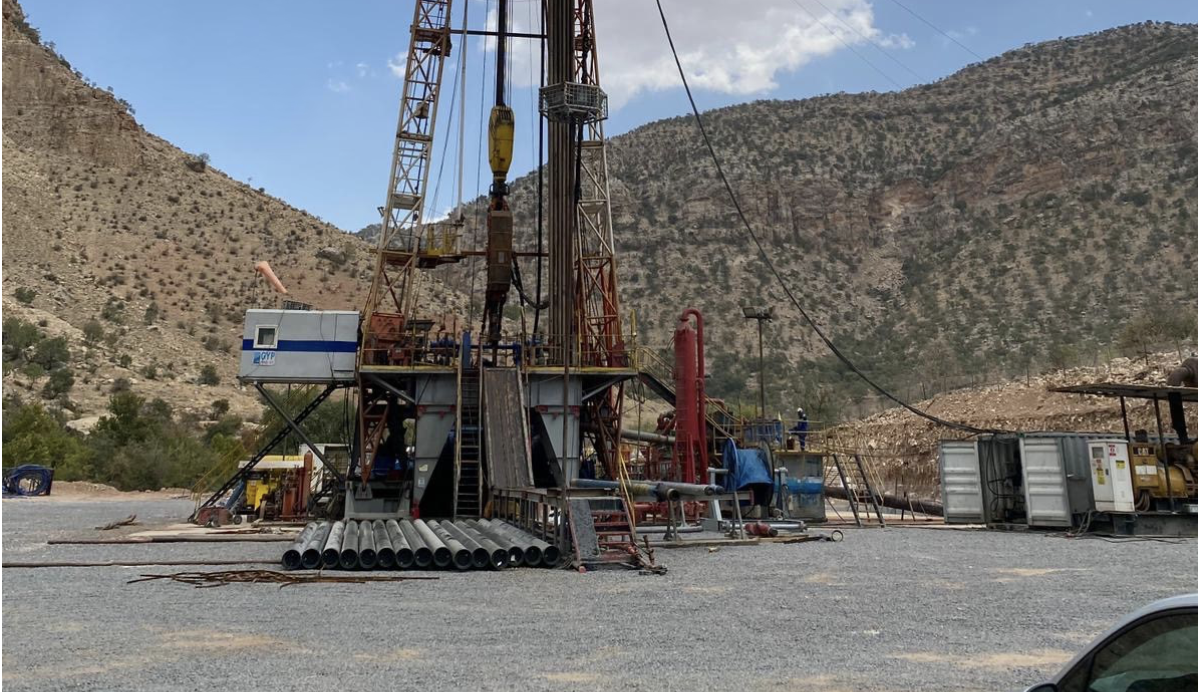
Dune Oil confirmed a light oil discovery with 32.4° API gravity and 38 meters of net oil pay at the C-1 well on the M47 exploration block in Turkey. An independent resource evaluation assigned the North Prospect a 2C best-estimate contingent resource of 27.6 million stock tank barrels of light oil and an unrisked NPV-10 of US$733.5 million, highlighting the potential value of the discovery if it advances to commercial development. However, contingent resources are not reserves and require additional appraisal, financing, and development before they can generate cash flow.
Scott Lower, President of Dune Oil, explains why conventional light oil is increasingly scarce:
"In North America, you've pretty much run out of onshore conventional light oil in highly porous formations because it's the best oil and the lowest cost. You're stuck with shale oil, which is great, but it's so tight you have to frack it. The best thing to ever have a discovery on is light oil, onshore, conventional resource, because the margins are so good."
Energy Intensity Varies by Commodity & Mining Method, Creating Uneven Mining Cost Exposure
Energy cost exposure varies by more than a factor of two across the mining sector depending on commodity and mining method, yet equity valuations often fail to distinguish between those differences. Published operating cost data provide a framework for identifying companies with lower fuel cost exposure.
Energy Intensity Varies by Commodity, Driving Cash Cost Energy Shares From 9% to 19.2%
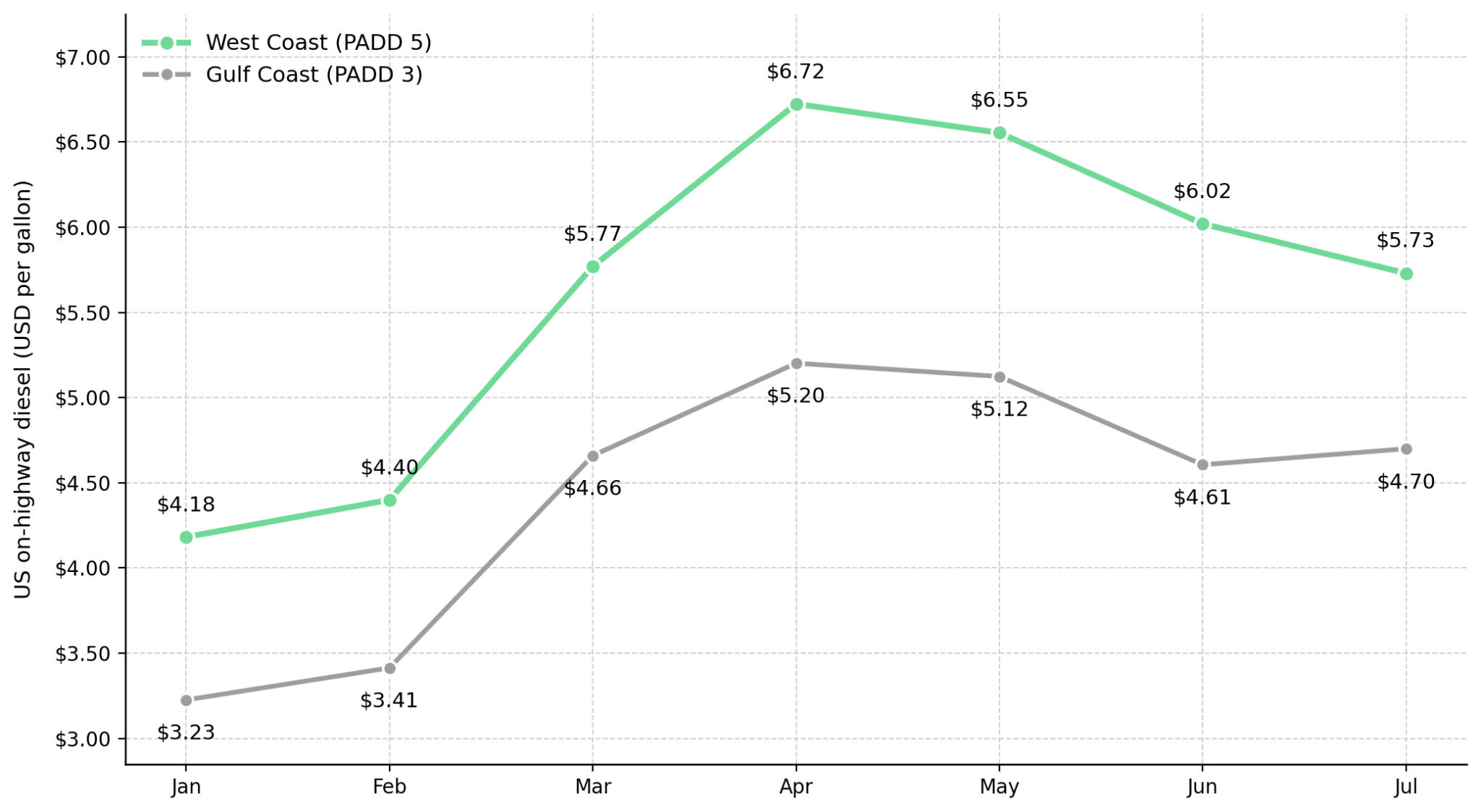
S&P Global reported that energy costs, including diesel and electricity, accounted for 9% of total cash costs in uranium mining and 19.2% in gold mining during 2025. The same report found that total cash costs for treated copper ore rose 27.8% between 2021 and 2024, with the 24.2% increase in energy costs during the 2021-2022 inflationary period contributing the largest share of that increase. S&P Global assessed that fuel-dependent producers face meaningful margin pressure when crude remains between $90 and $100 per barrel, with capital expenditure reductions becoming more likely if prices stay in that range for more than six months. Brent settled near $89 per barrel on July 30, 2026, just below that threshold, even as elevated refining margins kept diesel costs high.
Direct Diesel Exposure Understates Total Operating Cost Pass-Through Into Consumables & Freight
BMO Capital Markets, using Wood Mackenzie data, estimated diesel accounts for about 5% of copper mine operating costs today, down from roughly 8% two decades ago, but higher energy prices continue to flow through electricity, consumables, labor, and equipment costs. Explosives, tires, reagents, grinding media, and ocean freight all embed hydrocarbon costs and reprice on their own contract cycles rather than moving directly with crude prices. S&P Global identified the Democratic Republic of Congo as the most exposed jurisdiction, with marginal copper producers relying on diesel generators for power and sulfur for acid leaching. Underground operations, grid-connected and hydro-powered assets, and uranium producers, where energy accounts for about 9% of cash costs, generally face lower energy cost exposure than open-pit haulage operations.
Refinery Run Recovery Delays Fuel Cost Normalization Until 2027, Extending Mining Cost Pressures
Whether higher mining costs prove temporary or persist over multiple years depends on how quickly refining capacity recovers. The IEA forecasts global refinery runs will decline 2.4 mb/d in 2026 before rebounding 3.1 mb/d in 2027. The IEA also forecasts global crude supply will decline by an average 3.7 mb/d to 102.6 mb/d in 2026 before increasing 7.5 mb/d in 2027 if transit volumes improve, while demand falls 1.0 mb/d in 2026 before recovering by about 2.0 mb/d in 2027. The sequence matters because crude supply is expected to recover faster than refining capacity, extending the period during which refining margins, rather than crude prices, determine delivered fuel costs.
Brent price forecasts remain widely dispersed, reflecting uncertainty over the balance between geopolitical risks and recovering supply. J.P. Morgan forecasts Brent averaging $86 per barrel in Q3 2026, $80 in Q4, and $78 by year-end. Goldman Sachs forecasts Brent at $80 in Q4 2026 and $75 in 2027 under an open-transit scenario, with upside above $120 and downside to the low $60s by the end of 2027. The EIA's July Short-Term Energy Outlook forecasts Brent averaging $74 per barrel in Q3 2026 and $65 in 2027. Spot Brent traded near $89 per barrel on July 30, above all three near-term base-case forecasts, indicating the market continued to price a higher geopolitical risk premium than those central scenarios assumed.
J.P. Morgan's base case assumes only 250,000 barrels per day of Middle East refining capacity remains shut in by year-end. Faster refinery restarts would likely narrow distillate crack spreads, reduce the diesel premium over crude, and ease mining fuel cost pressures sooner than the base case assumes. The key indicator is the EIA's weekly distillate inventory relative to its five-year average, which remains about 10% below normal and is updated every Wednesday.
The Investment Thesis for Oil & Gas
- Refining margins, rather than crude prices, now determine delivered fuel costs, meaning Brent-indexed cost models understate fuel costs by an amount that varies with the crack spread rather than the crude price.
- Producers operating open-pit haulage fleets and diesel-generated power systems face the greatest margin pressure, but the magnitude of that exposure can only be quantified where companies disclose fuel price sensitivities in their filings.
- Explorers with light, sweet discoveries are better positioned when refining capacity is constrained because higher API crude yields more transport fuel with fewer processing steps.
- Energy intensity is not uniform across the mining sector, and underground, grid-connected, and hydro-powered assets face lower energy cost exposure than open-pit, diesel-dependent operations, creating meaningful differences in margin risk.
- Higher diesel prices shorten the payback period for on-site power generation by replacing a variable fuel cost with a fixed capital cost, although the resulting hedge is largely confined to processing plants and stationary loads rather than haulage.
- Fuel logistics have become a more important component of jurisdictional risk, particularly at remote mining operations where delivery reliability can matter more than fuel prices.
- Exploration-stage companies face the additional risk that contingent resources never convert to reserves, while the capital required to advance a project can dilute existing shareholders.
The shortage has shifted from crude supply to refining capacity, placing the cost signal in diesel crack spreads rather than in Brent. Fuel costs therefore require direct analysis rather than inference from crude prices. Companies that disclose fuel price sensitivities allow cost exposure to be quantified, while those that do not require broader assumptions based on energy intensity, mining method, and power source. Until refining capacity normalizes, these operating characteristics provide a more reliable basis for comparing cost exposure than a directional view on crude prices because refining margins, rather than Brent, determine delivered fuel costs.
TL;DR
Record diesel crack spreads have broken the historical relationship between Brent crude and mining fuel costs because refining capacity, not crude supply, has become the market's main constraint. Global refinery runs remain well below year-earlier levels, keeping diesel refining margins elevated despite Brent falling below $90 per barrel. Mining companies are increasingly reporting higher diesel costs in guidance, while energy intensity varies significantly across commodities and mining methods, creating uneven cost exposure. Until refinery capacity recovers, likely during 2027 according to IEA forecasts, investors should focus on diesel crack spreads, fuel price sensitivities, and energy intensity rather than Brent prices when assessing mining costs and project economics.
FAQs (AI-Generated)
Analyst's Notes





Subscribe to Our Channel


Stay Informed


