




West Red Lake Gold Mines Fork Infill Drilling: 7 Things You Need to Know


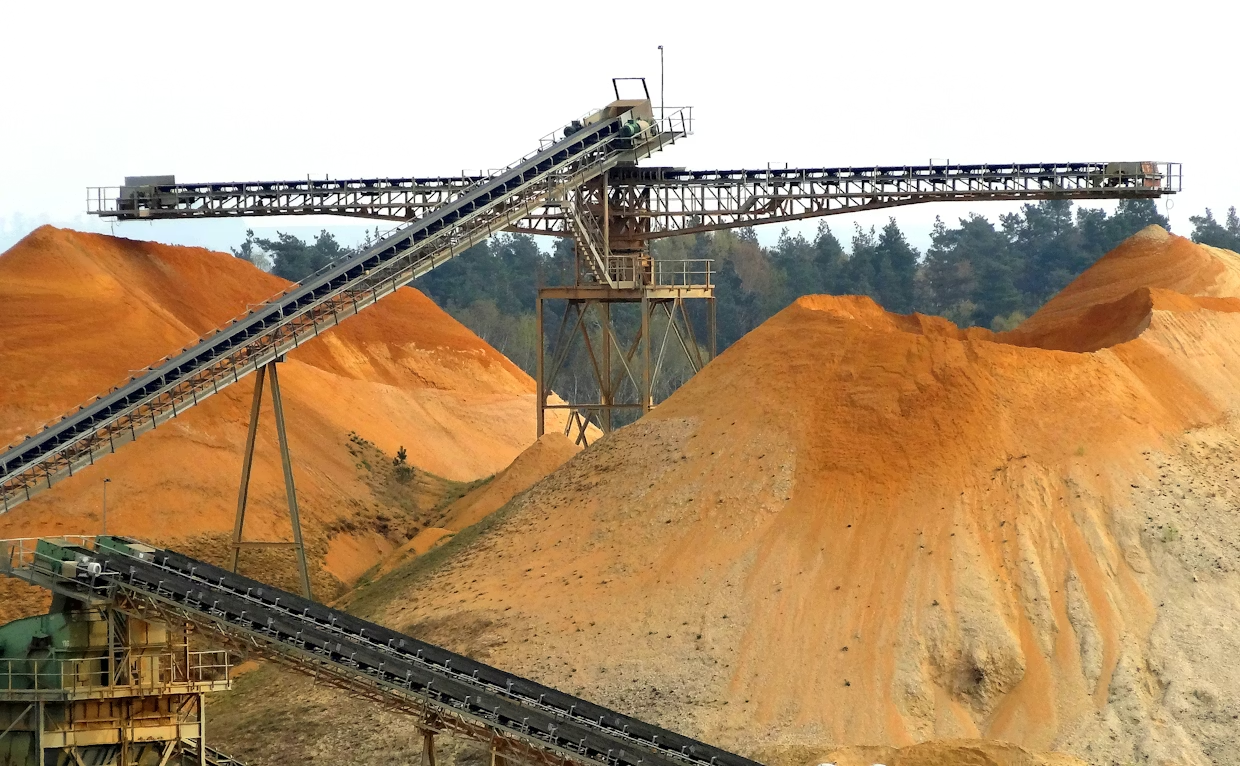
West Red Lake Gold’s Fork infill drilling confirms grade continuity near Madsen, advancing mine design while leaving economic contribution pending formal study.
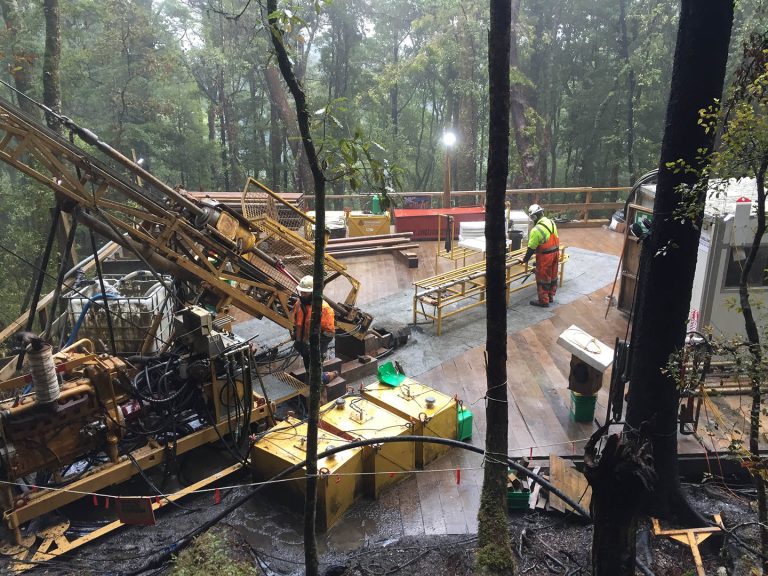
West Red Lake Gold Mines (TSXV: WRLG) released infill drilling results from its Fork satellite deposit, completing a 3,204-metre, 17-hole surface drilling program designed to reduce geological uncertainty ahead of a potential construction decision. Fork sits approximately 250 metres southwest of the Madsen Mine in the Red Lake Gold District of Northwestern Ontario, accessible via existing underground infrastructure. With gold trading above US$4,364 per ounce and the Madsen engineering team already advancing an initial mine design for the area, this program marks a defined step toward integrating Fork into near-term production planning.
1. Infill Drilling Was Scoped as a Construction Decision Gate, Not an Exploration Program
The 3,204-metre campaign was structured specifically to inform a construction decision, not to discover new mineralisation.
Infill drilling was concentrated on a shallow, high-grade, low-plunging zone of gold mineralisation first identified during a 2024 re-evaluation of the Fork deposit. That zone had already been defined by previous drilling over an area of 400 metres by 250 metres. The 17 new holes, averaging 170 metres in depth, were drilled to tighten data spacing and reduce the geological uncertainty that separates a resource estimate from a mineable design. The company is not testing whether gold exists at Fork; it is testing whether the grade distribution is predictable enough to support mine planning.
2. The Top Intercept Was High-Grade; Composite Widths Define the Mineable Envelope
Within the Red Lake district context,a 41.25 g/t Au intercept with visible gold confirmed by standard fire assay with AAS finish, and additionally analyzed via metallic screen analysis given the presence of visible gold.
Visible gold in core, confirmed by fire assay with gravimetric finish for values exceeding 100 grams per tonne (g/t) gold, points to bonanza-grade pockets within the broader mineralised system. Holes with 4.5 metres at 5.80 g/t gold and 3.3 metres at 4.22 g/t gold are more representative of the minable widths and grades the engineering team will work with. The bonanza result confirms the high-grade core exists; the broader composites define the economic envelope.
3. Vein Continuity Was the Specific Risk Being Tested
The infill program confirmed grade and vein continuity across the target zone, the geological property most critical for efficient mine planning in a narrow-vein deposit.
Average zone thickness is conservatively estimated at approximately 2 metres based on existing core intercepts, with mineralised zones typically ranging from 1 to 5 metres. Several holes returned no assays above 1 g/t gold. This is expected behaviour in infill programs targeting narrow, structurally controlled vein systems. It does not invalidate the zone; it defines the grade envelope and confirms which portions of the deposit are mineralised and which are waste. The result is a more reliable geological model to build mine design from.
President and Chief Executive Officer of West Red Lake Gold Mines, Shane Williams, addressed what the program was designed to prove:
"The results of the drill program are very encouraging and further support the gold grade and vein continuity at Fork which will be necessary for efficient mine planning and any future extraction scenario. The engineering team at Madsen is already working on the initial mine design for this satellite area."
4. Existing Madsen Infrastructure Substantially Reduces the Capital Cost of Bringing Fork Into Production
Fork's location approximately 250 metres southwest of the Madsen Mine, with existing underground development approximately 350 metres away via the West Ramp, substantially reduces the capital intensity of bringing this resource into production.
Underground gold mining in Ontario carries significant up-front development costs when infrastructure must be built from scratch. When an established ramp, ventilation system, and processing mill already exist within reach, the incremental capital required to access a satellite deposit is a fraction of a standalone development. The conceptual mine design envisions access driven from Level 3 of the McVeigh area at Madsen, using existing underground workings as the entry point. Ore would feed through Madsen's existing processing facility. Fork has not been assessed through a Preliminary Economic Assessment, Pre-Feasibility Study (PFS), or Feasibility Study, and its economics have not been formally demonstrated. Until a technical study quantifies the development cost and operating economics, the infrastructure proximity argument remains qualitative.
5. Fork's Grade Is Competitive but the Resource Scale Limits Its Standalone Contribution
Fork currently hosts an Indicated mineral resource of 20,900 ounces grading 5.0 g/t gold within 123,800 tonnes, plus an Inferred resource of 49,500 ounces grading 5.2 g/t gold within 298,200 tonnes.
For context, the adjacent Madsen Mine hosts a National Instrument 43-101 Indicated resource of 1.65 million ounces grading 7.4 g/t gold and Probable mineral reserves of 478,000 ounces grading 8.16 g/t gold. Fork's average grade of approximately 5 g/t gold falls below Madsen's reserve grade, which has implications for the blended mill feed economics of any combined extraction scenario. At approximately 70,400 combined ounces, Fork does not materially alter Madsen's resource base; its value is in incremental production optionality using existing infrastructure, not in stand-alone scale.
6. Fork's Exclusion from the Pre-Feasibility Study Makes Inclusion in a Future Technical Study the Key Catalyst
Fork was excluded from the January 2025 Madsen Mine Pre-Feasibility Study. Incorporation into a formal economic assessment is the next meaningful de-risking milestone.
The completion of infill drilling, combined with initial mine design work now underway at the Madsen engineering level, positions the company to potentially include Fork in a future technical study update. Until that study is completed, Fork's contribution to the Madsen production profile remains unquantified. The timeline for a formal study incorporating Fork has not been disclosed.
7. The Structural Trend Adds an Exploration Dimension Beyond the Deposit
Underground development toward Fork would extend along the main structural corridor connecting Madsen to the past-producing Starratt-Olson Mine, which historically produced approximately 164,000 ounces between 1948 and 1956.
Beyond providing access to Fork, this development pathway opens underground drilling access along a mineralised trend that has seen limited systematic testing with modern methods. The Fork Footwall Zone occupies the same structural and stratigraphic position as the 8 Zone at Madsen, located approximately 1.8 kilometres down plunge to the northeast. A separate Fork Footwall target, a 300-metre zone tested by only 11 drill holes, remains open and active. These are early-stage targets, not resource-bearing assets. But in the event of a Fork construction decision, the exploration upside along that development corridor is supported by untested strike length and the structural position the Fork Footwall Zone shares with the 8 Zone at Madsen.
Fork’s Role in Madsen’s Near-Term Production Plan
The Fork infill program delivered what it was designed to deliver: confirmation of grade and vein continuity across a shallow, near-infrastructure gold deposit in one of Canada's most productive gold districts. That reduces the geological risk in the construction decision the company is now evaluating. What it has not yet produced is a formal economic study placing Fork within the Madsen production plan. A PFS update is the catalyst that converts confirmed mineralisation into a quantified production contribution. Progress on the mine design work and any announcement of a formal study scope are the developments to track. Until then, Fork represents demonstrated resource quality with unquantified production economics, 250 metres from a mine with established infrastructure.
FAQs (AI-Generated)
The program was designed to reduce geological uncertainty ahead of a potential construction decision, not to discover new mineralisation. It focused on improving confidence in grade distribution and vein continuity to support mine planning.
The results confirmed both high-grade mineralisation and continuity within the target zone. While a 41.25 g/t gold intercept highlights high-grade potential, broader composite intervals better represent the likely mineable widths and grades.
Fork is located about 250 metres from the Madsen Mine and can be accessed through existing underground infrastructure. This reduces the need for new development, lowering capital requirements compared to a standalone project.
ork hosts an Indicated resource of 20,900 ounces at 5.0 g/t gold and an Inferred resource of 49,500 ounces at 5.2 g/t gold. Its total scale is relatively small compared to Madsen, making it more relevant as a satellite source of feed rather than a standalone operation.
The next step is inclusion in a formal economic study, such as a Pre-Feasibility Study update. This would quantify development costs and define Fork’s contribution to the overall Madsen production plan.
Analyst's Notes





Subscribe to Our Channel






Stay Informed






















