




What Agnico Eagle's Finland Play Tells Gold Investors About Where the Market Is Heading


Agnico Eagle's $3B Finland acquisition signals a structural shift in gold M&A. Here's what district-scale consolidation means for investors screening junior miners.
- Agnico Eagle's ~$3B acquisition of Rupert Resources and Aurion Resources signals a structural shift toward district-scale consolidation, not single-asset growth
- Premiums paid confirm the scarcity of Tier-1 gold assets in safe jurisdictions, and that majors are willing to act on it
- Large producers are moving earlier in the development cycle, compressing the window for "undervalued" developer opportunities
- The inclusion of an exploration-stage asset (Aurion) signals that ground position near infrastructure is now valued as strategic inventory
- Jurisdiction is increasingly a primary valuation driver, reshaping how investors should screen junior and mid-tier gold companies
The Premiums Are the Signal
Agnico Eagle Mines has announced a multi-part transaction to consolidate a dominant land position in Finland's Central Lapland Greenstone Belt, acquiring both Rupert Resources and Aurion Resources in a package worth approximately $3 billion. At face value, it is a large growth transaction aimed at building a new production hub around the Ikkari deposit. But the structure of the deal, and the specific assets being targeted, carries a message that extends well beyond Agnico's own balance sheet.
This is not just a company making an acquisition. It is a major producer telegraphing where capital is going next, and why.
The acquisition premiums paid for both Rupert and Aurion are not incidental to the story - they are the story. They reflect something structural: there are simply not many large, developable gold assets left in politically stable, infrastructure-supported jurisdictions. The pool is small, and it is getting smaller. When a major like Agnico pays up in this environment, it is not overpaying out of desperation. It is acting on a conviction that scarcity is real, and that waiting will only make the arithmetic worse.
For investors, the implication is direct. Not all ounces are created equal, and the market is increasingly pricing that distinction aggressively. A large deposit in a Tier-1 jurisdiction now commands a structurally different valuation than a comparable resource in a riskier region, regardless of grade. The Agnico transaction validates that thesis in dollar terms.
Majors Are Moving Earlier
Historically, large producers acquired assets once the hard work was done: feasibility complete, permits in hand, construction decision made. That model is breaking down. By acquiring Rupert and Aurion at their current stages, Agnico is deliberately accepting more development risk in exchange for locking up district-scale optionality before valuations fully reflect it.
This shift is not accidental. It reflects a structural shortage of "ready-to-build" projects that can move a major's production needle. The pipeline of near-term, large-scale, permitted opportunities in safe jurisdictions has been depleted faster than exploration has replenished it. Majors are now being forced to look earlier in the development curve, and they are willing to pay for that positioning.
For investors holding quality development-stage companies, particularly those with scale and jurisdictional advantages, the practical read is this: the window during which those assets are "undervalued" may be narrowing. Strategic buyers are increasingly acting before the market re-rates.
The Inclusion of Aurion Is Worth Reading Carefully
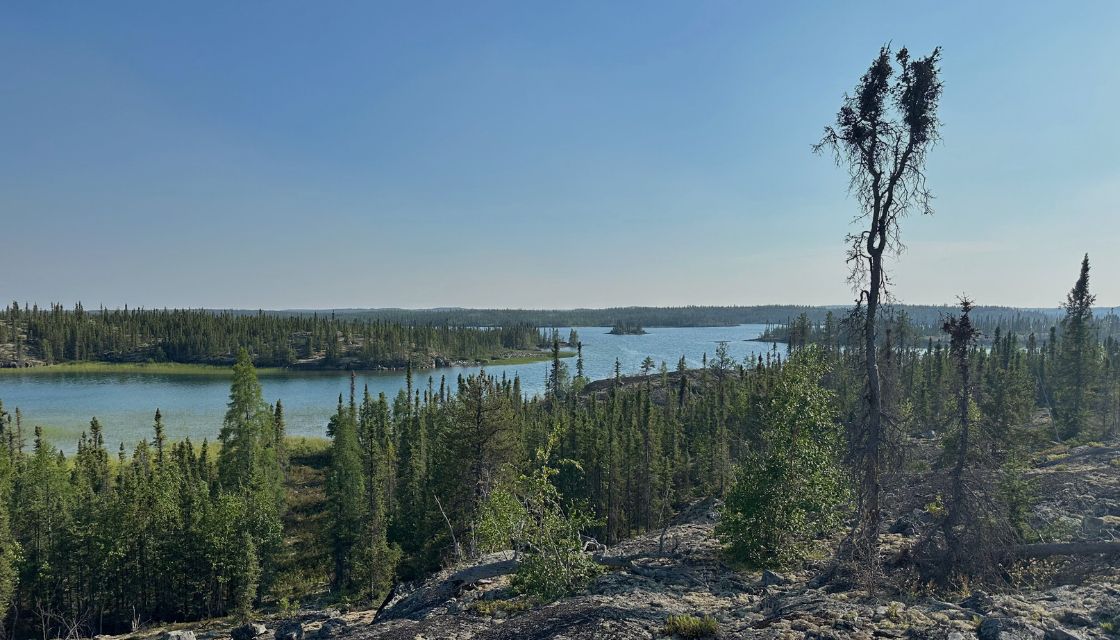
Of the two acquisitions, the purchase of Aurion Resources deserves particular attention. Aurion is not a development asset, it is an exploration land position with a discovery pipeline. There are no feasibility numbers, no resource estimate commanding a straightforward valuation. What it offers is geology, ground position, and proximity to what Agnico is building.
Exploration optionality is now being valued as core strategic inventory, not as speculative upside. Ground adjacent to producing or developing infrastructure is no longer "blue sky" - it is the raw material for the next decade of hub-and-spoke mine planning. Investors who have been discounting exploration-stage companies on the basis that they are "too early" may need to reconsider that framework.
Jurisdiction Has Become a Primary Variable
Finland's appeal in this transaction is not purely geological. It is politically stable, permitting-friendly relative to its peers, and already infrastructure-supported. In a world where rising geopolitical risk is increasingly constraining global supply, and where capital has become markedly more cautious about where it deploys, predictability carries a premium that did not exist in the same form a decade ago.
This is a genuine shift in how assets should be screened. A lower-grade deposit in a Tier-1 jurisdiction may now command a higher valuation than a higher-grade project in a jurisdiction carrying regulatory, political, or infrastructure risk. Agnico's willingness to pay up for Finland confirms that this is not theory, it is already being priced into real transactions.
So What? The Investor Takeaway
This deal is unlikely to be isolated. The pressures driving it (declining reserve bases, limited large-scale discovery success, long permitting timelines, and a shallow pipeline of build-ready projects) apply equally to every major producer. The logical consequence is more acquisitions, focused specifically on district-scale opportunities in safe jurisdictions, and pursued earlier in the development cycle than historical norms would suggest.
For investors, the framework for evaluating junior and mid-tier gold companies may need updating. The question is no longer simply "what is the grade, and when does it produce?" The more relevant questions are: Does this asset sit in a Tier-1 jurisdiction? Is there district-scale potential, or is this a single-asset story? Is there a strategic buyer who needs what this company controls? And critically, is the market already pricing that in, or is the gap still there?
Agnico's Finland consolidation is a data point, but it is a loud one. The next phase of the gold cycle may well be defined not just by the gold price, but by who controls the best geology, in the best jurisdictions, at a scale that genuinely moves the needle for a major. The market is already starting to price that in, and the deals will tell us how fast.
Analyst's Notes





Subscribe to Our Channel





.jpg)
Stay Informed






















