




Why New Found Gold’s Financing Design Could Reduce Future Dilution


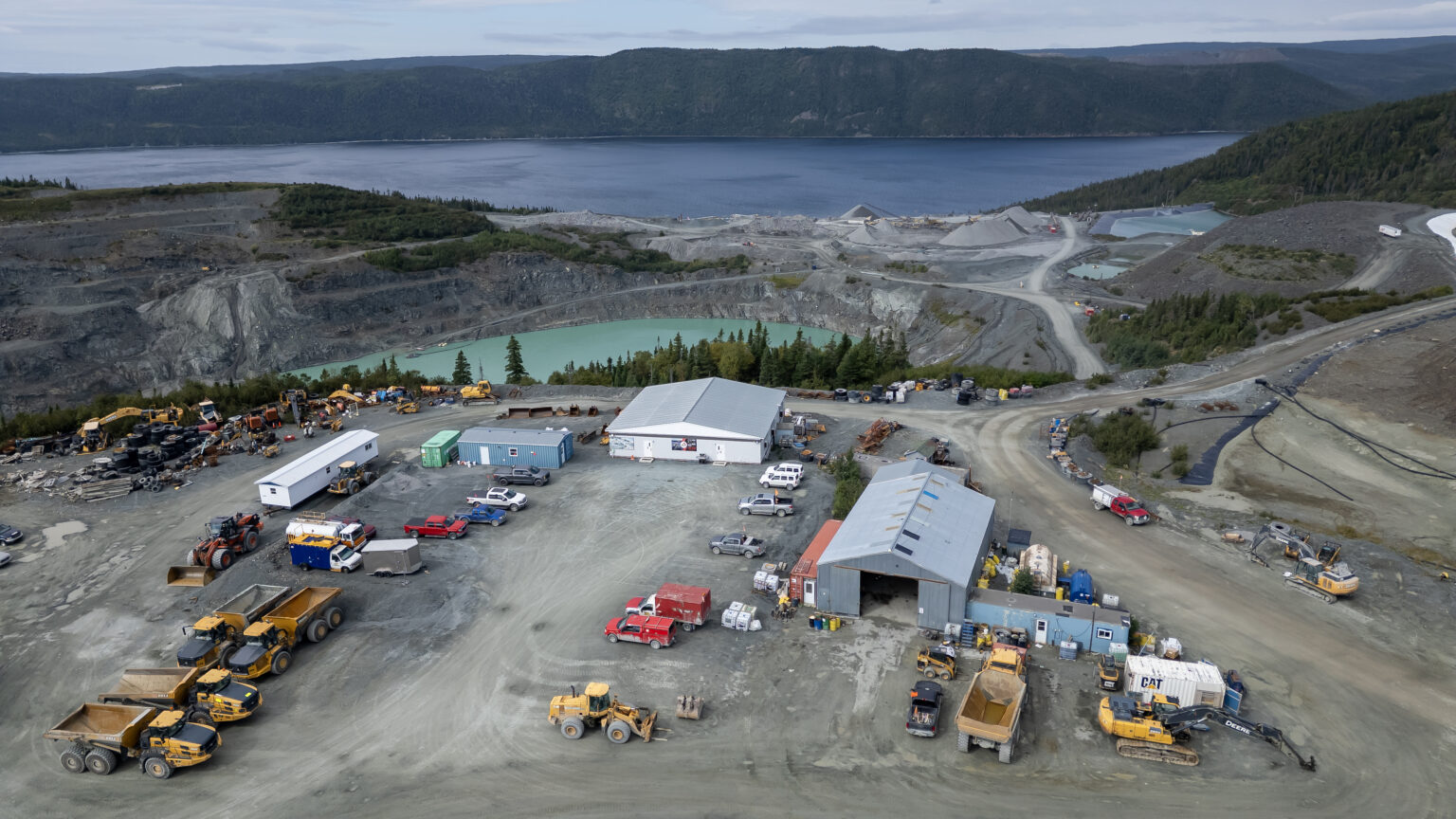
New Found Gold’s staged financing structure and discretionary second tranche may reduce future dilution while fully funding Queensway toward production in late 2027.
- New Found Gold has drawn $70 million in First Tranche funding under its $105 million senior secured credit facility (the Credit Facility) with EdgePoint Investment Group Inc. (EdgePoint), which was established on April 20, 2026.
- Combined with a $115 million bought-deal financing and approximately C$19 million in potential proceeds from warrant exercises, the company has capital exceeding the $155 million in capital expenditure (capex) outlined in the July 2025 Queensway preliminary economic assessment (PEA).
- The $35 million Second Tranche carries no mandatory milestone triggers and is drawn entirely at the company's discretion within 12 months of the First Tranche drawdown, capping near-term warrant dilution if existing capital proves sufficient.
- Queensway is targeting approximately 100,000 ounces of gold annually in the first couple of years of production at an all-in sustaining cost (AISC) of
- EdgePoint participates as both a senior secured $1,300 per ounce, based on the July 2025 PEA, with the build programme targeting first production in late 2027. lender and an equity investor, aligning its financial interest with project execution rather than covenant enforcement.
A Structure Built Around Optionality
When junior mining companies raise capital, the question investors rarely ask loudly enough is: how much future dilution does this financing embed? For New Found Gold (TSXV: NFG | NYSE American: NFGC), that answer is embedded directly in the mechanics of the Credit Facility itself.
Chief Executive Officer and Director of New Found Gold, Keith Boyle, confirmed the company’s fully funded status on drawing the First Tranche on May 19, 2026:
“Following the receipt of the $70 million Tranche 1 funding, together with the $115 million raised in the recently completed oversubscribed bought deal financing, we are now fully funded to advance Queensway Phase 1 development and construction and bring the project into production in late 2027, in line with our development timeline.”
That fully funded position rests on the structure of the $105 million Credit Facility established on April 20, 2026. The remaining $35 million Second Tranche is not a scheduled draw with predetermined milestones attached. The decision to draw rests entirely with the company and must be exercised within 12 months of the First Tranche drawdown date, subject to exchange approvals from the TSX Venture Exchange (TSXV) and NYSE American LLC. New Found Gold could enter construction at Queensway with $185 million in hand and never touch the Second Tranche at all, if operational cash flows from Hammerdown or other sources make it unnecessary.
Warrant Exposure & the Capital Surplus
The First Tranche is not without dilutive components. In connection with the $70 million advance, the company issued EdgePoint and its nominees 2,489,818 non-transferable Tranche 1 Warrants with an aggregate value of US$6,000,000. Each warrant entitles the holder to purchase 1 common share at an exercise price of $3.30, exercisable until May 15, 2029, subject to a statutory hold period expiring September 16, 2026. The First Tranche principal also carries an original issue discount of 2.00%, a standard feature of senior secured credit facilities that investors should incorporate into any cost-of-capital calculation.
Boyle described the significance of the overall financing package coming together:
“It really did just put everything tied up in a bow, and we can get on with business.”
If the Second Tranche is drawn, a corresponding package of Tranche 2 Warrants with an aggregate value of US$3,000,000 would be issued. For shareholders, the arithmetic is direct: leaving the Second Tranche undrawn caps the warrant dilution at the Tranche 1 package alone. With $185 million now in hand and approximately C$19 million in potential proceeds from warrant exercises against a preliminary economic assessment (PEA) capital expenditure (capex) of $155 million, the company is funded in excess of its Phase 1 construction requirement without activating that instrument.
Production Economics & the Path to First Pour
The investment rationale for the Queensway development rests on a high-grade Phase 1 feed profile. Management described the project as targeting ore grades of 10 to over 12 grams per tonne gold in the first couple of years of processing, with Queensway alone targeting approximately 100,000 ounces of gold annually during that period. The July 2025 PEA established an AISC of $1,300 per ounce, a cost structure that, at current gold prices, positions Queensway to generate material free cash flow per ounce in that same period.
The build programme runs on a tight sequence. Groundbreaking at Pine Cove for the mill expansion from 700 to 1,400 tonnes per day is targeting the end of the Second Quarter of 2026. The company is targeting receipt of Environmental Assessment (EA) approval in late Second Quarter or early Third Quarter 2026, ahead of the early works permit, which is targeted for the end of the Third Quarter of 2026. Hammerdown is separately targeting commercial gold production in the second half of 2026, feeding processed material into Pine Cove at its current capacity ahead of the expansion. Hydro is also relocating a power line above the Queensway deposit, a prerequisite for mining operations, targeting completion within 12 to 18 months.
EdgePoint’s Dual Role as Lender & Equity Partner
What distinguishes the EdgePoint arrangement from a conventional credit facility is EdgePoint’s concurrent participation in the $115 million equity raise alongside cornerstone investor Eric Sprott. That dual positioning, as both senior secured creditor and equity shareholder, aligns the company’s largest structured capital provider with its existing long-term equity holders. A lender with a material equity stake has a financial incentive to support project execution rather than enforce covenants at the first sign of construction friction. Cutfield Freeman & Co. Ltd., an independent global mining finance advisory firm, acted as financial advisors to New Found Gold in relation to the Credit Facility and its overall project finance strategy.
Fully Funded, Dilution Capped: What the Structure Means for Investors
The thesis here is not simply that New Found Gold has raised enough money to build Queensway. It is the way it has raised that money that actively protects per-share value through the construction period. The company enters the 18-month build window with capital exceeding its PEA capex, preserving capacity for continued exploration activity, a discretionary second debt tranche it may never need, and a lead lender whose equity stake aligns its financial interest directly with project success. Key catalysts: Pine Cove groundbreaking targeting the end of Second Quarter of 2026; the Queensway early works permit targeting the end of Third Quarter of 2026; Hammerdown commercial production targeting the second half of 2026; and the Second Tranche election due within 12 months of May 19, 2026.
FAQs (AI-Generated)
Analyst's Notes





Subscribe to Our Channel






Stay Informed






















