




Gold Grassroots Exploration Hits 18% Record Low, Favoring Advanced Projects



Slow mine-supply growth, record costs, and selective funding are increasing the value of permitted and financed gold projects.
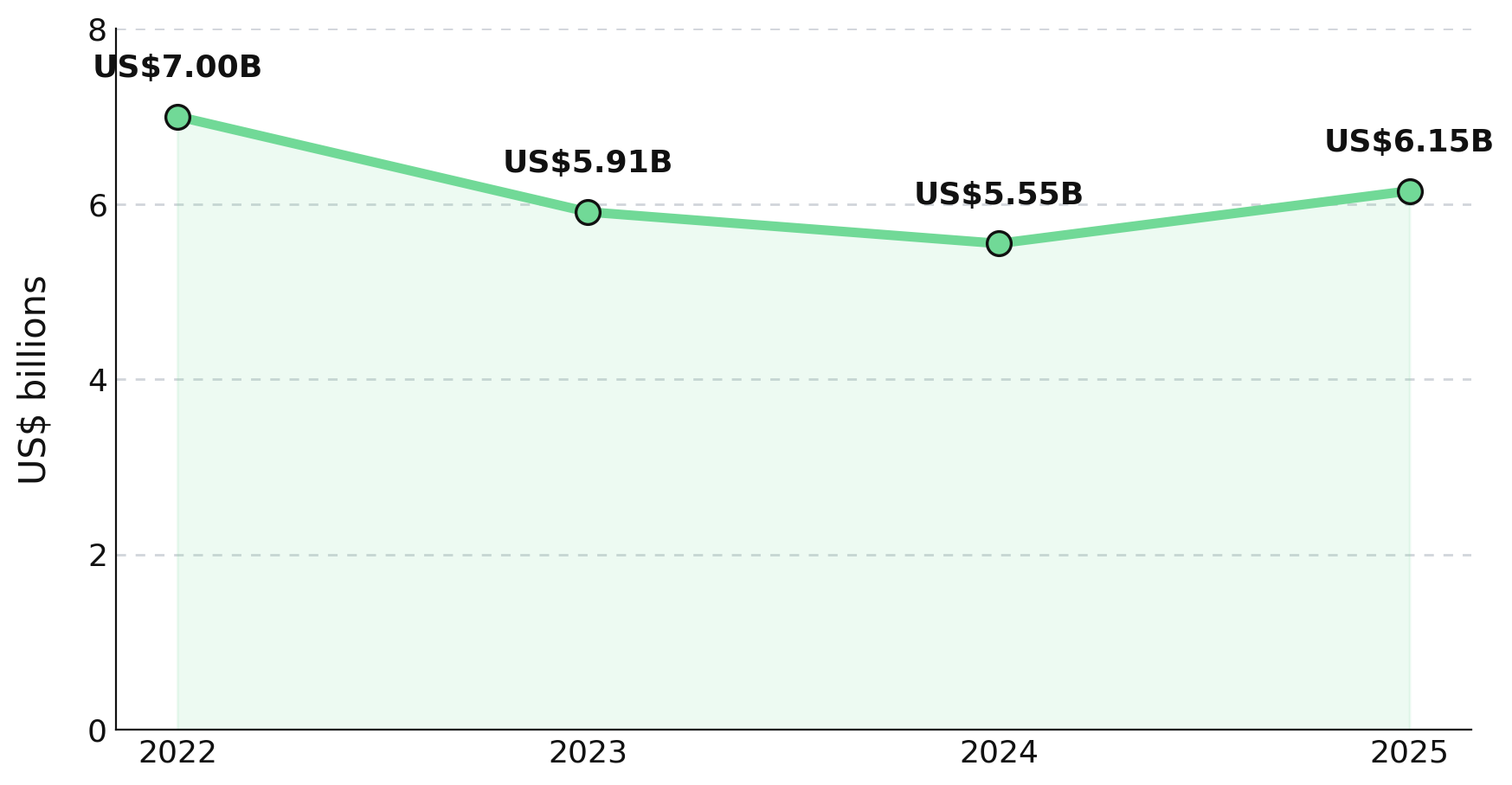
- S&P Global found that global gold exploration budgets rose 11% to US$6.15 billion in 2025, but minesite programs received 51% while grassroots exploration fell to a record-low 18% share.
- Junior and intermediate miners raised US$21.43 billion in 2025, but development absorbed much of the capital, increasing the scarcity of permitted and construction-ready gold assets.
- The World Gold Council recorded first-half mine production of 1,867 metric tons, while all-in sustaining costs (AISC) rose 16% year over year to US$1,785 per ounce in the first quarter, limiting the supply response.
- Advanced developers gain two valuation levers because higher gold prices improve project margins, while completed studies, permits, and financing reduce execution risk and valuation discounts.
- Project selection should prioritize resource quality, metallurgy, infrastructure, permitting, and financing capacity, while untested targets and non-binding opportunities remain excluded from base-case value.
Higher Gold Prices Redirect Capital & Increase Advanced-Project Scarcity
Higher gold prices increase operating cash flow and financing capacity, but long discovery timelines and low success rates continue to limit capital allocated to early-stage exploration. Capital is therefore favoring operating mines, brownfield extensions, and advanced developments because existing infrastructure and shorter development schedules can bring additional gold production to market sooner. This allocation can support higher valuations for developers that reduce geological, technical, permitting, and financing risk through measurable project milestones.
Minesite Spending Absorbs Capital & Shrinks the Discovery Pipeline
S&P Global found that global gold exploration budgets rose 11% year over year to US$6.15 billion in 2025, accounting for nearly half of global nonferrous exploration spending. Major producers increased their budgets 15% to US$3.5 billion, accounting for 57% of total gold exploration spending. By exploration stage, US$3.13 billion, or 51%, went to minesite programs around existing operations, while early-stage grassroots exploration fell to a record-low 18% share. Canada received the largest national allocation at US$1.27 billion, but S&P Global warned that the country’s thinning project pipeline could leave fewer future mines available to replace depleted operations.
Companies favor minesite drilling because nearby infrastructure can lower evaluation and development costs, while additional drilling can improve geological confidence and support later conversion of resources into reserves through engineering and economic studies. Extending an existing operation can spread fixed costs over more production, lengthen mine life, and support operating earnings. Grassroots exploration requires longer funding periods and has a lower probability of producing an economic discovery than drilling around a known deposit, so concentrating capital around existing mines supports near-term cash flow but reduces the pool of deposits available to replace future production.
The 11% increase in 2025 gold exploration budgets overstates funding for future supply because 51% of spending remained concentrated at existing mines. Minesite programs can extend operating lives and sustain production, but the record-low 18% share allocated to grassroots exploration limits the discovery pipeline needed to replace depleted mines. This scarcity can support higher valuations for advanced projects with defined resources, demonstrated metallurgical recoveries, existing infrastructure, documented permitting schedules, and funding plans matched to initial capital requirements.
Development Funding Accelerates Projects & Rewards Construction Readiness
Junior and intermediate mining companies raised US$21.43 billion across gold and other commodities in 2025, the second-highest annual total in its dataset. However, stronger fundraising did not produce higher junior exploration budgets because companies directed a sizable portion of the proceeds toward project development. This allocation favors projects approaching construction or production while leaving less capital for the early-stage discoveries required to expand the future mine pipeline.
Projects with stronger technical evidence and shorter development paths can secure capital on better terms. Indicated resources support more detailed mine planning than inferred resources, while metallurgical recovery determines how much contained metal can be sold. Cut-off grades, infrastructure, permitting, and capital requirements therefore matter alongside enterprise value per resource ounce (EV/oz) when comparing development-stage valuations.
Permits, current feasibility studies, and committed financing can support higher project valuations because each milestone reduces development uncertainty. Smaller phased projects may rank above larger deposits when lower initial capital, simpler processing, and earlier cash flow reduce funding needs. Senior debt preserves ownership but requires fixed repayments, while streams and royalties reduce share issuance by transferring part of future production revenue, making delivery timing and dilution as important as reported ounces.
Limited Gold Supply Growth Raises the Value of Production-Ready Projects
The World Gold Council recorded first-half mine production of 1,867 metric tons, up 3% year over year. Long development timelines and operating constraints limit how quickly supply can respond, directing capital toward assets with shorter paths to new or expanded production.
Record Gold-Mining Costs Restrict Supply & Favor Phased Development
Second-quarter mine production rose 2% year over year to 965.6 metric tons. Total supply was unchanged at 1,268.9 metric tons because the increase in mine production was almost exactly offset by a 6% decline in recycling to 326.1 metric tons. Producer de-hedging separately reduced quarterly supply by approximately 23 metric tons. First-quarter AISC rose 16% year over year to a record US$1,785 per ounce, increasing the gold price required to protect operating margins.
Cabral Gold completed its first gold pour at the wholly owned Phase 1 Cuiú Cuiú mine, producing approximately 1,130 ounces while wet-circuit commissioning nears completion ahead of schedule. The company is targeting a stacking rate of 3,000 tonnes per day and commercial production by the end of 2026, establishing an operating and cash-flow base that could support low-cost Phase 1 expansions and reduce execution risk for the planned hard-rock Phase 2 development.
Alan Carter, President and Chief Executive Officer of Cabral Gold, explains how phased production converts gold into margins:
“In the first 12 months of production here, we anticipate that we’ll be producing between 20 and 25,000 oz. The margin on this material is currently around about 3,300 US dollars an ounce.”
Commercial Production Validates Operations & Improves Capital Access
Commercial production replaces modeled assumptions with measured throughput, recovery, grade, equipment reliability, and unit-cost data. Consistent operating results can reduce execution uncertainty, improve access to debt or strategic capital, and provide operating experience for larger developments.
New Found Gold declared commercial production at Hammerdown after sustaining required throughput, recovery, and grade levels for 60 consecutive days. The operation averaged 748 metric tons per day, achieved 87.7% gold recovery, and processed material grading 2.92 grams per metric ton. The company is targeting an annual run rate of 20,000 to 25,000 ounces at AISC of approximately US$2,500 per ounce. Completion of the crusher and sorter is targeted for the fourth quarter of 2026, with the equipment intended to reduce crushing costs and improve mill-feed grade as the fully funded first phase of Queensway advances toward production.
Shrinking Discovery Pipeline Raises Resource & Permitting Premiums
The record-low 18% share allocated to grassroots exploration reduces new discoveries, making large advanced resources and permitted projects harder to replace. Scale supports higher valuations only when demonstrated recoveries, infrastructure access, experienced management, and permitting progress increase the probability of converting resources into reserves and production.
Fewer Gold Discoveries Raise the Value of Large Resources
Large deposits offer operating flexibility because mine plans can sequence higher-value material first and defer lower-grade inventory until initial capital has been recovered. In porphyry systems, this may involve starting with a higher cut-off grade before expanding into a larger bulk-tonnage resource. Indicated resources can support detailed mine planning, while inferred resources require additional drilling before they can be upgraded and considered for reserve conversion.
Tudor Gold reported results from ten drill holes at Perfectstorm, extending the copper-gold porphyry system and supporting potential continuity of broader gold-dominant epithermal mineralization at its 80%-owned Treaty Creek project. Highlights included 101 meters grading 0.98 grams per metric ton gold and 9.39 grams per metric ton silver, and 66.7 meters grading 1.12 grams per metric ton gold and 7.04 grams per metric ton silver. With the system open in all directions, four near-surface holes pending, and two drills active, Perfectstorm adds resource-growth potential alongside Goldstorm’s 24.9 million indicated and 4.0 million inferred gold ounces at a US$50-per-metric-ton net smelter return cut-off. A Preliminary Economic Assessment is evaluating underground production.
Joseph Ovsenek, President and Chief Executive Officer of Tudor Gold, explains why large undeveloped gold resources remain scarce:
“We have 24.9 million oz of gold in the indicated category, another 4 million oz of gold in the inferred category. That is one of the biggest undeveloped gold deposits you’ll find anywhere around.”
Completed Permits Reduce Schedule Risk & Support Project Financing
Permitting creates scarcity because environmental studies, public consultation, water management, and closure planning require time and capital that higher gold prices cannot shorten. Completed approvals can reduce schedule and financing risk, but they support development value only when project economics, process design, and funding remain viable at the study’s base-case gold price.
U.S. Gold Corp is set to feature its fully permitted CK Gold Project along with its broader exploration pipeline across four institutional mining events in September 2026, highlighted by presentations at the Precious Metals Summit Beaver Creek and the Mining Forum Americas. This conference line-up provides executive leadership multiple platforms to engage institutional investors regarding CK Gold’s feasibility economics, while outlining ongoing exploration upside at the Keystone project in Nevada and the Challis asset in Idaho.
Selective Capital Allocation Rewards Execution & Raises Valuation Standards
WGC’s July 2026 outlook identifies investment as the main source of demand growth during the second half of 2026, supported by over-the-counter (OTC) activity and Asian buying, while second quarter central bank purchases of 289 metric tons demonstrate continued official-sector demand. Long mine-development timelines, operating constraints, limited recyclable stocks, and price expectations that delay selling leave mine and recycled supply positioned for only modest growth.
Higher gold prices can raise net present value (NPV) and internal rate of return (IRR), shorten payback, and bring lower-grade material above a project’s cut-off grade, but they do not make every resource economic. Higher prices can also increase royalty payments, while broader mine-development activity raises competition for labor, equipment, and contractors, offsetting part of the margin gain. Project valuations should therefore use conservative gold-price assumptions, capital contingencies, and schedules that account for remaining engineering, permits, financing, construction, and commissioning.
Valuation gains depend on converting capital into measurable operating or development progress. Producers can use margins to replace reserves and fund disciplined growth, developers can advance resources through studies, permits, financing, and construction, and explorers can define scale and grade while testing recoveries and infrastructure access. As the discovery pipeline contracts, resource conversion, recovery testing, permit approval, committed financing, construction completion, and stable throughput can narrow valuation discounts by reducing specific cash-flow risks, while missed milestones can widen them.
The Investment Thesis for Gold
- Gold producers with AISC that preserves margins under conservative gold-price assumptions, reserve replacement, and disciplined capital spending can sustain free cash flow across commodity cycles.
- Advanced developers can command higher valuations when current engineering, demonstrated recoveries, permitting progress, and funding plans matched to initial capital requirements increase construction probability.
- Phased developments can bring forward cash flow and reduce upfront funding needs, but base-case valuations should rely on demonstrated operating data rather than spot-price illustrations.
- Large resources can support staged growth when higher-grade zones, recoveries, infrastructure, and manageable initial capital allow a starter operation without developing the entire deposit at once.
- Jurisdictional quality affects project valuation through permitting timelines, fiscal stability, infrastructure, community acceptance, and the enforceability of approvals rather than country labels alone.
- The record-low 18% grassroots allocation increases the value of explorers that can fund efficient drilling and advance inferred resources through additional drilling, economic studies, and reserve conversion.
Gold exploration budgets rose 11% to US$6.15 billion in 2025, but 51% went to minesite programs while grassroots exploration received a record-low 18% share. This allocation increases the relative scarcity of producers with sustainable margins and developers with defined resources, demonstrated recoveries, infrastructure, permits, and financing matched to capital requirements. Higher gold prices can improve project economics, but realized value depends on converting capital into reserve replacement, construction, and stable production without excessive dilution.
TL;DR
Gold exploration budgets rose 11% to US$6.15 billion in 2025, but 51% went to minesite programs and only 18% to grassroots exploration. This allocation supports existing operations while reducing the pipeline of new discoveries. Mine supply grew just 3% in the first half of 2026, while all-in sustaining costs reached US$1,785 per ounce, reinforcing the value of permitted, financed, and production-ready assets. Higher gold prices improve project economics, but valuation depends on resource confidence, recoveries, infrastructure, permitting, funding, construction progress, and stable operations. Phased developments can reduce upfront capital and dilution, while untested targets should remain outside base-case value.
FAQs (AI-Generated)
Analyst's Notes





Subscribe to Our Channel






Stay Informed






















