




5 Gold Developers Timing the Market Perfectly



Junior gold producers achieving commercial production and advanced developers progressing toward near-term timelines create compelling opportunities in $4,400+ gold environment
- The junior gold sector is experiencing a significant inflection point as multiple developers successfully transition from exploration and construction phases into commercial production, demonstrating operational competence that validates development strategies and reduces execution uncertainty for investors.
- High-grade gold deposits averaging 5-7 grams per tonne (g/t) are delivering superior project economics with exceptional capital efficiency ratios, providing substantial margin protection against cost inflation while generating faster payback periods and higher returns on invested capital compared to lower-grade alternatives.
- Self-funding business models enabled by positive monthly cash flow and elevated gold prices above $4,400 per ounce eliminate equity dilution concerns, allowing value creation to accrue directly to existing shareholders while providing capital for organic growth initiatives and exploration programs.
- Strategic positioning in mining-friendly jurisdictions with proven permitting frameworks and improving infrastructure reduces development timelines to two to four years from present to production, significantly compressing traditional 15-16 year industry development cycles and limiting exposure to cost escalation and market volatility.
- The convergence of demonstrated operational success, near-term production catalysts, experienced management teams with proven track records, and sustained elevated commodity prices creates compelling risk-adjusted return potential for investors seeking differentiated exposure to precious metals appreciation in a capital-constrained environment.
From newly declared commercial producers generating positive cash flow to advanced-stage developers with clear pathways to production within two to four years, gold developers demonstrated execution capability, high-grade resource bases that provide margin protection, and strategic positioning in mining-friendly jurisdictions that reduce permitting and operational risks. With gold prices sustaining levels above $4,600 per ounce and producers achieving technical milestones that validate development strategies, the sector is attracting renewed institutional interest focused on companies with near-term production profiles and self-funding growth trajectories.
For investors seeking exposure to gold price appreciation with reduced execution uncertainty, this cohort offers compelling opportunities backed by tangible operational progress and experienced management teams.
Building Mongolia's Next Mining District
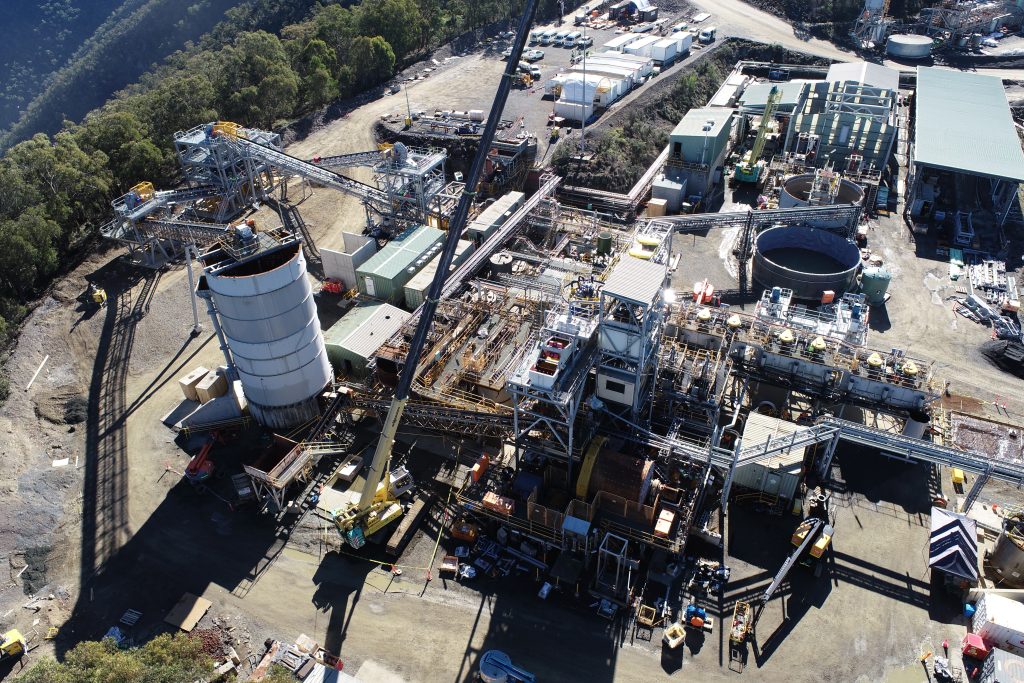
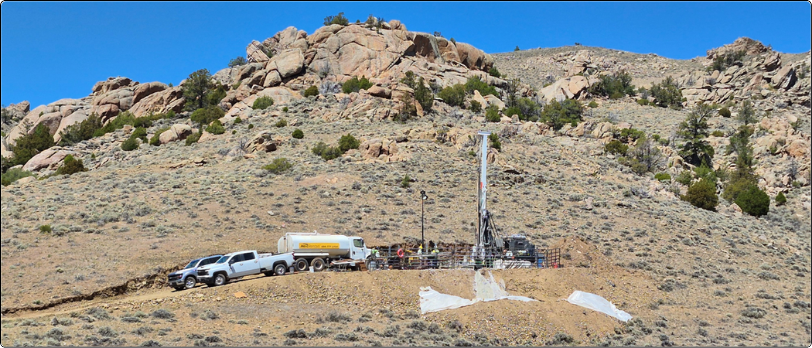
Erdene Resource Development achieved first gold production at its Bayan Khundii mine in southwestern Mongolia during Q3 2025, completing the $115 million construction on time and on budget over 22 months. CEO Peter Akerley described the strategic vision:
"A new minerals district in southwestern Mongolia that ultimately will be a multi-mine producer of multiple commodities."
The operational transition from bulk mining startup to selective high-grade operations continues, with the plant having reached nameplate capacity of 1,950 tons per day operating at approximately 90% utilisation. The company is systematically increasing feed grade toward the 3.8 g/t reserve grade target, expecting to declare commercial production by April 2026. Akerley explained the technical refinements underway:
"It's everything from updated resources to digging lines to blasting to the mining. Mining is a big part of this. You have operators that are new to this who if they are experienced have come out of coal mining, so it's getting it down to very fine-tuned mining and then it's the blending of those stockpiles into the plant."
The financial structure demonstrates confidence in operational sustainability, with the operating subsidiary carrying $123 million in debt while partners have approved a $10 million exploration budget for 2026. This decision reflects confidence that Bayan Khundii operations have achieved self-sustaining status without requiring additional capital injections.
Nevada & Guyana's Near-Term Timelines
P2 Gold Inc. is advancing its Gabbs project in Nevada toward 2028 production with a management team that previously took Pretium Resources' Brucejack project from discovery to production in under eight years. President and CEO Joseph Ovsenek emphasized this track record:
"We took it from discovery to production in under eight years which, when you think about it, nowadays they always talk about it's 15-16 years to permit a mine. That's quick and we were cash flowing right out of the gate."
The preliminary economic assessment (PEA) outlined 109,000 ounces of gold and 33 million pounds of copper annual production, but management is evaluating scenarios to increase throughput from 9 million tonnes to 11-12 million tonnes annually, potentially increasing gold production toward 150,000 ounces. Current spot prices significantly exceed the PEA assumptions of $1,950 gold and $4.50 copper, creating opportunities to optimize the mine plan. The company is targeting environmental permitting completion by end of 2027 and first gold pour in 2028, executing less than three years from present to production.
Interview with Joe Ovsenek, CEO of P2 Gold
G2 Goldfields has released an exceptional initial PEA for its Oko gold project in Guyana demonstrating sector-leading economics. At $4,000 gold, the PEA economics improve substantially, with NPV increasing to $4.2 billion and IRR expanding to 54%. Noone noted that at current gold prices above $4,500 per ounce, the economic leverage is considerable, demonstrating the project's sensitivity to continued gold price appreciation. The resource comprises 3.5 million ounces with average grades of 3.2-3.3 g/t.
G2 has commenced environmental permitting with submission of its Environmental Impact Statement application, expecting early earthworks permit within 12-15 months and full mine permit approval within 24-30 months. These timelines reflect recent improvements in Guyana's permitting processes. The company's 2026 drilling programme prioritizes conversion of inferred resources to the indicated category, addressing one of the key perceived risks that currently constrains valuation.
Interview with Dan Noone, CEO of G2 Goldfields
Canadian High-Grade Opportunities
New Found Gold executed a fundamental transformation through complete board and management overhaul bringing in production-focused executives including CEO Keith Boyle. Boyle explained his mandate:
"The mandate being let's get the gold - let's get to production. We were an exploration company and had been doing that for five years since discovering the Queensway deposit and so it was time to make that shift."
The strategic acquisition of Maritime Resources' Hammerdown mine provides near-term cash flow while securing critical milling infrastructure for the flagship Queensway project. Hammerdown is targeting steady-state production by mid-2026, while Queensway advances toward Final Investment Decision in H2 2026. The company released both a mineral resource estimate and PEA for Queensway in July 2025, subsequently raising $87 million in financing. Boyle emphasized the favourable timing:
"At these gold prices, it really is going to help us in being able to manage the amount of money that we have to raise externally in order to advance Queensway."
The company maintains significant exploration commitments despite the production pivot, conducting a 70,000-meter drill campaign in 2026 with approximately 60% of results still pending.
Interview with Keith Boyle, CEO of New Found Gold
West Red Lake Gold Mines represents the clearest validation of successful project execution, declaring commercial production at its Madsen Gold Mine effective January 1, 2026, just seven months after completing its bulk sample program. CEO Shane Williams emphasized the significance of sustained operational performance where December 2025 performance metrics demonstrate the mine's capabilities, with the mill processing 21,389 tonnes at an average of 689 tonnes per day, representing 86% of permitted 800 tpd throughput, while maintaining strong recovery rates averaging 94.6%.
The company's financial performance during the transition period confirms the project's economic strength even before achieving full production rates. West Red Lake generated US$30 million in gold sales revenue during Q4 2025, selling 7,200 ounces at an average price of US$4,150 per ounce, while ending the year with CAD$46 million in cash and gold receivables. Williams highlighted the fundamental shift from previous operations:
"From a West Red Lake point of view, we are making money today. We are generating cash and free cash flow and making money."
Looking ahead to 2026, Williams articulated clear operational objectives as the company positions to generate substantial free cash flow throughout 2026 while advancing multiple growth initiatives including the Fork deposit, the newly identified 904 Complex in Lower Austin, and shaft optimization studies.
Interview with Shane Williams, CEO of West Red Lake Gold
The Macro Context: Timing and Market Conditions
The convergence of operational success stories with sustained elevated gold prices creates exceptionally favourable conditions for junior producers and advanced developers. Shane Williams of West Red Lake captured this sentiment:
"It's just a great time to be a gold producer. Gold is nearly up on our all-time record again. It's jumping every day. It's perfect as we ramp up, the gold price is rising. In a ramp up situation, you want a bit of headway, you want tailwinds with you, and so it's perfect for the gold price rising as we get into our stride."
The structural supply deficit in gold mining, with reserve replacement rates lagging depletion for over a decade, creates favourable conditions for quality development assets. Infrastructure improvements in previously challenging jurisdictions—Mongolia's border power connectivity, Guyana's offshore oil-driven economic development, and proven permitting timelines in Newfoundland—reduce traditional frontier market concerns.
The capital efficiency imperative—maximizing net present value per dollar of initial capital expenditure—has become increasingly relevant as mining companies face constrained access to development capital. High-grade deposits provide compounding advantages through smaller mills processing less material to produce equivalent gold output, reducing both initial capital and ongoing operating costs while delivering superior margins capable of withstanding cost inflation.
The Investment Thesis for Gold
- Proven Operational Execution Eliminates Development Risk: West Red Lake Gold's achievement of commercial production with 86% capacity utilisation and positive monthly cash flow, combined with Erdene's on-time, on-budget $115 million construction completion, demonstrates that experienced management teams can successfully transition projects from development to cash-generating operations in the current environment.
- Near-Term Production Pipeline Creates Diversified Entry Points: Multiple companies are advancing toward commercial production within 12-24 months (Erdene April 2026, New Found Gold's Hammerdown mid-2026) while advanced developers target 2028-2030 timelines (P2 Gold, Gold Terra), providing investors with exposure across different risk-return profiles within the development spectrum.
- High-Grade Resources Deliver Superior Economics and Margin Protection: Projects targeting 5-7 g/t gold resources across multiple jurisdictions provide exceptional margins that withstand commodity price volatility and cost inflation, with companies like G2 Goldfields demonstrating capital intensity ratios of 3.9 versus sector benchmarks below 2.5.
- Substantial Operating Leverage to Sustained Gold Price Strength: Projects defined at $1,860-$3,000 gold assumptions now operate in a $4,400+ environment, demonstrating how elevated prices transform project economics and accelerate payback periods.
- Self-Funding Business Models Eliminate Equity Dilution Concerns: Companies generating positive monthly cash flow (West Red Lake with C$46 million cash) or advancing projects with near-term production cash flow (New Found Gold's Hammerdown reducing Queensway financing needs) create value that accrues directly to existing shareholders without requiring dilutive capital raises.
- Mining-Friendly Jurisdictions Reduce Permitting and Political Risk: Strategic positioning in Nevada (P2 Gold's sub-three-year development timeline), Canada's established mining provinces (West Red Lake, New Found Gold, Gold Terra), and improving infrastructure environments (Mongolia's border power, Guyana's 24-30 month proven permitting) significantly reduces execution uncertainty compared to frontier markets.
- Multiple 2026 Catalysts Support Systematic Valuation Re-Rating: Dense newsflow including updated resource estimates, feasibility study completions, commercial production declarations, and final investment decisions provides regular inflection points for valuation expansion as companies systematically de-risk projects through technical milestone achievement.
TL;DR
The junior gold sector enters 2026 with demonstrated operational success as multiple companies achieve commercial production or advance toward near-term timelines within two to four years. Strategic positioning in mining-friendly jurisdictions—Nevada's efficient permitting, Canada's established provinces, Mongolia's improving infrastructure with border power connectivity, and Guyana's proven 24-30 month permitting timelines—reduces development risk and compresses execution timelines. enhance execution confidence. Multiple 2026 catalysts including resource updates, feasibility completions, commercial production declarations, and final investment decisions provide regular inflection points for valuation re-rating as companies systematically de-risk projects through technical milestone achievement.
Frequently Asked Questions (FAQs) AI-Generated
High-grade deposits provide superior margins that withstand commodity price volatility and cost inflation because they require smaller mills to process less material for equivalent gold production, reducing both initial capital expenditure and ongoing operating costs. As G2 Goldfields CEO Dan Noone stated: "The least risky asset is the highest grade asset." This translates to capital intensity ratios exceeding 3.9 for projects like G2's Oko versus sector benchmarks below 2.5, meaning investors receive substantially more net present value per dollar of initial capital deployed. High-grade operations also achieve faster payback periods—G2's Oko shows 2.6-year payback at $3,000 gold—and maintain profitability across wider commodity price ranges, with breakeven costs often between $1,500-$2,000 per ounce versus current prices above $4,400.
Self-funding companies generate positive monthly cash flow from existing operations that covers ongoing operational costs, debt service, exploration programs, and growth initiatives without requiring additional equity capital raises. West Red Lake Gold exemplifies this model, generating US$30 million in Q4 2025 gold sales while ending the year with CAD$46 million in cash and gold receivables, with CEO Shane Williams confirming: "We're self-sufficient now. We're generating cash every month." This eliminates the need for dilutive financings that reduce existing shareholders' ownership percentage, allowing value creation to accrue directly to current investors. Similarly, Erdene maintains a $10 million exploration budget while servicing $123 million debt through operational cash flow, and New Found Gold's Hammerdown production will reduce external financing requirements for flagship Queensway development.
Development timeline compression results from three primary factors: strategic positioning in mining-friendly jurisdictions with proven permitting frameworks, experienced management teams executing disciplined technical programs, and favourable commodity price environments that justify accelerated development decisions. P2 Gold targets 2028 production (less than 3 years from present) leveraging Nevada's efficient Bureau of Land Management permitting and a management team that delivered Pretium's Brucejack from discovery to production in under 8 years. CEO Joseph Ovsenek explained: "We took it from discovery to production in under eight years which, when you think about it, nowadays they always talk about it's 15-16 years to permit a mine." Similarly, G2 Goldfields expects 24-30 month permitting in Guyana based on neighbouring projects, while New Found Gold targets H2 2026 final investment decision for Queensway with potential late 2026 construction start, demonstrating how jurisdiction selection and experienced teams compress traditional timelines.
Elevated gold prices substantially improve project economics beyond original PEA assumptions, creating significant operating leverage and margin expansion. G2 Goldfields' Oko project shows NPV increasing from $2.6 billion at $3,000 gold to $4.2 billion at $4,000 gold, with internal rate of return expanding from 39% to 54% and payback shortening from 2.6 years to 2.0 years. P2 Gold's Gabbs project PEA used $1,950 gold assumptions versus current $4,400+ prices, with CEO Joseph Ovsenek noting first-year revenues could approach $900 million with initial capex recovered in 5-6 months, creating optionality to accelerate mill construction and enhance recoveries. Gold Terra Resources CEO Gerald Panneton explained how elevated prices enabled strategic recalibration: "With the gold price going above $4,000, we can focus on building a mill based on 1 million ounces between surface and 1,000 meters" rather than the 1.5 million ounces previously required at lower prices, fundamentally improving project viability.
Key 2026 catalysts include: West Red Lake Gold updated guidance in Q1 as company ramps toward 800 tpd while mining 6+ g/t ore from 4447 zone; Erdene resource update in Q2 incorporating higher gold prices and expanded Dark Horse drilling, with commercial production declaration expected April 2026; Gold Terra mineral resource estimate in September followed by preliminary economic assessment year-end for Con Mine; New Found Gold's Hammerdown technical report Q1, steady-state production mid-2026, and Queensway final investment decision H2 2026; P2 Gold feasibility study completion incorporating optimized throughput scenarios (11-12 million tonnes versus 9 million tonnes in PEA); and G2 Goldfields resource conversion drilling results, environmental permitting advancement (early earthworks permit within 12-15 months), and updated economic assessments incorporating 2026 drilling. These milestones provide regular opportunities for valuation re-rating as companies systematically address perceived risks through technical achievement and regulatory progress.
Analyst's Notes





Subscribe to Our Channel










Stay Informed






















