




Assumption Changes Match the Drill Bit in Minto's 2026 Resource Growth


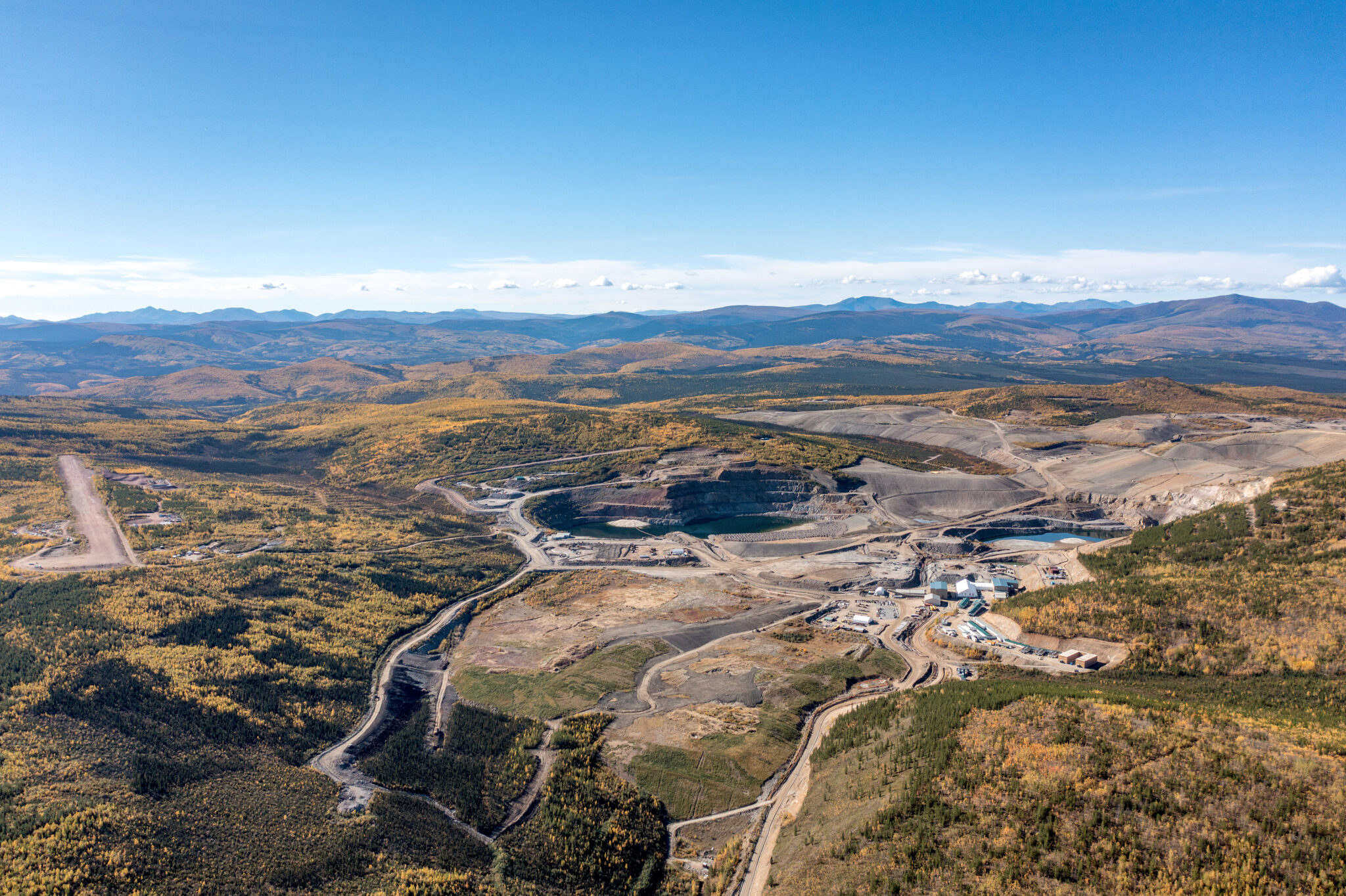
Minto's measured and indicated resource grew 280% in tonnage as average grade fell to 0.89% copper, shifting restart risk to the mine plan and price deck.
- The 2026 resource estimate at Minto contains 47.8 million tonnes of measured and indicated material at 0.89% copper, compared with 1.20% copper in the 2025 indicated resource.
- Approximately half of the expansion in the indicated category was driven by higher metal prices and design-basis changes rather than by drilling.
- Reported open-pit indicated tonnage falls from 21,779,000 tonnes to 11,961,000 tonnes as the net smelter return (NSR) cut-off rises from C$30 to C$60 per tonne.
- Mill throughput is fixed at 4,100 tonnes per day, and the split between underground and open-pit feed is targeted at roughly half each for the first seven to eight years.
- The estimate uses US$4.60 per pound for copper, while copper stood at US$6.28 per pound in July 2026.
Resource Base & Category Composition
The updated resource for the Minto copper-gold-silver project of Selkirk Copper Mines (TSXV: SCMI | OTCQX: SKRKF | FRA: IO20) is divided into two grade populations that behave differently within the mine plan. Measured and indicated resources total 47.8 million tonnes at 0.89% copper, 0.34 grams per tonne (g/t) gold, and 3.2 g/t silver, containing 940 million pounds of copper, 530,000 ounces of gold, and 4.97 million ounces of silver, with an effective date of June 10, 2026. A further 16.9 million tonnes of inferred material grades 0.76% copper, 0.26 g/t gold and 2.7 g/t silver, for 281 million pounds of copper.
The underground component holds 26.0 million tonnes of measured and indicated material at 1.14% copper, 0.49 g/t gold, and 4.4 g/t silver. The open-pit component contains 21.8 million tonnes of indicated material at 0.59% copper, 0.17 g/t gold, and 1.8 g/t silver. Mineralised lenses occupy an area roughly 3 by 3 kilometres and extend to at least 650 metres (m) below the surface, across 69 modelled domains.
Confidence sits almost entirely in the indicated category. Measured resources amount to 348,000 tonnes at 0.92% copper, 0.39 g/t gold, and 3.3 g/t silver, all of which are underground. Against a 2025 estimate carrying 12.6 million tonnes indicated and 23.6 million tonnes inferred, the 2026 figures are 47.5 million tonnes indicated, 16.9 million tonnes inferred, and 0.3 million tonnes measured. Resources that are not reserves have no demonstrated economic viability, and the inferred portion is too speculative geologically for economic considerations to be applied to it.
Sources of the Resource Growth
Growth in the indicated category split roughly evenly between the drill bit and the assumptions behind the cut-off. Approximately half of the expansion came from higher metal prices and changes to design-basis assumptions, which lifted lower-grade material above the net smelter return (NSR) cut-off. The other half came from exploration success through drilling. The tonnage admitted by the assumption change is based on reasonable prospects of eventual economic extraction and also lowered the average grade, which now stands at 0.89% copper for measured and indicated material, compared with 1.20% copper in the 2025 indicated resource.
Drilling delivered expansion in four separate areas. At Minto North, the 202 Lens grew 238% in indicated contained copper against the 2025 estimate, with that indicated material averaging 1.39% copper, 0.75 g/t gold, and 6.57 g/t silver. At Ridgetop, a group of stacked, sub-horizontal lenses grew by 255% in indicated contained copper near the surface and within the resource pit. At Minto Main, the 117 Lens established indicated and measured resources for the first time in ground that previously held only sparse historical drill holes. The 301 Lens sits in Area 118, beneath previously known resources and close to existing underground workings.
President and Chief Executive Officer of Selkirk Copper Mines, M. Colin Joudrie, is direct about what the drilling showed:
"So I think what we've seen is the grades holding true both in the open pit configurations and in the underground. As a matter of fact, we're probably seeing a little bit of an uptick in some of the underground intercepts that we've hit in terms of average grade, both copper and then copper gold silver equivalency."
Each of those percentage increases is measured within a named lens area rather than across the deposit. Phase 1 comprised 52,288 m of drilling in 175 holes, and the estimate as a whole draws on 428,388 m in 1,956 holes.
Cut-Off Sensitivity & Tonnage Response
Reported tonnage at Minto is a function of the cut-off applied to it. The estimate uses a C$30 per tonne NSR cut-off for open-pit material, and C$80 per tonne for underground material, selected because they align with the marginal mining and processing cost assumptions in the preliminary economic assessment (PEA) design basis.
Open-pit indicated material moves from 23,444,000 tonnes at 0.566% copper at a C$25 cut-off to 21,779,000 tonnes at 0.589% copper at C$30, 18,455,000 tonnes at 0.638% copper at C$40, 15,070,000 tonnes at 0.697% copper at C$50, and 11,961,000 tonnes at 0.767% copper at C$60. The underground measured and indicated series runs from 29,704,000 tonnes at 1.068% copper at a C$60 cut-off to 26,026,000 tonnes at 1.145% copper at C$80 and 19,803,000 tonnes at 1.300% copper at C$110. Both series exchange tonnes for grade in the same direction as the cut-off rises.
Recovery introduces a second sensitivity running the same way. At a fixed 1.0% copper grade, copper recovery falls from 96.6% at a 0% oxide ratio to 85.3% at 10%, 74.0% at 20%, and 62.7% at 30%, while gold recovery moves from 85.0% to 70.7% across that range. Average oxide ratios are 6% for underground measured and indicated material and 11% for open-pit measured and indicated material. Near-surface areas, including Ridgetop, Area 118, and southern Copper Keel, host a horizon of copper oxide mineralisation. Historical life-of-mine recoveries averaged 91.7% for copper and 72.6% for gold.
Mine Plan Sequencing & Blended Mill Feed
Mill capacity, not resource size, sets the rate at which this estimate converts into metal. Throughput is fixed at 4,100 tonnes per day, equivalent to 1.5 million tonnes per year, and an updated mine plan is under development as part of the PEA to deliver the targeted 12 to 15-year mine life from the resource. The plant, a 400-person camp, water treatment facilities, grid power, road and barge access, and existing underground development are already in place.
Management is targeting roughly 50% of the go-forward mine plan volume from the open pit at Ridgetop, with the balance from the existing underground and a new underground at the Minto North zone, and describes the blend as roughly even for the first seven to eight years before shifting towards underground in the later part of the mine life. The exact volume from each source is not settled until the feasibility study. Management places access to the 301 Lens at about 100 m depth, adjacent to an existing mine development, and the 117 Lens at a deeper level, immediately adjacent to the northern end of the Copper Keel underground. It is unlikely that both new lens discoveries will be included in the plan, and a new horizontal portal access is required to open the Minto North deposit.
Joudrie frames the trade-off plainly:
"This is where you will test our integrity, and the market will. It's so easy to just go to high grade and run hard off the high grade, but our objective is that integrated mine plan to produce 30,000 tons copper contained on an equivalent basis: copper, gold, and silver."
The mill therefore receives a blended grade rather than the grade of either component, and setting that blend is work the feasibility study still has to complete.
Price Assumptions & Cost Position
The cut-offs that define this resource are derived from a fixed-price deck. Net smelter return values use US$4.60 per pound for copper, US$3,300 per ounce for gold, and US$40 per ounce for silver, at an exchange rate of 0.72 US dollars per Canadian dollar. Copper stood at US$6.28 per pound on July 10, 2026, with gold at US$4,114 per ounce and silver at US$60.17 per ounce, against US$3.75 per pound for copper, US$1,846 per ounce for gold, and US$24.23 per ounce for silver at the start of 2023. Higher copper, gold, and silver prices, in combination with the removal of the precious metals stream, alter the value of a tonne of ore and the approaches to exploration, resource modelling, mine planning, and mineral processing.
Operating cost assumptions are C$4.58 per tonne mined for open-pit material, C$95.64 per tonne mined for underground material, C$30.00 per tonne milled for processing, and C$20.00 per tonne milled for general and administrative costs. A marginal underground mining cost of C$50.00 per tonne was used only for the reasonable-prospects shapes and the reporting cut-offs. Concentrate carries a copper grade of 38% on a design basis, with offsite costs of US$200 per dry metric tonne and a copper concentrate treatment charge of US$35 per dry metric tonne. A 1.5% NSR royalty is payable to the Selkirk First Nation. Management is targeting an operating cost near the middle of the cost curve, net of byproduct credits.
Joudrie is precise on what would change the plan:
"We can always back off if prices really get bad. We can always revert the operating plans to cover that off with some higher-grade short-term plans, but the more important thing is to just be disciplined about this."
That cost objective is a target rather than a study output.
What the Economic Study Must Resolve
The estimate feeds a PEA whose cost work is unfinished. Its scope covers an updated operating cost estimate based on current input costs; an updated restart and sustaining capital cost estimate based on vendor quotes; an updated scoping-level closure plan; and the incorporation of the Phase 1 drilling results. Engineering work packages for the trade-off study went to Hatch Ltd. and SRK Consulting (Canada) Inc., both of which have worked on the Minto site. Design basis objectives include tailings and waste rock disposal within the licence boundary, annual water management, including a one-in-200-year event, and minimising site footprint, operating costs, and disturbance.
None of the current drilling sits in the resource that the study will use. The 50,000-metre Phase 2 programme was 75% complete with 37,000 m drilled as of July 30, 2026, and its results are excluded from an estimate whose effective date precedes that drilling. Initial Phase 2 assay results and visual drill logs continue to indicate expansion potential across all mineralised zones in the central mine area. A primary objective of the programme is to target the inferred resources at a drill spacing similar to that of the indicated resources, and management is targeting four to five years of measured material, with the remainder upgraded as the mine plan develops. Additional metallurgical test work to validate the flotation performance of planned mining areas is in progress, following earlier work on historical drill core that qualitatively confirms that flotation performance is sensitive to copper oxide.
Factors identified as capable of affecting the estimates include metal price assumptions; changes in interpretations of mineralisation geometry or continuity from future drilling; changes to interpolation assumptions or methodology; metallurgical recovery assumptions; mining method assumptions; and operating cost assumptions. Previous technical reports, including the 2025 estimate, are no longer current and should not be relied upon. A technical report supporting the 2026 estimate is to be filed within 45 days of July 30, 2026.
Dated Milestones to a Restart Decision
The 2026 resource estimate is being used for the development of an updated PEA. Management is targeting completion of Phase 2 drilling around the first part of September 2026, about a month and a half earlier than planned, with the feasibility study targeted to start in the third quarter of 2026.
Phase 2 assay results are targeted for October to November 2026 for integration into the feasibility study, which places the study's start ahead of the arrival of the data it will use. Submission of amended licences to the Yukon Government is targeted for October 2026. The feasibility study completion and the restart investment decision are both targeted for mid-2027.
Mill commissioning is targeted for the first quarter of 2028, with first production in mid-2028.
The Investment Thesis for Selkirk Copper Mines
- Minto's 2026 resource estimate contains 47.8 million tonnes of measured and indicated material at 0.89% copper, compared with 1.20% copper in the 2025 indicated resource.
- Approximately half of the growth in the indicated category was driven by higher metal prices and design-basis changes rather than by drilling.
- Reported open-pit indicated tonnage falls from 21,779,000 tonnes to 11,961,000 tonnes as the net smelter return cut-off rises from C$30 to C$60 per tonne.
- The mine plan targets roughly equal volumes from the 1.14% copper underground component and the 0.59% copper open-pit component over the first seven to eight years.
- The resource is priced at US$4.60 per pound for copper, while copper stood at US$6.28 per pound in July 2026.
- Neither the mine plan nor the updated capital and operating cost estimates are complete, and none of the current drilling is within the resource used in the preliminary economic assessment.
Minto's 2026 estimate expanded the resource base without increasing its grade, and the material that came in at the bottom of the cut-off range is the material that a fixed 4,100-tonne-per-day mill must absorb alongside the higher-grade underground feed. That makes the blending decision, the cost estimate, and the price deck the three variables carrying the restart case, in place of the question of whether enough metal exists. Each is targeted to be answered on a dated timetable running from the preliminary economic assessment through a feasibility study to a restart investment decision in mid-2027.
TL;DR
Minto is a former copper-gold-silver mine targeting a restart, whose resource grew by 280% in measured and indicated tonnage, while the average grade fell to 0.89% copper. Roughly half of the indicated expansion came from higher metal prices and design-basis changes rather than from drilling, which shifts the open question from whether the metal is present to whether the mine plan can blend it economically. The cut-off tables show the trade directly, with open-pit indicated tonnage falling from 21,779,000 tonnes to 11,961,000 tonnes between a C$30 and a C$60 per tonne NSR cut-off as grade rises from 0.589% to 0.767% copper. With the PEA, the mine plan, and the updated cost estimates all outstanding, the restart case turns on engineering and price assumptions rather than on geology.
FAQs (AI-Generated)
Analyst's Notes





Subscribe to Our Channel








Stay Informed


